 Irina Ivina
 Photos by Alexander Bury
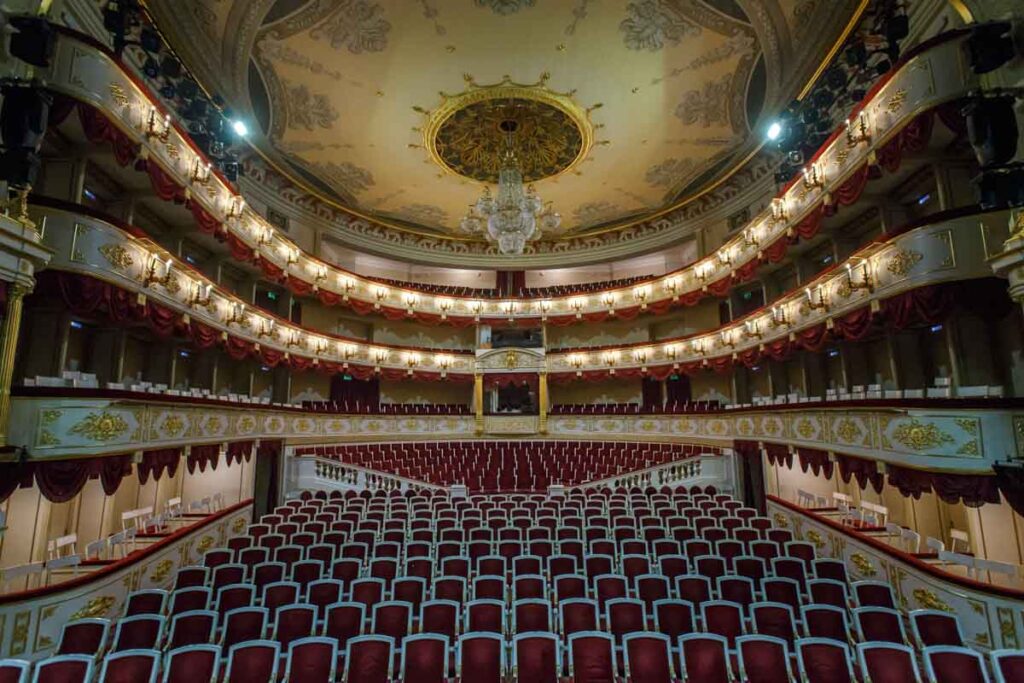
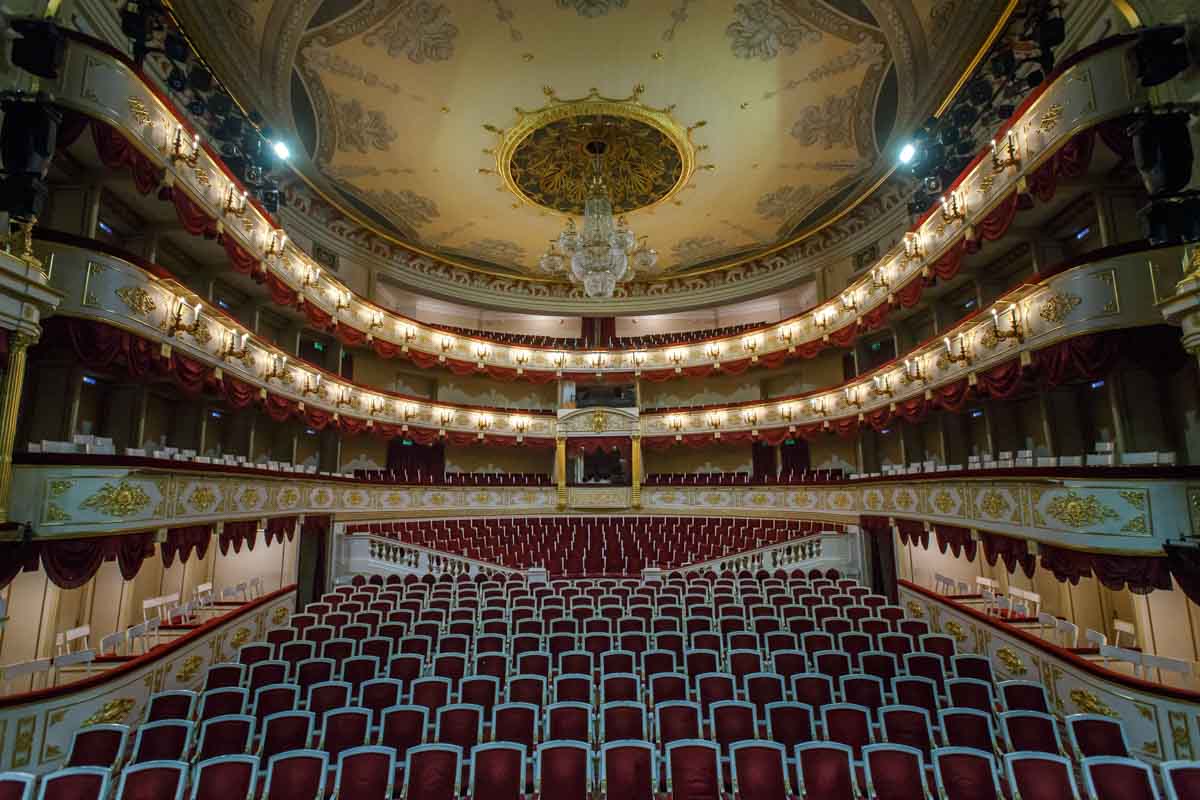
The Moscow Maly Theatre is a place that remembers Gogol and Ostrovsky – both of whom rehearsed their plays on its stage, often revising them on the fly. This is the very place where the traditions of Russian dramatic art were born.
The State Academic Maly Theatre of Russia traces its history back to August 30, 1756 – the day Empress Elizabeth Petrovna issued a decree “On the Establishment of a Russian Theatre for Tragedies and Comedies”. Soon afterward, two official theatrical centers emerged in St. Petersburg and Moscow.
A University Venture
While the court theatre in St. Petersburg grew out of the Land Gentry Cadet Corps, its Moscow counterpart was born at the Imperial University (the future Moscow State University, or MSU). Classes were set up at the university theatre, where students studied the dramatic arts. In 1759, these students formed the city’s first professional troupe, which took the name “The Russian Theatre”. From the very beginning, it was open to the general public, which influenced its repertoire: Muscovites were bolder than their St. Petersburg counterparts and often staged plays that would have been unthinkable on the then-capital’s stage.
For a long time, the Moscow theatre had no permanent home. In 1780, the English impresario Michael Medox founded his own theatre in Moscow. “This vast building <…>, in the opinion of the finest architects and with the approval of theatre connoisseurs, has been constructed and completed with such solidity and efficiency that it surpasses almost all notable European theatres in this respect,” wrote Moskovskie Vedomosti (Moscow News) enthusiastically. Designed to hold a thousand spectators from all social classes, it was built at the very beginning of Petrovka Street – right where the famous Bolshoi Theatre stands today, with the Maly Theatre located just to its left. The Moscow University troupe performed dramatic works, as well as ballets and operas, on the stage of the Petrovsky Theatre. In 1805, Medox’s theatre burned down – in its place, in 1808, the architect Karl Rossi constructed his only Moscow masterpiece. Alas, its life was also short-lived: it was destroyed during the Great Fire of 1812.
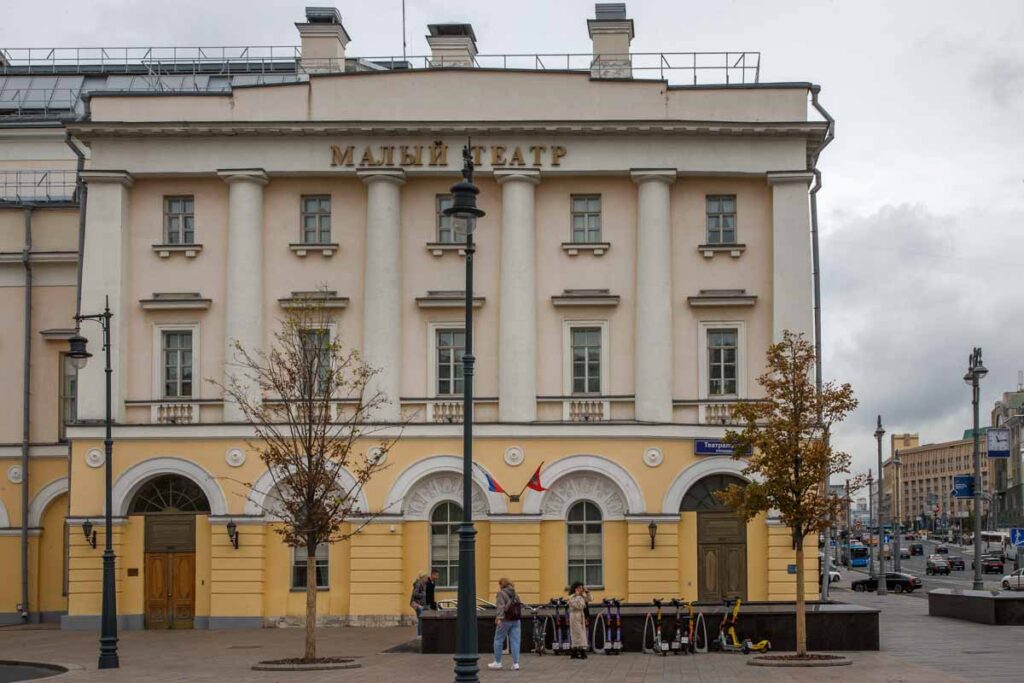
The acting troupe, which had been under the jurisdiction of the Directorate of Imperial Theatres since 1806, was once again moving from one location to another. Finally, in 1820, the Directorate decided to redevelop Petrovskaya Square according to a plan by the architect Osip Bove. Thus, an entire theatrical center emerged in Moscow: a magnificent new theatre rose on the site of the burned-down one, while the house of the merchant Vasily Vargin next door was specially remodeled for the dramatic troupe. In October 1824, the Moscow actors finally found a home of their own.
Both new theatres were immediately dubbed the “big” and “small” ones (which is exactly what Bolshoi and Maly translate to) – purely because of the size of the two neighboring buildings. At first, these names were even written in lowercase. The acting troupe of the Imperial Moscow Theatre was split: previously, the same actors could perform in both dramatic productions and in operas and ballets. And even after this, the theatres could swap stages – for instance, if a dramatic production couldn’t accommodate everyone who wanted to see it. Conversely, the premiere of Tchaikovsky’s opera Eugene Onegin on March 29, 1879, actually took place on the stage of the Maly Theatre – the composer preferred a more “intimate” venue. An underground tunnel connected the two theatres, allowing the actors to quickly transport costumes, props, and scenery between them. But after the theatres finally “divorced” in the early 20th century, the tunnel was no longer needed, so it was filled in and hidden behind a modest door.
Moscow’s Spirit of Freedom
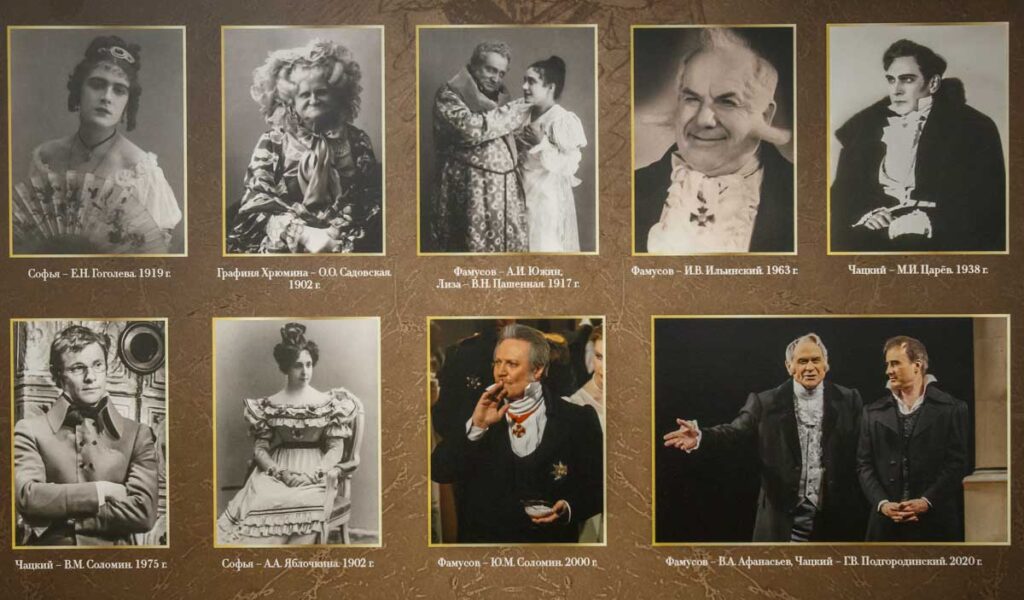
In St. Petersburg, two theatres also took shape: opera and ballet were staged at the Mariinsky, and everything else at the Alexandrinsky. On their stages, everything was dictated by the emperor’s will and suited his taste. Yet, in 1825, students of the St. Petersburg Theatre School staged Alexander Griboyedov’s comedy Woe from Wit. And then, right before the premiere, the play – which had no censorship approval – was banned from being performed. The full text of the comedy circulated in handwritten copies from person to person, but after the death of the playwright and diplomat, public interest in Griboyedov grew so much that society practically forced the government to permit its publication. For several years, theatres staged only individual scenes from the work, until January 1831, when Woe from Wit was finally performed in its entirety at the Alexandrinsky Theatre – albeit with censorship cuts.
The Muscovites were not to be outdone: the comedy was staged at the Maly Theatre in November of that same year. The audience’s favorites dazzled on stage. The role of Famusov was played by Mikhail Shchepkin, who laid the foundation for realism in Russian acting. Much later, Konstantin Stanislavsky stated that he built his famous acting system specifically on Shchepkin’s precepts.
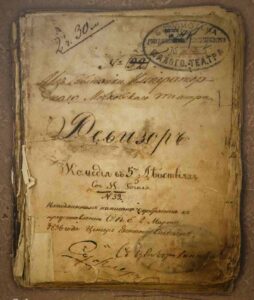
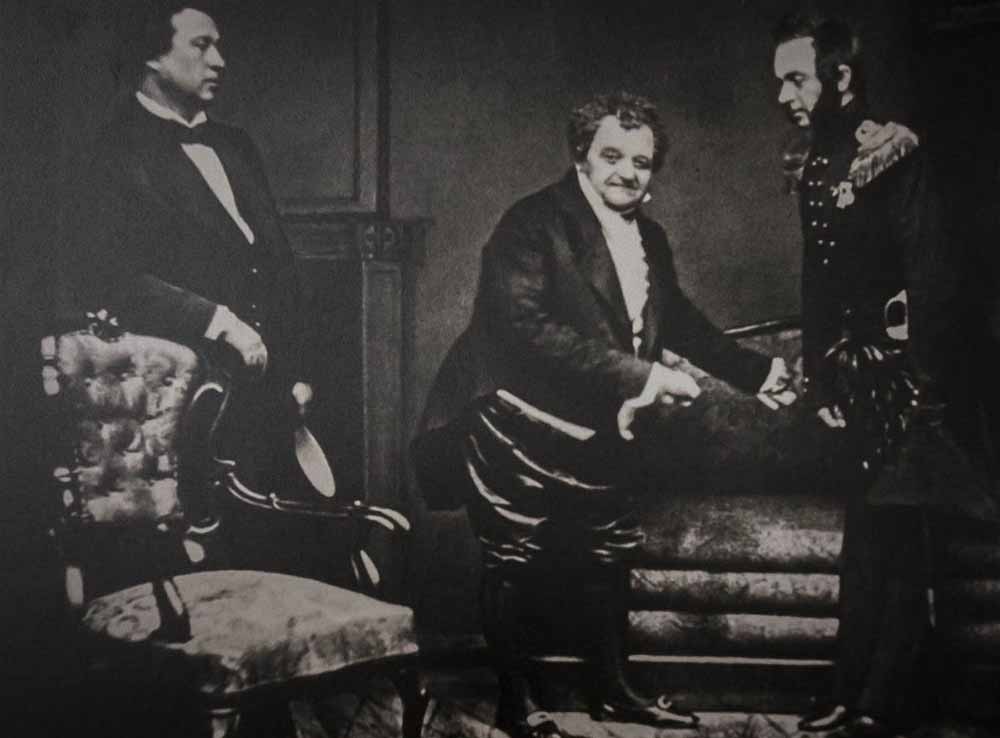
The production of Gogol’s comedy The Government Inspector became a true theatrical landmark, premiering at the Alexandrinsky Theatre on April 19, 1836. The writer criticized the Russian stage for being overrun by melodramas and vaudevilles translated from French, and was equally frustrated that the productions of that era failed to reflect the life in the country. He attended the rehearsals of The Government Inspector and worked closely with the actors; however, after the premiere, he had to concede that the cast – with the exception of Sosnitsky as the Mayor – had failed to capture his vision.
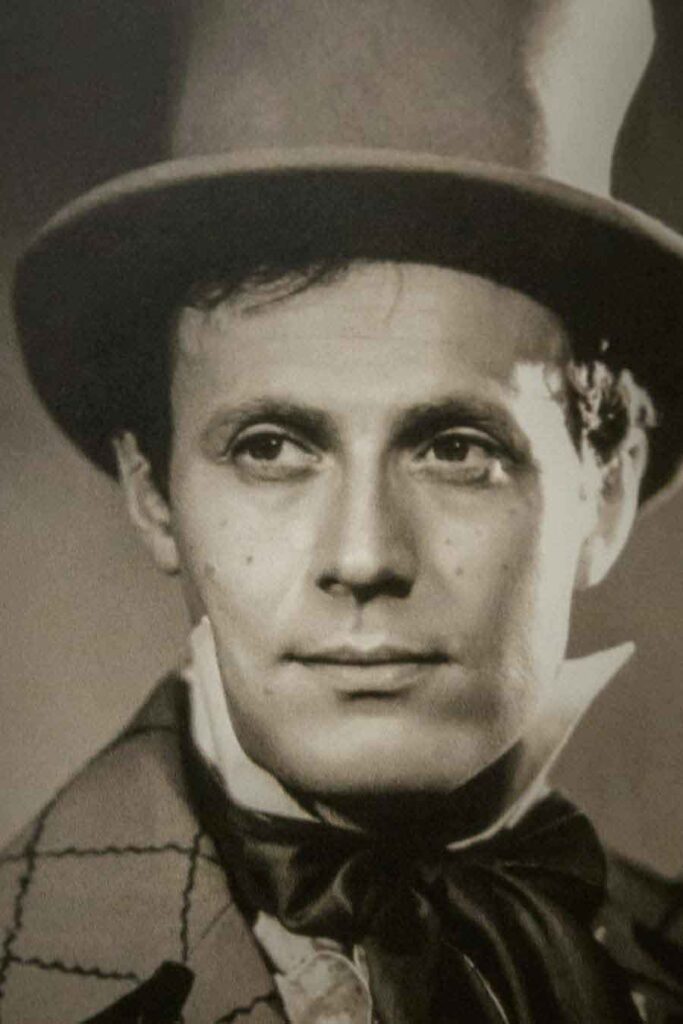
Emperor Nicholas I was delighted with the comedy and laughed heartily – however, not everyone in the audience agreed with him. The famous actor Mikhail Shchepkin, a close friend of Gogol, later explained this mixed reception. As he wrote in a letter to his fellow actor Ivan Sosnitsky on June 3, 1836, jokingly told him: “Have mercy, how could it be received better, when half the audience takes [bribes] and the other half gives [them]?” Consequently, many viewed The Government Inspector as a libel and a mockery of society. Gogol, however, viewed the premiere of his comedy as a failure.
Mikhail Shchepkin, a close friend of Gogol’s, nevertheless managed to persuade him to give it another try – this time at the Maly Theatre. The actor effectively directed the production and delivered a brilliant portrayal of Gogol’s Mayor. The Moscow premiere followed just a month later, on May 25.
This production restored Gogol’s faith in his own success. Afterwards, the writer made frequent trips to Moscow to attend rehearsals, revise the text of The Government Inspector, and offer advice to the actors. Gogol loved to watch his plays from the back rows of the auditorium. As the theatre staff told us, remembering this, they left a single empty seat for his spirit before the modern premiere of Dead Souls – placing a hat on the cushion.
The House of Ostrovsky
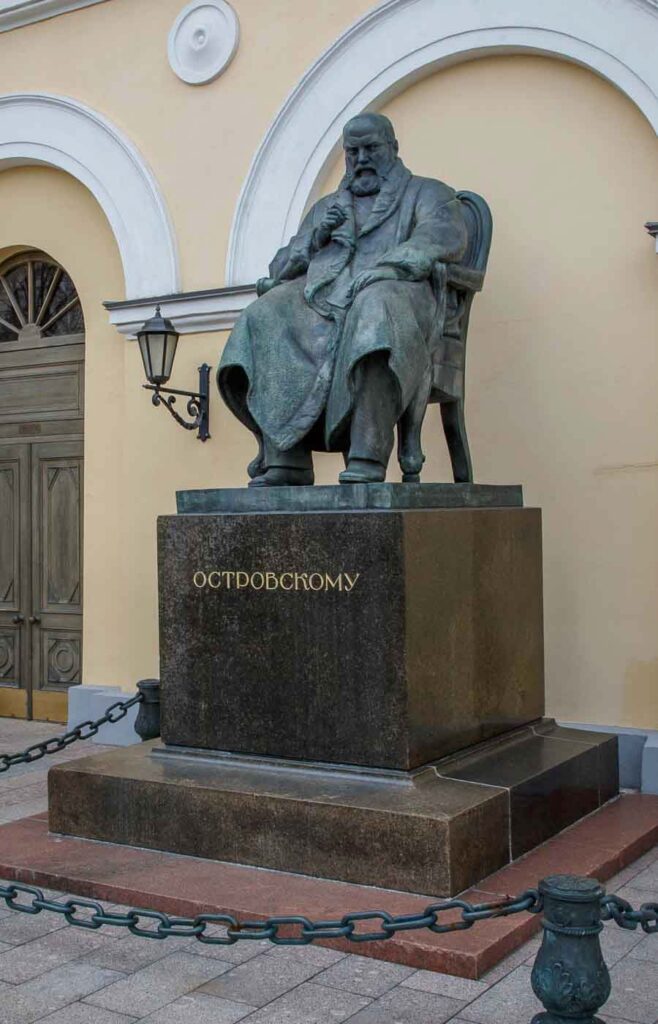
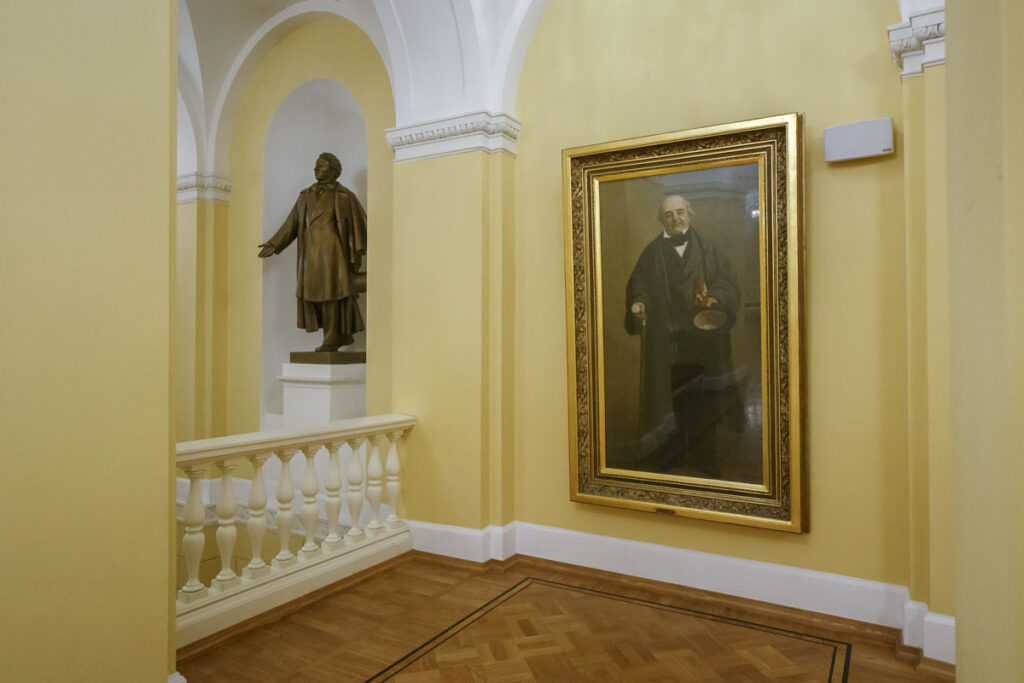
The unseen presence of another Russian classic, Alexander Ostrovsky, is also palpable in the theatre – his monument greets guests at the entrance to the Maly. “For over thirty years I have worked for the Russian stage, written more than 40 original plays, and for a long time now, not a single day has passed without my plays being performed in several theatres across Russia,” – this is how the playwright, considered the father of the Russian national theatre, assessed his own work.
Ostrovsky felt the strongest connection to the Maly Theatre in Moscow. He personally staged his plays, paid attention to every detail, rehearsed with the actors, and even wrote works tailored to the personalities of specific actors. All 47 of his original plays were staged at the Maly Theatre, and some of them are still part of the current repertoire. Money became the central theme of most of Ostrovsky’s works – including arranged marriages, debts, bankruptcies, bribes, cunning get-rich-quick schemes, speculation, and the like. The Moscow audience received such productions with great enthusiasm.
Late in life, Ostrovsky also took on the role of a high-ranking official: in 1885, he was appointed head of the repertoire department for Moscow theatres and director of the theatre school. Working tirelessly twelve hours a day, he managed to significantly ease the lives of his wards and improve their working conditions. He surely could have done even more had he not died of a heart attack in June 1886 at his estate, Shchelykovo, in the Kostroma region.
In 1882, the state monopoly on public entertainment was abolished, and by 1898, the Moscow Art and Public Theatre (today – the Chekhov Moscow Art Theatre) had emerged. The leaders of the new theatre, Vladimir Nemirovich-Danchenko and Konstantin Stanislavsky, revolutionized Russian theatrical art. The famous Anton Chekhov became the driving spirit of the young theatre, while his relationship with the Maly was rather complicated. The writer showed his early dramatic works to Maria Yermolova, the leading actress of the Maly Theatre, and she was highly critical of them. Moreover, the theatre’s chief director, Alexander Lensky, after reading Chekhov’s The Wood Demon, advised him to give up on playwriting altogether: “Stick to fiction. You have far too much contempt for the stage and dramatic form.”
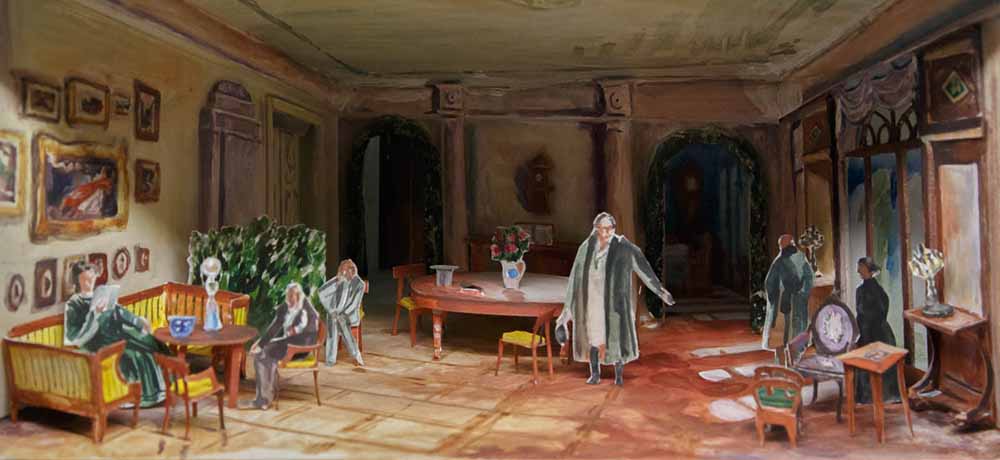
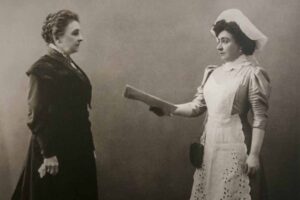
Only after Chekhov’s plays began to be staged at the Art Theatre and achieved success did the Maly realize its oversight. Lensky’s successor as head of the theatre, Alexander Sumbatov-Yuzhin, attempted to introduce Chekhov’s plays into the repertoire, but faced a categorical refusal from Nemirovich-Danchenko to “share” Chekhov. For over half a century, Chekhov was associated specifically with the Moscow Art Theatre – it was not until 1960 that his work was first staged in its entirety at the Maly. Ivanov, directed by Boris Babochkin, who also took on the title role, became a sensation. Today, a season at the Maly rarely goes by without The Seagull, The Cherry Orchard, Three Sisters, and other world-famous plays by Chekhov.
The famous feuilletonist Vlas Doroshevich, who dedicated several of his critical articles to the Maly, noted with bitterness that at the turn of the 19th and 20th centuries, the theatre was facing a crisis. Classical productions were beginning to seem outdated, failing to capture the spirit of change. According to Doroshevich, the actors themselves spoke to him in private conversations about the difficult times the Maly was going through. But hardly any of them could have foreseen the imminent collapse of the Russian Empire itself.
Guardians of Traditions
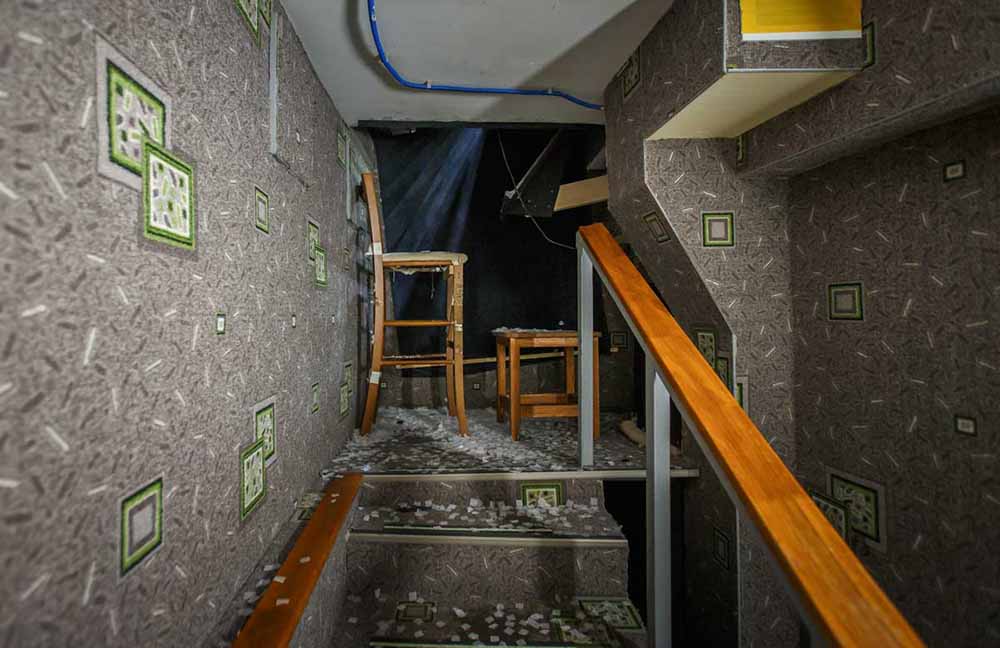
In post-revolutionary Moscow, new theatres sprang up everywhere. True to its roots, the Maly Theatre carved out its own niche for decades to come: amid the restless search for new forms, it strictly adhered to the rules of its founders and continued to stage classical works in their traditional manner. As always, great emphasis was placed on the purity of the Russian language and proper pronunciation.
In recent times, in order to promote the Russian language abroad, the State Academic Maly Theatre signed a cooperation agreement with the Russky Mir Foundation. The centerpiece of this partnership will be a series of literary and theatrical salons launching in autumn 2026 – live readings by the theatre’s leading actors of excerpts from Russian classics in various countries.
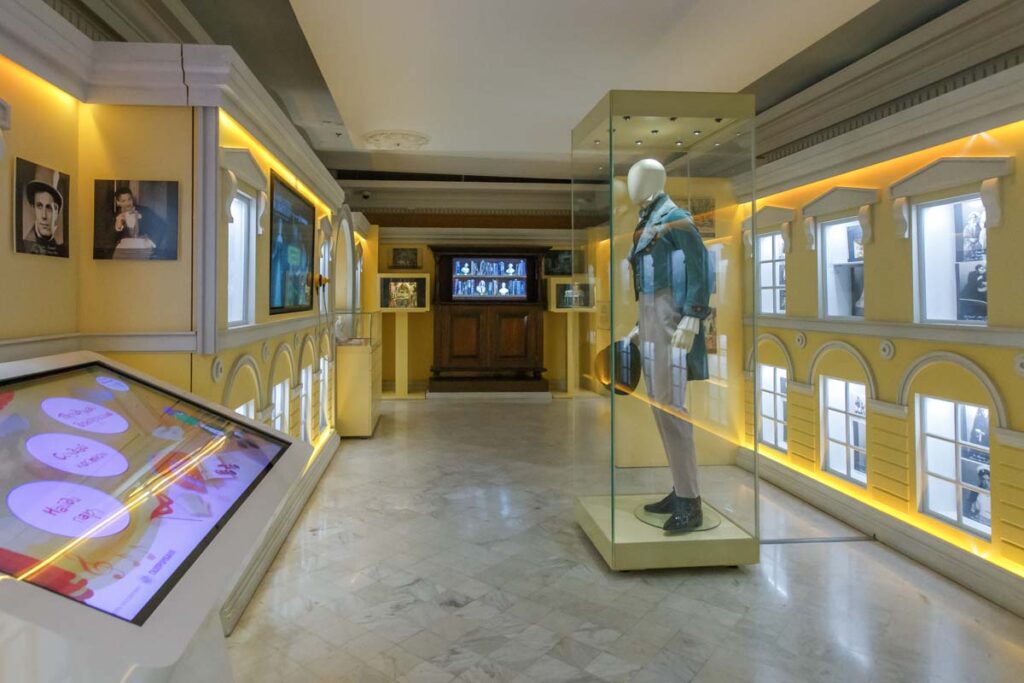
The ceremonial signing took place in the New Shchepkin Foyer, which currently hosts an exhibition drawn from the theatre’s extensive museum collection. As you examine the beautifully preserved historical costumes and production photographs, it is impossible to miss an exhibit that seems entirely out of place here – an aircraft engine with mangled propeller blades. How did it end up here?
During the Second World War, the theatre’s staff worked without a single day off and managed to save one million rubles. In 1943, they asked Stalin for permission to fund the construction of a combat air squadron. Permission was granted, and on June 8, 1944, twelve bombers – bearing the inscription “Maly Theatre to the Front” on their fuselages – were ceremonially handed over to the pilots of the 909th Fighter Regiment. Chief director Konstantin Zubov, who attended the event alongside the theatre’s leading actors, recalled: “We couldn’t take our eyes off the brand-new, gleaming fighters built on our own initiative. We couldn’t stop admiring those handsome young pilots – every single one a fine specimen – who were to crush the enemy in our aircraft.” As the theatre staff told us, all of these combat aircraft were lost in battles…
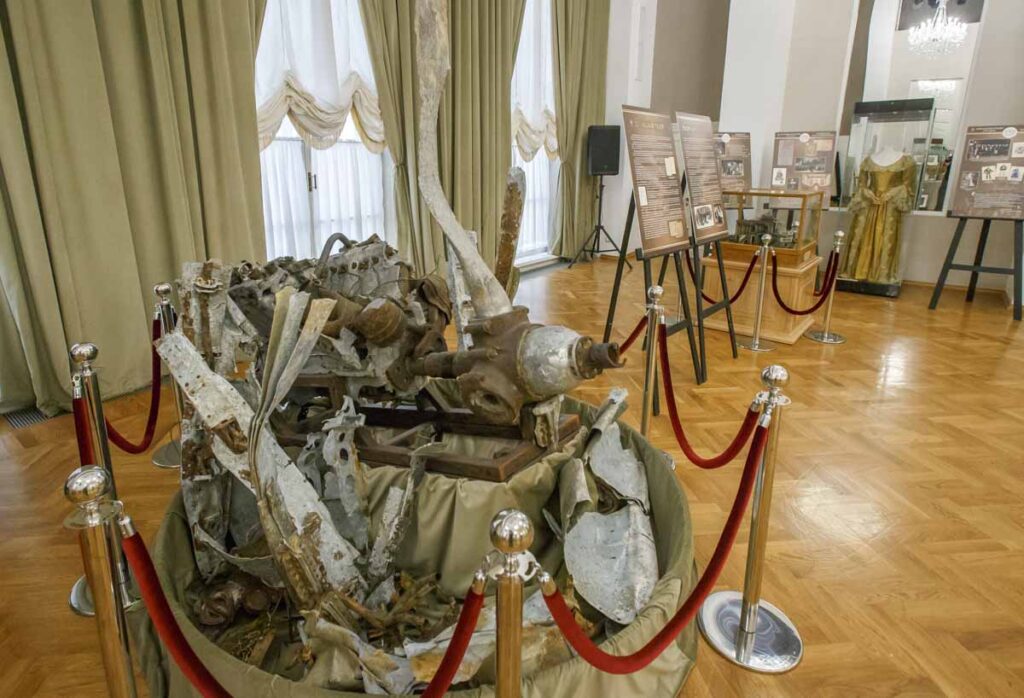
In 2025, to mark the 80th anniversary of the Victory, an exhibition opened in the theatre’s New Shchepkin Foyer. Its main exhibits were the heavily damaged fragments of one of the squadron’s bombers, discovered a year earlier. The plane had crashed near the village of Kallen (now Tsvetnoye) not far from Königsberg. The damaged parts had to be transported to Moscow by ferry, and installing them safely right in the foyer proved to be no easy task. But the effort paid off – the theatre’s museum now boasts a truly unique exhibit.
From Korovin to Zaitsev
Irina Dzheniya, a staff member at the Maly Theatre’s Museum and Information Center, shows me the places hidden from the public eye. Here is the only ground-floor dressing room – a lavishly decorated space known as the room of the “great old ladies.” In their day, such famous actresses as Vera Pashennaya, Alexandra Yablochkina, Irina Likso, and Elena Gogoleva prepared for their performances right here. Today, Lyudmila Polyakova does her makeup in this room, still performing on stage at the age of 87. I ask my companion if these esteemed actresses take offense at being called “old ladies,” even if they are “great” ones. “They don’t take offense,” Irina assures me. “On the contrary, it’s a great honor!”
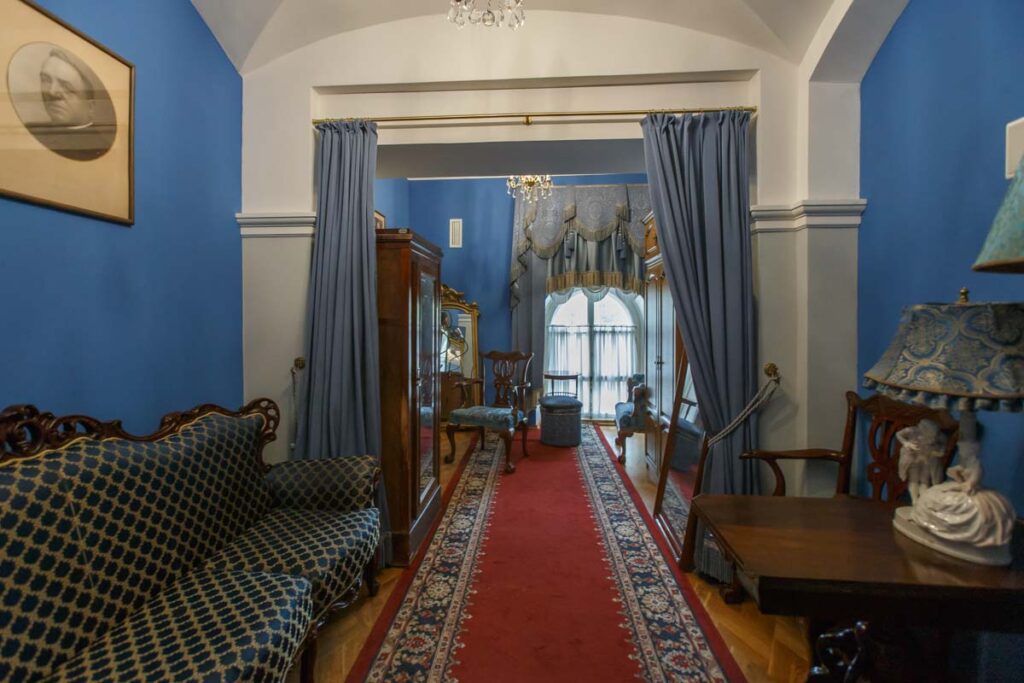
Upstairs, past a row of dressing rooms, is the women’s wardrobe, which houses costumes for current productions. There is an endless array of clothes on the racks, and yet this is only a fraction of what the theatre has kept since the 19th century. The main costume storage – the reserve wardrobe – is located on Nagatinskaya Street. Costumes in good condition that are no longer needed for the current season are sent there from all four of the Maly’s Moscow venues, as well as its one regional venue in the city of Kogalym. You can imagine the sheer scale of this grand wardrobe, considering that for almost every new production, the theatre prefers to make everything from scratch!
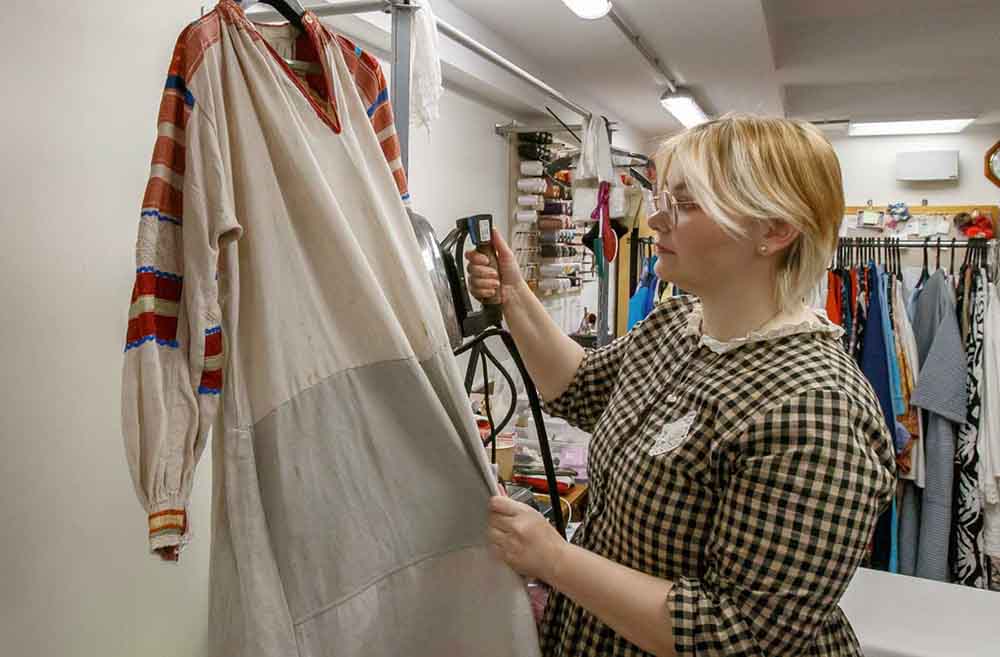
Students from the Shchepkin Theatre School, which trains new talent for the Maly Theatre, often drop by the Nagatinskaya facility. There, they select costumes from the old archives for their training productions. The reserve wardrobe also houses genuine treasures – historical costumes once worn by theatre legends. Fortunately, it has been customary since imperial times to tag each garment, noting who wore it, in which production, and in which years.
According to the theatre staff, one of the most beautiful works is the costume collection by Vyacheslav Zaitsev, which the famous Russian fashion designer created for the productions of The Queen of Spades, Masquerade, and The Youth of Louis XIV in 2013–2014. When these productions were dropped from the repertoire, almost all the costumes – right down to the dance ensemble’s outfits – were sent to the storage facility. Few designers can boast of that!
The museum exhibition in the theatre’s main building also features digital versions of masterpieces created from sketches by outstanding artists. For example, there is a green velvet costume with sequins designed by Konstantin Korovin for William Shakespeare’s tragedy Macbeth – sewn over a century ago, it is still in pristine condition. Korovin enjoyed years of fruitful collaboration with the Maly Theatre. In 1900, at the invitation of Vladimir Telyakovsky, Director of the Moscow Office of the Imperial Theatres, the first Russian impressionist was appointed as the theatre’s production designer, creating dozens of large-scale stage sets and numerous costume sketches. Unfortunately, a significant part of the artist’s theatrical legacy was lost when a fire broke out in the Maly Theatre’s scenery depot in 1914… However, many sketches for both sets and costumes survived and are now housed in the collections of the A. Bakhrushin State Central Theatre Museum.
The Russian Character
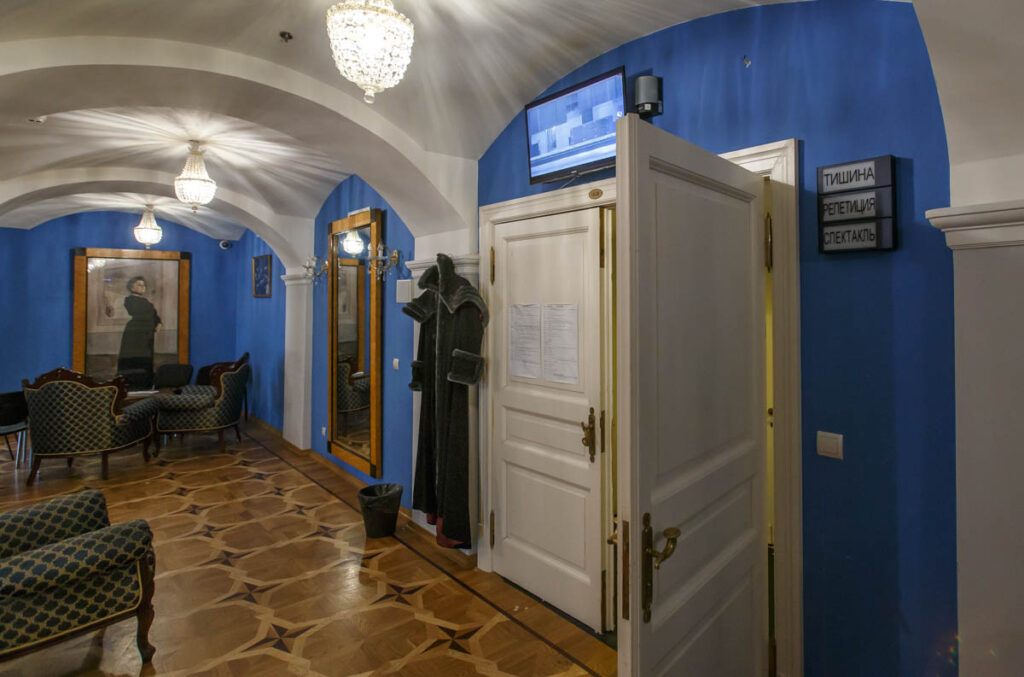
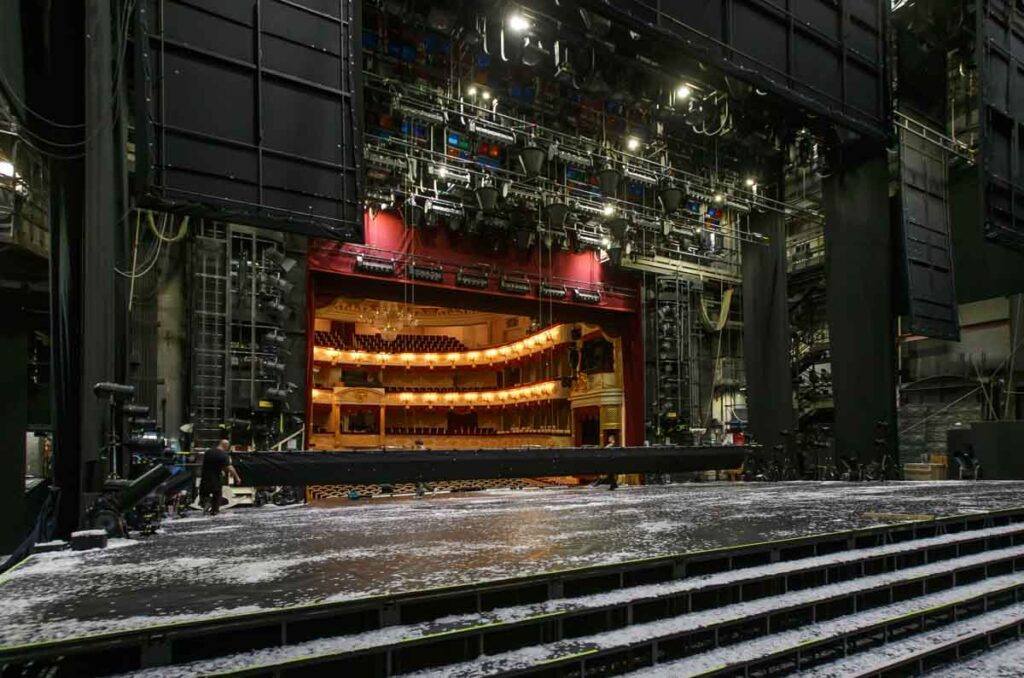
Passing through the Yermolova Foyer, decorated with a copy of the actress’s famous portrait painted by Valentin Serov, we step directly onto the main stage of the Maly Theatre. Before going out onto it, many actors cross themselves, touch their fingers to the floor, or perform some other unusual “ritual.” Perhaps the most amusing of these traditions involves Alexandr Klyukvin – the famous voice of the Rossiya TV channel. He walks up to the assistant director’s console and flips some switch. When the theatre updated its equipment, a dummy switch was installed on the console specifically for Klyukvin – one that doesn’t cue anyone to the stage or trigger any commands. Now everyone is satisfied!
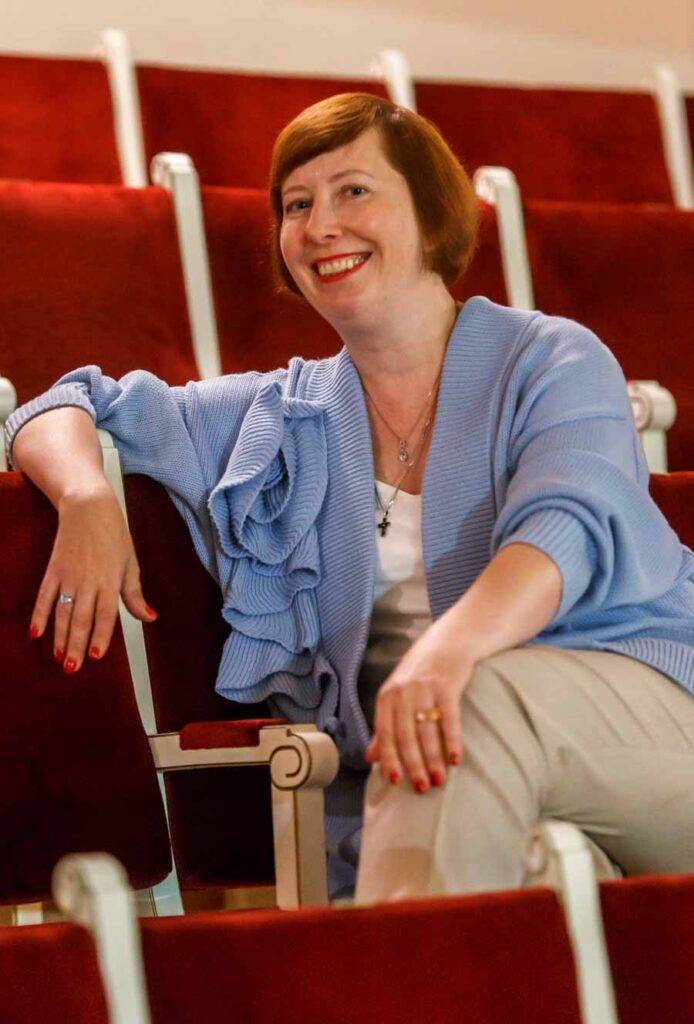
The Maly Theatre troupe currently consists of 128 people. Every year, it is joined by young graduates of the Shchepkin Theatre School. It is considered a great success if five newcomers from a single class enter the troupe, but usually, there are only three or four such lucky ones – roughly 10 percent of all students. For someone who has not studied at this famous school, getting into the troupe is practically impossible: the school itself, transferred to the Maly’s management after the revolution, was created specifically as a talent pipeline for the theatre.
The courses are led by renowned masters – leading actors of the Maly, including the theatre’s chief director, Alexei Dubrovsky. As a rule, even before the first auditions, they already have a clear idea of which actor types they need for their course. Interestingly, Yuri Solomin, who passed away in 2024 and had headed the Maly Theatre since 1988, made a point of selecting students with classic Slavic looks – anticipating that these actors would later perform in Ostrovsky’s plays.
Moreover, since 1951, the Shchepkin Theatre School has organized national studios: every year, a dedicated cohort of sponsored students is trained for the theatre troupe of a specific Russian region or even an entire country. The first such group was from Yakutia, later followed by Altai, Kyrgyz, Turkmen, Abkhazian, Korean, and many others – a total of about 40 groups have graduated. After four years of training, these national troupes return to their homelands, where they promote Russian theatre on the stages of their own cities and countries. As we were told at the Maly, thanks to this wonderful tradition, wherever the theatre now tours, its actors are welcomed like family members, because they almost always encounter Shchepkin School graduates or their students.
Towards the end of our meeting, I ask the theatre’s deputy director, Tatyana Krupennikova: is it true that the Maly never deviated from its traditions or allowed itself even a hint of rebellion, even in the most turbulent of times? Tatyana replies that during the 1990s, the theatre actually remained extremely conservative – that was the only way it could survive such a difficult period. It is only in recent years that it has begun to allow itself a little more freedom. For instance, since last year, the stage on Bolshaya Ordynka has been hosting The Secret Life of the Valkyries, a play based on a story by the blogger Slava Se, in which cultural figures find the strength to stand up to the terrifying fascist machine. The plot follows the residents of a Dutch province during the Nazi occupation who, preparing for Hitler’s arrival and lacking a professional acting troupe, attempt to stage a famous Wagner opera.
Otherwise, everything remains the same: audiences prefer classical productions they can easily understand. Anna Karenina has been playing to full houses for the second year in a row, while tickets for The Golovlyov Family – the most anticipated premiere of the season – are being snapped up fast. As always, Woe from Wit, The Government Inspector, and Ostrovsky’s plays remain popular with audiences. They are the crown jewels of Russian dramatic art and the signature productions of the Maly Theatre.
Translated by Grigory Litvinov.