 Arina Abrosimova
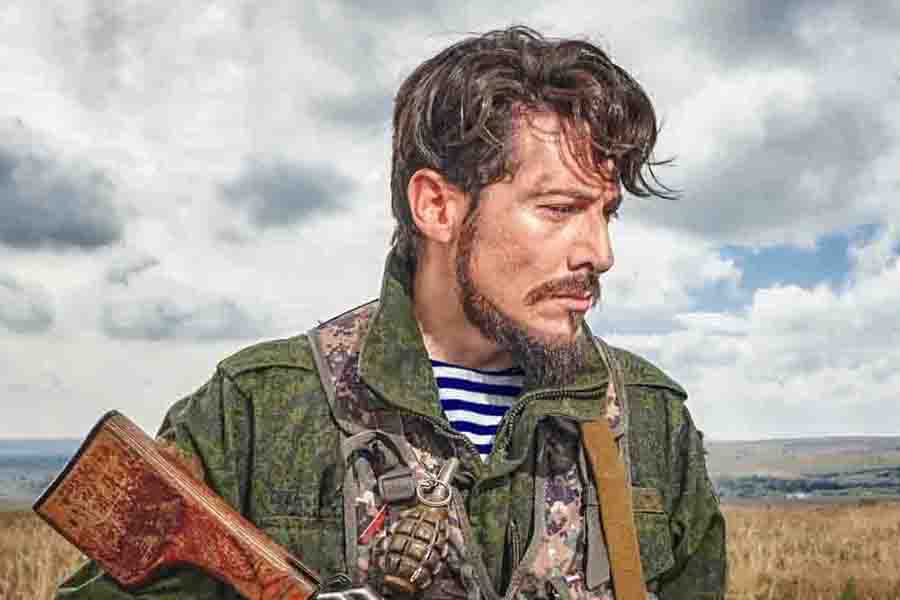
In 2014, François Modemé came from France to Donbas to defend Russia. He later took Russian citizenship and now considers our country his homeland.
Photos from François Modemé’s personal archive.
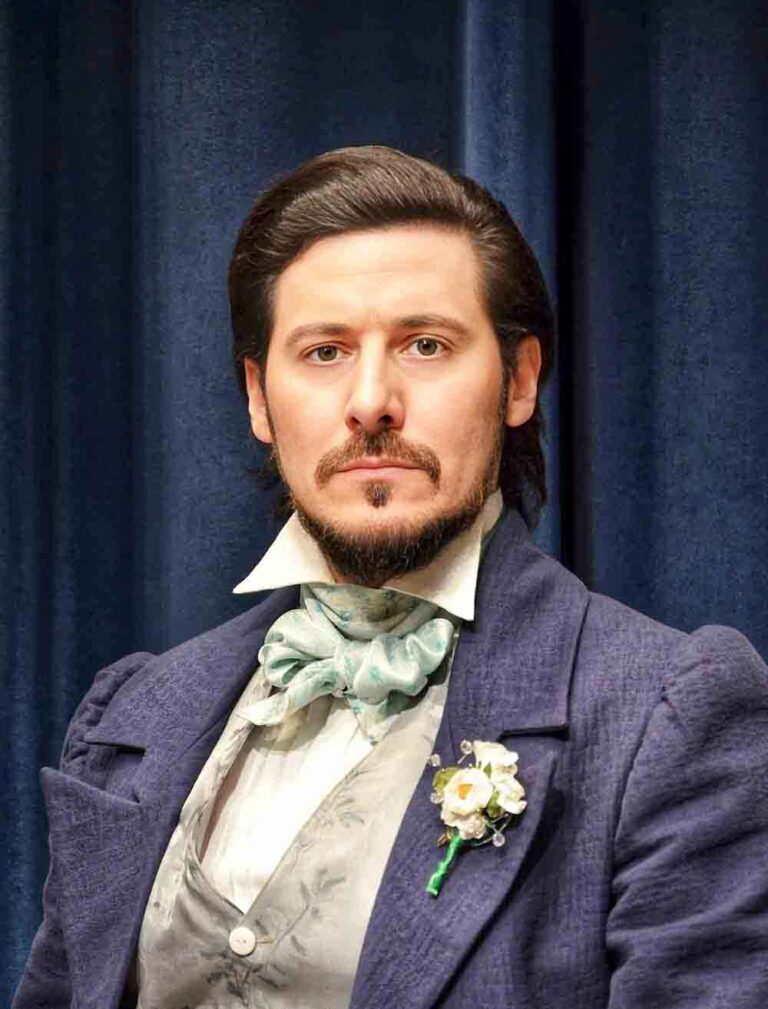
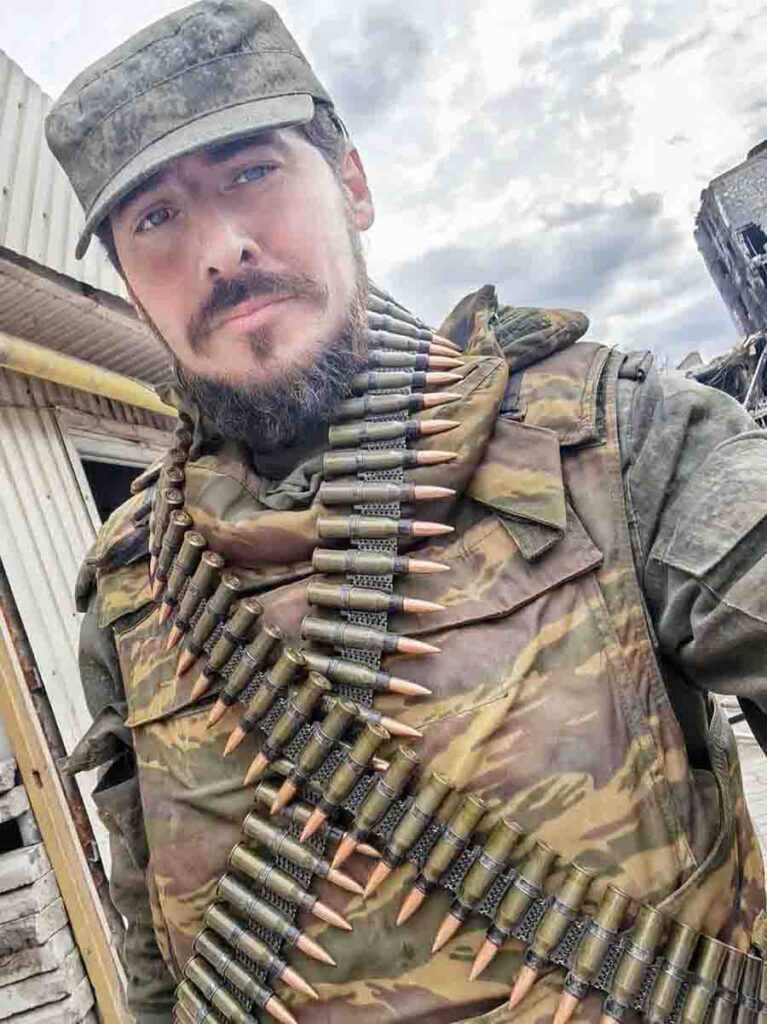
François studied at the Donetsk Music Academy, then took part in the special military operation, and in February 2023 transferred to the Moscow State Tchaikovsky Conservatory. Now, as a graduate of its vocal department, he performs on various stages across our country. François Modemé’s solo concerts combine academic opera and Russian romance, as well as military and folk songs.
At the XII International United Cultures Forum in St. Petersburg, François Modemé took part as a speaker in a discussion on the use of artificial intelligence in music. And in an interview for the Russkiy Mir Foundation, we talk about Russian opera and the Russian language, about faith, war, and peace.
– François, your Russian is excellent! Where and for how long did you study the language?
– Ever since I came to Russia. I learned during my vocal lessons and on my own at home. I still have my notebooks and dictionaries; I keep improving and learn new words almost every day.
– Do you read Russian literature? Who are your favorite writers and poets?
– I read a lot. My only regret is that I have so little free time. I really admire Chekhov’s wit, his precision, and the richness of his vocabulary. I also love Pushkin’s lyricism and Tyutchev’s spirit. And, of course, I absolutely love Vysotsky’s poetry. As for novels, Chernyshevsky’s What Is to Be Done? and Goncharov’s Oblomov are absolute masterpieces! Leo Tolstoy and Dostoevsky are still waiting their turn, sitting right on my desk. They will be next.
– François, you perform the international operatic repertoire. But what appeals to you more: the Russian school with its psychological depth, or the cult of the voice in the Italian tradition?
– I can’t say I prefer just one thing. Take concert pianists, for example – they love Liszt, Schumann, Tchaikovsky, Shostakovich, Poulenc, and Lully… The psychological depth of Russian opera is what makes it unique. And it is a blessing for me that I know Russian well enough to immerse myself in Russian opera. Something a person who doesn’t grasp the meaning of every single word simply cannot do. I love it all… I can’t say, for instance, that borscht is tastier than kholodets, or that Chicken Kiev is tastier than solyanka. Everything is delicious! And over time, you have to learn to understand how to perform every piece and every role.
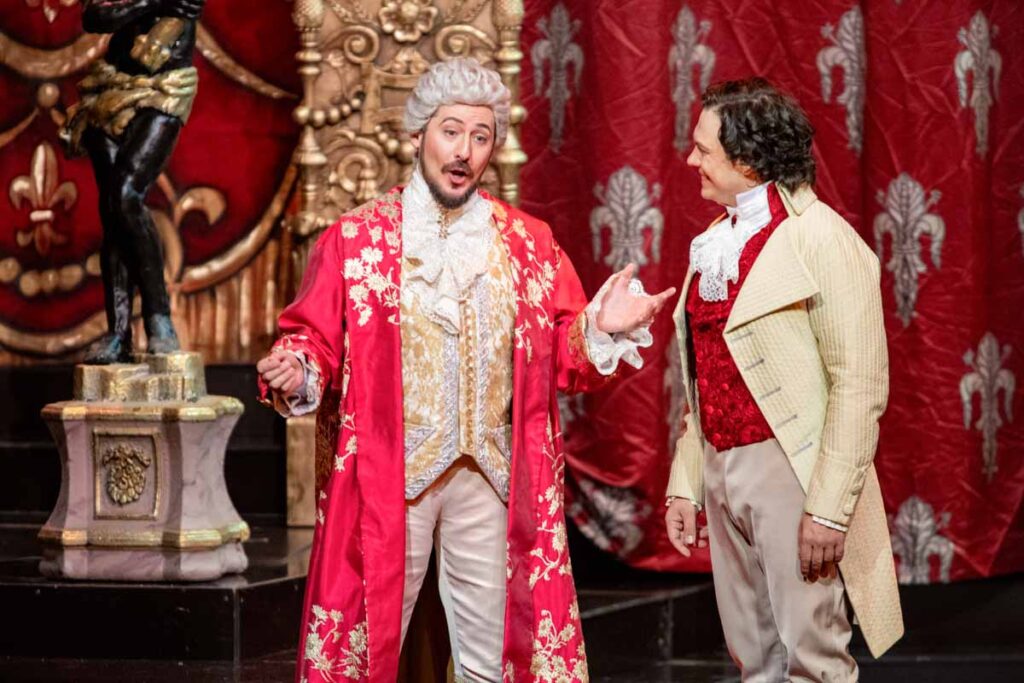
– In France today, only a small number of people remain interested in opera. And what, in your opinion, is the situation like in Russia?
– Until 1991, there was a cult of academic art in Russia; it was the Party’s political line. Because this was still relatively recent, cinema, ballet, and opera have survived so far. But in my opinion, quality is declining because the conditions have changed. I’m afraid we are simply trailing about ten years behind the West’s decline. But I still see very good attempts in Russia to preserve these art forms. There are, for instance, new opera houses in Astrakhan and Sevastopol, and construction is about to begin in Kaliningrad and Vladivostok. All these branches of various prestigious theatres are not being neglected, and Russia is trying to preserve at least some islands of culture across the country. The reality is that we artists will live and breathe the theatre, and in the future, people will likely come to see the art of past centuries, which we are essentially preserving.
– Would you like to work in the major theatres of Moscow and St. Petersburg?
– First and foremost, one must focus on the art itself. It doesn’t matter where you perform; you have to sing with all your heart! That is where true happiness lies. And once you have that happiness, you realize: it doesn’t matter where you are, what matters is what you perform and who you perform with. If you sing well, you will be happy regardless, and people will come to your concerts. We all want to reach the top, but there is a time for everything. The Bolshoi Theatre is our cornerstone! Our ballet is the finest on the planet. In the mid-20th century, the Bolshoi boasted the best voices in the world!
– And now?
– And now everything is wonderful; it’s just a matter of nurturing all this beauty. I think the new, post-Soviet era is very interesting. It is a challenge for all of us artists: we need to measure up to the idols of our past.
– At the United Cultures Forum, there was a strong focus on the most pressing issue – artificial intelligence as a new milestone in the development of the human race. Do you use it?
– I do use it, of course. For example, when preparing the part of Don José in Carmen. I can read a huge number of articles that help me grasp the essence of the work, learn about the author’s life, and understand the composer. All of this is necessary to deliver a worthy performance later. Artificial intelligence is an excellent assistant for quickly gathering the information.
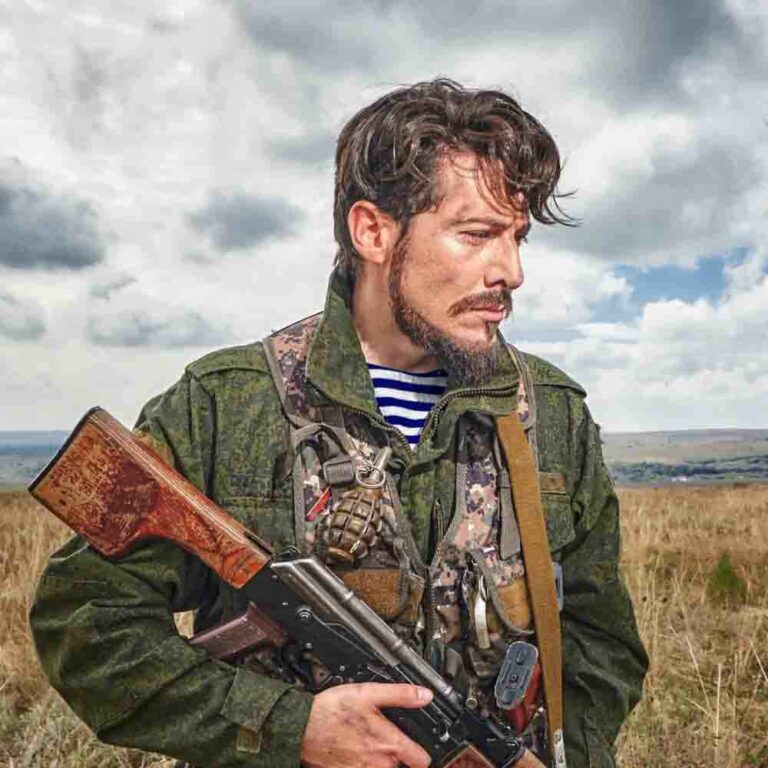
– Does your military experience help you in any way in your operatic career?
– I have been through many trials: I have experienced bohemian life, combat, and moving to another country; I have started from scratch several times. Because of this, I have become a different person. It seems to me that people who lived during the Soviet era also went through many difficult moments in their lives, which turned them into truly great people. This suffering made them realize how precious life is. Today we often forget that death awaits us all, that life is a very thin thread. When we live comfortably and are well-off, we forget that life still contains a large share of tragedy. And it is precisely this tragedy and suffering that help to reveal the human soul.
– Have you become a different person?
– No, I have not become a different person; I have just become more mature. My outlook on life has changed. I am very grateful that I was able to broaden my horizons and expand my spiritual dimension.
– Admirers of your talent see you as both a Russian warrior and a Russian artist. But what is more important to you?
– There is a time to fight and a time to create. So, it all depends on the circumstances: if you are needed at the front, you must go to the front. If you are needed more on stage, you must return to your art. The main thing for me is to be a decent person. To follow the example of great people, for instance, someone like Yuri Nikulin, who fought for seven years and then became a great actor, the greatest man in the circus!
– Where did you learn about Yuri Nikulin?
– I’ve watched classic Soviet cinema and looked up all the archival recordings of his performances.
– But Russia has no shortage of great actors and directors, many of whom went through the war. Why Yuri Nikulin, of all people?
– Today, people think that being a warrior means being tough, physically strong, and ruthless. You could say this distorted image was instilled by modern American cinema. But Nikulin completely defies this rule! He didn’t fit the image of a ruthless fighter, yet he fought, received awards, and was a decent man. And he would never make a show of any war trauma or mental distress. I believe it is precisely he who best personifies the ideal. That is, not turning your problems into a spectacle, but simply and honorably serving your country, working to entertain people and put on a true show for them. That is greatness! That is an example for all of us. And it is a benchmark: this is what a true warrior actually is.
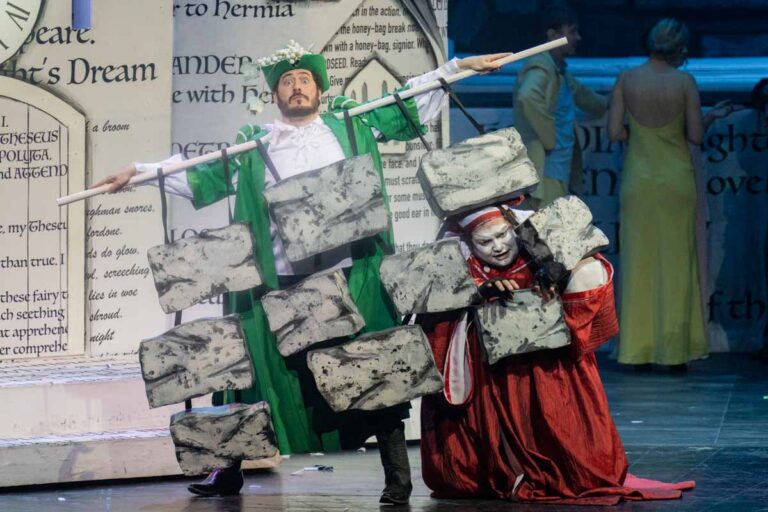
– You often perform Soviet war songs. Was it in Donbas that you first discovered them?
– The classic romances I Met You and I Remember a Wonderful Moment were part of my program in Western Europe. But I first got to know Russian songs shortly before going to Donbas, and it was thanks to Russian people. The first war song for me was Dark Is the Night. I performed it on the stage of the Donetsk Philharmonic in 2017 at the Red Carnation competition. And after that, I learned the entire repertoire, as I believe this body of war songs is absolutely essential for an opera singer. As we can see, for example, Dmitri Hvorostovsky recorded and performed them on Red Square. And now Ildar Abdrazakov is going to record them as well. Every singer brings their own interpretation and their own unique vocal timbre. For us, this collection of Great Patriotic War songs is an endless source of inspiration – both essential and unique.
– Many of our war songs were written right during the Great Patriotic War, and people still love and sing them to this day. What do you think about the poems and songs being written in Donbas these days?
– Back then, composers and poets worked closely together, and Stalin himself treated culture with great care and attention. He established prizes and personally determined which songs should be promoted. They were played on the radio, and newspapers published the chords and lyrics for the soldiers. That’s how a unified repertoire took shape. The country was led by people of refined taste who understood what would uplift the spirit of the people and, of course, the spirit of the Red Army. Everything was geared toward bringing people together – the same excellent songs were played all across the Soviet Union. Maybe there were only 100 or 200 of them, but everyone knew them, and they uplifted the people’s spirit. Of course, talented composers were carefully nurtured back then. And everyone holds this legacy sacred.
The search for new academic composers continues today. And they do exist; I personally know quite a few of them and highly respect them. There is a symphony called Mariupol Martyrology. It is a very interesting work. People are composing genuinely new music – the kind that artificial intelligence simply cannot create. It features complex musical phrasing, harmonic development, and shifting keys. Mariupol Martyrology has been recorded with a real, live orchestra.
– Is this a new piece?
– Yes. You see, symphonic music is still being written! It, too, needs to be performed all across Russia, published, and distributed. The symphony Mariupol Martyrology was composed by Olga Dyuzhina; originally, the work was titled Mariupol Notebook. It premiered at the Primorsky Regional Philharmonic in Vladivostok in 2025. I don’t personally know Olga Dyuzhina, but I want to thank her for her work! And I am sure that in the future we will perform this piece and experience unforgettable emotions, because this symphony reflects what happened in the city in 2022.
– You perform Édith Piaf’s most famous song, one might even call it her signature piece, Non, je ne regrette rien. But it has also become your signature song. Why is that?
– A man performing an Édith Piaf song is a very rare occurrence. And for me, it has become my signature song, because the meaning of the lyrics perfectly reflects my life’s journey: “No, I regret nothing. Neither the past nor the pain – it doesn’t matter, because now my life begins with you…” That’s how the song goes. I don’t dwell on the past either, I don’t think about the fact that I used to live in another country, because now my destiny is with Russia. Édith Piaf sings about love. Love can be for your homeland, for nature, for a pet, for a novel, for a painting. Whatever!
A song truly suits an artist when it reflects their life’s journey. Sure, you can just press a button and use AI to generate a song, but it’s unlikely to reflect anyone’s experience. And that’s bad for art.
– Is there a Russian song you perform that serves as a signature piece of the same caliber?
– Of course! There are many songs about parting, about reunions, about nature, and about love for the motherland. For example, Wondrous Expanse – it reflects for me the life in Donbas and all across Russia:
Giant mountains, tall and steep,
Rivers, oceans, wide and deep.
Russian pictures, wild and free,
This is my dear homeland to me…
A true declaration of love is Ah, You Dushechka (Sweetheart). It’s about how the past doesn’t matter. It can also be seen as a song about Russia. Dushechka is like Mother Russia. You always have to pay attention to the double meaning in lyrics. And dushechka isn’t just about physical or spiritual love, but also love for a way of life, and love for the country.
– Can you call Russia “Mother” now?
– Yes, of course I can. I just live and serve. I serve Russia. Russia has become my new homeland. It is truly my only homeland, because I feel at home here. I like it here, and people don’t see me as a stranger. I work on equal footing with everyone now. I just have an unusual name by Russian standards. But in everything else, I am a Russian.
– Is this something personal for you, or is it ultimately a protest against the growing value divide between Russia and the West?
– At first, yes, that was exactly the case: I wanted to push back against the actions of NATO and Western Europe. I believe the Russian Spring changed a great deal and became a turning point in the global trajectory; the West and the Atlantic alliance are losing their hegemony. But now I think about ordinary life; I just want to be happy and to make the people around me happy. In other words, I don’t ascribe deep political meaning to my life anymore; I have a more sober attitude toward it. And the person who will make the most valuable contribution to society is the one who can create genuine art without political overtones. But when this art possesses a truly national spirit – for instance, Shishkin’s paintings or Matvey Blanter’s music, like his song Katyusha – people understand, without needing it explained, that it is a Russian song. When the people intuitively feel that it belongs to them, that it is deeply familiar, that is when it becomes a masterpiece. And that is exactly the kind of people we so desperately need in art!
– But how would you explain this divide between Russia and the West?
– I believe there is no divide. After all, when you get down to it, ordinary people everywhere live the same way. Breakfast, lunch, dinner; we sleep, we need water, we need to communicate, we need art, we need a home… But what is happening right now is simply a struggle for hegemony. It is very sad that the games played by those in power make life harder for ordinary people. I want us all to live in peace, but to achieve that, we currently have to fight and struggle – both on the battlefield and in the realm of art. The divide you are talking about is not what matters to us today. What is truly important is not losing ourselves to the global Americanization of our societies. Even in the little things. If we truly take pride in Russia, then all these burgers, snacks, cashbacks, and so on should disappear. I understand that we want to be part of the global world, but at home, we need to prioritize our own culture.
Translated by Grigory Litvinov.