 Arina Abrosimova
 Photos by Alexander Bury
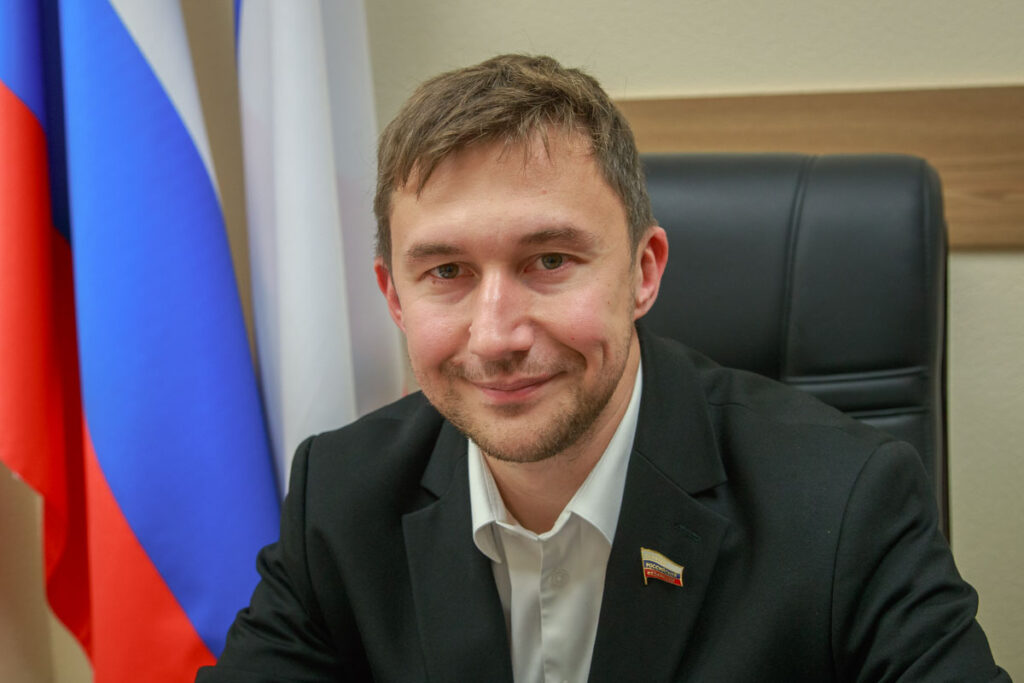
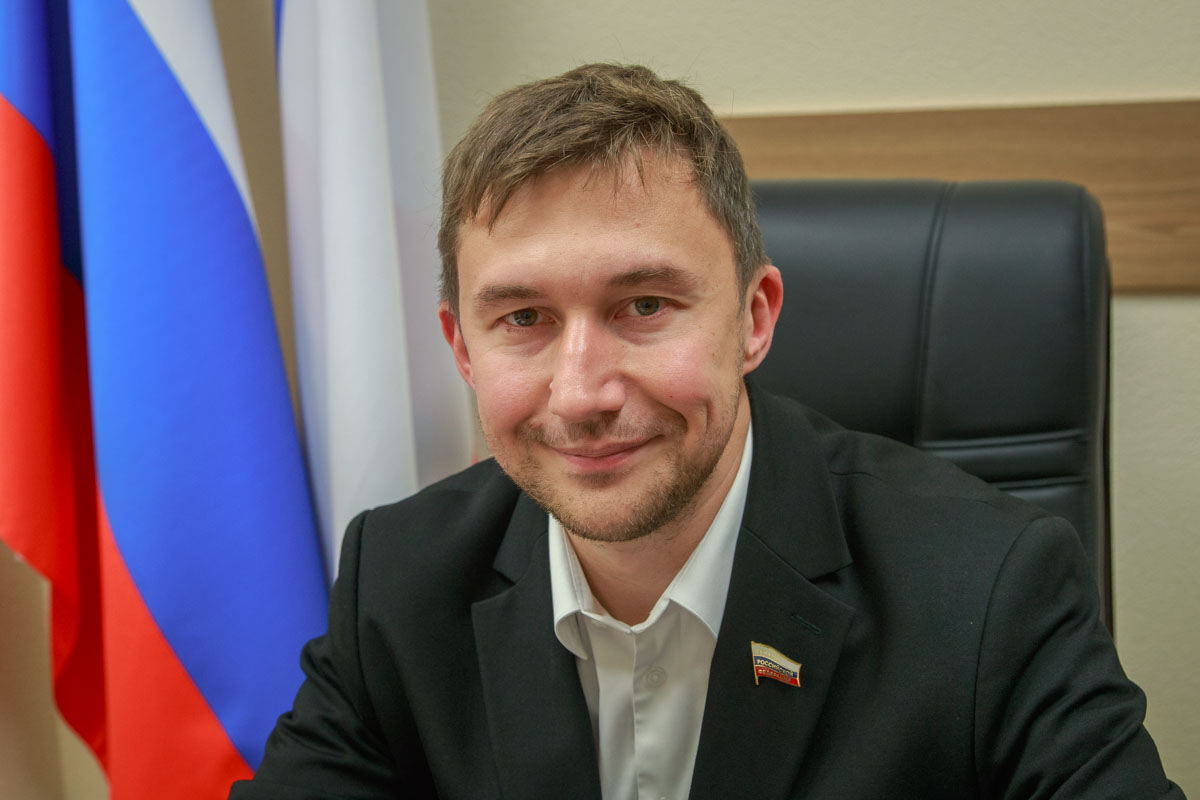
At just over 12, Sergey Karjakin became the youngest grandmaster in the history of chess; at 22, world champion in rapid; at 26, in blitz. Now he has traded his chair at the chessboard for a senator’s seat and temporarily left the sports rankings behind.
– In ancient times, chess was considered the art of the wise; today it is just one of the sports. What is chess for you? Which is more appealing – to be an athlete or a sage?
– I think chess is a multifaceted game. It comes in different formats. There are three standard categories: blitz, rapid, and classical. What sets them apart is the time control. In blitz, each player usually gets three or five minutes per game – sometimes with a little extra time. Rapid is usually 15 minutes per game. And in classical chess, a game can last for hours.
– In which of these formats have you achieved your best results?
– I’ve had success in different formats… To get back to your question, I’d say: when it comes to blitz, it’s definitely a sport – you have to make decisions instantly, adapt quickly to a changing situation, and stay one step ahead of your opponent. You can’t calculate everything in advance, so sometimes moves in blitz are made intuitively, but you have to decide fast. Classical chess, on the other hand, is truly an art! It’s like going to a performance at the Bolshoi Theatre, for example. It’s incredibly interesting! Let’s put it this way: not everything may be clear to observers during the game, but if you understand chess, you can appreciate a game on a very deep level. Overall, chess is a truly fascinating game. I think that’s exactly what drew me in years ago.
– There’s another view of chess: it’s a battle, but not with fists or weapons. It’s a clash of minds – a fundamentally different kind of contest, a more humane one.
– Yes! Well, of course, chess is not war. It’s a fair contest of minds. In that sense, chess can be considered a universal, highly engaging, and rather complex sport. But the most interesting thing is that absolutely anyone can learn to play chess. In my view, it’s a wonderful sport.
– Have you ever done any other sports?
– I have started discovering new sports, and I do them now. My youngest son plays hockey professionally. I gave it a try too – I’ve had a few training sessions and started playing. I’ve also had a few boxing sessions. You see, I believe a person should always push themselves. After all, we all have our strengths and weaknesses. I never used to be drawn to these sports, and to be honest, I’m still not. But I want to push myself and learn to play hockey and box, at least at the most basic level. Naturally, as an amateur.
– As a chess player, you can calculate moves and even entire games in advance and anticipate your opponent’s strategy. Does this skill help you in everyday life? How easily do you adapt to unfamiliar surroundings and to dealing with other people, especially when you have to stand your ground?
– Chess teaches you never to take what you’re told at face value, to always double-check, to question other people’s words and actions. And above all, to think for yourself. To analyse. I believe chess is a good choice for anyone. And especially for children. After all, chess builds logical thinking, which will definitely come in handy in life. In any situation.
– You often say that patriotism should be instilled in children and teenagers. But how? Do you have a recipe? After all, you grew up in the Soviet Union, where patriotic feeling was cultivated through children’s and youth organisations – the Little Octobrists, the Pioneers, the Komsomol. And now we have to come up with new methods from scratch…
– By the time I became a conscious teenager, the Soviet Union had already ceased to exist. So, the main role in my upbringing in the appropriate traditions and spirit was, of course, played by my parents. And, naturally, my grandparents. For example, my grandfather, Ivan Gerasimovich Karjakin, went through the Great Patriotic War. He had a lot of awards, orders, and medals. Talking with my grandfather and listening to his stories and memories, I was absorbing something essential and priceless. So, I can say that my path in life will always be linked to my country.
As for instilling patriotism in the younger generation, that is, of course, a crucial state task. A great deal is being done in this area today, but the most important thing is that this education not be artificially imposed on children. It’s important that children understand that being with your country is self-evident, inherent, and understandable. You only have to look at today’s Ukraine to grasp a simple truth: if you forget your roots, if you forget who you are and where you come from, if you don’t remember your past – your grandfathers and great-grandfathers – then nothing good will come of it. There will always be forces around your country ready to bring chaos, strife, and war to your land. Sadly, that is the case. So you definitely have to be with Russia!
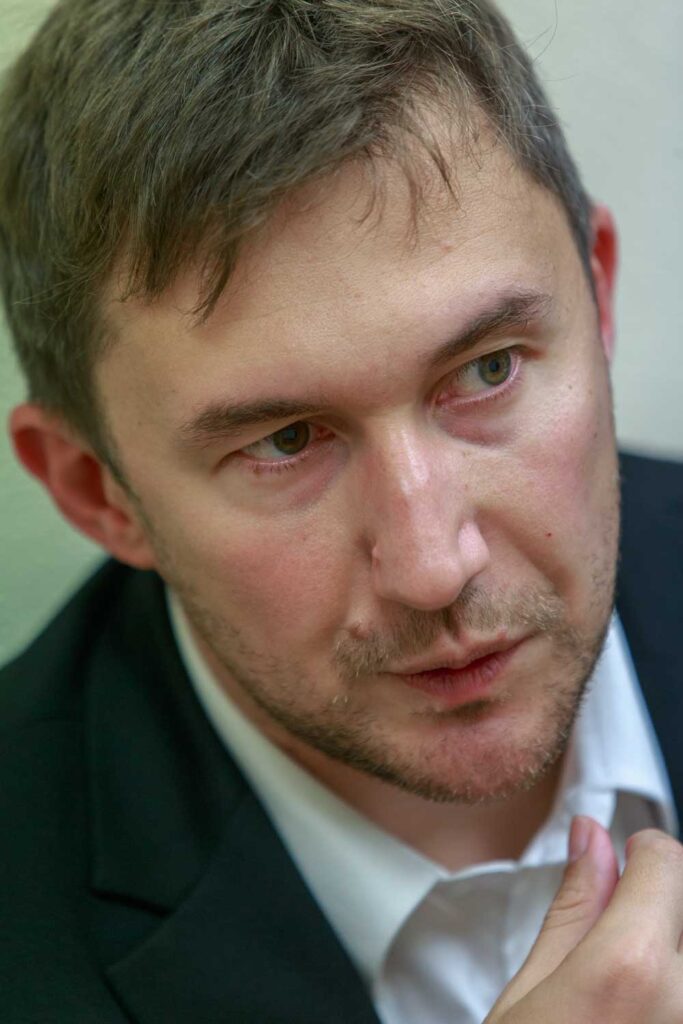
– You grew up at the chessboard from childhood; training took up almost all your free time, and you had little contact with people. Now you have a great deal of interaction. How long have you been in politics? Is it hard being a Senator?
– I’ve been a senator for about two years. Before that, starting in 2017, I served several times as a member of the Civic Chamber.
I’d say that after my match with the Norwegian Magnus Carlsen, I gained quite a bit of recognition. The thing is, the match was shown on TV – there was very good coverage of the event overall. I’m grateful to all the media that covered our match back then… By the way, there was a real stir at the time, and a lot of children came to join chess clubs. After that match, at the invitation of Russian President Vladimir Putin, I became a member of the Civic Chamber. I was re-elected several times. And now, for about two years now, I’ve been representing my native Crimea in the Federation Council.
There’s nothing to hide here. Until 2022, I was a professional athlete, constantly travelling to competitions and taking part in international tournaments in various countries. But when the special military operation began, everything changed in an instant. I supported the operation from the very first day – or rather, from the very first hours. And after that, for me everything was divided into a before and an after. In sport, I was disqualified because of my position. And for no other reason – there were no other grounds for disqualification. Which meant that trips to tournaments in the US or Europe simply became impossible for me.
And I realised I could no longer pursue a career as a professional athlete. I started actively helping the front, making many trips to the frontline to deliver aid — work that continues to this day — and hand-delivering everything the soldiers need. Of course, I also visited my native Crimea, where I talked with the head of the republic, Sergey Aksyonov. That was when we came up with the idea of my representing Crimea in the Federation Council. For me, that is a great honour and a great responsibility. I agreed, and I try to do everything in my power so as not to let Crimea down.
Of course, it was hard at first, and much was unclear, because for me, working in the Federation Council is a completely different kind of work, an entirely new area. In chess, everything is pretty clear: there are tournaments, there are results – you win, you lose, or it’s a draw. In politics, let’s say, things are less definite; besides black and white, there are many shades of grey. So at first I needed some time to adapt… But on the other hand, I always believed and still baelieve that if you do everything in your power, make an effort, try to create something, to bring meaningful projects to life, the result will eventually come.
– What problems do the people you represent most often come to you with?
– Almost always social issues. For example, benefits for participants in the special military operation. Both volunteers and professional soldiers come to us. We always follow up on every issue people bring to us. Fortunately, I have a very good team. We also work closely with the Crimean authorities and with the Crimean branch of the Defenders of the Fatherland foundation. So, we resolve everything we can; people almost always get the support they need, and no one is left without attention. Of course, there are also problems that simply cannot be solved…
– You have made repeated trips to the special military operation zone with humanitarian missions and, what’s more, organised chess tournaments there. As I understand it, so that people could at least briefly forget about the stress and tension… Is it a call of the soul for you, or a duty?
– Yes, I used to go to the special military operation zone all the time; now my representatives are often there. They are decent, trusted people. The thing is, the situation has changed: a senator can’t just go to the frontline, because he becomes an obvious target, and as a result other people may get hurt as well. That’s why there is a ban on senators visiting the combat zone. But I continue to help people in the liberated territories and resolve social issues. Besides that, we are opening chess schools and clubs. Over the past two years, we have opened chess schools in Luhansk and Donetsk; in some cases we had to do it online. One of our chess schools was opened online by President Putin, for which I am very grateful to him. We are now planning to open schools in Mariupol and several other cities. We do not neglect the new regions and will certainly continue our work.
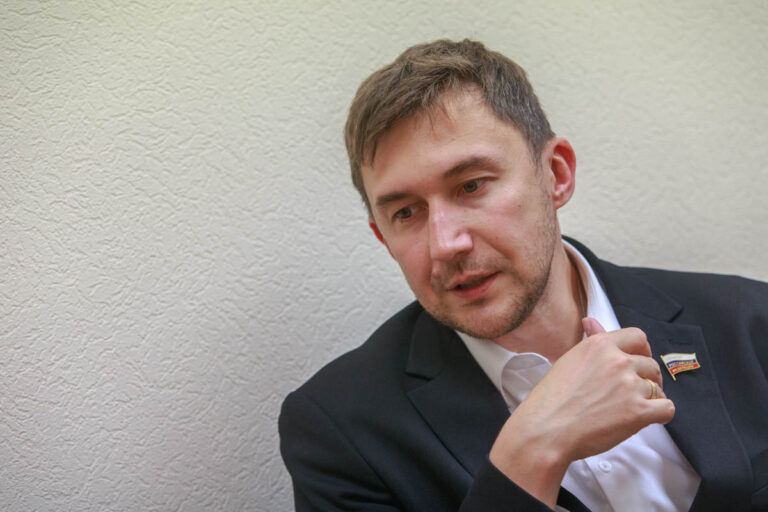
– You say chess shouldn’t be mixed with politics, but as it turned out, all sport has become totally dependent on international politics. It’s a strange situation, of course. It’s even unclear how to prove that all of this is absurd.
– Well, yes, you have to prove that you’re not the bad guy, so to say. But if you try to assess the situation objectively, you have to admit that all Russian sport has been suffering since 2014. All this time we’ve faced harassment and various sanctions in many sports. Until a certain point, chess remained somewhat on the sidelines. But over the past two years, Russian chess has also come under all sorts of sanctions. For example, for the third time our team has not been allowed to take part in the World Chess Olympiad, which, frankly speaking, discredits not the Russian chess players but those who made this decision. How can any major chess tournament be held without the Russian team, which is one of the strongest in the world? It’s a pity that this is happening. I’m sure chess, like any other sport, should unite people, not divide them. Alas, this fairly obvious idea does not resonate with those who make unjust decisions.
– The idea that chess should unite people rather than divide them is obvious. But isn’t it naive today, in this age of cynicism and widespread betrayal?
– Unfortunately, yes. Right now, we are seeing the opposite trend: under any pretext they try to prevent us from competing, to disqualify us. There are open Russophobes in the leadership of the International Chess Federation (FIDE). FIDE CEO Emil Sutovsky has himself admitted that he was the one who initiated my disqualification, as well as the disqualification of the Russian national team. I think he was also among those who initiated the suspension of Vladimir Kramnik from tournaments (in July 2026, the FIDE Ethics and Disciplinary Commission suspended Vladimir Kramnik from participating in FIDE-sanctioned tournaments for two years, with one year suspended. The reason was his public accusations that other chess players deliberately used prohibited methods and technical means to gain an advantage in a game. He retains the title of 14th world champion. – Author’s note.). All this shows that anti-Russian forces have no scruples.
Back in 2022, when I was disqualified, I proposed creating alternative chess federations so that we would have more room for manoeuvre. If they don’t want us in one organisation, we can create another ourselves. Unfortunately, so far there is no such way out of this difficult situation for Russian chess players. But in any case, we will return to chess. Let’s hope that some changes will happen after all. The FIDE presidential election will be held at the end of September. So, changes are coming. We’ll see what course the new leadership of the federation takes, and then we’ll draw our conclusions.
– You’ve been under sanctions for several years now. And presumably this leaves a mark on your life in general, not just on your sports career. Is this the price you have to pay for your position – especially when everyone in the West talks about democracy, tolerance, freedom of speech, and so on…?
– If you have convictions, you have to stand up for them. And be willing to suffer for them. Otherwise, they’re just words. If you stay with your country, publicly take a position, and refuse to compromise, then you come under sanctions, under pressure… First I was, so to speak, under chess sanctions, now I’m under EU sanctions. On the one hand, I can’t travel to European countries or some others. On the other hand, our country is so vast! You’d have to try really hard if you want to see all the interesting places. So, the sanctions don’t cause me any discomfort. I’d rather have it this way than not have spoken out. I would never have forgiven myself…
– But what about those chess players who left after the special military operation began? On the one hand, a person has devoted their whole life to perfecting their game. On the other hand, suddenly a situation arises where they have to choose: the opportunity to play on the international stage, or losing it. Alas, some make the wrong choice. So it turns out that for the sake of the game, a person sacrifices “love for the graves of their fathers,” the memory of their ancestors, and leaves. You said you can’t condemn these people simply because the federation has not done everything it could to keep them. But surely it’s still a personal choice?
– Of course, it’s a personal choice. But that’s not quite what I was talking about. I said I can’t condemn those who go to international competitions and play in tournaments under a neutral flag. Surely, you’ll agree that’s a different matter. As for those who move to other countries and compete under a foreign flag… I am strictly against that. I believe it’s simply unacceptable. I avoid words like “condemnation,” but of course I am categorically opposed to changing sporting nationality, because you have to be with your country in any situation! Yes, there can be internal contradictions. I don’t hide the fact that I also had contradictions with the Russian Chess Federation. But at the same time, to go somewhere and compete for another country – that never even crossed my mind! On this issue my position is unambiguous.
And honestly, I look at the guys who left and I don’t understand them. In my view, such a betrayal was not worth it at all. Take Nikita Vitiugov, for example – a strong grandmaster, we played together for the Russian national team. He left and started playing for Great Britain. He headed their team, and a few years later he quit chess – at least, I saw his statement in the press. But why would he even do it in the first place? Why leave? Why play for a country that is our geopolitical adversary? Honestly, I just don’t get it.

– In Vladimir Nabokov’s novel The Luzhin Defense, the protagonist, living in a world of chess and oblivious to what is happening around him, believes that life is playing a game with him and that he must build a defense. But nothing works out for him, and it all ends tragically…
– One could say: man proposes, God disposes… If you had interviewed me in early February 2022, when I had just returned from the Netherlands after another international tournament, I was up against the best chess player in the world and at the same time continuing my preparations for the Candidates Tournament – for a possible place in the World Championship match. I saw myself exclusively as a professional chess player. But in late February 2022, I realized that life for me, as for all of us, had changed very dramatically. So, the most important thing is to hold on to God, and everything will be fine.
– Do you feel that you have, so to speak, picked up the baton from one of our great chess players? And if so, who is it?
– We have always had many strong chess players; the competition is quite stiff. I see myself as a follower of Anatoly Karpov, the great 12th world champion, who opened many chess schools and did a great deal for the development of chess in our country. We have kept in constant touch for many years. And before my World Championship match with Magnus Carlsen, Anatoly Karpov gave me useful advice. I am grateful to him for his mentorship.
I’m very pleased that just recently the final of the Sergey Karjakin Cup took place in Krasnogorsk, with about three and a half thousand people taking part in one way or another. Anatoly Karpov was our guest of honour. We watched the film The World Champion on an open-air screen – it tells the story of the famous Karpov–Korchnoi match. And afterwards Anatoly Karpov answered children’s questions. Of course, for the kids it was an unforgettable experience.
– Have you ever played chess with Anatoly Karpov?
– Of course I have, many times! And the results varied. Usually, when I played with him, at first, I felt that things were going well for me. But at some point, his champion’s instincts would kick in – and the match would become very, very difficult!
– There’s Russian roulette, Russian billiards, Russian poker. Is there a Russian style of playing chess?
– There is the Soviet chess school, which later became the Russian school. It is one of the strongest in the world. The thing is, competition in world chess is very tough right now, and to stay afloat we need not just to maintain the skills we’ve accumulated, but to increase our efforts to remain among the strongest. And most importantly, to nurture a new young generation that will replace today’s leading Russian chess players.
Translated by Grigory Litvinov.