 Arina Abrosimova
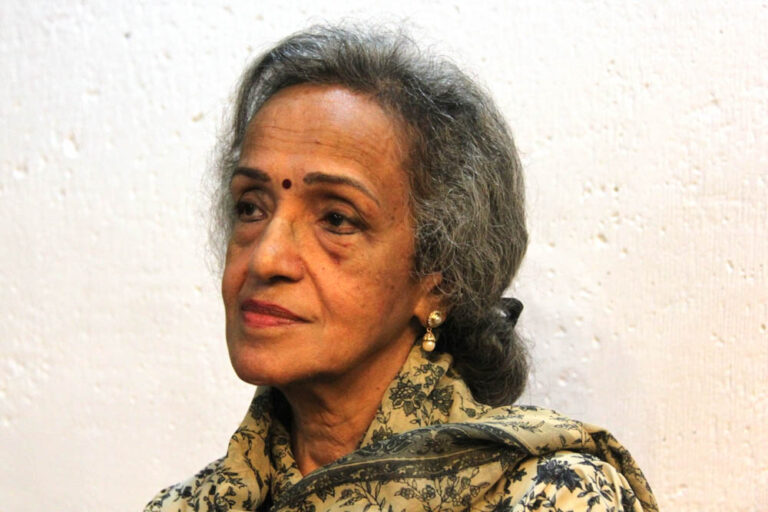
The renowned Indian writer Achala Moulik is the author of more than 35 books, among them Silhouettes of Russian Literature: From Pushkin to Yevtushenko, The Russian Revolution — Storms Across a Century, 1917–2017, A Hundred Years of Lev Tolstoy and the Indian Connection, and the play Pushkin’s Last Poem. For her contribution to the study and promotion of Russian culture and literature in India, Moulik was awarded the Pushkin Medal and the Sergei Yesenin International Literary Prize “Oh, Rus, Wave Your Wings.”
Achala Moulik’s new book, The Thousand Year War: Russia and the West, was published in 2025, and this autumn the AST publishing house will release it in Russian. Despite her busy schedule, the writer agreed to give an exclusive interview to the Russkiy Mir Foundation.
– Achala, you were still a young girl when you took on the complex analytical work Silhouettes of Russian Literature: From Pushkin to Yevtushenko. Half a century has passed since then. Has your opinion of Russian literature changed?
– Yes, that book was written fifty years ago, but over the years my opinion of Russian literature has not changed. I am still inspired by Russia. And I want to tell you about another book of mine, one that is very important to me. It was published in 2009, when Russia was marking the Year of India. It is Dialogue of Civilizations: William Jones and the Orientalists. I wrote it together with my husband, Mohandas Moses. Our work is partly devoted to the British orientalist William Jones, who stood at the origins of the European study of India’s cultural heritage. But the connection between our book and Russia is quite specific. The thing is, a significant part of it is devoted to the development of Russian Oriental studies – Indology as a phenomenon in its own right, in many ways different from the Western European understanding of our culture. Russian Indology followed a different path from its Western European counterpart — one marked by interest in and sympathy for the Indian people, who were under foreign oppression.
– Tell us more about the book.
– This book was the first major work in which I, together with my husband, explored a fascinating theme: Russia and India as two civilizations capable of dialogue without confrontation. I think it was from here that my later works grew – on Tolstoy and Gandhi, on the Russian Revolution, and on The Thousand Year War… For me, Russia is a country that has always looked at India differently from the West: not as an object of colonial conquest, but as an equal ancient culture commanding respect and sympathy. Russian Oriental studies had a fundamentally different tone from the outset – one marked by genuine sympathy for ancient Indian civilization. While British Indology took shape within a colonial empire, Russian Indology developed in a country that had no colonies in India, no sense of “white race” superiority, no attempts to humiliate and suppress our national dignity. So, 2009 is not just the publication date of our book. It is the point where my early interest in Russian literature merged with a broader interest in Russia as a special partner in dialogue for India.
– You wrote the play Pushkin’s Last Poem, which was staged in Moscow and St Petersburg. Was it staged in India as well?
– Oh yes! In Delhi we had a full house for three premiere evenings! You see, everyone in India knows Tolstoy, Dostoevsky, Chekhov, but very few people know Pushkin. It started when I was looking for a publisher to bring out this small play – just 60 pages. When I went to one publisher, he asked: “Who even knows Pushkin? Who is interested in him?” I replied: “Many people are interested. Maybe you are too?” Then, with the help of the National Book Trust of India, my play was published and became a bestseller; it has already gone into a third edition. Today it is part of the curriculum in schools and colleges in India.
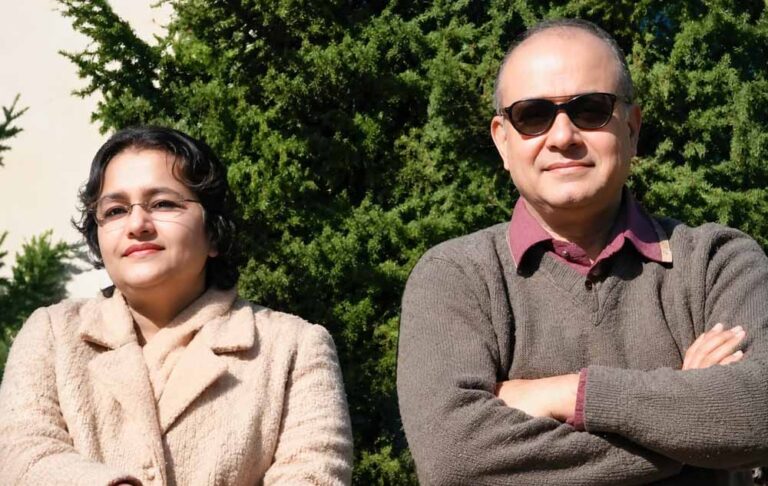
– What drew you to Pushkin as a figure? And what was the hardest part of portraying him?
– By that time, I had already written three books, and my husband especially praised me for one of them – The British Raj. He began urging me: “Write this play!” I started working on it while my husband was still alive; he read the first draft of the play. Alas, two months later he died. For two years I couldn’t bring myself to work on the play. But I decided that I would definitely return to it. While working on it, I would mentally address Alexander Pushkin: “Please bless me – and I will do it.” And I did finish the play. Many people were surprised that I managed to write it. At that time, Russia’s ambassador to India was a remarkable man – Alexander Kadakin. He was widely respected in India and spoke excellent Hindi. There is even a street in Delhi named after him… So, he read my play and recommended me to take part in a Pushkin celebration. A Russian professor working in India asked me: “How did you manage to understand Pushkin so deeply?” That surprised me. I replied that I had read many works of the great Russian poet and that this had allowed me to immerse myself in his world. And I said to him: “Professor, you are a teacher in India and you probably know about reincarnation, which we believe in. Perhaps I was in Pushkin’s house, washed the floors, cooked food in his kitchen…” I think Pushkin and I had something in common in a past life…
Later I wrote an essay, Growing up with Pushkin and Tagore: both poets were true artists. Both came from the landed gentry, yet spoke out against the abuse of power. Both embraced new ideas from the West with enthusiasm, yet drew inspiration from their own historical and cultural traditions…
– You first learned about our country from Rabindranath Tagore’s book Letters from Russia, which your mother gave you in childhood. The country opened up to you as an unfamiliar, exotic, and distant one. You first came to Russia in 2009. How much has your perception of Russia changed since then?
– People are better off now, very patriotic, but they are just the same as in 2009. Basically, they are the same people who are proud of their country. They are not closed off; they can say: we are Russians, our country is vast, but we are interested in the world and in other people. Let me quote Rabindranath Tagore’s words about the Russian people: “They have a child’s curiosity and interest.”
– You wrote a book, Rabindranath Tagore: A Man for All Times…
– He was a remarkable man. He came from a wealthy family and went to study in England. I attended the same college in London as he did. In 1913, his English poet friends nominated him for the Nobel Prize in Literature. The British Crown knighted him. But then came the tragedy in Punjab – the Jallianwala Bagh massacre (the shooting by the British Indian Army of a peaceful demonstration in Jallianwala Bagh park in Amritsar on 13 April 1919. – Editor’s note.). Tagore wrote a very bold letter to the Viceroy of India. In it, he said that he thought with horror about what had happened: thousands of peaceful people – men, women, and children – had gathered to protest against a repressive law that allowed the British authorities to arrest Indians without trial or investigation. “And you call yourself a civilized nation, an empire that has brought civilization to the world? I do not wish to be associated with you. I wish to be treated as the humblest and poorest of Indians!” He renounced his knighthood. After that, he became world-famous. In 1930, Tagore met in Berlin with Anatoly Lunacharsky, the Commissar for Education, who invited him to come to the Soviet Union.
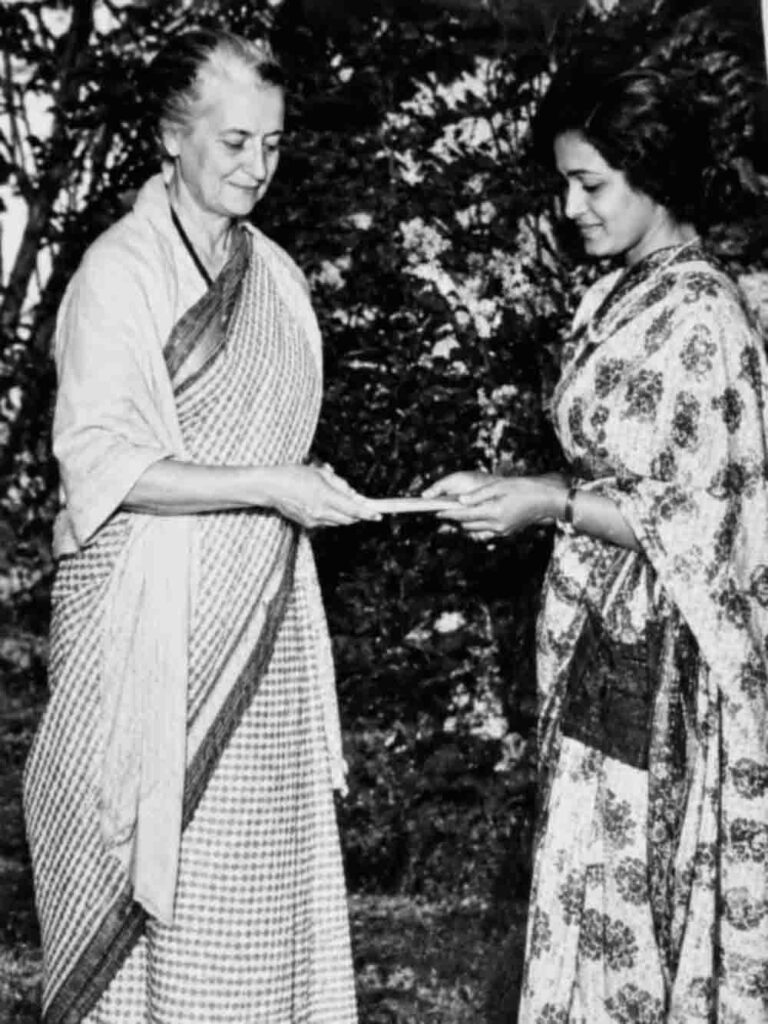
– After his trip to the young Soviet country, Tagore wrote Letters from Russia as a British subject, didn’t he?
– The British advised him against going to the USSR. But they behaved like a civilized nation: they did not persecute him; they simply expressed their displeasure. After Tagore supported the anti-colonial movement, they cut funding for the university in Shantiniketan, which he had founded in West Bengal in 1921. Today it is Visva-Bharati University – the name can be translated from Sanskrit as “India and the World”. Tagore wanted it to be a centre of world cultural exchange.
– At sixty-nine, Tagore had fallen out of favour with the British Empire. He came to the Soviet Union and later admitted that at the time he knew nothing about communism or revolution. Lunacharsky received Tagore and told him that the USSR wanted to see an objective, direct person capable of telling the truth about the Soviet Union. He noted that Tagore was the right person for that, because he had spoken out against the British Empire. And in Letters from Russia, Tagore wrote about his journey, about the inner workings of Russia, about the new society, about the people and their life, which was built before his eyes. He saw how the treasures of the palaces were catalogued – not a single pin was lost, everything was accounted. Before leaving Russia, he told Lunacharsky: “Beware, you need to prepare – you have many enemies in Europe.” Ten years later, the Nazis invaded Russia. Just imagine, he sensed the war coming! We call this divya drishti – divine vision.
– Do your personal impressions of Russia match Rabindranath Tagore’s?
– Russia was never alien to me: I had been reading about it since I was sixteen. I had Russian friends at university. Of course, I would like to have seen Russia in Soviet times, because I believe it was a great experiment in social organization. Mrs. Indira Gandhi intended to take me with her on a trip to the USSR, but she lost the 1977 election, and the visit never happened.
– For Tagore, Russia was alien – he had nothing in common with it, yet he adored it. He said that in a single decade the Russian people had taken a thousand years away from tyranny! He believed that the revolution had transformed Russia, but that it was a spiritual, not a political, evolution. He was astonished to see factory workers, men and women in worn-out clothes and shoes, coming to the Bolshoi Theatre to listen to Tchaikovsky’s music. Tagore was an admirer of Leo Tolstoy, calling him a teacher of humanity, but he stressed that Tolstoy’s voice against violence and oppression “cries in the wilderness.”
– You wrote a book with a rather unexpected title – A Hundred Years of Lev Tolstoy and the Indian Connection. What is it about?
– In this book I wrote about Tolstoy’s life in general. He is, after all, closely connected with Indian culture. His name is far better known in India than those of other Russian classics, because he showed Indians how to organize passive resistance to the authorities in order to gain freedom. I reminded my fellow Indians that in 1908 the revolutionary movement in India was banned, but the revolutionary Taraknath Das wrote to Leo Tolstoy asking for support in the struggle against the British. Tolstoy replied with his open “Letter to a Hindu”: do not meet violence with violence, do not cooperate with the oppressors; once you stop working for them, they will leave – that is the path to freedom. The letter was read by a young lawyer working in South Africa. It was Mahatma Gandhi, who sent Tolstoy his book Indian Home Rule. The writer replied to the lawyer, and a correspondence began: four letters from Gandhi and three from Tolstoy. In them they worked out a political philosophy: how to fight evil without becoming evil. Tolstoy derived the idea from the Gospel, Gandhi from the Hindu scriptures. Gandhi made Tolstoy’s ideas about non-violent resistance (ahimsa) his own philosophy: it is satyagraha – “insistence on truth.” In 1920–1922 it grew into a mass movement. And in 1942 Gandhi publicly stated that Russia had given him a teacher who provided the theoretical basis for the struggle for freedom.
– And what did “passive resistance” mean back then?
– It’s not simply “passivity” but active non-violent action: refusing to obey unjust laws, not taking revenge, not taking up arms. Tolstoy believed that this was precisely how you could defeat an empire that has an army when you have none. After all, India had no troops, while the British army was very powerful. The maharajas and rajas sided with the occupiers. Protests by the local population were brutally suppressed – just recall the famous Sepoy Rebellion of 1857. Tolstoy formulated three rules: do not serve, do not go to court, do not buy the enemy’s goods. This is the very “formula of non-violent non-cooperation” that proved so close to India. In the end it worked: the independence movement gained serious momentum, and the British were paralysed. I hope that in time India will give even greater recognition to the fact that Gandhi adopted Tolstoy’s idea of non-violence.
– But how did Count Tolstoy become close to poor Indians and their mentality – where were the points of contact?
– In 1847, a student at Kazan University, Leo Tolstoy, met a Buddhist monk – the Buryat lama Galsan Gomboyev (who taught Mongolian at the university. — Editor’s note.). Tolstoy learned that this monk had been robbed and wounded on the road by a brigand, yet had offered no resistance. Then came the Crimean War, in which Tolstoy fought, witnessing battle, blood, and death. After the war he searched for the meaning of life. Tolstoy deeply respected other religions and drew inspiration from Buddhism and Hinduism. In 1879 his Confession was published, in which he directly referred to the Buddha and to Indian sages. By the 1880s he had begun to study the foundations of Indian philosophy systematically, reading the Vedas. And the main idea he came to was non-resistance to evil by force.
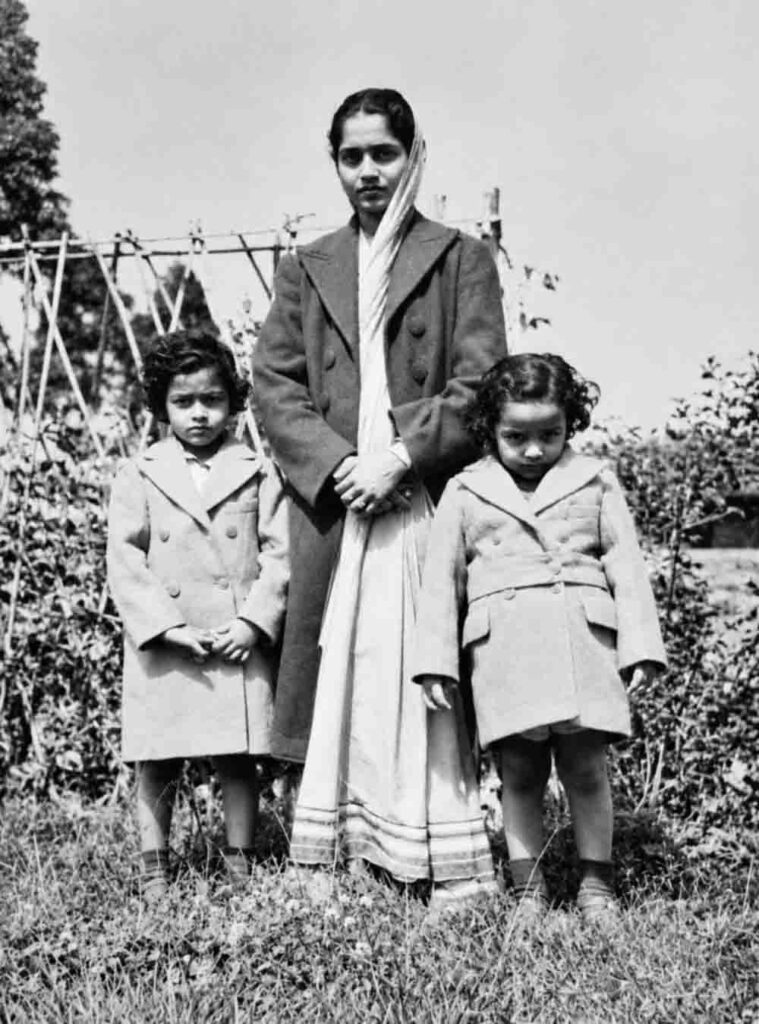
– Are Russian authors still read in India today, including our classics?
– Yes, they are very popular in India! True, they are mostly read in English translations, but some works have been translated into local languages as well. People with socialist sympathies, especially in my home state of Bengal, love not only the classics but also Soviet literature. They read Tolstoy, Dostoevsky, Chekhov, Blok, Mayakovsky, Yesenin…
– In your book The Russian Revolution – Storms Across A Century 1917–2017, you write that this event influenced the whole world…
– Tagore’s Letters from Russia are his personal impressions, not a historical study. Besides, they were written in Bengali, and the work was known mainly in Bengal. My book is the first systematic study of the Russian Revolution for the Indian reader. It was published in English, dedicated to the centenary of the Russian Revolution, and tells what actually happened.
– The Soviet Union was a mighty power. For us it became a great protector. For example, in 1971, during the war between India and Pakistan, the United States sent an aircraft carrier into the Bay of Bengal in support of Pakistan. And then the Soviet Union came to our aid, sending its ships into the Indian Ocean. Because of diplomatic pressure and the threat of escalation, the Americans left the Bay of Bengal. Indians remember this well! When the Soviet Union collapsed, it was a sad day for us. Yes, the Soviet Union is gone, but Russia is still here!
– Your new book, The Thousand Year War: Russia and the West, is about to come out in Russia. Why did you decide to write about it?
– Russia has been constantly subjected to invasions for 1,200 years – from both East and West. My book is about the thousand-year confrontation specifically with the West. It interested me because India, too, was attacked for many centuries. And we could not defeat our enemies because for most of our history our country was divided into small states. The British made our fragmentation worse, but we managed to create internal resistance to what came from outside. Russia, by contrast, reacts differently: it always puts up a direct fight. In India, little is known about the Battle of Stalingrad or the siege of Leningrad. My book was initially intended for the Indian audience – I needed to tell my readers what happened in Russia, how the Russian people fought and won. I wrote the book in about a year, but I collected and studied the material for much longer – that work took more than five years.
– How do people in India view the current conflict between Russia and Ukraine?
– In India there is a pro-Western lobby, and it sides with Ukraine, but the majority of Indians side with Russia! We know that the West is simply using Ukraine to create a hostile state on Russia’s borders. When presenting my book in India, Russia’s ambassador Denis Alipov said: what is happening now is not a war between Russia and Ukraine – it is the West setting two brotherly peoples against each other. For many centuries Ukraine was an integral part of Russia. But an artificial division of the empire took place in order to make it possible to attack Russia, and Ukraine here is a proxy arena in the confrontation between the West and your country. Russia and Ukraine have always been together and have far more in common than England and Scotland, which were different kingdoms and often fought each other. Back in 1858, setting Hindus and Muslims against each other, the Viceroy of India said outright: “The old Roman maxim ‘divide and conquer’ should be ours.” In my book I describe many examples of the West not fighting directly but waging a proxy war, since in a direct armed confrontation it cannot defeat Russia.
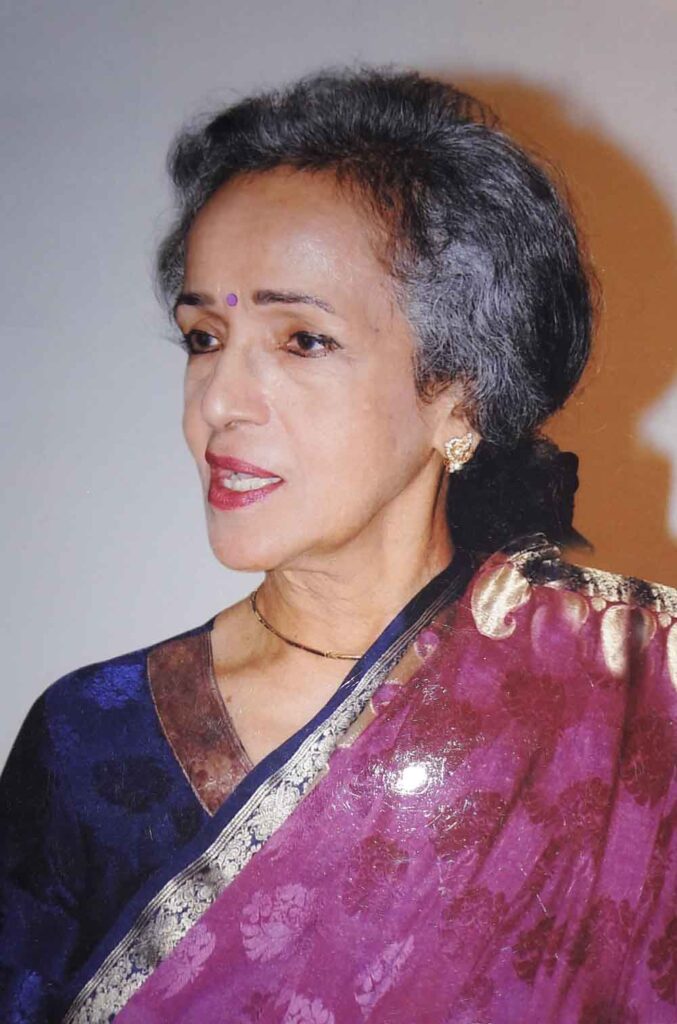
– Achala, as a member of the jury, you took part in the ceremony of awarding the Leo Tolstoy Peace Prize…
– I am glad to be involved with the Peace Prize. I admire Vietnam, whose president we honored this year. Russian President Vladimir Putin was at the ceremony in the Kremlin, and we spoke with him. I told him that I respect the Vietnamese for the way they fought first against the French, then against the Americans. Poor Asian Vietnam defeated a superpower in 1975! I was young when the war in Vietnam ended. A Vietnamese delegation came to Bangalore, where I live, for an international conference. They were exhausted, worn out, and made no attempt to hide their poverty. Indians are ashamed of poverty, but the Vietnamese are not. I told my friends then: “They are so weak, yet they defeated America. If they could do it, then we cannot help but respect them. They do not hide their poverty, and it shows their courage.”
I hope the Peace Prize will continue to develop. And people must understand that peace is a necessity. As Pierre de Gaulle, one of the members of our jury, said, the Nobel Prize has already lost its meaning – it is awarded only to dissidents. The Peace Prize, on the other hand, is for people who have worked for peace and freedom. Tolstoy’s words that we must fight, but without violence, are still relevant today. Not everyone understands this, but I believe it always takes time to bring great ideas to life.
– Don’t people get smarter over time?
– Alas, no. People don’t read books. The main tragedy of the book in the digital age is computers. You know, 21 years ago my husband wrote a book about artificial intelligence called Last Frontiers of the Mind. That was 2005 – at the time no one believed him, because his conclusions were far ahead of the time. But in the end he turned out to be right; what is happening now is exactly what he wrote about: the computer has captured and destroyed the human mind. It seems to me that evolution has gone into reverse. People have lost the ability to analyse; we are beginning to resemble monkeys with gadgets. Creativity has been destroyed, individuality has been destroyed, and people are gradually becoming like machines. And machines cannot be geniuses. They will not be like Einstein with his insight, like Tagore with his intuitive intelligence, like military commanders who have to think about strategy. Kutuzov had no computer to tell him how to fight Napoleon. If artificial intelligence is present in our lives, then at the same time the great ones – the Pushkins, the Tolstoys, the Chekhovs, the Yesenins – may be absent from it… Yes, poetry, music – all of that will exist, all of that will remain, but will people still need great art?
Translated by Grigory Litvinov.