 Lada Sinyutkina
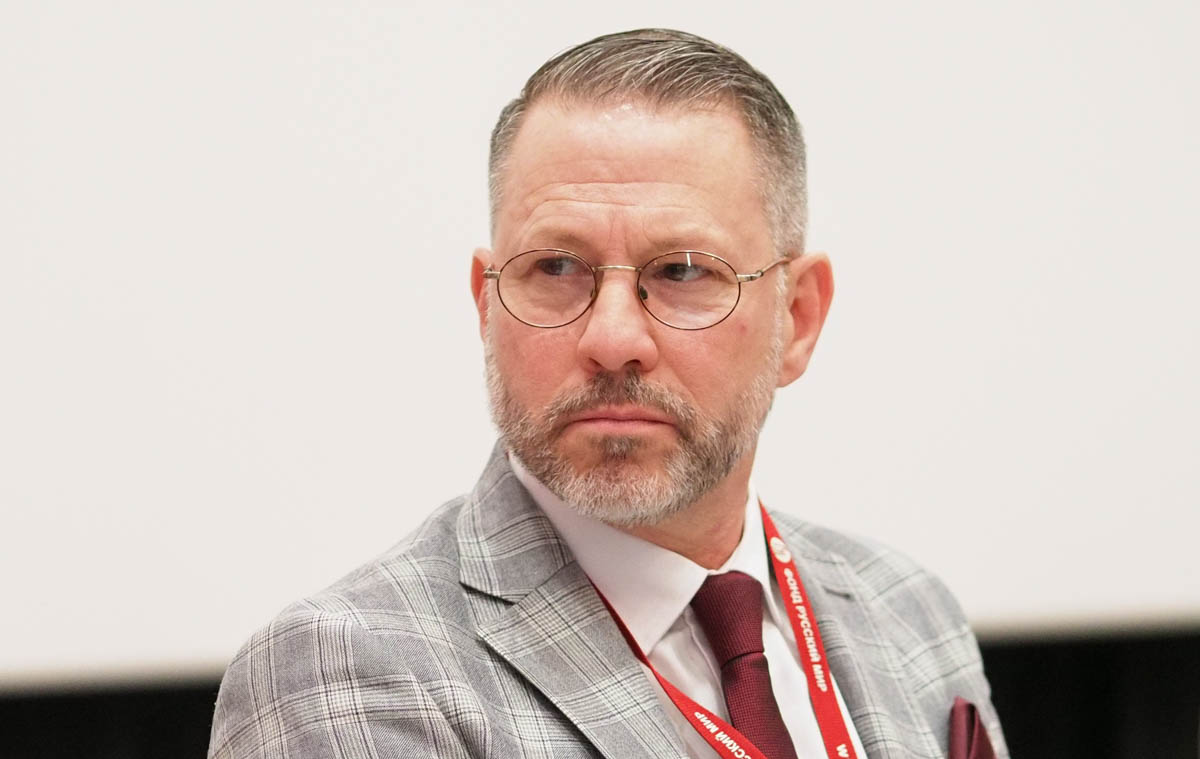
 What do Eva Perón and Joseph Stalin have in common? What should an ideal state look like? How can one fathom the mysterious Russian soul? These are among the questions that Russkiy Mir discussed with political scientist, writer, and ambassador of the Russian Znanie Society in Argentina, Cristian Lamesa.
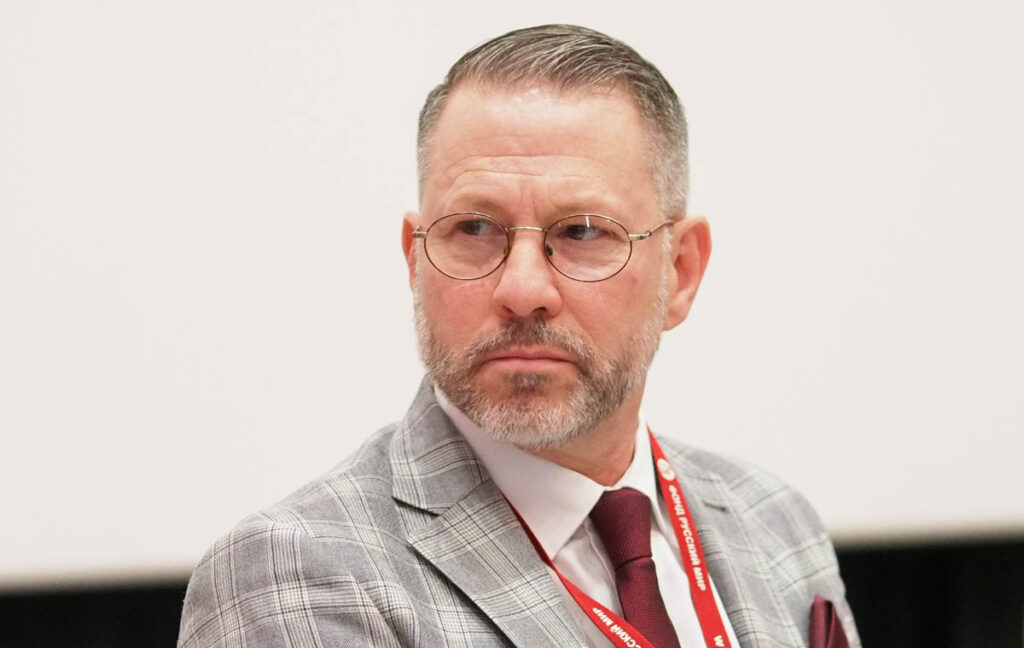
– Christian, you once mentioned in an interview that your interest in Russia first emerged when you were very young – at the age of five or six. What was the reason?
– I grew up in a family with a fairly high social and cultural standing. My father, Aldo, was a civil engineer, and my mother, Alicia, stayed at home to raise the children. I have four older brothers; I’m the youngest. We often had lively conversations at home about politics, art, and history. That sparked my interest in learning about different cultures. Quite early on, I became fascinated by the history of Russia and the Russian revolutions of 1917. The Soviet Union still existed back then, and for me it embodied the lofty ideals of brotherhood among peoples and social justice.
After finishing school, I studied photography at the Buenos Aires Fine Arts Association. Later, I worked as a professional photographer and set up my own photography business. At the same time, I studied politics, geopolitics, and the history of Russia and the Soviet Union in depth on my own. I consider self‑education to be a good way to learn, because the social sciences taught at Western universities are often highly politicised and ‘infected’ with prejudice and Russophobia. I managed to avoid that kind of influence by using various sources to form an objective picture of Russia.
– How do ordinary Argentinians feel about your pro‑Russian stance?
– People in my circle are fine with it – there’s no negative reaction at all. Most Argentinians see Russia as a friendly country. Our two nations have close historical and cultural ties; last year marked 140 years of diplomatic relations between Russia and Argentina. I am convinced that we need to deepen and develop cooperation between our countries. And people‑to‑people diplomacy plays a big part in this process. Especially since, historically, we have quite a lot in common.
– Latin America is a distinctive civilisation, albeit a very young one. What lies at its core?
– Each country in Latin America has its own distinct national traits and unique historical experience. But we also have much in common: the legacy of the Spanish Empire, which organically blended with the culture of America’s indigenous peoples – the Aztecs, the Maya, the Incas and many others. Furthermore, immigrants from all over the world who came to Latin American countries made a significant contribution to shaping our identity. In Argentina, for example, besides Italians, Spaniards and people from other countries, there is a large Russian community. Latin American countries share similar traditional values, a common language, a belief in God, and a love for their land. I hope that what unites us will help, in the future, to fully shape a unique and distinctive Latin American civilisation.
A Diverse Diaspora
The Russian‑speaking diaspora in Argentina, formed through five waves of emigration, is considered the largest in Latin America – numbering around 300,000 people. Its composition is very mixed: it includes descendants of Old Believers, Cossacks, anarchists and Trotskyists. Many representatives of Russia’s scientific community also emigrated to this Latin American country – for example, the naturalist and ornithologist Yuliy Kozlovsky (1866–1923); Vladimir Dobrovolsky (1895–1987), who led an Argentine expedition to Antarctica in 1924. Russian cultural traditions found expression in Argentina thanks to the actress Galina Tolmacheva (1895–1987), who popularised the Stanislavski system in the country, and to the collector Count Sergei Zubov (1881–1964), part of whose rich collection of portraits and miniatures formed the basis of the National Museum of Decorative Art in Buenos Aires. Argentina also became a second home for Vasily Kharlamov (1875–1957), chairman of the first Grand Military Circle and a deputy of the pre‑revolutionary State Duma for all four convocations. Alongside Kharlamov, Nikolai Krasnov (1918–1959) played an important role in the self‑organisation of the Cossacks in Argentina. On 19 December 1948, the Cossack Union was founded in Buenos Aires.
During the Second World War, many residents of Argentina, including ethnic Russians, Ukrainians, Belarusians and Poles, actively supported the Soviet Union. They organised fundraising and the sewing of clothes for soldiers. Emigrants also spoke out against the shipment of strategic supplies to Nazi Germany.
– Do you think a public figure should speak openly about their worldview? And what is your worldview?
– In my opinion, if a person has influence over public opinion, they can speak openly and sincerely about their values – provided, of course, that those values do not go beyond the bounds of generally accepted morality. That is a sign of honesty.
As for me, as a political scientist, I openly state my position in my public speeches and my support for Russia, which is fighting to preserve traditional values. I share those values. They include respect for religions, patriotism, the traditional family, and much more.
– You criticise the postmodern world for lacking clear criteria of good and evil. Do you think these are ethical concepts, or are their roots spiritual?
– In my view, postmodernist thinking – in which the boundaries between good and evil are blurred – allows a person to feel no responsibility towards society, to have no moral obligations. But a harmonious existence is impossible without moral norms. I believe their roots lie in the spiritual realm, from which they seamlessly flow into ethical principles and become defining within communities where people are able to understand what is right and what is wrong.
– What is the role of traditional religions in modern society, in your opinion? Which model does the future belong to: a theocratic state, a symphony of secular and spiritual authority, or a secular society?
– I believe that the role of traditional religions in modern societies is fundamental. They are the force that can prevent the world from sliding into degradation and the destruction of moral and ethical foundations – a process we are currently witnessing in the countries of the collective West. But this same process also has the opposite effect: today, young people in those countries are setting out on a quest for spiritual principles. In the United States, for example, there is a growing interest in the Catholic Church, which had long been overshadowed by Protestantism.
As for the ideal model of society, I see it in modern Russia, where, in my opinion, there is a symphony of secular and spiritual authority. But balance is always important. In my view, the state comes first, while the Church is a force that can support and strengthen it.
– Which Argentine national hero resonates most deeply with you?
– That’s not an easy question. It’s difficult because I am Argentine, but part of my heart belongs to Russia – I see Russia as my second homeland. I say this sincerely, from the bottom of my heart. So I will answer this way: the two historical figures who are particularly close to me and whom I immensely respect are Eva Perón and Joseph Stalin. Many consider the First Lady and wife of President Juan Perón to be the most famous Argentine woman in the world; historians still study her life. She defended the interests of ordinary people. In Argentina, Eva Perón is called the ‘standard‑bearer of the humble’, and people still admire her deeds to this day.
What unites Joseph Stalin and Eva is their background and life goals: they both came from the common people and selflessly served them. Stalin can be considered the architect and builder of a great state – the Soviet Union. Interestingly, the last foreign ambassador to meet with Stalin was an Argentine, Leopoldo Bravo. They met in February 1953, less than a month before Stalin’s death. They discussed various issues, but Stalin was particularly interested in Eva Duarte de Perón, who had passed away six months earlier. A few days after the meeting, the Soviet leader, in memory of Eva, gifted the Republic of Argentina a house in Moscow’s Serebryany Bor.
Evita
Eva Duarte de Perón was born on 7 May 1919. The illegitimate daughter of a wealthy Argentine farmer, she had no support or means at the start of her journey. She rose to fame as a television presenter and actress, and later became First Lady of Argentina. On 22 October 1945, she married Colonel Juan Perón, who won the presidential election in February of the following year.
Eva played a significant role in her husband’s political career: she helped him with campaigning, delivered emotional speeches, engaged in charity work and fought for women’s rights. Argentinians who supported Juan Perón’s course called the First Lady ‘Evita’. This nickname combined her name Eva with the Spanish word evitar (to avoid one’s fate).
Eva died of cancer on 26 July 1952, aged just 33. She remains in the memory of people across the continent as one of the most prominent figures of the left‑wing movement in Latin America.
– In Russia, the concept of the ‘katechon state’ – the force that restrains the spread of evil in the world – is currently popular. What is your attitude towards it?
This is perhaps a question that resonates with me on a deeply personal level. I am firmly convinced that a battle is currently raging between the proponents of a unipolar and a multipolar world order. It is a clash between a fading hegemon—the United States, which has dictated its rules to the world and crushed all dissent—and other nations striving for a fairer and more equitable global order. At the vanguard of this struggle, I see Russia and China. One need only recall that during the celebrations marking the 80th anniversary of the victory over militarist Japan—a triumph achieved by the PRC and the USSR with the support of the United States—Chinese President Xi Jinping touched upon this very theme in his address: the enduring struggle between good and evil. It is of paramount importance that all who understand this reality rally to the banner of this cause, defending truth against falsehood.
– Your book The Fatherhood of Evil is very relevant today. What prompted you to write it?
– The current NATO war against Russia in Ukraine is, in some ways, a continuation of World War II. I was filled with anger at the attempts of those who were once Hitler’s accomplices – and there are a number of EU countries among them – to rewrite history, to wipe out the memory of the war’s true heroes, to blacken and desecrate that memory, and to devalue their feat. My book is an opportunity to tell people in the West and in Latin America the truth about who freed the world from the Nazis and destroyed the brown plague at the cost of enormous efforts and sacrifices.
Besides, I have gathered numerous historical facts that reveal who Hitler’s real allies were – those who allowed him to turn into a sinister political figure and gain enormous influence and power. Today, the West tries to equate Nazi Germany with the Soviet Union. Yet in reality, in the pre‑war years, Hitler’s accomplices included British Prime Minister Neville Chamberlain, his French counterpart Édouard Daladier, the head of the Second Polish Republic, Marshal Józef Piłsudski, and Poland’s Foreign Minister Józef Beck.
The work on this book took me nine months. I wrote it during the COVID‑19 pandemic, when many people were forced to stay at home. Every day, on average about eight hours, I gathered information from various sources, cross‑checked it, studied archives – fortunately, these days all of this can be done online. Preliminary research took six months, and only after that did I write the book. It contains 250 pages of quite a few interesting facts. Many of them are unknown even to Russian readers. Soon my study will be published in Russian and will become available not only in Russia but also in countries with large Russian‑speaking diasporas. This is thanks to the AST publishing house.

– Russian is considered one of the most difficult languages to learn. Yet you bravely took on this challenge. How are you getting on?
– The desire to learn Russian has come to me regularly over different periods of my life, with remarkable persistence. But it wasn’t until recently that I actually got down to it. First, I taught myself the Cyrillic alphabet, and then I started taking lessons with a native‑speaking teacher who lives in Argentina. The hardest part for me is the case system, but I don’t get discouraged. Every day I try to gradually get to grips with your incredibly rich, expressive language, in order to better understand the character and soul of the Russian people.
– How do you picture this ‘mysterious Russian soul’? Some foreigners see it as more of a widespread myth.
– No, I don’t think it’s a myth. This soul exists in all Russians – it’s just that in some it’s stronger, in others weaker. Of course, a certain part of Russian society has become highly Westernised and is gradually losing that very ‘mysteriousness’. But the vast majority – whether consciously or not – display a unique combination of inner qualities: generosity, hospitality, a readiness to sacrifice for others. It’s remarkable: the Russian people are especially distinguished by their willingness to sacrifice themselves, something that was particularly evident during World War II. In my book, I cite many examples of Russian courage and heroism. For instance, a true feat was performed by military pilot Alexander Mamkin, who, while rescuing orphaned children behind the front line in Belarus, managed to land a burning plane – all the passengers survived, but he died from his burns. A number of heroes, including the partisan Nikolay Kislyakov, repeated the famous exploit of Alexander Matrosov. They sacrificed themselves, but gave their comrades the chance to continue fighting.
One could go on describing the stories of such people for a very long time – there are so many of them on your land, in every generation. Consider the feat of the Chernobyl disaster liquidators! Our own time and the current war have also shown the world new heroes – the world has yet to learn about their deeds.
– In 2024, you won the ‘Foreign Educator of the Year’ award given by the Russian Znanie Society. Now you represent that organisation in Argentina and give lectures to students. You have had the chance to speak not only with young people from your own country but also with Russian youth. Do you see any difference between students of the two countries?
– When I received the official letter from the leadership of the Russian Znanie Society inviting me to become its ambassador in Argentina, I did not hesitate for a moment: it is a great honour and recognition of my work. In my lectures, I speak mainly about the geopolitical reality, current events, and also about the fact that without knowledge of history one cannot understand the present. We also discuss anti‑Russian propaganda and ways to counter it, especially in the West, where people have virtually no access to objective information. For the most part, students in Argentina are patriotic; they love their homeland. However, when I compare them with the young people from Luhansk whom I had the good fortune to meet, I would say that the Russian young people have these qualities more strongly developed, due to their personal experience and the losses and suffering they have endured.
– As far as I know, you are planning to travel to the area of the conflict. What made you take this decision?
– I would like to visit the new regions of Russia. I particularly want to talk to ordinary people, especially those who lived under occupation and waited for liberation during the Special Military Operation. So far, I only know about this from other people’s words and media reports, but I want to see and hear everything for myself. I have been told that the years 2014–2022 were incredibly hard for those living in those regions under the Kyiv regime. I believe that people’s experiences and thoughts should be reflected in various kinds of work – videos, interviews, reports, or essays.
– In March 2026, you delivered a speech at the 61st session of the UN in Geneva, a report on human rights violations in Donbass. Why did you choose a topic so unpopular with the Western press?
– The current war in Donbass has deep‑rooted causes – it is not simply a territorial battle between two countries. I began my speech in Geneva by outlining the background to this conflict, because without it, what is happening is very hard to understand. The collapse of the Soviet Union, after which Western leaders promised not to expand NATO eastward – but they lied. Vladimir Putin’s famous Munich speech, in which he warned that Russia would respond to the growing threat from Western countries. The deceitful Minsk agreements, which gave Ukraine time to prepare for war and rearm – something European leaders themselves later admitted. The dehumanisation of the people of Donbass, in which the notorious nationalist battalions were particularly prominent. All of this was a preparation for the future confrontation.
Russians who simply wanted to preserve their language, history and faith were contemptuously called ‘seps’ or ‘Moskal’ by Ukrainians, who launched a hunt for them. The Western press does not report the atrocities committed against civilians by Ukrainians on Donetsk and Luhansk soil since 2014. That is why I am convinced that any opportunity to tell the truth about what is happening, including using the UN platform, is a blessing.
– You took part in the 17th Russkiy Mir Assembly. What were your impressions of the forum?
– First of all, it was a great honour for me to participate in the Russkiy Mir Assembly. It was wonderful to see so many like‑minded people from different corners of the world – representatives from Africa, Asia, Latin America, Europe – all those who understand what Russia means to humanity, who love its history and culture, and share its values. I believe that the work carried out by the Russkiy Mir Foundation is very important. People in Latin America need to be told more about Russia and Russians – after all, we have so much in common.
Translated by Grigory Litvinov