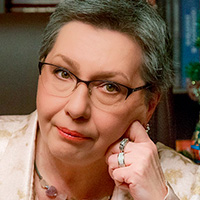
 Lada Klokova
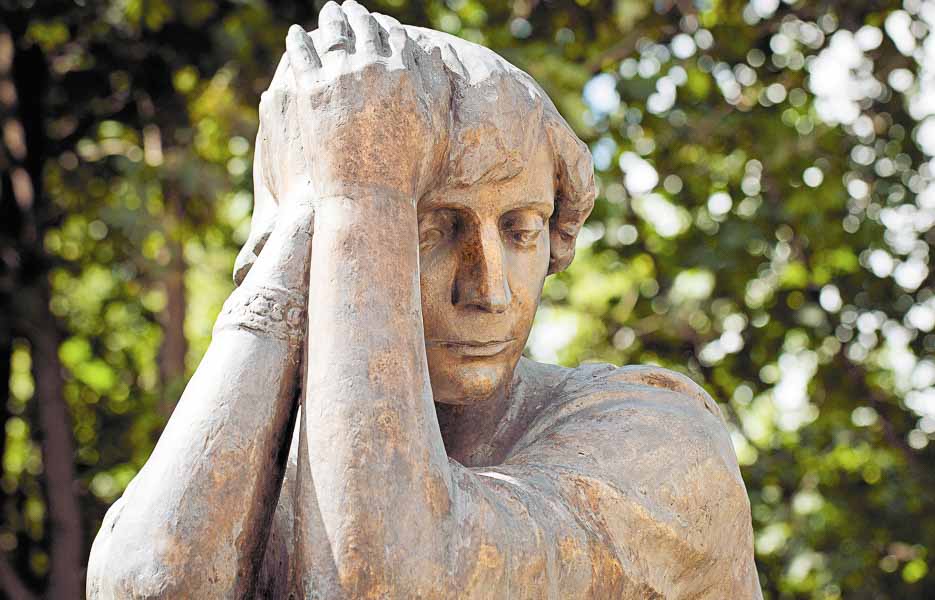
A fair-haired thirteen-year-old girl once asked a seasoned revolutionary: “Can one be a poet and belong to the Party?” “No,” he replied. Honour and credit to that man: had he answered otherwise, Russian literature might have lost one of its greatest poets… Five years later, the girl published a collection of poems. Its green cover bore the words Evening Album and the name — Marina Tsvetaeva.
Photos by Alexander Bury.
The book was a great success. In their reviews, leading poets noted the extraordinary intimacy of the poems and the absence of any discernible influences. Voloshin even made a wager with the poet Adelaide Gertsyk that he would find some literary influence in Tsvetaeva’s verse. He lost the bet completely. Yet he went on to claim that no fewer than ten poets lived within Marina, and even tried to persuade her to publish under different pen names. Tsvetaeva refused.
“For a Year I have been Trying Death on”

…She wakes before dawn, while everyone else is asleep. She makes her way to the kitchen table (there is no other one), feels around for her notebook. The main thing is not to knock anything over with a crash: despite her severe short-sightedness, she does not wear glasses. Outside the window, the Paris suburb of Meudon stirs restlessly in its sleep. The pencil scratches the paper; the words are shortened — her hand cannot keep pace with her thoughts. Her hands are large and callused, peasant-like. There is no elegance in them that poetesses are distinguished by, the envious say. But she does not acknowledge the word “poetess.” She is a Poet.
She writes, stealing an extra minute from time: soon another bleak day will begin. She must think about where to find money, how to feed her family, whether emigrant journals will publish her essays and poems; she counts every penny of her meagre royalties. Laundry awaits her, cooking, and the endless question of what belongings she might sell. And who would buy them anyway? However, who is going to buy them? ” Sell! Easy to say! I liked all my things too much when I bought them — and therefore no one buys them.” — she mentioned in her diary back in 1919 in starving Moscow. Back then she was selling books from her own library collection. But constant relocations and the need for money have consumed everything of value. Only the silver rings and bracelets that cover her hands remained. Yet she would not part with them until her death…
There is one strange thing: when Marina Tsvetaeva imagined her own death, she would bring up a noose. In September 1940, she wrote: “No one sees, no one knows, that for a year already (almost) I have been looking around for a hook… For a year I have been trying death on.” One year remained before that dark day — 31 August 1941 — before the noose in the remote Yelabuga…
The Beginning
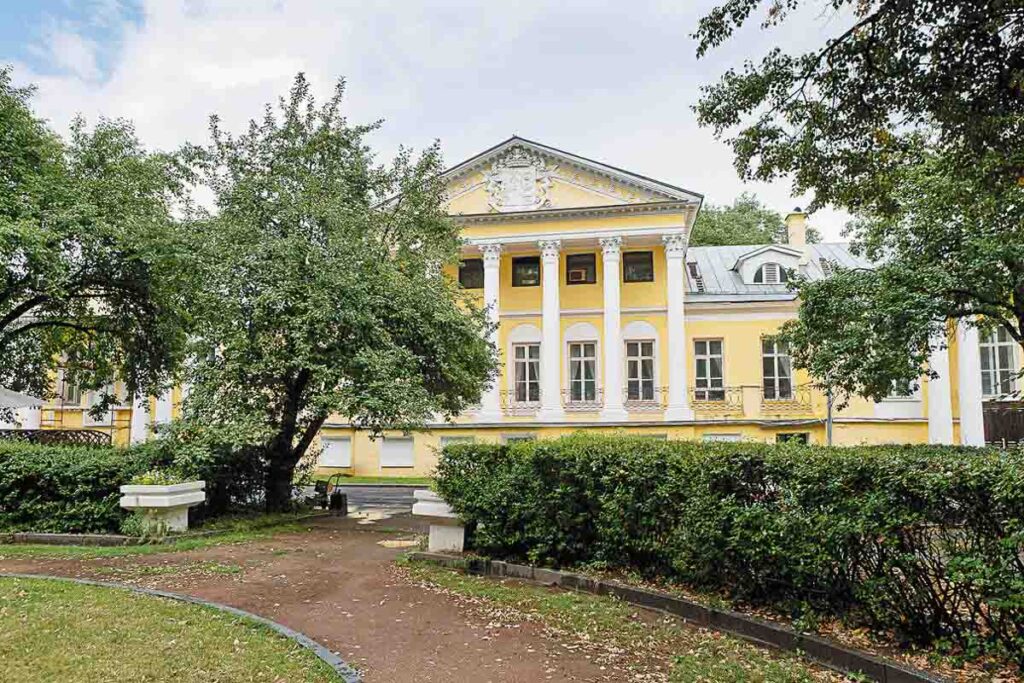
Turn off bustling Tverskaya Street in Moscow and make your way to Trekhprudny Lane. See that ornate little building with turrets? It is the former rapid-printing house of the A. A. Levenson Partnership. This is where Marina brought her first collection of poems. Diagonally opposite stood a wooden mansion (during the Revolution, it was torn apart for firewood). It was here, on 26 September 1892, that Marina Tsvetaeva was born.
Marina Tsvetaeva later recalled:
“The strongest influence was my mother’s (music, nature, poetry, Germany). <…> A more hidden, yet no less powerful influence was my father’s. (A passion for work, a lack of careerism, simplicity, detachment.) The influence of both my father and my mother together — stoicism.”
It is hard to imagine two people less suited to each other than her parents. Ivan Tsvetaev, a professor at Moscow University, devoted fourteen years of his life to creating the Museum of Fine Arts (now the Pushkin Museum of Fine Arts). The son of a village priest, he achieved everything in life through his own efforts.

At thirty-three, he fell deeply in love with the beautiful Varvara, the daughter of the well-known historian Dmitry Ilovaysky. They were married for ten years. Varvara died after giving birth, leaving her husband a seven-year-old daughter, Valeria, and an infant son, Andrey.
A year later, Tsvetaev married Maria Meyn. She was not a great beauty, but she played the piano beautifully, sang, painted, and spoke several languages. Yet she could never take Varvara’s place; Tsvetaev had hung Varvara’s portrait in their bedroom.
In her diary, his second wife wrote: “Our wedding took place beside a coffin.”
Maria Meyn gave birth to Marina and Anastasia, but she had dreamed of a son and wanted to name him after her own father. Alexander Meyn was a Baltic German and served as an official in the office of the Moscow Governor-General. Maria’s mother died after childbirth.
To raise Maria, her father brought a governess, Suzanne Emler, from Neuchâtel, Switzerland. He later married her when his daughter was twenty.
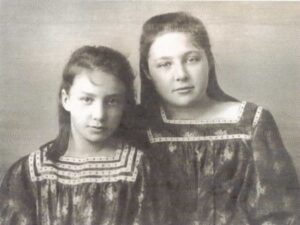
Within the family, the future poet was known as Musya or Marusya. At the age of four, her mother sat her down at the piano. At the same time, Musya learned to read and began writing poetry.

Marina and Anastasia were taught that asking for anything was beneath them, that caring about money was beneath a person’s dignity; they were dressed with deliberate modesty. Their mother read aloud to them and played the piano. She repeated that talent was not a person’s achievement, but a gift from God.
Judging by the memoirs of Anastasia and Valeria, Marina was not an easy child: stubborn, shy, proud. Her favorite pastime was reading. Her idol was Pushkin. Marina Tsvetaeva completed her first notebook of poems at the age of seven! Her mother did not take her early verses seriously; she dreamed that her daughter would become a renowned pianist.
In summer, the family moved to Tarusa. There was the country house, the garden, the vegetable patch where her father tended the plants, jasmine branches by the window, gooseberry jam, little bouquets of immortelles, evenings spent sitting on the banks of the Oka…
In 1902, misfortune struck: Maria Meyn developed tuberculosis; an unhealthy flush appeared on her cheeks, betraying her illness. Doctors advised a change of climate. For three years, mother and daughters lived in Italy, Switzerland, and Germany.
In Nervi, near Genoa, at the “Russian Boarding House,” ten-year-old Musya listened intently to the conversations of their neighbours — revolutionary emigrants. In 1905, the Tsvetaev family travelled to Yalta. There, at the boarding house, their neighbours were members of the Socialist Revolutionary Party, and Marusya was once again drawn to conversations about the “political situation.” Maria Meyn feared that her daughter would choose “the wrong path.” Meanwhile, her condition worsened; she returned to Tarusa, where she died in July 1906.
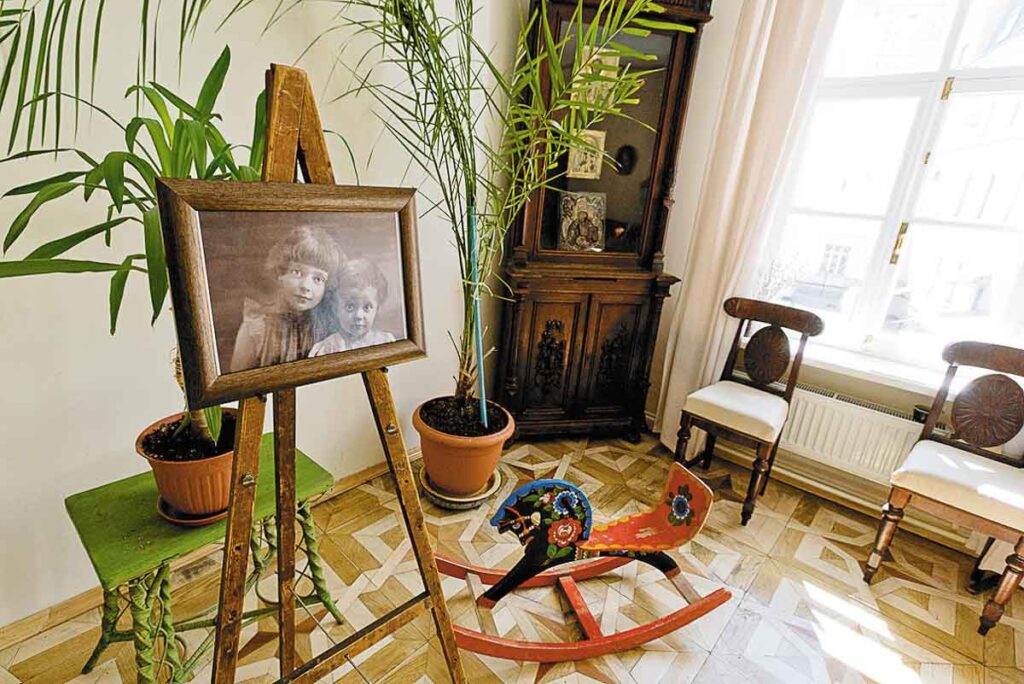
Her fears about the path her daughter would choose proved unfounded: by the age of sixteen, Marina had lost interest in politics.
After her mother’s death, Marina withdrew into herself. She gave up her music lessons and changed three gymnasiums in four years. She hid away in the attic, and whenever her father left for work, she locked herself in her room and read. Her passion was the age of Napoleon; her life was French and German poets. In the summer of 1909, she went to Paris, where she attended a literature course at the Sorbonne. Yet even there she felt lonely; she was tormented by melancholy and loneliness.
Later, Tsvetaeva would formulate the reasons for this: a poet always stands in opposition to the world. Poet is a captive to their gift and a prisoner of their time. Poet’s task is to see the world for and to make everyone else see it as well. And how painful this ability “to see” and this gift “to make others see” are!
After returning to Moscow, she secretly worked on her first book: Evening Album was published in the autumn of 1910. Yes, the collection was praised by established poets; Tsvetaeva began corresponding with Voloshin, and a mutual dislike developed between her and Bryusov. But they were not the ones who brought her into literary circles. Her “Virgil” was Lev Ellis, one of the founders of the Musaget publishing house. He asked for seventeen-year-old Marina’s hand and was refused. She was in love with someone else — Vladimir Nilender, a twenty-six-year-old translator of classical literature. But things did not work out between them. Now she began smoking, drinking rowanberry liqueur, and playing around: she placed an advertisement in a matrimonial newspaper announcing that she was looking for a fiancé.
Her loneliness came to an end in May 1911, when Marina met Sergey Efron in Koktebel, Crimea, where she had come at the invitation of Voloshin and his mother, whom the family called Pra. The people of Koktebel searched the beach with delight for unusual little stones. Tsvetaeva declared that she would marry the person who guessed her favourite stone.
“…S. Efron… almost on the very first day we met dug up and gave me — a true rarity! — a Genoese carnelian bead, which is still with me to this day,” she wrote in 1931.
They were married in Moscow in January 1912. Marina and Sergey were young and happy. They founded the Ole-Lukoye publishing house, which released several books, including Tsvetaeva’s poetry collections The Magic Lantern and Two Books. But the publishing house soon failed.
After returning from their honeymoon in Europe, Marina searched half of Moscow for “her own” home and found what she was looking for in Borisoglebsky Lane. In September 1912, she gave birth to a daughter — Ariadne.
Better to Be Than to Have

In Hero of Labour, Tsvetaeva wrote that in 1912–1920 she lived “outside literary life.” This seems odd. Yes, she did not publish a single collection of poems during those years after Two Books. But it was precisely then that she created her remarkable cycle dedicated to Akhmatova and her achingly bright poems to Blok, poems about Moscow, war, and revolution…
During the same period, she wrote the plays The Jack of Hearts, The Snowstorm, Fortune, and The Stone Angel…
Perhaps she meant that she did not meet with poets or publish? Unlikely: she was popular, and in 1916 her poems appeared in every issue of Severnye Zapiski (Northern Notes).
Or perhaps what was happening in her own life and around her at that time overshadowed the very notion of “literary life”? After all, this was when the First World War broke out and revolutions erupted in Russia. Tsvetaeva refused to accept them. Germany had been her love since childhood, and war was, for her, an apocalyptic experience. The February Revolution shook her. She saw the October Revolution as an irreparable catastrophe.
Her life, too, was full of catastrophes. After her daughter’s birth, she blossomed, began wearing old-fashioned floor-length dresses and jewellery made of amethysts and amber. She began an affair… Not even an affair, but a kind of self-torment. Its cause was the poet Sophia Parnok.” Efron withdrew; his trips to the front on a medical train proved unexpectedly convenient.
But by the end of 1915, Tsvetaeva seemed to awaken from a spell.
In 1916, another brief affair flared up. This time it was with Osip Mandelstam, who, to judge by the poems he dedicated to Tsvetaeva, had fallen seriously in love. At that moment, Efron was drafted into the army, and again he noticed nothing. Or did he pretend not to?
At the time, he still almost worshipped Marina…
In April 1917, Efron and Tsvetaeva’s second daughter, Irina, was born. Sergey was transferred to the 56th Reserve Regiment in Moscow. He was often in poor health, and fearing tuberculosis, Tsvetaeva began making plans to move south.
In October 1917, she went to Crimea to visit Voloshin, and on her way back she learned of the fighting in Moscow. Tsvetaeva was horrified. Amid the clatter of wheels and the coarse curses of her fellow passengers, she wrote a vow to her husband in her notebook:
“…If God performs this miracle — if He lets you live, I will follow you like a dog…”
Twenty-one years later, when Tsvetaeva, against her will, went to the USSR to join her husband and daughter, she added to these words:
“Here I go — like a dog…”
Efron was heading for Rostov, where the Volunteer Army was taking shape. The last time they saw each other was in January 1918.
For the next four years, Marina Ivanovna would receive no news of her husband. A period of severe trials lay ahead: hunger, cold, poverty, and her daughters’ illnesses. In 1920, Irina died at the Kuntsevo orphanage, where Tsvetaeva had temporarily placed the children because she had nothing to feed them with.
The house in Borisoglebsky Lane was turned into a communal apartment. Tsvetaeva chopped up cupboards and chairs for firewood, exchanged the piano for a bag of coarse flour, cooked thin soups with almost nothing in them… She saved paper, writing down stanzas on the wallpaper.
One day, she found a stranger in the house. Taking the burglar for an aspiring poet who had come to introduce himself, she offered him carrot tea. Horrified by the poverty he saw, he emptied all the money from his pockets for her.
She tried to work, but the meaningless service at the People’s Commissariat for Nationalities (Narkomnats) became unbearable to her. She resigned after five months.
In those years she came up with another motto for herself: Mieux vaut être qu’avoir (“Better to be than to have”).

“In the autumn of 1921, Tsvetaeva and I were walking down Tverskoy Boulevard,” Fyodor Stepun recalls in The Former and the Unrealized. “…Bravely walking along the sandy boulevard barefoot, she spoke simply and precisely about the horror of her impoverished, unsettled life… It was frightening for me to listen to her, but she felt no fear in telling it: she believed that in Moscow it was not only Lenin in the Kremlin who held sway, but also Pushkin near Strastnoy Monastery.” With Pushkin beside her, she feared nothing.
And there were also those around her who shared the little they had left. Konstantin Balmont, whom she called “Little brother”; Pavel Antokolsky; the actress Sophia Holliday — to her Tsvetaeva would dedicate The Tale of Sonechka; Sergey Volkonsky — for him she would write the cycle The Disciple; friends from her beloved “Obormotnik” circle…
Oh, how often Marina must have thought of “Obormotnik” in hard times!
The seventh floor of the house on Malaya Molchanovka Street was home to Efron’s sisters, Vera and Lilia, as well as Pra. Marina and Sergey were regulars here. Two floors below lived Alexey Tolstoy, whom the “Voloshin circle” grandly called “Alehan,” while he affectionately called them “obormoty” — lovable oddballs. And so “Obormotnik” came into being…
In July 1921, Tsvetaeva learned that her husband was still alive: Efron had been evacuated to Constantinople and planned to move on to Czechoslovakia. Marina tried to secure permission to leave.
And then… On August 7, word came of Alexander Blok’s death: there was no longer a “blameless knight” whom she revered. A little more than two weeks passed — and another blow! Nikolai Gumilev was executed, and rumours began to circulate that Akhmatova had taken her own life. Learning that Anna Akhmatova was alive, Tsvetaeva wrote her an admiring letter…
The greatest joy of that year was the publication of her collection Versty, released shortly before Tsvetaeva’s departure.
“Please tell Marina that her book Versty, which she left us when she departed, is the best that remained of Russia,” Adelaide Gertsyk wrote to an acquaintance in exile.
In a Foreign Land
By May 1922, Tsvetaeva and her daughter were already in Berlin. In June, they moved on to Prague, where they were reunited with Efron. Until 1925, the family lived in villages on financial support from the Czechoslovak government and on Tsvetaeva’s literary earnings.
Her work with emigrant journals was far from easy. But she had a devoted admirer — Mark Slonim, literary editor of the Right Socialist Revolutionary journal Volya Rossii (The Will of Russia), which published her works regularly.

She also had her “guardian angel” — Anna Teskova, a Czech teacher and translator with whom Marina Tsvetaeva corresponded from 1922 to 1939. Teskova helped her in every way she could — with money, clothing, and other necessities.
Tsvetaeva’s letters to her have been published as a separate volume. Reading this harrowing chronicle of a life suffocating under the weight of poverty is an ordeal in itself…
What sustained her? Most likely, communication and correspondence with people like herself — those who were, as she put it, “out of this world”: Andrei Bely, Boris Pasternak, Rainer Maria Rilke…
In 1925, Tsvetaeva’s son Georgy was born; she called him Mur. The family moved to France, drifting from one Paris suburb to another and struggling to survive. Ariadne helped her mother with the household, while Efron spent increasingly long periods without work. Her income from publications continued to decline. Marina Tsvetaeva developed anaemia. At times, the entire family had to live on just five francs a day.
By the end of the 1920s, Sergey Efron had joined the left wing of the Eurasianist movement, whose leaders were trying to establish contacts with the “opposition” in the USSR. This elaborate deception, staged by the Joint State Political Directorate (OGPU), went down in history as “Operation Trust.”
Efron became more sympathetic toward the Soviet Union and influenced his children, Ariadna and Georgy, with his ideas. Marina Tsvetaeva could no longer find common ground with her husband and daughter. Efron joined the “Union for Repatriation to the Homeland”; from 1931 onward, he was an OGPU agent.
Tsvetaeva knew nothing about it.
The scandal surrounding the murder of Ignace Reiss, a Soviet intelligence officer who refused to return to the USSR, in Switzerland in the autumn of 1937 proved catastrophic for Tsvetaeva. Efron was believed to have played a role in the killing.
In October, her husband fled to Leningrad (Ariadna had left for the USSR back in March 1937).
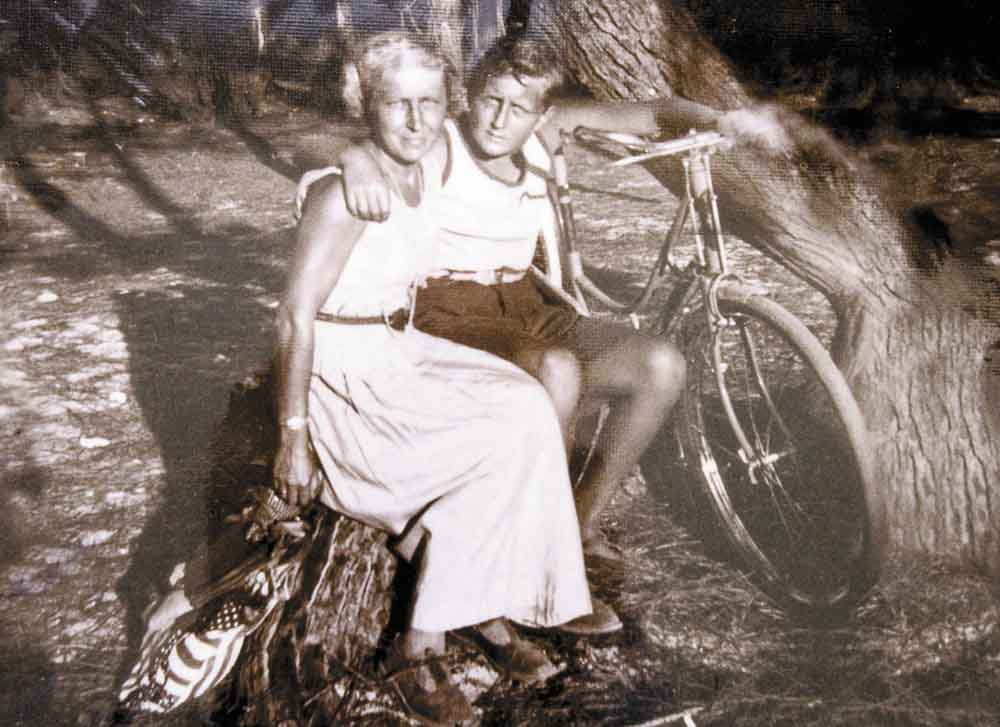
Tsvetaeva was summoned for police questioning. She was devastated: she answered the questions incoherently and, for some reason, began reading out her French translations of Pushkin’s poems… The investigators released “this mad Russian woman.”
Soon afterwards, Mark Slonim met Tsvetaeva:
“I embraced her, and she suddenly began to cry — quietly and silently… I remember how simple and ordinary her words sounded: ‘I would like to die, but I have to go on living for Mur. Alya and Sergey no longer need me.’”
After Efron fled, almost everyone turned away from Tsvetaeva. She had no means of supporting herself. She understood that she had no choice: she would have to go to her husband.
She knew that she would not be able to write there — and she had always said: “If I cannot write, I will die.”
Just before leaving Paris, after learning that Germany had occupied Czechoslovakia, she wrote Poems to Bohemia. There are lines in them that send a chill down one’s spine:
Refusing life — I’m done.
In Bedlam of non-men,
I choose not — to live on.
With wolves around the bend,
I’m choosing not — to howl.
With sharks that move in packs,
I will not swim or prowl
On top of people’s backs.
This was how she felt as she returned to her homeland. And yet her homeland no longer existed. Nor did the Moscow she loved, the Moscow she had celebrated in her poetry as no one else had. Red Russia had no need for her. And White Russia, living in the Paris suburbs, had no need for her either…
In Moscow, most of her former acquaintances were reluctant to seek her company. The last people who still sympathized with her turned away in 1939, after her husband and daughter were arrested by the NKVD. Tsvetaeva wrote almost no poetry: only nine poems were written in 1940, and two in 1941.
“If I cannot write, I will die” … Her life was transformed from a nightmare into a living hell.
“This Is No Longer Me”
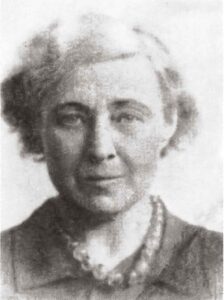
On August 18, 1941, Marina Tsvetaeva arrived in Yelabuga with Mur as part of a group of evacuees. On August 21, they moved into the house of the Brodelshchikov family. On August 24, Tsvetaeva went to Chistopol, hoping to find work. On August 26, she submitted an application to the Literary Fund Council:
“I request that you accept me for work as a dishwasher in the Literary Fund canteen that is about to open.”
There was no work available. On August 28, she returned to Yelabuga. August 31…
Tsvetaeva’s biographer Victoria Schweitzer interviewed the Brodelshchikovs about their lodger.
“To them, she appeared old and plain,” Schweitzer writes in her book The Life and the Being of Marina Tsvetaeva. “At home she wore a large apron with a pocket all the time — ‘that was how she died, still wearing it,’ says Anastasia Brodelshchikova.
“That day, everyone was ordered to go and clean the airfield. Mur went instead of his mother. The landlady returned home first. In the entryway, she came across a chair, wondered why it was there. Then she looked up and saw that the lodger had hanged herself.”
Tsvetaeva left three farewell letters. The first was addressed to her son:
“…Forgive me, but things would only have become worse. I am seriously ill; this is no longer me. …Understand that I could not go on living.”
The second was addressed to the police; in it, she asked them to take her son to the poet Nikolai Aseev. The third was addressed to Aseev, asking him to take care of Mur…
She was buried on September 2, 1941, at the Yelabuga Cemetery. The exact location of her grave remains unknown…
Beyond Time
“Human! Soul! Inspiration!” This is how Tsvetaeva described herself in 1919. It was the only way she knew how to live. She had no interest in politics and was hopeless when it came to practical matters. She called her work “a conspiracy against the age, weight, numbers, time, and fractions.” She insisted that the word was God’s highest gift to humankind.
Like all great poets, she belonged neither to her own time nor to the lives of the people around her. Like all great poets, she is valued by posterity far more than she was by her contemporaries.
“Time! I will pass you by!” — this is a line from one of her poems.
And she kept her promise.
The house in Borisoglebsky Lane, where she lived for eight years, has fortunately survived. Here, just over a century ago, a six-year-old Ariadne sat at the table and carefully wrote in her notebook a few words about her mother:
“…She has light brown hair that curls at the sides. She has green eyes, a nose with a slight bump, and pink lips. She has a slender figure and hands that I like.”
Let this be the way we remember Marina Tsvetaeva.
Translated by Grigory Litvinov.