 Natalia Tanchina
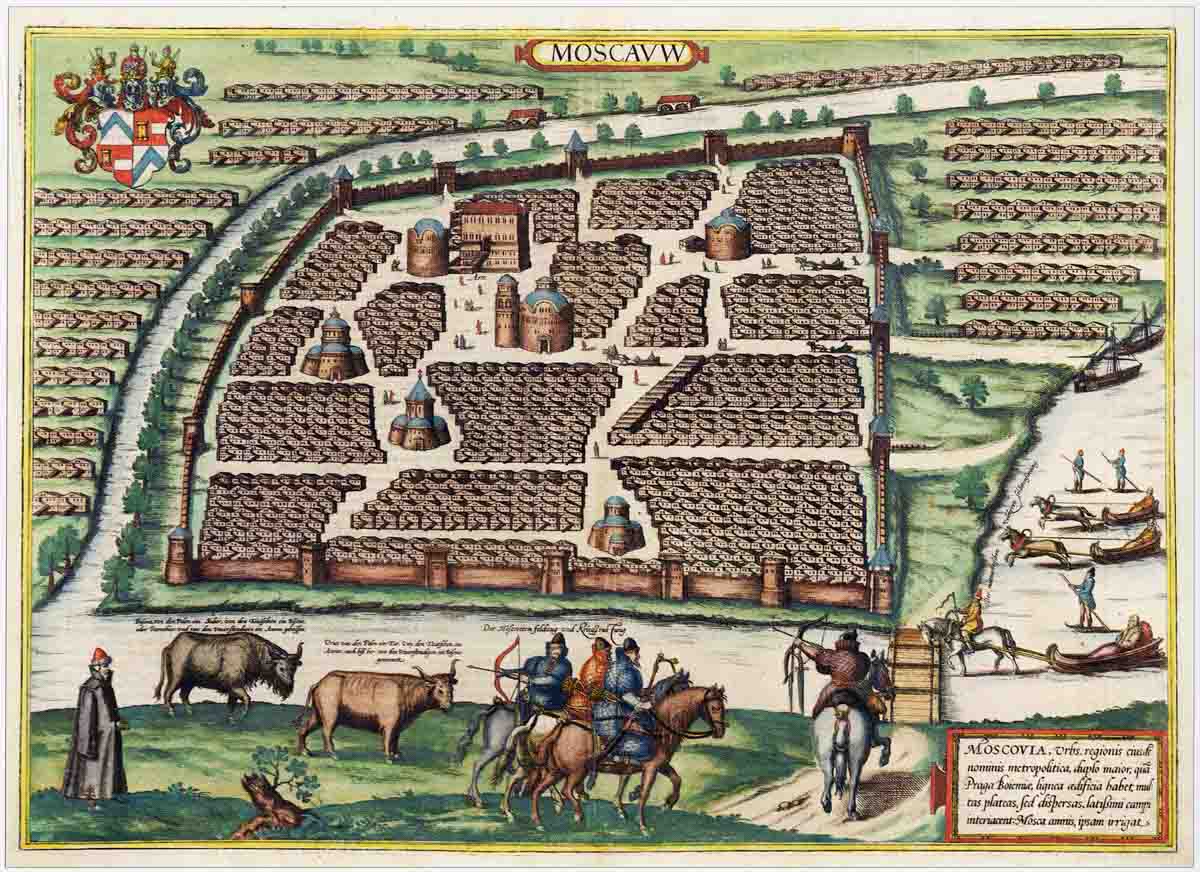
 Foreigners have always viewed Russia through a fairy‑tale lens – and still do. They see our country either as a utopia, an ideal social order, or as a dystopia – a terrifying place, an anti‑world, an anti‑Europe. The beginning of this myth‑making was laid in the Renaissance, when European merchants, diplomats, and travellers flocked to the distant Muscovite state, which had thrown off the Tatar yoke.
Images courtesy of N. Zolotareva
It was under Knyaz Ivan the Great of Moscow that Europeans began to rediscover our country. Although many travellers visited the Muscovite realm – and many of them left their own accounts – the most famous work to this day remains Notes on Muscovy by the Austrian diplomat Sigismund von Herberstein. It is he who may be considered the systematizer of scary tales about Russia.
What Was Europe Really After?
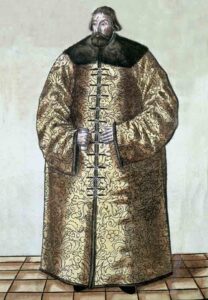
The interest in Muscovite Rus – or “Muscovy,” as Europeans called it – was explained not so much by the mere existence of a vast state in eastern Europe, but by its presumed staggering resources, as well as by the search for a power that could help overcome the trials that threatened the very existence of European civilization.
One of the main reasons that prompted Europe to turn its attention to Rus was the threat of Ottoman conquest. In 1354, the Ottomans reached the European shore of the Dardanelles, and from 1365 their temporary capital was already located at European Adrianople. Although the inhabitants of Muscovite Rus were considered by Europeans to be “schismatics” and “heretics,” they were successfully fighting against Muslim countries – and therefore could be useful.

Another major reason for European interest in Rus was the spread of Reformation ideas, when “Muscovy” came to be seen as the last bastion of true Christianity, with hopes pinned on it for the expansion of the Catholic world. There was also a political side to the religious question: the Habsburg dynasty sought to bring the “Muscovite barbarians” into an alliance against the pro‑Roman Polish‑Lithuanian state.
Interest in “Muscovy” increased even further due to changes in the geography of maritime trade routes during the Age of Discovery: through Rus one could reach many countries.
Beyond the specific historical factors behind the interest in Muscovite Rus, there were also other circumstances connected with the Renaissance man’s urge to expand the boundaries of the familiar world.
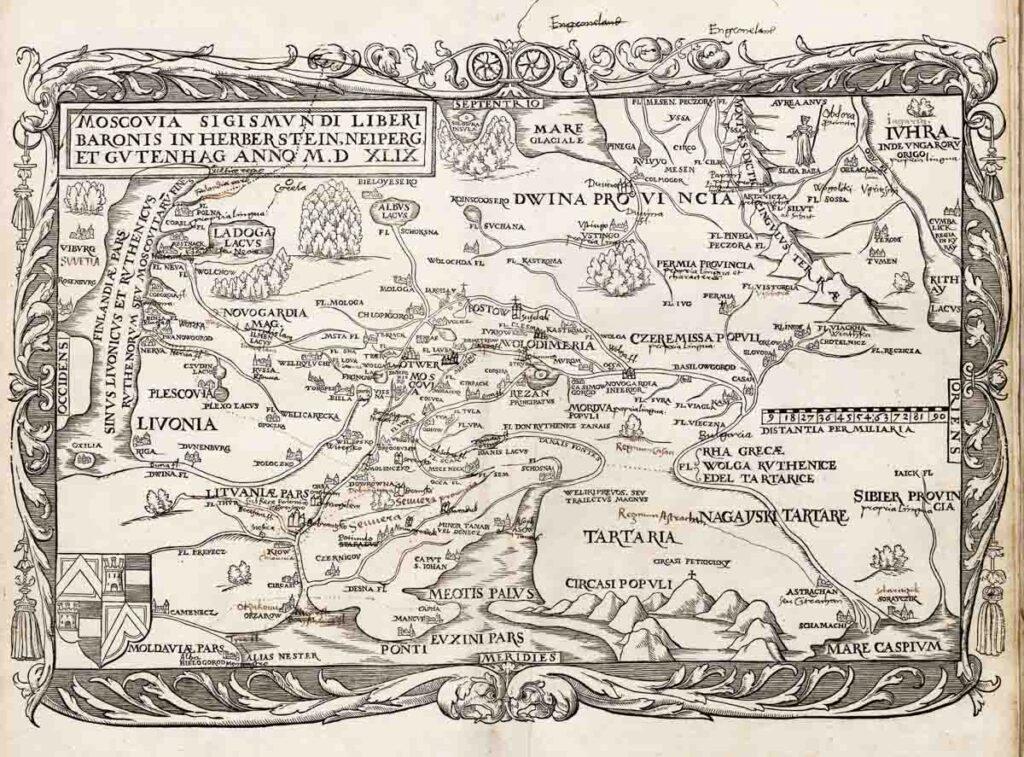
The discovery of Muscovite Rus by Europeans manifested itself in the appearance, at the end of the 15th and beginning of the 16th centuries, of a large number of travel diaries: Ambrogio Contarini, Johann Fabri and Paolo Giovio, Maciej Miechowita, Sebastian Münster, Albert Campensis. No less important were the scholars – European geographers, historians and theologians – who had never visited Rus themselves but compiled its first descriptions and maps.
Notes on Muscovy
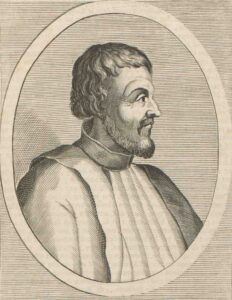
The most famous book about our country written at that time was Notes on Muscovy by the Austrian diplomat Sigismund von Herberstein (1486–1566). Herberstein visited Muscovite Rus twice: in 1517 as ambassador of Emperor Maximilian, and in 1526 as ambassador of the Austrian Archduke Ferdinand. However, his book was not published until 1549.
Russian historian Ivan Ivanov wrote about Herberstein as early as 1894 in the journal Artist: “This Herberstein is the historical progenitor of European fabulists about our motherland. Rus is so richly blessed with such myths that Herberstein himself, in the hands of other writers, turns into a mythical figure.” Indeed, foreigners have always liked tales about Russia, especially scary ones. But Herberstein drew on the works of his predecessors and contemporaries, as well as on a deeply rooted European tradition of perception that went back to Antiquity.
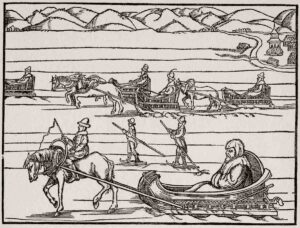
In accordance with the ancient tradition, Renaissance authors regarded Rus not as the East, but as the North. They ascribed to its inhabitants those natural qualities and character traits which, as believed by ancient and medieval philosophers, ought to be inherent in northerners – raised in the inhuman conditions of a harsh climate and subjected to the harmful influence of the heavenly bodies. The inhabitants of Rus were described as barbarians, to whom good morals and proper civic order were alien.
The view formulated by Aristotle also has its roots in Antiquity. He argued that despotism was incompatible with the freedom‑loving character of the Greeks, and that this form of government corresponded to the nature of barbarian peoples – above all the hostile Persians, who were allegedly possessed of an innate inclination to submission. These characteristics were transferred to the inhabitants of Rus as well.
Significantly, in the mid‑1520s, treatises on Muscovy by Paolo Giovio, Johann Fabri, and Albert Campensis were published – yet everything that had aroused admiration, even envy, in these authors, Herberstein presented from a completely different angle. At the same time, the Austrian diplomat did not always contradict his predecessors when pointing to a particular fact or phenomenon in the life of the Muscovites; he did, however, draw opposite conclusions.
Herberstein’s View

But where did such a difference in the perception of one and the same thing come from? We need to understand Herberstein’s motives. What was his goal as a diplomat? To persuade the Russian state to participate in joint anti‑Turkish actions, for which it was necessary, among other things, to reconcile it with Lithuania. However, both of his embassies ended in failure. That is why, in his Notes, Herberstein sought to attribute their practical failure to the very nature of the Muscovites and to the impossibility of an alliance with them.

Thus, while the works of Albert Campensis, Johann Fabri, and Paolo Giovio represented an attempt at a dialogue of civilizations, on the pages of Herberstein’s book the relationship between the two worlds is presented as considerably more strained. In Herberstein’s view, everything in Russia was marked by the stamp of inferiority – not only its political and social order, its religion and morality, but also its very inhabitants.
It is worth bearing in mind, that Herberstein was an educated man who, before his trip to Muscovite Rus, had seen virtually all of Europe, was well‑versed in history, knew the languages of the Slavic peoples, and spoke Russian. Yet in his Notes on Muscovy, he deliberately created an image of a terrible, fantastical country that bore no resemblance to the real Rus.
The historian Ivanov asks pointed questions: “But why, after reading through the Russian chronicles, did Herberstein fail to glean the basic facts of our history? Why does he not know for certain when the Russian land began, and why does he tell outright fabrications about the Mongol yoke?.. Did you know that in sixteenth‑century Kiev there was not a single chaste girl over seven years of age? Did you know that throughout the entire Muscovite state there is no game but hares, no berries or fruits but nuts?.. And that the Russians are steeped in venality, duplicity, perjury, debauchery, and drunkenness – that goes without saying. It is a wonder that the ambassadors managed to leave this den of robbers in one piece – and then even paid it a second visit!”
“Moscow is in Asia, not in Europe”
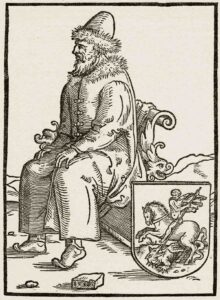
Although much had been written about Rus before Herberstein, his book established the tradition of viewing our country as a despotic Asian state. It was he who was among the first to challenge the notion that “Muscovy” was part of Europe, and to propose assigning it to Asia: “If one draws a straight line from the mouth of the Tanais (the Don) to its sources, it will turn out that Moscow lies in Asia, not in Europe.” The status of “Asians” allowed the “Russian” and “Turkish” threats to be conflated and these peoples to be merged into a single image of Europe’s enemy.
Russian rulers appeared before the Western reader not as “true Christian sovereigns,” but as the embodiment of every vice. Despotism of power, the lawlessness and universal servitude of subjects, the pseudo‑divine nature of authority as the apogee of universal deceit – such are Herberstein’s characterizations. In his words, no ruler could compare in the fullness of power with the Muscovite sovereign. Moreover, his despotic power is all‑encompassing: “He exercises his authority over the clergy no less than over the laity, disposing freely and at will of the life and property of every one of his counsellors; not one of them is so important as to dare to differ with him or to oppose him in any matter.”
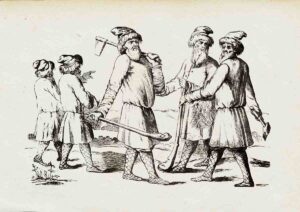
The people, in Herberstein’s view, display slavish submission to such power, and the diplomat reflects on the causes of this phenomenon: “It is hard to understand whether it is the people who, by their own coarseness, require a tyrant sovereign, or whether it is from the sovereign’s tyranny that the people themselves become coarse, callous, and cruel.” It is clear that Herberstein is being disingenuous here and that he has an answer to the question he poses: a people that prefers slavery to freedom needs harsh oppression. The diplomat advances the idea that slavery is a property immanently inherent in the Russians. Herberstein was the first to write about the link between the type of power wielded by the Russian ruler and the traits inherent in his people. For example, even the bread baked in the shape of a horse collar he describes as a symbol of dependence: “Moreover, the loaves which have the form of a horse collar signify, in my opinion, for all who eat them, a heavy yoke and eternal servitude.”
Having portrayed the institutions of the Muscovite state as tyrannical, Herberstein not only presented it in a bad light, but also led the reader toward the conclusion of its political and legal inferiority and illegitimacy.
Herberstein and His Followers

Notes on Muscovy became extremely popular in Europe. In the second half of the sixteenth century, they were published on average once every two years; altogether, twenty‑two editions are known. Thanks to the author’s authority and numerous reprints, this very book fundamentally changed the European view of Muscovite Rus and laid the groundwork for the common perception of “Russian tyranny.” The mythologemes formulated by Herberstein later became the ideological tenets of a Russophobic image. Whereas before Herberstein authors had written of the virtues and piety of the Muscovites, now, by contrast, foreigners were depicted as immeasurably superior to the Russians. Where travellers had previously reported on the Russians’ faithfulness to their word and the inviolability of their oaths, the diplomat now asserted: “As soon as they begin to swear and make vows, know that treachery lurks therein, for they swear with the intent to mislead and deceive.” Where authors had once marvelled at the purity of morals, henceforth there was no talk whatsoever of any high morality.
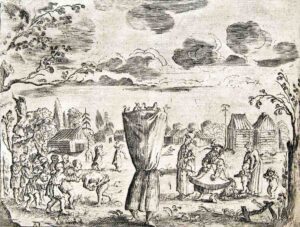
Drunkenness, wild manners, and sexual licentiousness now became the defining characteristics of the Russians. The English poet George Turberville, who visited Russia as part of Sir Thomas Randolph’s embassy in 1568–1569, wrote in one of his verse epistles from Russia:
The maners are so Turkie like, the men so full of guile,
The women wanton, temples stuft with idols that defile
The seats that sacred ought to be, the customes are so quaint,
As if I would describe the whole, I feare my penne would faint.
There were, of course, exceptions to this rule. The Polish nobleman Samuel Maskiewicz (c. 1580–1632), who was in Russia in 1609–1612, wrote of Russian mores: “The Muscovites observe great sobriety, which they strictly demand of both nobles and commoners. Drunkenness is forbidden; there are no taverns of any kind anywhere in all of Russia; there is nowhere to buy wine or beer; and even at home, with the exception of the boyars, no one dares to brew strong drink for themselves…”
On the whole, almost all subsequent narrators would refer to Herberstein’s description. The main theses formulated by the Austrian diplomat would constantly recur in writings about Russia. His work was considered almost obligatory reading for anyone studying Russia or travelling through it. The aforementioned Turberville, concluding his poetic pamphlet, advised:

To Sigismundus booke repayre, who all the trueth can tell,
For he long earst in message went unto that sauage king,
Sent by the Pole, and true report in ech respect did bring.
Similar ideas to those which Sigismund Herberstein had set forth in his book were further developed by the French traveller Captain Jacques Margeret (c. 1565–1619). He visited Russia twice: in 1600–1606 he served officially as a mercenary under Boris Godunov and False Dmitry I, and in 1609–1611 he fought in the army of the Polish‑Lithuanian Commonwealth against Russia. “Although there are plenty of provisions there, and they are cheap, the common people content themselves with very little, since they could not otherwise sustain themselves, having no crafts and being very lazy, so little inclined are they to labour, yet so inclined to drunkenness that it is beyond belief,” wrote Margeret in his memoirs. “When they rest, their drinking consists chiefly of vodka and mead, which is made from honey they obtain without effort and in abundance, as can be judged from the large quantity of wax exported from the country every year. They also have braga and other cheap beverages. This vice of immoderate drunkenness is indulged in by all – men and women, girls and children; the clergy no less, if not more, than the rest.” Margeret also emphasised the extreme ignorance of the people, including in matters of faith: “…the ignorance among the people is such that not even a third know what the Our Father or the Creed are … They hate learning and, in particular, the Latin language. They have not a single school, nor a university.”
Adam Olearius and the Myth of Russian Servitude
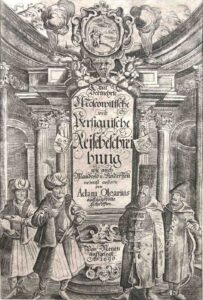
Herberstein’s ideas had a significant influence on the perception of Russia held by the German traveller and diplomat Adam Olearius (1599–1671). He visited our country several times (in 1633, 1636, and 1643) as part of Holstein embassies, about which he wrote a detailed account. Olearius, one of the most learned men of his time, made extensive use of Herberstein’s Notes on Muscovy as an invaluable source of information – and disseminated the “black myth” about the Russian state that Herberstein had created.
He unambiguously classifies the Russians as barbarians: “When one observes Russians in respect of their spiritual qualities, customs, and way of life, one cannot but rank them among barbarians.” The Russians, according to Olearius, “have no love whatsoever for the liberal arts and higher sciences, and have no inclination to pursue them.” At the same time, the Muscovites, as the traveller wrote, “are distinguished by shrewdness and cunning, but they use their intelligence not to strive for virtue and a praiseworthy life, but rather to seek advantage and profit, and to gratify their passions.”
As for the moral purity of the Russians, there is no question of it: they are “so given over to carnal pleasures and debauchery that some defile themselves with the foul vice which we call sodomy.” “This lewd insolence,” Olearius continues, “is greatly encouraged by idleness; every day many hundreds of them may be seen standing idle or strolling about the market or the Kremlin.” According to the traveller, “the vice of drunkenness is so widespread among this people, in all estates – among clergy and laity alike, among high and low, men and women, young and old – that when one sees drunkards lying about in the mud, one pays no attention; so ordinary has it all become.” The theme of universal drunkenness among the Russians clearly preoccupied Olearius, and he devotes many pages of his book to it; and having fully indulged himself in the description of Russian inebriation, he concludes that the Russians are slaves. “Just as the Russians are by nature cruel‑hearted and, as it were, born for servitude, so they must be kept constantly under a harsh and severe yoke and compulsion, and constantly driven to labour by beatings and whips. They show no discontent at this, for their condition demands such treatment of them.”

Olearius’s main conclusion is as follows: “All of them are slaves and serfs… all subjects of high and low rank are called, and must be considered, the tsar’s ‘kholops’ – that is, slaves and serfs…” Significantly, the practice of referring to oneself as a kholop in addresses to the sovereign in the late sixteenth and seventeenth centuries goes back to the Horde tradition: the Mongolian term bogol, and later its Turkic equivalent kul, were used by noble persons directly dependent on the khans when referring to themselves. The Russian word kholop was, in this case, a literal translation of these terms. However, the coincidence of this term with the ancient Russian word for slaves is nothing more than a curious fact. The address “your kholop” had no bearing on the humiliation of the nobility.
Olearius draws the following conclusion about the Russians: “They are cunning, stubborn, unbridled, unfriendly, depraved, shameless, inclined to all that is evil; they use force instead of law; they have parted with all virtues.” Before us is a whole catalogue of negative qualities – the opposition of the Russian barbarian‑slaves to the civilized Europeans.
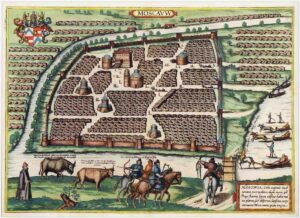
These stereotypes of Russia and the Russians were destined to have a long life. Herberstein remained an authoritative figure in the centuries that followed. The Slovene historian Vasko Simoniti, in the afterword to the first Slovene edition of Notes on Muscovy, published in 1951, wrote: “Despotic rule remained a characteristic feature of Russian reality throughout the subsequent centuries of Russian history.” In the scholar’s view, Russia had several opportunities to turn away from the path of autocracy, but failed to take them.
Herberstein’s book and the works of other foreign authors remain highly authoritative among Russian scholars and are regarded as reliable sources of information. After all, the Renaissance was marked by the emergence of historical treatises and historians as such, and it was customary to trust Renaissance authors. As a result, the historical discipline came to be built on what were often purely mythological assertions by Herberstein and other foreign writers. As time has shown, the image of Russia created by Herberstein and his followers proved useful to subsequent generations of Europeans, for the image of our country has undergone no substantial change since the Austrian diplomat’s travels. It is no accident that the prominent French historian Henri Martin, in the second half of the nineteenth century, thought it fitting to call the Russian Empire “Muscovy”; and in our own day, the same initiative has emerged in Ukraine. Russia changes, but the basic perceptions of it do not – especially when it comes to political propaganda. That is why myths about a country whose population is disenfranchised and which is ruled by a despotic ruler remain so much in demand in contemporary Western propaganda. Why reinvent the wheel when everything was already created nearly five centuries ago?
Translated by Grigory Litvinov
Читайте также: