 Elena Machulskaya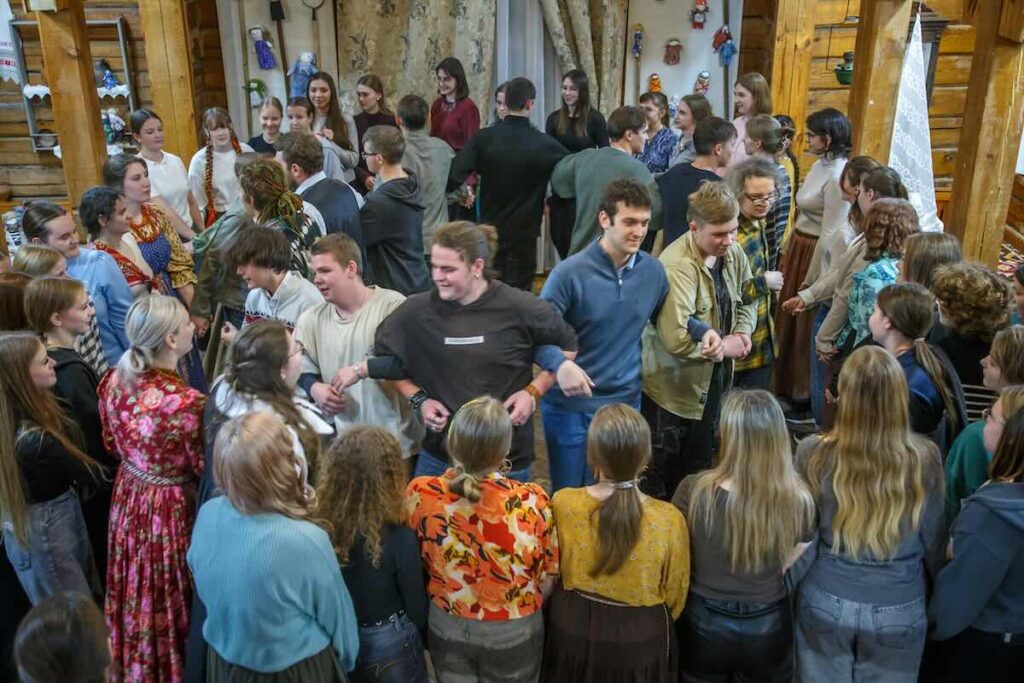
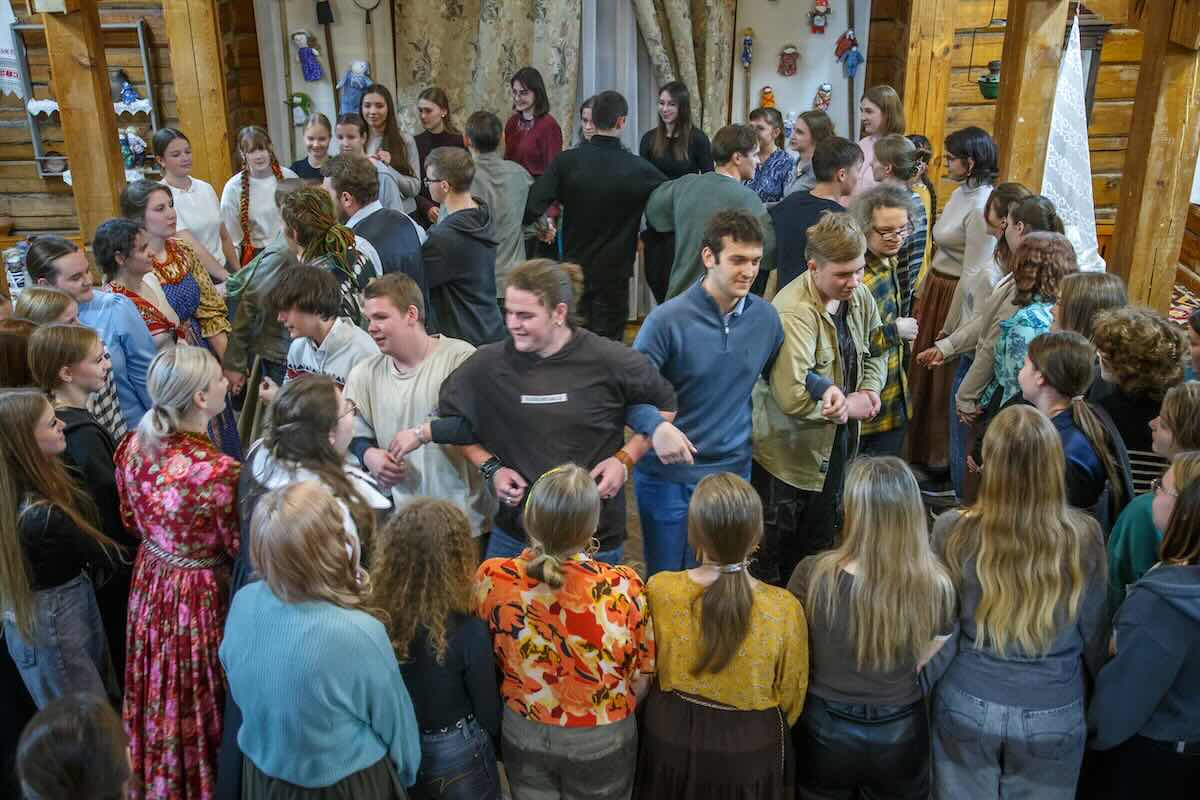
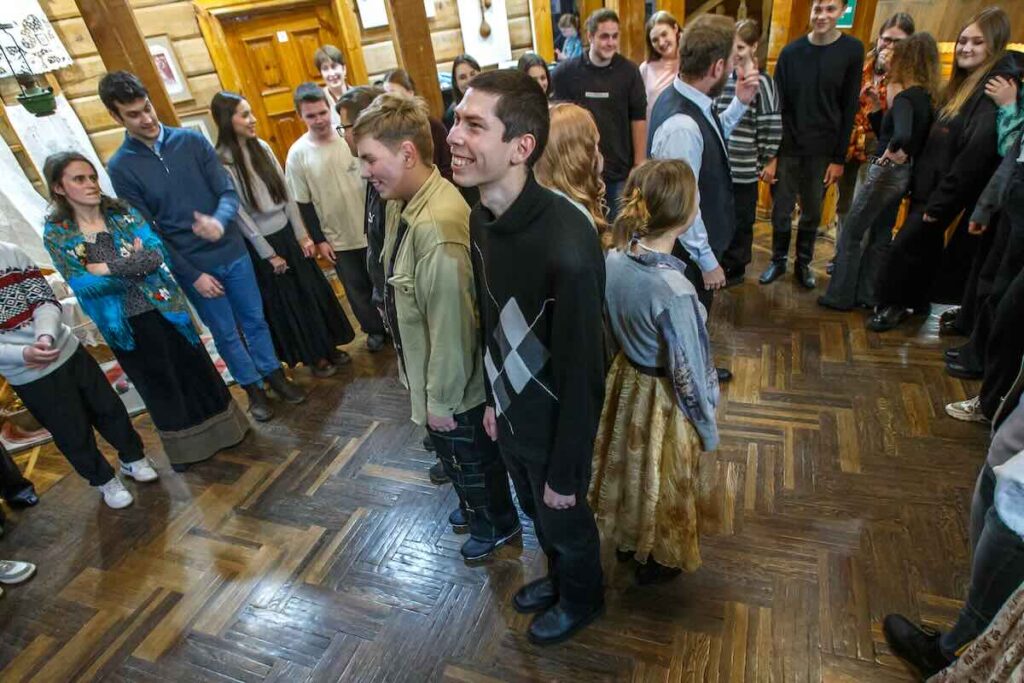
On Saturday evenings, the young people of modern Omsk aren’t heading to a nightclub – they’re rushing off to a vechorka, a traditional Siberian evening gathering. They put away their gadgets and have fun, dance and play games – just like their peers did a hundred years ago in the villages of the Chaldons, the old‑time Siberian settlers.
The round‑dance season in Siberia didn’t last long. If Easter came early, there could still be frosts; if it came late, there was the spring thaw. And in summer, the fun was spoiled by gnats and mosquitoes. So the main entertainment for young people was the vechorka – evening gatherings held on Sundays and holidays, not outdoors but in people’s homes. And during Svyatki – the Twelve Days from Christmas to Epiphany – they were held every single day. During the fasting periods, of course, there were no vechorkas; they were replaced by handicraft get‑togethers.
The Past
“Uncle Ivan, would you please let Maria Ivanovna come with us to the vechorka? We’ll bring her back afterwards.” – that’s how, back in the 1920s and 30s, young men in the villages of northern Omsk region would ask permission to take girls to the vechorka.
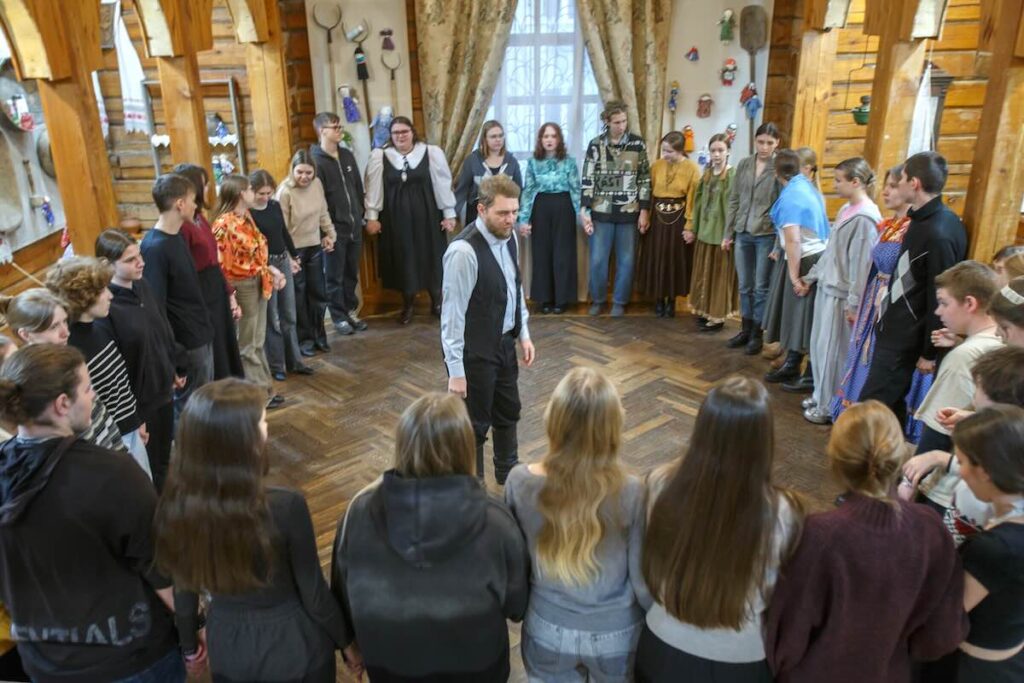
Usually, for the vechorka, the young men would rent a hut for one evening (until midnight), paying with firewood, bread, or money. “We’d rent a hut. It was always some poor fellow who’d let us. We’d bring firewood or whatever… And then we’d start partying… The hut would be full! Say, three lads and three girls would walk around. Then we’d finish, and they’d kiss. If the lads had been walking, they’d kiss the girls. The girls walk around, and we sing to them. We’ll sing them another song. They walk around, not holding hands… Whoever she wanted, she’d call over, and they’d kiss. And that’s how this vechorka went,” recalled Ivan Mironovich Subbotin, a folk singer from the village of Mikhaylovka in Kolosovsky district.
Young people came to the vechorkas in their finest outfits. The lads would bring treats for their sweethearts – nuts, gingerbread, candy. Communication at the vechorkas was largely governed by ritual, and young people addressed one another by their full names.
The vechorka followed certain rules: like a literary work, it had its exposition, development, and denouement, with games and dances alternating in a set order. It was overseen by an elected master of ceremonies, who went by various titles: “commissar,” “brigadier,” or “Cossack.”
In many villages, the vechorka would begin with a game called – “Neighbors.” The girls would sing:
Oh you neighbors, neighbors dear,
Take a neighbor, have no fear –
Take the girl who suits you best,
Sit her down and let her rest
On your knee, and don’t be shy –
Kiss her gently, kiss her kind.
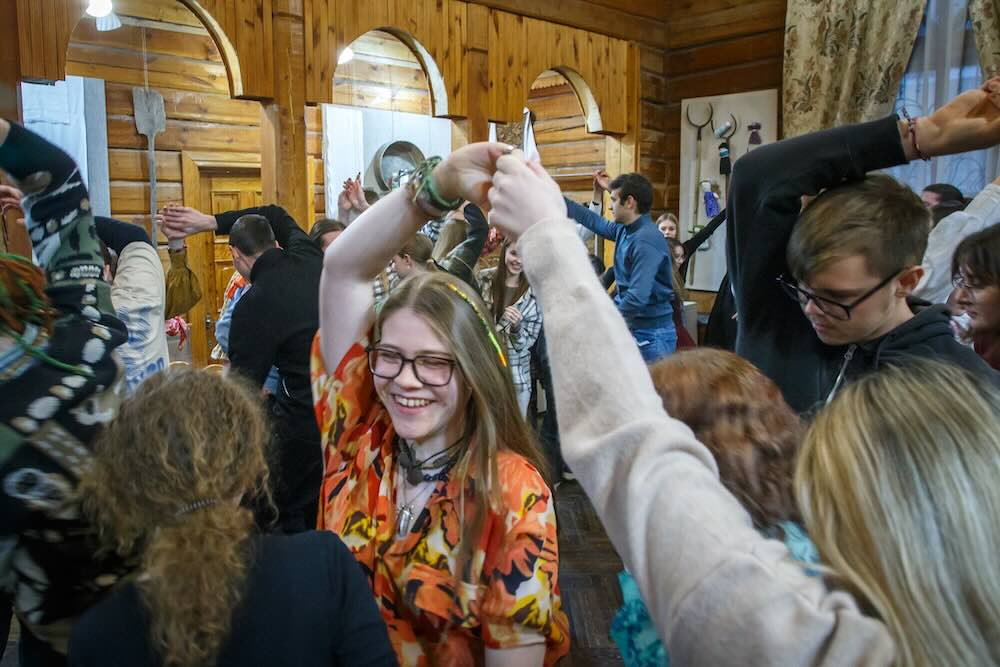
The “commissars” seated the girls on the lads’ knees as they saw fit. Approaching each pair in turn, they would ask: “How do you like your neighbor?” If the answer was affirmative, the neighbors kissed. But a lad could also ask to swap his neighbor for a girl he fancied — though not for free, of course. In the village of Stanovka, for instance, anyone who was unhappy with his neighbor was made to dance.
At the vechorkas, young people would look one another over, searching for a future spouse. Songs were sung during the evening, and to these tunes the lads and girls would figure out whether their sympathies were mutual. Luckily, there were plenty of opportunities for this. For one thing, partners were constantly swapped in games and dances. You couldn’t refuse. And asking the same person over and over was considered improper.
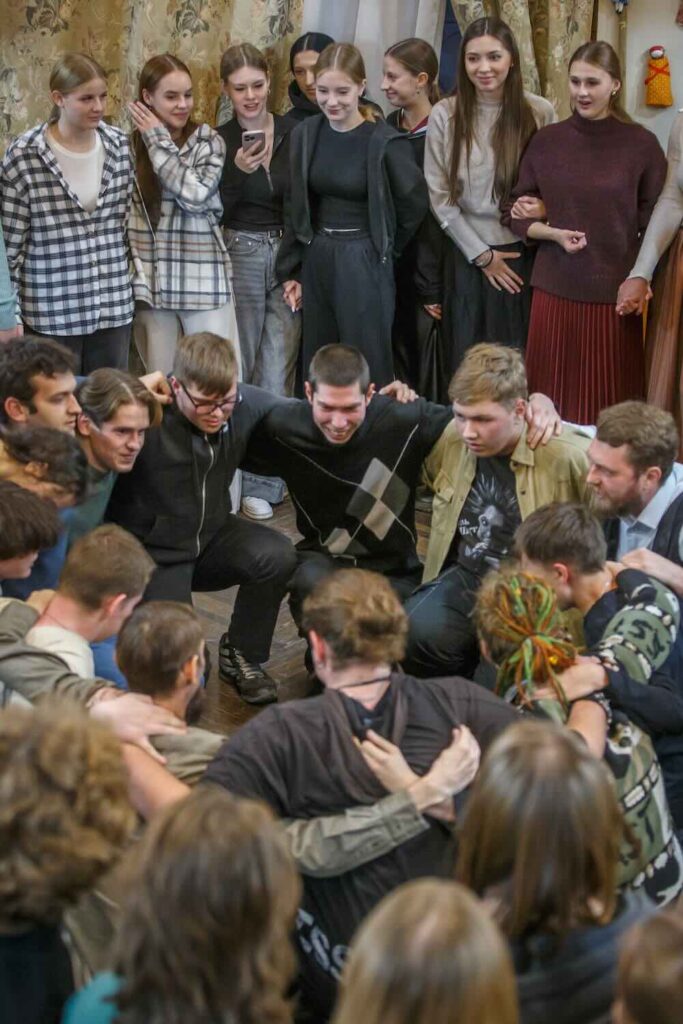
There were different ways of “walking to the vechorkas songs.” “The lads walk around, the girls sit on a bench. Each lad takes a girl, and they walk around in pairs. At the end, they kiss in front of everyone. Then the lads sit down – the girls walk around and choose their lads.” Or like this: “The lads and girls walk around in a circle, holding hands. A lad is chosen to stand in the center. He chooses a girl for himself. They stand in the circle and also spin around – in the opposite direction. At the end of the song, they kiss.” Those who were shy about kissing were egged on with little rhymes: “Kiss her once, kiss her twice, kiss her thrice – that’ll be nice!” or “Are you game? – Sure am! – Then kiss her forty times, no shame!” And then there were game round‑dances to songs, where they’d act out the song’s plot in the center of the circle. There were also just games, without songs. They played “The Belt” – standing in a circle and hiding a belt behind their backs, while the leader had to guess who had it. And the game “Numbers” was all about reaction speed – if you missed your number, you could get a flick with that belt.

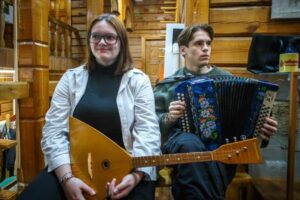
After the games came the dancing – to accordion or balalaika, sometimes with a tambourine. They performed traditional Russian numbers, with couples facing off in the center of the circle. The multi‑figure quadrilles, however, were danced in Omsk region only by Belarusian settlers. So when Russian, Belarusian, and Ukrainian settlers poured into Siberia in the early twentieth century, the vechorka repertoire – which had originally been based on the song‑and‑game traditions of Russia’s northern provinces – sparkled with new colors.
After the quadrille came the polka. In Tara district it was called the “frenzied polka,” and in Sedelnikovsky district – the “silly polka.” During the dance, all the couples would whirl in a fast waltz, spinning first clockwise, then counterclockwise. “They’d spin until they dropped. Some would fall, everyone would laugh – it was great fun!” the old‑timers recalled.
The vechorka typically ended with the game “Parting”. The accordionist was thanked, and everyone headed home in pairs. They walked unhurriedly, with little dance steps, and sometimes those at the front and back of the column would sing different chastushki (traditional Russian folk ditties). Sometimes they’d circle the whole village twice this way, reluctant to part ways.
The Present and the Future
In many villages of Omsk region, vechorkas were held right up until the start of the Great Patriotic War. Later, traditional leisure was edged out by dances in village clubs.
But the tradition did not fade into oblivion. Starting in the 1950s, teachers and students of Omsk State Pedagogical University began collecting information about the vechorka traditions of the Omsk Irtysh region. Later, folklorists took up the baton. Extensive archives were built up, which made it possible to reconstruct the scenario of these youth festive gatherings. The Omsk folklore ensemble “Sretenye” has been holding vechorkas at the Siberian Cultural Center for nearly three decades, attracting young people passionate about folklore. And since 2024, members of the youth group “Omsk Folk Dvizh” have been drawing in young people who had never even heard of folklore before.
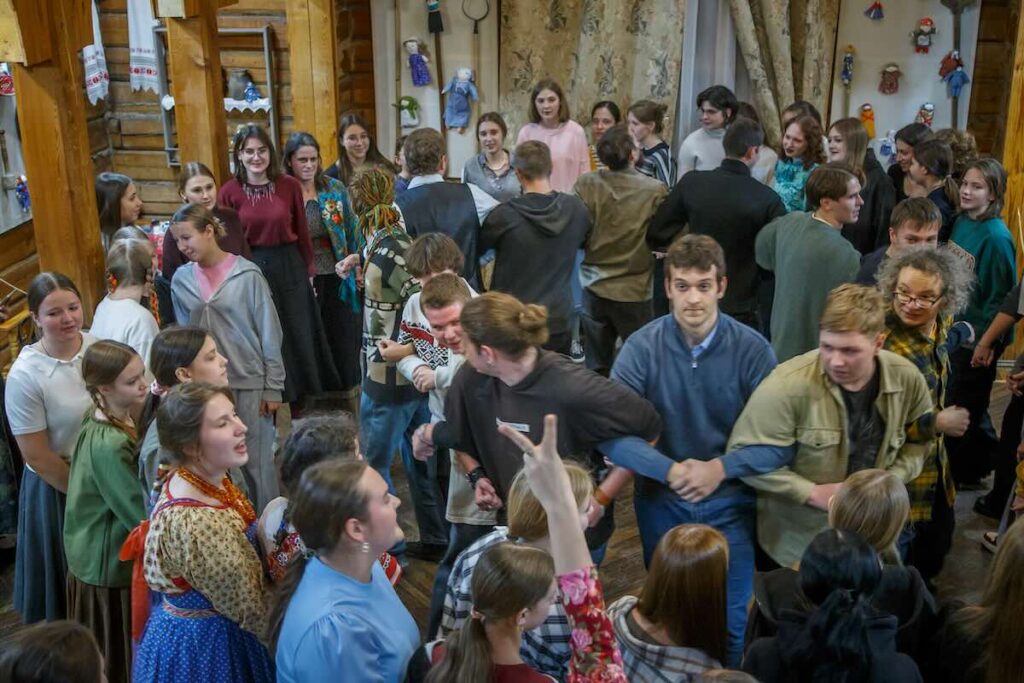
At modern vechorkas, much looks different. A girl can show up in jeans, and no one will give her a second glance. Family people can come too, although in the past, only unmarried youth took part in traditional vechorkas.
The head of the group, Anastasia Martynova – a teacher at Omsk Music College – once met members of the “Vechernyaya Moskva” (Evening Moscow) society at a festival in the Yaroslavl region; they hold vechorkas all over the capital. She found herself wondering: why isn’t there anything like this in Omsk? When she returned to her hometown, she shared the idea with friends and acquaintances who had also been passionate about folklore since childhood. And that’s how “Omsk Folk Dvizh” came into being.
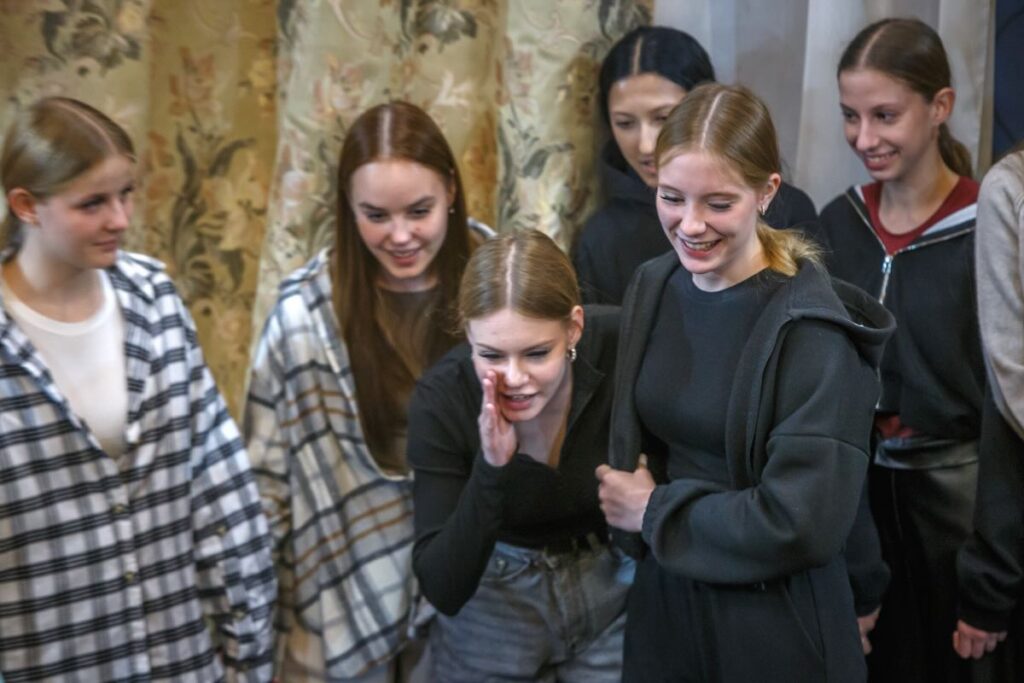
Today, organizing a vechorka is more complicated – in the past it was part of everyday life, but now it’s a form of leisure. In a city of a million, people are invited using modern technology, primarily social media advertising. And of course, today’s folklore enthusiasts have had to adapt the vechorka to current realities. “In the old days, young people went to vechorkas to find a partner and start a family. Now it’s a traditional alternative to a nightclub – and one of the best alternatives,” explains multi‑instrumentalist musician Yakov Reznikov. “The main thing is that the vechorka doesn’t lose its pace and energy, because modern people, unfortunately, are wired in such a way that you have to keep them engaged – they need to be constantly entertained.”
As a result, the slow processions to lyrical songs were edged out by games and high‑energy dances. “Today’s young people especially love simple couple dances: the Krakowiak, Korobochka (The Little Box), Padespan, and Svetit Mesyats (The Moon Shines). There are few steps, the tunes are catchy, and they’re quick and easy to learn,” explains choreographer and vocal teacher Elizaveta Batyaeva.
In the past, the “vechorka season” would open with the Pokrovskaya vechorka, held in mid‑October to mark the feast of the Intercession of the Theotokos on October 14. Today, Omsk Folk Dvizh does the same – and sometimes, they choose an unconventional start to the evening. Last year, for instance, the Pokrovskaya vechorka began with a children’s game called “Dudar” (The Piper). The players would chant:
Dudar, dudar, old piper man,
Old, old ancient man,
Put him under the log, under the damp log…
Then those in the round‑dance would ask: “Dudar, dudar, what hurts?” – “My head hurts,” the player acting as the dudar would answer. Everyone would grab the “sore” spot, walk in a circle again with the same chant, and repeat the question. In response, the dudar could name any other body part – not necessarily his own, pointing to anyone in the circle – turning the game into a merry romp.
“Our vechorkas have an educational dimension, because people come who have no idea what folklore is. So we have to explain it to them, starting with the games that used to be played at children’s vechorkas, which were held separately,” explains Yakov Reznikov.
And of course, modern vechorkas wouldn’t be complete without the “adult” kissing games – and these are what today’s young people enjoy most of all.
In the round‑dances at Omsk Folk Dvizh vechorkas, they often sing a song recorded in the village of Ragozino, Sedelnikovsky district, Omsk region:
Little bunny white, ears black as night,
One way he flew – bought honey and sugar too,
The other way he spun – there the river run deep,
There the river run deep, muddy and steep,
Muddy and steep, with rowan trees all round.
Oh, the rowan is thick – kiss your girl quick!

Three lads and three girls step into the circle, turn their backs to one another, and when the song ends, they spin around. Those who end up facing the same direction kiss.
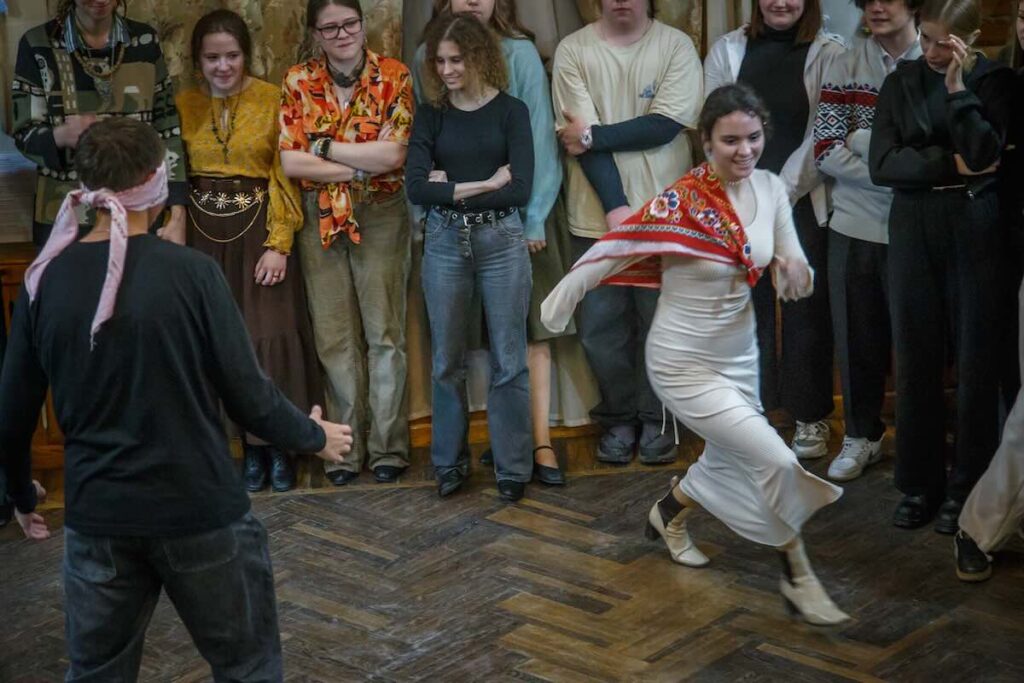
The game “Yasha Is Looking for Masha” is a blind man’s bluff played in a circle. Throughout the game, “Yasha” and “Masha” keep calling out to each other. “Masha, where are you?” asks “Yasha.” “I’m here,” the girl replies, slipping away from the blindfolded lad trying to catch her. If “Yasha” doesn’t succeed for too long, the circle gets smaller.
Another game, called “The Little Kerchief,” is trickier than it looks. In the center of the circle, a girl dances with a kerchief in her hand. Beside her is a lad who is after that kerchief. “In tradition, nothing ever happens just for the sake of it. Here, both have to show their dancing mettle. You have to charm the girl with your dancing, so that she forgets about the kerchief and has eyes only for you. Then you neatly take that kerchief, without any strong‑arm tactics,” says Yakov Reznikov with a smile.
Some games have to be seriously adapted for the modern age – transposed onto today’s everyday life, sprinkled with jokes that today’s young people will get. Otherwise, the kids just won’t understand them. Besides, as the members of “Omsk Folk Dvizh” say, “tradition is always evolving.” For instance, in the round‑dance game “Oh, There’s No Woman”, the man, after much searching and questioning, finds his wife at the well‑known Shebalin Music College – a place every Omsk resident knows.
The unconventional pastime has already caught the fancy of many city dwellers: at the last Pokrovskaya vechorka, there were so many people that some couples had to wait their turn on a small balcony while others danced, and then swap. This, incidentally, is characteristic of traditional Siberian vechorkas: in Siberia, huts were mostly small, so not everyone could dance at the same time.
The Future

“We try to make sure that every vechorka has some new element – a new dance, a new game. We aim to show the richness and diversity of our culture. Of course, the folklore of the Omsk region is our priority. But we borrow some games and dances from other areas. Fortunately, we have a wealth of accumulated material – a repertoire we can mix up and rearrange,” explains Yakov Reznikov.
A clear trend is already emerging: those who come to a vechorka once tend to come back to the next gatherings. Because here, you’re not a spectator – you’re an active participant in the action.

It’s no accident that the organizers don’t wear traditional folk costumes to the vechorkas. They found through experience that doing so creates a certain barrier between the hosts and the guests. Instead, folklorists try to introduce some unifying element – for example, they agree that everyone’s outfit should include red, white, black, and green. In this way, in a world geared toward extreme individualism, a sense of togetherness emerges.
Taking part in vechorkas changes young people in many ways. “They get to know each other, become friends, and start hanging out beyond just these gatherings of ours. And of course, they discover their own culture and want to delve deeper into it. They ask for the lyrics of vechorka songs, and some even ask for a voice message so they can learn the tune,” says Anastasia Martynova. And then a young man or girl will go up to their grandmother and ask: “Tell us, what did you sing when you were young?” And she starts to remember…
What’s more, “Omsk Folk Dvizh” isn’t limited to vechorkas. The group members also run workshops on playing the balalaika, block printing on fabric, and couple dances, and they teach folk songs… Because folklore is all‑encompassing. You can’t just sing, or just dance, or just do handicrafts. It’s all interconnected – everything complements everything else.
And “Omsk Folk Dvizh” has plenty of exciting plans ahead. “Our team is driven by a huge love for folklore and a desire to give as many young people as possible the chance to connect with their native tradition. Even if someone comes to just one workshop or one vechorka, that’s already wonderful. Even a small touch of your own cultural code is already a victory,” states Anastasia Martynova. “In today’s world, all of this is necessary so that we don’t forget our roots, so that we remember who we are and who our ancestors were. Because without that memory, there is no future.”