 Platon Besedin
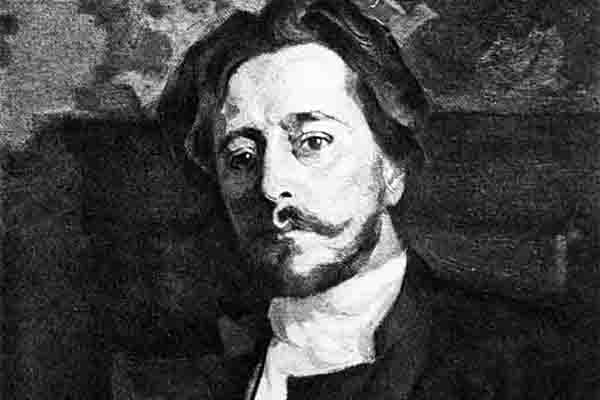
In the early 20th century, Leonid Andreyev’s popularity was phenomenal. He was hailed as the idol of his generation; admirers tried to imitate him, and readers eagerly awaited his new short stories and novellas. However, after the revolution, the writer’s name fell into oblivion for many years.
But today, Leonid Andreyev is returning to readers. As before, few remain indifferent to his stories. We are rediscovering a writer who lived and worked at a punishing pace. A writer who always felt out of place in this best of all possible worlds.
The “Indian” Who Became the “Duke”
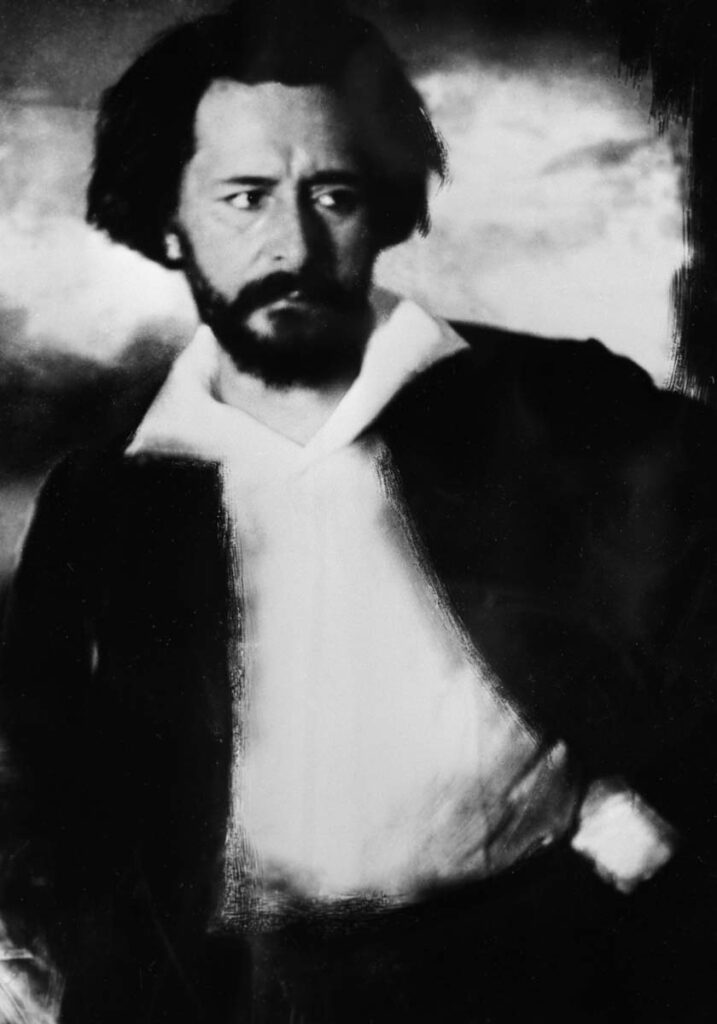
Leonid Andreyev was born in Oryol on August 21, 1871. When he was three years old, his parents – who had been living in rented flats – moved to 2nd Pushkarskaya Street into their own house, built to a design by his father, Nikolai. It was here that Leonid and his five siblings spent their childhood and youth. In August 1991, a memorial museum dedicated to the writer opened its doors in this very house.
Leonid learned to read around the age of six, and from then on he would constantly hide away with a book, either in the attic or on the roof of the house. When he discovered the novels of Cooper and Mayne Reid, he built his own wigwam in the garden, where he would retreat with his latest volume. This is what his cousin Zoya Patskovskaya recalled: one day, Lenya gathered “a company of boys and girls – all aged 8 to 10 – ordered them to strip naked, smeared them all with clay, rolled them in chicken feathers, and began preparing an attack. He said the white men were close and that they needed to surround them and attack by surprise.” The role of the “white men” fell to the Andreyevs’ guests who were having tea in the garden. It is easy to imagine what followed the attack by the half-naked “Indians” bursting out of the bushes: panic, shattered teacups, spilled tea, and terrified screams.
In 1882, Leonid was sent to the Oryol Classical Gymnasium. He was not a particularly diligent student, nor did he distinguish himself by exemplary behavior. He made no close friends and was arrogant and taciturn – it is no coincidence that his classmates nicknamed him “the Duke”. By the age of 14, he had become seriously engrossed in the works of Arthur Schopenhauer and Eduard von Hartmann. The influence of the German pessimist philosophers left its mark. One evening, the 16-year-old Andreyev, while out walking with a group of gymnasium students, decided to test his willpower and, at the same time, his fate. “Suddenly, right in front of the train, an overwhelming thought of suicide seized me, and I lay down between the rails, telling myself: if I survive – it means my life has meaning; but if the train crushes me – then such is the will of Providence,” recalled the writer. Andreyev survived that time. What drove him to this reckless act? Perhaps a part of that destructive force which, like a demon, had resided within him all his life?
From Correspondent to Writer
In 1889, Andreyev’s father suddenly died, leaving the family without a breadwinner and barely able to make ends meet. In 1891, Leonid enrolled in the Faculty of Law at St. Petersburg University, but two years later he was expelled for failing to pay his tuition. The young man then moved to Moscow, where he enrolled at the Faculty of Law of Moscow University. Life was somewhat easier for him here, though he still had to live half-starved, scraping by on private tutoring and drawing portraits.
Now, the Duke wore a red silk shirt, cracked jokes, raised hell when drunk, and brawled with the police. His drunken escapades were the talk of the entire university. If the memoirs of his classmates are to be believed, a new expression even emerged among student circles in those days: drinking “the Andreyev way.”
Once, while drunk, Andreyev stabbed himself. Another time, one of his friends entered his room just in time to stop him from yet another suicide attempt. At the age of 23, he shot himself with a revolver. He aimed for his heart – fortunately, he missed, but the wound still led to a heart condition. Andreyev’s suicide attempt was the result of “unhappy love.” Handsome, intelligent, and talented, Leonid was unlucky in love until he met his first wife – Alexandra Veligorskaya…
At the end of 1894, Andreyev’s mother sold the house in Oryol and moved with her children to Moscow to join her eldest son. The money quickly ran out, and the family never managed to escape poverty. Their monthly income at the time consisted of a few rubles Leonid earned from private tutoring, the meager salary of his brother Vsevolod, who worked as a clerk at the District Court, and the 30 kopecks a day his sisters made in a corset workshop. Sometimes in the evenings, the girls would go to Filippov’s bakery, where they were given unsold buns out of pity. They had to rent the cheapest accommodation available.
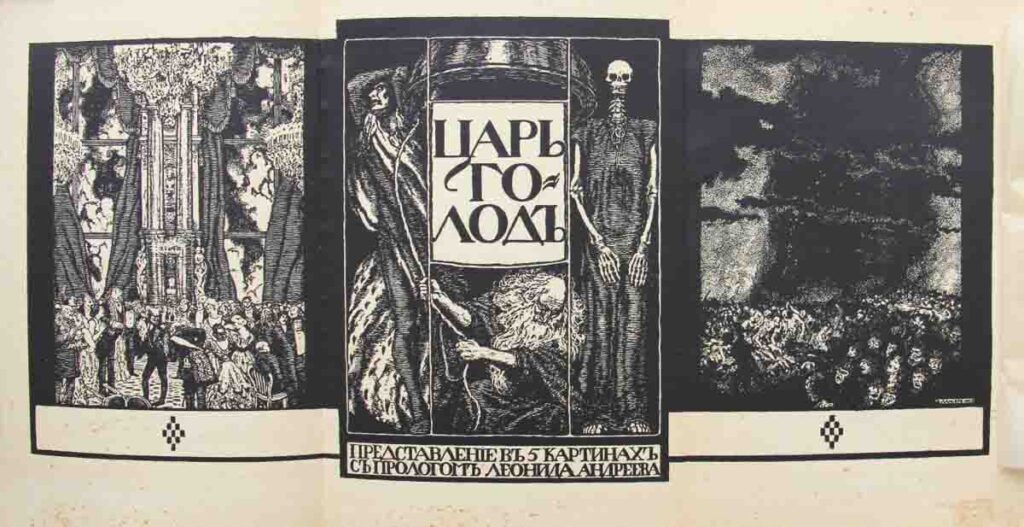
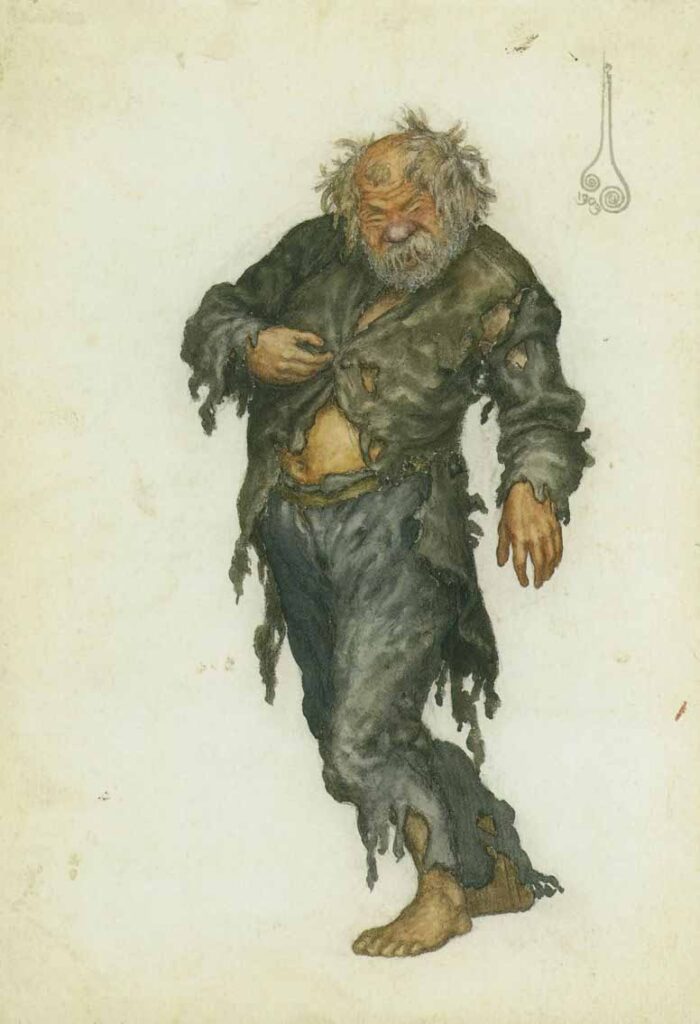
The situation gradually improved only after Andreyev began contributing to the journal Moscow Herald, and then secured a position as a correspondent for the newspaper Courier. In 1897, he passed his final exams and became an assistant attorney of the Moscow Judicial District. However, this career did not last long. Soon, Leonid made his final choice in favor of journalism – and thus began the journey of the writer Andreyev into Russian literature.
Here, we should give credit to Isaac Novik, the editor of the Courier, who commissioned the young correspondent to write an Easter story for the newspaper. And in April 1898, Bargamot and Garaska appeared on the front page – written, as the writer himself admitted, in imitation of Dickens. “They say the story is the highlight of the entire Easter issue,” Andreyev noted in his diary.
Over the next five years, Andreyev published several dozen of his early short stories in the Courier. He also continued to work as a correspondent, churning out court reports and satirical feuilletons, which he signed with the pseudonyms L-ev and James Lynch. Andreyev’s articles appeared in the newspaper almost every day. This exhausting workload solved the family’s financial problems, but following a severe nervous breakdown, it led Leonid to the clinic of Professor Mikhail Cherinov. It was there that Andreyev wrote the short story Once Upon a Time, which brought the writer his first real fame.
A new chapter in Leonid Andreyev’s life began at the end of 1899, when he started corresponding with Maxim Gorky. The following year, they met in person. Gorky introduced Andreyev to the Sreda (Wednesday) literary circle, which included Vikenty Veresaev, Nikolai Teleshov, Ivan Bunin, and other writers. He also helped his new friend publish his first collection of short stories.
An Angel Named Shurochka
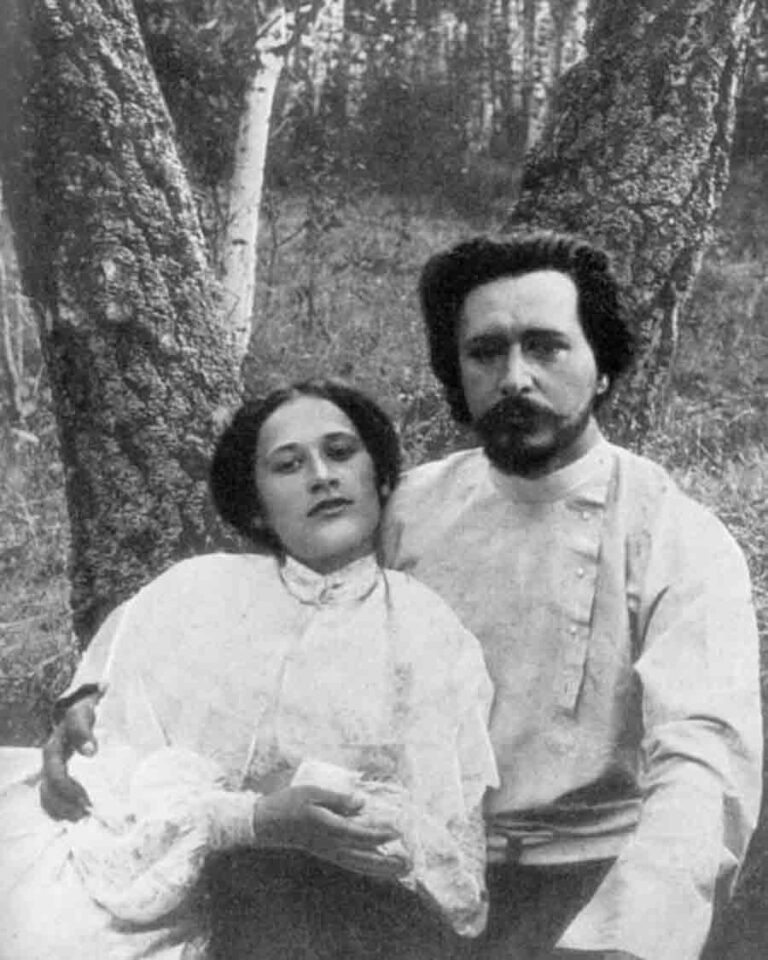
Andreyev often said that it was crucial for a writer to marry the right person. His first wife was Shurochka (short for Alexandra) Veligorskaya, a great-niece of Taras Shevchenko. They met in 1896, when she was a fifteen-year-old schoolgirl. While Shurochka was growing up, the writer had romances with other young ladies. But he made no secret of the fact that he was very interested in Alexandra.
They were married in 1902. A few days before the wedding, the groom gave his bride his debut short story collection – the one that had been published thanks to Gorky’s patronage. By this time, Andreyev was already the editor of the Courier and a famous writer commanding substantial fees. Their first child, Vadim, was born. It seemed as though everything in his life was going perfectly. But in 1905, Andreyev, who supported the First Russian Revolution, hid socialist revolutionaries who were evading the authorities in his home. The police arrested everyone, including the writer, and threw them into Taganka Prison.
In 1906, the Andreyevs left for Europe and settled in Berlin. It was here that their second son was born – Daniil, who would become a poet and mystical philosopher, the author of the remarkable Rose of the World. But Shurochka died after giving birth. They say that for a long time afterward, Andreyev could not even bear to look at little Daniil (looking ahead, it is worth noting that the writer had four sons and a daughter from his two marriages).
By this time, Andreyev had already written his most famous short stories – The Abyss, Once Upon a Time, Lazarus, His Excellency the Governor, and The Red Laugh. They shocked the public. Writing so boldly and expressively was simply not a thing at the time. It is no coincidence that Andreyev is hailed as the founding father of Russian Expressionism. He knew how to catch a fleeting impulse and, giving it a powerful acceleration, strike a flame from a spark. His element was emotion, pure nerve. He often preferred to capture a scene, a character, or an event in just a few punchy sentences. Yet at times, Andreyev would plunge into a neurotic, agonizing state, plagued by hallucinations.
As a rule, Andreyev did not deeply dissect his characters; he preferred to create caricatures. In A Book about Leonid Andreyev, Korney Chukovsky observed that the writer spent his entire life inventing and acting out the roles of his characters, trying on their masks and transforming himself into the protagonists of his works. And sometimes these were not merely functional characters, but personifications of vice, endowed with distinct physical and moral traits. Sometimes they seemed to spread their wings – most often demonic ones.
Poetically speaking, Andreyev, like a tightrope walker, balanced on the edge of the abyss – but after Shurochka’s death, he likely plunged straight into it.
“Something on the Psychology of Betrayal”
He did not withdraw or isolate himself; instead, he threw himself even more into carousing and reckless behavior. Yet another mask, it seemed, hiding the inner fracture and despair of a man disappointed not so much in the structure of the universe as in the divine presence within it. His friend and mentor Gorky said shortly before his death: “Oh, how I argued with God! Oh, how I argued!” Perhaps Andreyev experienced something similar after his wife’s death. It was then that the writer conceived the idea for one of his most famous works. “Something on the Psychology of Betrayal” – that is how he described his idea in a letter to his friend, the writer Alexander Serafimovich. And in 1907, his novella Judas Iscariot was published in the collected volume of the Znanie partnership, and it continues to spark fierce debate to this day.
In his earlier works, Andreyev had already touched upon biblical themes, reinterpreting them in his own unique way. He did so primarily through the lens of protest. At the time, he was deeply engrossed in the books of Strauss and Renan about Jesus Christ and the apostles, and the subject utterly captivated his imagination. Even before this, he had enjoyed shocking the public and leaving them stunned. But with Judas Iscariot, his primary goal was not to surprise, but to unravel the nature of the greatest betrayal on earth. Maximilian Voloshin dubbed Andreyev’s novella Judas Iscariot “The Gospel Inside Out”. Of course, the Russian writer was not the first to attempt a radical reinterpretation of Judas’s betrayal. However, he was one of those who set the tone for this theme throughout the entire 20th century.
In Andreyev’s telling, Judas proves to be Christ’s most faithful follower. The Apostle Peter denied his Teacher three times and repented. Judas, however, saw his betrayal through to the end, hoping that the people would try to save the Savior from death. This radical reinterpretation, bordering on defiance, is characteristic of Andreyev. The short story Lazarus is equally telling in this regard. Sin, the writer reflects, is something that takes root in a person like a monstrous disease, altering both the individual and human nature as a whole. In the story he rises on the third day, just as he does in the Gospel, but death leaves horrifying traces on him. So, what, then, is the point of immortality for man – Andreyev asks…
At the Height of His Fame
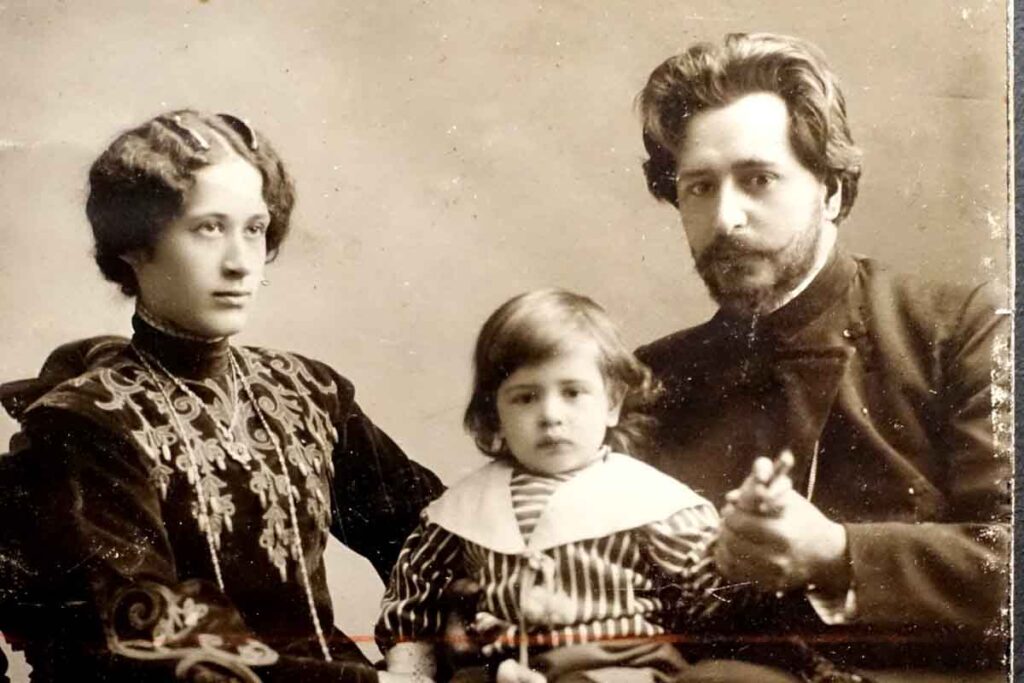
Another work widely considered to be Andreyev’s most famous is the short story The Red Laugh – a strange, powerful, and striking anti-war, and indeed, broadly anti-violence piece. It was published in early 1905 in the collected volume of the Znanie partnership.
The idea for The Red Laugh came to the writer while he was in Yalta with his wife. Here is how Andreyev described it to Gorky: “And this evening near our dacha, two Turks were wounded by an explosion – one, it seems, fatally, his eye blown out. …The two of them were setting up a burka when a spark triggered the explosion. I saw them carrying one of them away – his whole body limp as a rag, his face a mask of blood, and he was smiling a strange smile, while he was unconscious. His muscles must have contracted somehow, producing this awful, red smile.”
The Russo-Japanese War was raging at the time. Andreyev took no part in the battles, but he reflected on them with agonizing intensity. He wrote the story for nine nights on end, as if in a feverish frenzy, driving himself to the brink of madness, and after finishing the work, he fell ill for a long time and feared he was losing his mind. Vikenty Veresaev characterized the work this way: “We read The Red Laugh amid the thunder of cannons and exploding shells, and – we laughed. The most terrifying and yet most saving trait of man has been missed – the ability to get used to anything. This is the work of a great, neurotic artist who painfully and passionately experiences the war through newspaper reports about it.”
But be that as it may, Andreyev spoke about the horrors of war honestly and without pulling any punches, so that as many people as possible would not be lulled into a false sense of security. So that they could at least briefly shake off the shackles of comfort and finally understand what is really happening – and why one cannot just stand on the sidelines or remain indifferent. To achieve this, one must pass through understanding, and then, if fortune allows, touch the light…
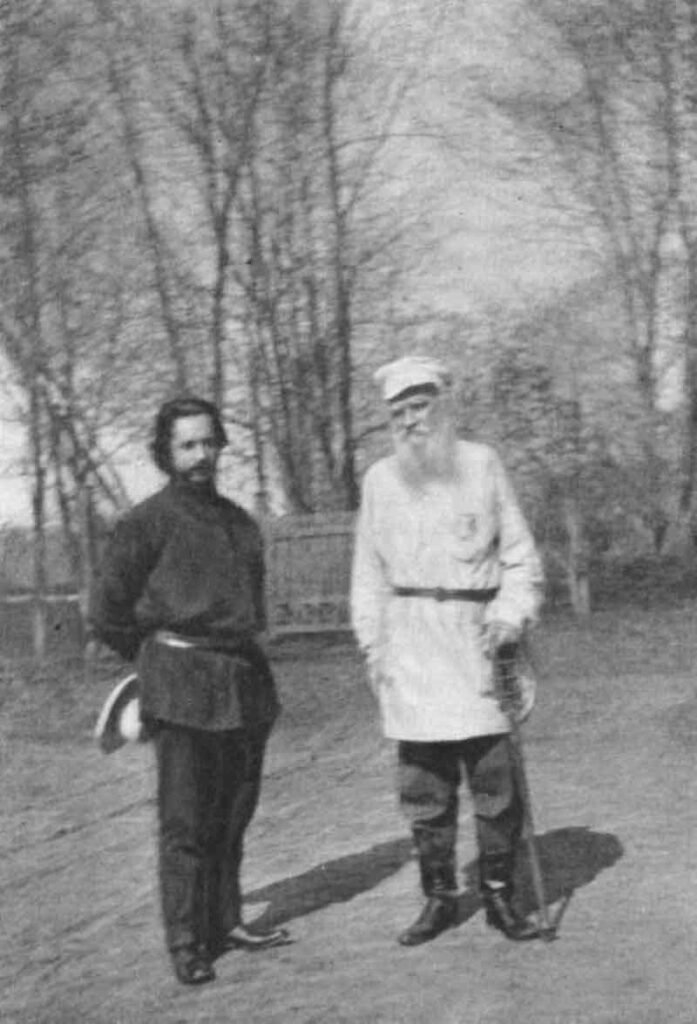
In 1908, following The Red Laugh and Judas Iscariot, Andreyev published another novella that stunned readers and quickly gained immense popularity. It was published in the almanac of the Shipovnik publishing house and subsequently translated into some two dozen languages. His fame reached new heights. This was, of course, The Seven Who Were Hanged. The novella was dedicated to Leo Tolstoy. However, he absolutely hated it.
Andreyev conceived the idea for The Seven Who Were Hanged in February 1908, after the execution of seven Socialist Revolutionary terrorists who had been plotting an assassination attempt on Minister of Justice Shcheglovitov (Andreyev was personally acquainted with one of them – Vsevolod Lebedintsev. – Editor’s note.). However, the revolutionaries were not the only prototypes for the novella’s characters; they also included the Estonian peasant Weber, who had murdered a landowner, and the convict killer Murilin, whose crimes Andreyev had read about in the newspapers.
The novella is not about the heroism of terrorist revolutionaries, nor is it about the depravity of ordinary criminals. The writer neither justifies, defends, nor condemns any of the characters. The novella is an attempt to understand the clash between the instinct for self-preservation and death within a human being. It is a desire to explore how people behave and what they feel when they know the exact day and hour of their death. What do they remember? What goes through their minds the moment they fully grasp that their violent death is inevitable? The exploration of the human psyche in this work sometimes seems merciless, but apparently, that is exactly what draws the reader in, leaving them to wonder: what kind of courage must a writer possess to dare undertake such an attempt?..
A Restless Soul
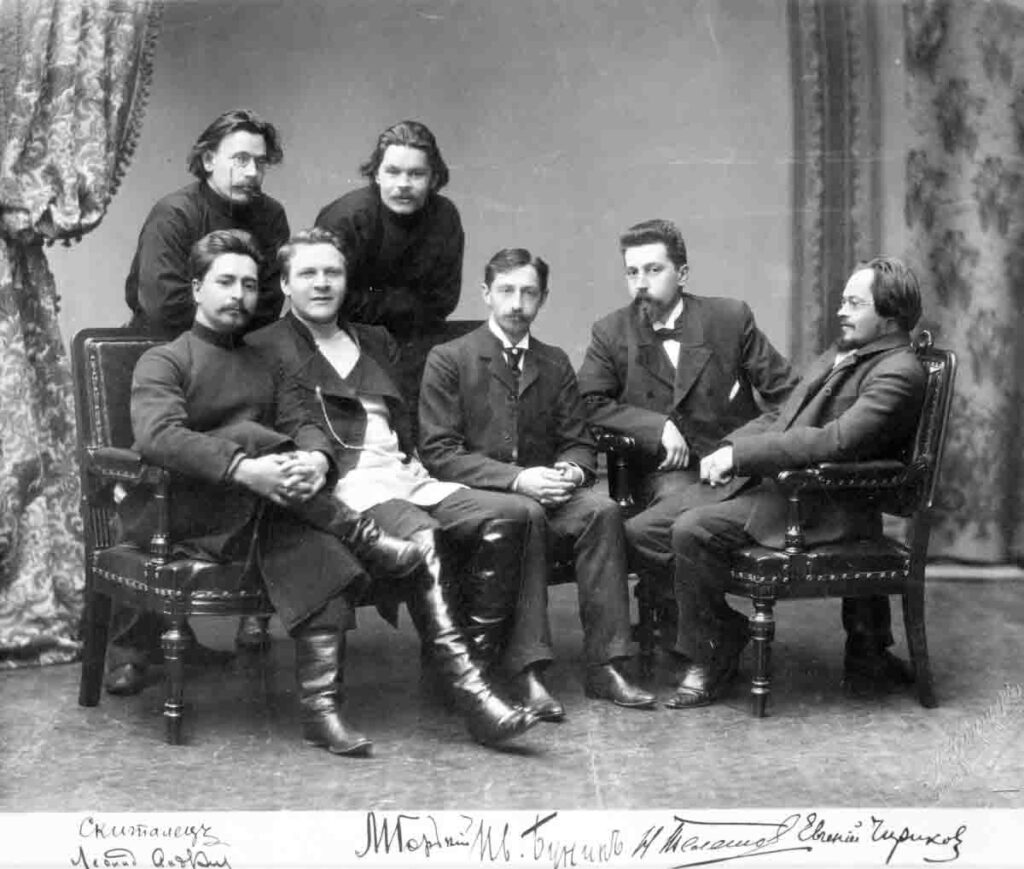
Leonid Andreyev was a deeply introspective and restless man. He supported the 1905 Revolution, but rejected the October Revolution of 1917. He welcomed the war against Germany in 1914, viewing it as a war of liberation. Because of these very convictions, he finally broke with Gorky.
I would venture to suggest that Andreyev’s political views and allegiances largely depended on his inner state. In general, the writer often found any interpersonal relationships burdensome, with the exception of a very tight circle of friends and family. But after the death of his wife Alexandra, Andreyev seemed to become genuinely terrified of loneliness. So much so that his search for a new wife provoked rather cruel mockery from his acquaintances. For example, there was a joke going around Moscow that he had proposed to every single actress at the Moscow Art Theatre.
Finally, in 1908, Andreyev married Anna Denisevich – the complete opposite of Shurochka. She insisted that her acquaintances address her as Matilda. Rumor had it that her father wanted only sons and vowed that any daughters he had would be named Anna. Whether this is actually true or not, Ilya Denisevich did indeed give both of his daughters this name. As a result, the sisters decided to correct their father’s quirk themselves: the elder began introducing herself as Matilda, and the younger as Victoria. Before the wedding, Andreyev demanded that his bride stop calling herself that. Which she did, becoming Anna Andreeva.
The children from his first marriage never accepted their stepmother, and neither did Andreyev’s family – they believed that the “lovely Shurochka” had suited him far better.
Anna became not only a devoted wife to her husband, but also his literary secretary and typist. With her, the writer moved to the Finnish village of Vammelsuu – into their own estate, which they named “White Night”. The house resembled a gloomy medieval Gothic castle and was built to a unique design using Andreyev’s royalties. By then, his earnings were so vast that he could afford to travel on his own yacht, buy an expensive camera, and throw lavish feasts. The locals, however, nicknamed the place the “Devil’s Castle”.
Also in 1908, Andreyev wrote the play The Black Masks, whose protagonist, Duke Lorenzo, hosts a masquerade in his castle. But instead of ordinary guests, he is visited by mysterious masked figures exuding cold, horror, and an infernal presence: a lady in red – the Duke’s Heart; a monstrous, corpse-like Fever; a Queen with a Groom; seven hunchbacked, hideous old hags… However, The Black Masks was not a success with audiences, unlike another play he wrote in 1908, The Days of Our Life, whose plot is built around the tragic love between a student and a kept woman.
From Twilight to Twilight
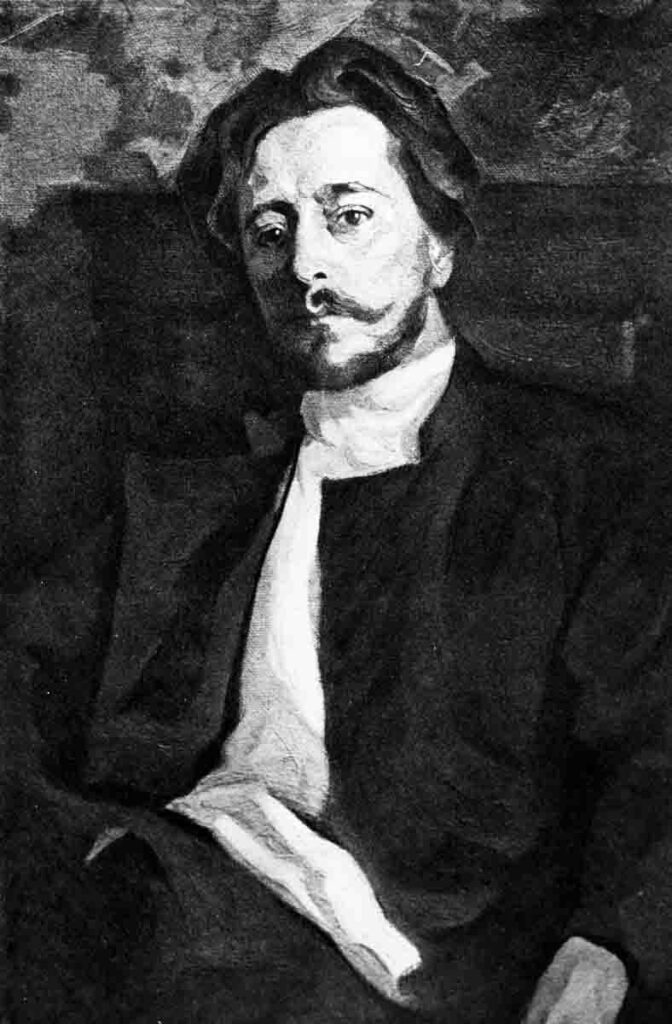
It must be said that for the most part, Andreyev’s characters are masks embodying a particular vice, phobia, or sin. The play The Black Masks is, in a sense, autobiographical and uniquely eerie. Leo Tolstoy once said of Leonid Andreyev’s works: “He tries to frighten, but I am not afraid.” But in reality, it is genuinely terrifying. And this is not merely because some literary scholars consider Andreyev the founding father of Russian horror. It becomes truly chilling when, in his stories and novellas, he dissects life itself, agonizingly searching for answers about the nature of evil. He gazed into the abyss, and the abyss, following Nietzsche’s maxim, gazed back into him. Andreyev took Nietzsche’s death as a personal loss.
The writer died in exile. Having rejected the October Revolution, he remained in Finland. Moreover, he was so infuriated by the new authorities in Russia that in his pamphlet-appeal “S.O.S.” he called on Europe to launch a crusade against the Bolsheviks. He was making plans to organize a lecture tour in the United States to speak about the situation in Russia. He might very well have gone. But on September 12, 1919, he suddenly died of a heart attack.
Since the early 20th century, Leonid had been complaining of severe migraines, bouts of depression, insomnia, and angina. Doctors diagnosed him with “severe neurasthenia rooted in a degenerative predisposition.” Above all, however, the writer was tormented by a heart condition – the result of his failed suicide attempt.
In September 1919, Andreyev moved from Vammelsuu – a village that had come under bombardment with the outbreak of the Soviet-Finnish armed conflict – to the settlement of Neivola, to the country house of his friend, the veterinarian and writer Fyodor Falkovsky. There, while working on his pamphlet novel The Diary of Satan, the writer suffered a severe heart attack and collapsed onto the couch. His eldest son rushed to the village for a doctor, but could not find him right away. By the time he returned, it was too late. Leonid Andreyev was dead. The twilight abyss had finally swallowed him up.