 Aleksey Makeev
Poet and translator Hoang Thuy Toan introduced several generations of Vietnamese readers to Russian poetry. Over seven decades of work, he has published about 60 books. Toan is a living witness to and participant in Russian-Vietnamese cultural exchange – its birth, its ups and downs. It seems the translator’s fate was predetermined from childhood: he first learned about Russia not from history textbooks, but from literary works.
Before meeting Toan, we decided to stop by the Temple of Literature in Hanoi. We wanted to understand what place literature held in Vietnam’s history.
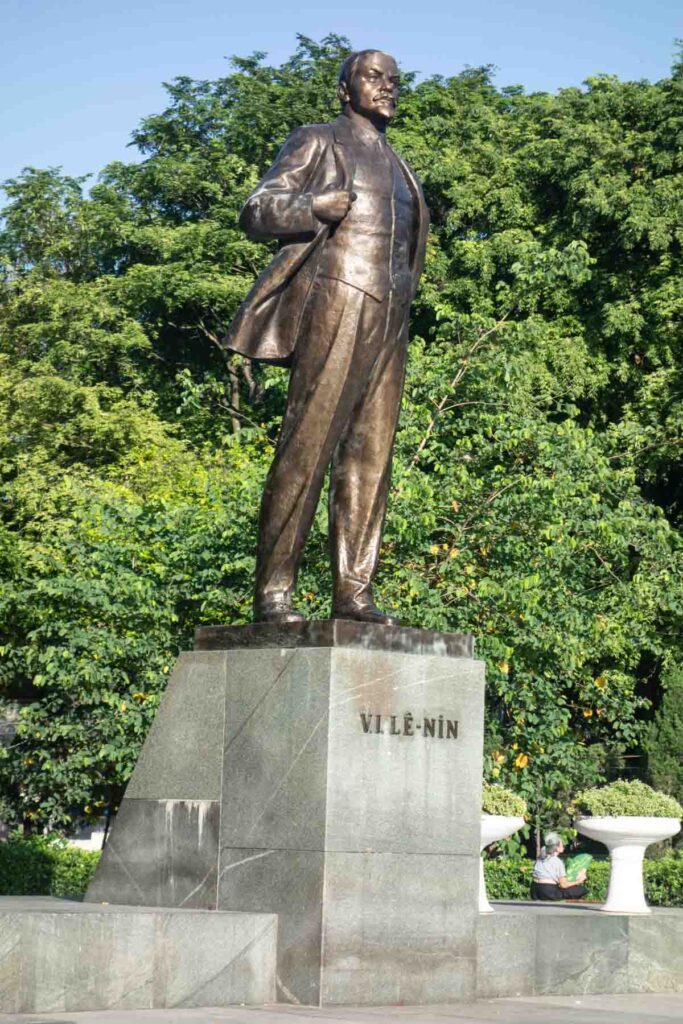
Because of the abnormal heat that had gripped Hanoi, we left the hotel at six in the morning. Life around us was in full swing: motorcyclists rushed by in an endless stream, and morning workouts were underway in the parks. And suddenly – an unexpected discovery: a statue of Lenin! In fact, in modern Hanoi, one rarely comes across anything reminiscent of Russia. But here, in the park, was a whole Lenin Square with the figure of the leader of the proletariat, confidently striding into a bright future. The park was opened in 1980, for the 110th anniversary of Lenin’s birth, and the statue itself was delivered from the Soviet Union two years later.
Skateboarders have long claimed the square – the granite cladding is well suited for tricks. But not in this heat! Pensioners have taken over the shaded area around the monument. Some, having formed a column, tapped one another on the back with their fists in unison; others twirled in a dance to an old waltz playing from a portable speaker. Encouraging them all was a muscular, shirtless man who, right beneath the Lenin statue, was practising qigong and every couple of minutes filled the square with a piercing shout…
Under the walls of the Temple of Literature, you could also see devotees of a healthy lifestyle. On one side, elderly women danced; on the other, couples passionately played badminton: they had stretched a net right from the wall and marked out a court with chalk. After finishing their match, the badminton players sat down to drink tea and invited us to join them. On the table, out of nowhere, appeared ginseng tincture and a long Vietnamese pipe. What a strange workout…
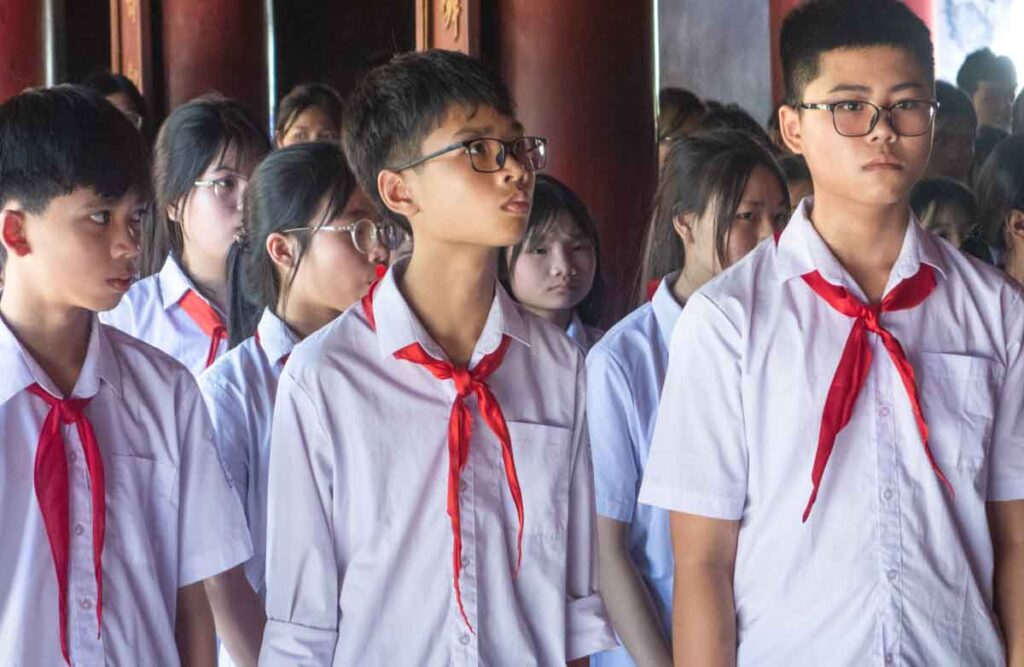
The Temple of Literature did not open until eight in the morning. But after walking around the building, we unexpectedly found the back gate open. Solemn speeches were coming from the inner courtyards. It turned out the temple had been opened for school graduates who had gathered for a ceremony that resembled, rather, a kind of valedictory prayer service. In the centre of the courtyard stood a man in a red robe and an old-fashioned hat, apparently portraying a Confucian teacher. Around him crowded schoolchildren in pioneer neckerchiefs, their palms pressed together in prayer.
In old Vietnam, literature was a true cult and the very basis of education. It was here, on the site of the temple, that the first Vietnamese university was once located. Along the central courtyard stood rows of stone turtles bearing steles with the names of the best students of past centuries. The examination courtyard is especially interesting. At first glance, it is hard to guess that the small arched reed shelters were intended for students. They served as a kind of “cubicle”: they prevented examinees from peeking at their neighbour’s answers. And after the exams, the students’ papers were copied by scribes so that the teachers could not recognise the author by handwriting.
Unexpectedly, Russian traces turned up here as well: on the altar of Confucius lay a packet of Krasny Oktyabr (Red October) sweets.
The Lucky Hundred
Toan and his wife Nga live a few kilometres from the Old Quarter. The streets in their neighbourhood are just as narrow: you can only get around them on foot, by bicycle, or by motorbike. Walking under garlands of red flags with stars, hammers, and sickles, we finally found the poet’s house.
The hosts greeted us warmly, and it was clear at first glance: admirers of Russian literature live here. Books on the shelves, mugs with portraits of Russian writers and poets, signed in both Russian and Vietnamese, commemorative plates, a figurine of the Mistress of the Copper Mountain… By the way, the Vietnamese word for Russia sounds like “Nga”, so the name of Toan’s wife can be translated as “Russian”. And the poet’s name, Thuy Toan, means “fullness of water” or “perfect river”. He was born in 1938 in the village of Phu Luu, Bac Ninh province, which today has effectively become a suburb of Hanoi.
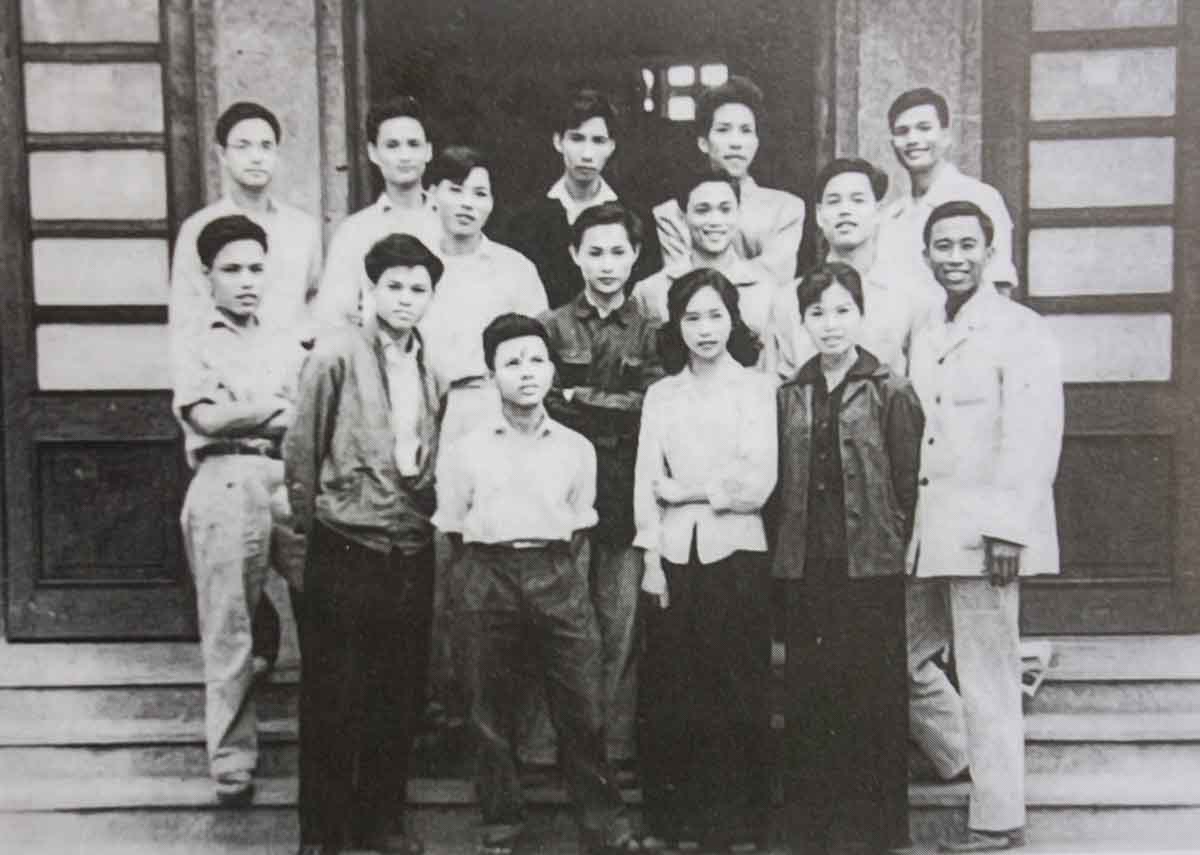
Toan’s childhood coincided with the years of the war for independence (from 1885 to 1954, Vietnam was a French colony). During the fighting, he was evacuated to China, where he managed to pick up some Chinese. Returning home at the age of twelve, he entered the Viet Bac cadet school, located in the mountain jungles: by order of Ho Chi Minh, an entire network of such schools had been established across the country. By the way, the first president of Vietnam once visited Viet Bac, and the students had the chance to speak with their idol in person. According to Toan’s recollections, he did not give the impression of an unattainable leader, and remained a genuinely popular one. Many of the poet’s acquaintances met him personally – both during the war and after it.

It was in Viet Bac that Toan wrote his first poems; the teachers encouraged the students to write stories and poems for the school newspaper.
It was also here that Thuy Toan first learned about Russia. His music teacher, Pham Tuyen, introduced him to the works of Ilya Ehrenburg – though in French.
In 1954, after gaining independence, Vietnam set about building a new state. The USSR became its main model. The country was in urgent need of Russian-Vietnamese translators and specialists in a wide range of fields.
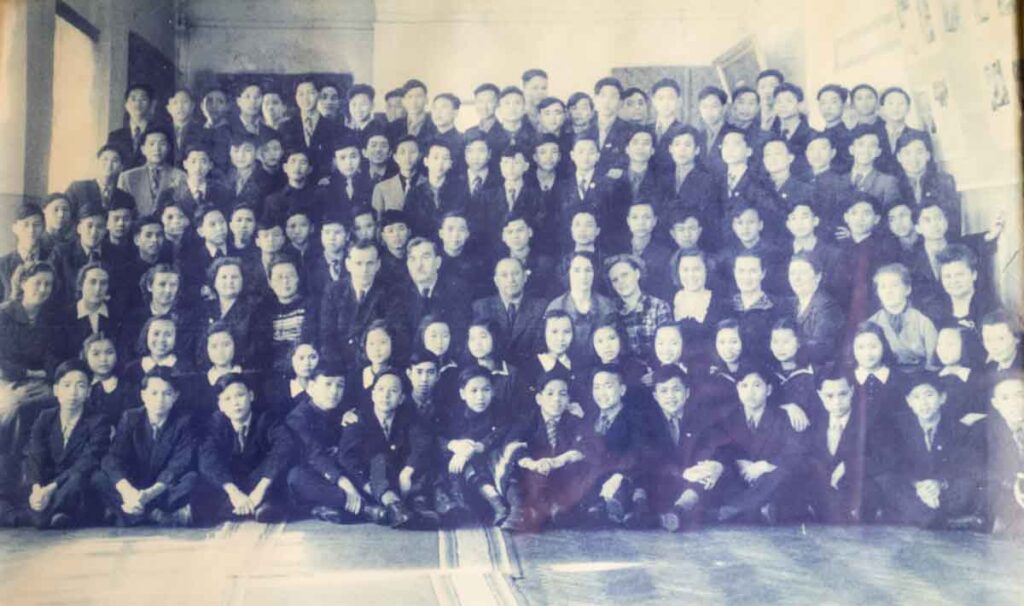
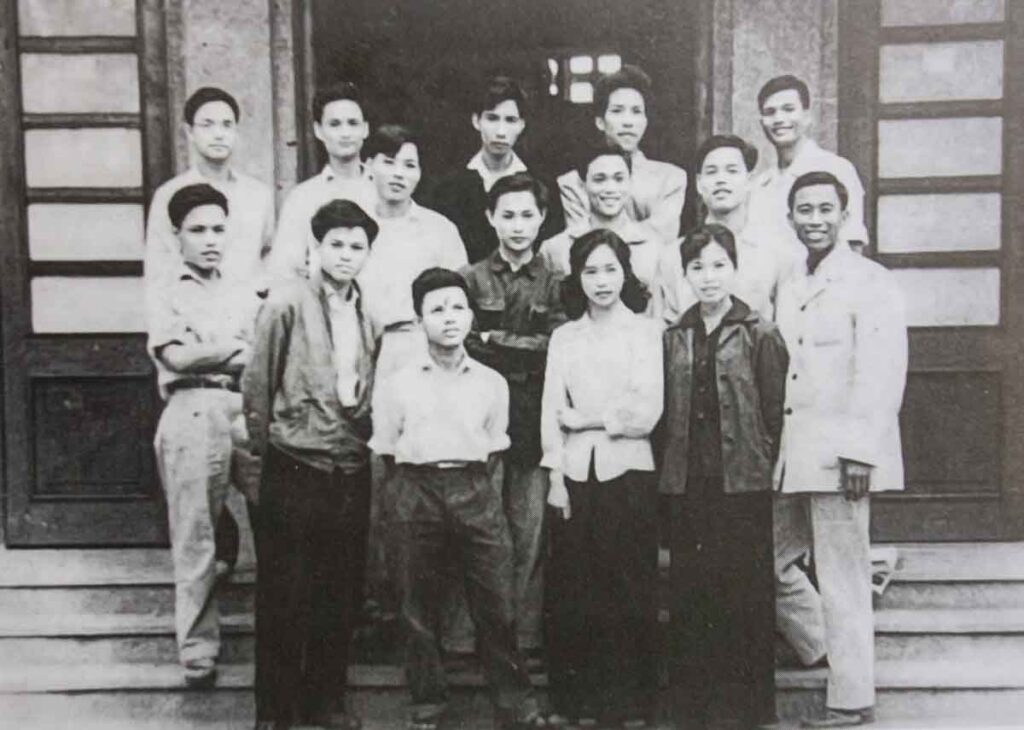
Toan and Nga were among the first hundred Vietnamese students sent to study in the Soviet Union. The selection was open to those who had at least a little command of Chinese. There were thousands of candidates. Toan made it into the lucky hundred from the jungles of Viet Bac; Nga, from her native village near Hanoi. Toan was sixteen at the time; Nga, fifteen.
The journey to the Soviet Union was long. The train passed through Beijing, Manchuria, and Siberia. At the stations, women would come up to the young Vietnamese, offer them food, ask them questions, and try to help in whatever way they could.
Russian through Immersion

For their first three years in Moscow, the students studied nothing but Russian at a special school attached to the Institute for Advanced Training on Korolenko Street. They did not know a word of Russian, and their teachers had no Vietnamese. Russian had to be learned through intermediary languages – Chinese and French – which many of the students commanded at a basic level. The studies were demanding, but they took place in a friendly, open atmosphere. At first, the teachers even accompanied the students to the shops, helped them make purchases, and unobtrusively explained how to behave – in the canteen, the dormitory, the school, and simply out on the street.
Pioneers were frequent visitors to the dormitory. They would come to meet the foreign students, communicate by gestures, and teach them new words. So after just two months, the Vietnamese could go to the shops on their own.
Surrounded by care, the students got through their first Moscow winter without much difficulty. They could not stop admiring the snow. For the Vietnamese, it is a symbol of purity, of something lofty and almost magical. In Vietnam, snow can only be found high in the mountains, and in those years most of the country’s inhabitants had never seen it.
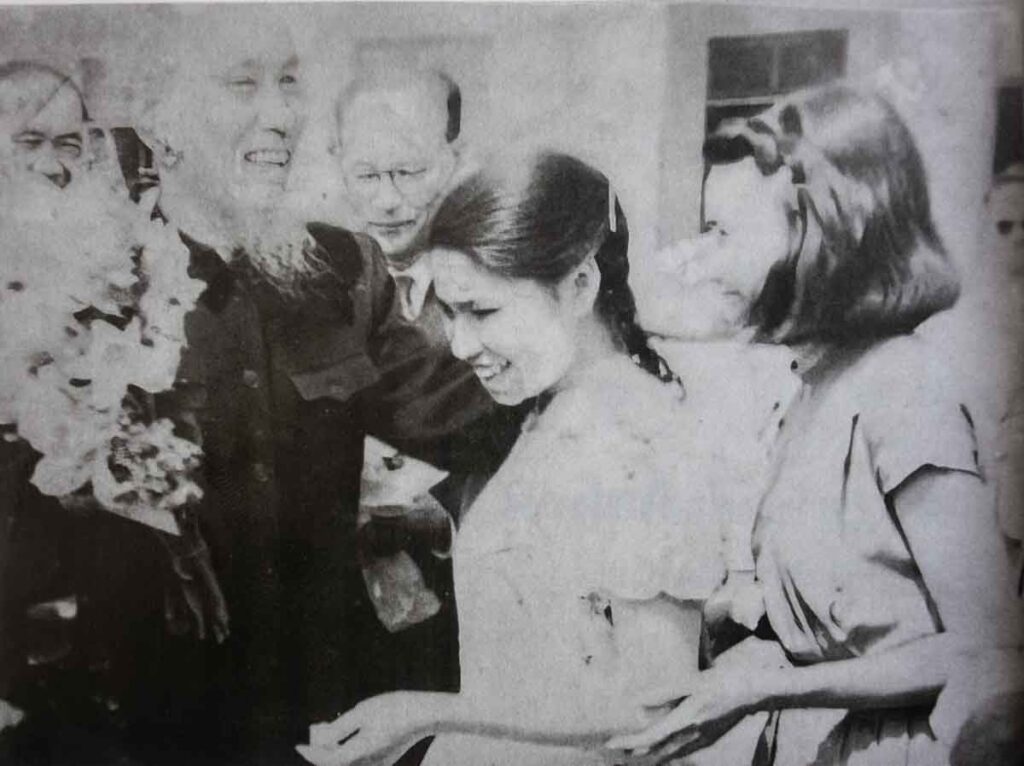
Nga recalls how amazed she was by the swans on the pond (another meaning of the word “nga” is “swan”). It was in Moscow that she first saw these graceful birds. Her meeting with Ho Chi Minh was no less impressive – he made a special point of visiting the first hundred Vietnamese students while in Moscow.
Frost and Sun… and a Sweater
Thuy Toan made his first literary translation in 1956 – it was a short children’s story. But what interested him most was Russian poetry, and his love for it began with songs. In his native village, people loved to sing. Folk holidays were impossible to imagine without songs, and from childhood Toan had happily taken part in such festivities. It turned out that in Moscow, Russian songs also held an important place in the curriculum. He took to them right away: the melodies were easy to remember, and soon a whole singing group sprang up among the Vietnamese students, performing right in the dormitory. Naturally, Toan wanted to understand what he was singing about. The teachers and Pioneers willingly explained unfamiliar words.
One frosty, sunny morning in 1957, their teacher took her students out of town. Amid snow-covered fields, she read Pushkin’s Winter Morning. She read it so movingly that Toan was shaken to the core. That same evening, he decided to translate the poem into Vietnamese himself, armed with a Russian-Chinese dictionary. But by the end of the evening, he had managed only the first words: “Frost and sun…” (“Мороз и солнце”).
The work proved difficult. It was not enough simply to understand each line; he also had to find its exact poetic resonance in Vietnamese. Sometimes a whole day would yield only a single line, after which he would return to the beginning and rewrite everything from scratch. The translation work continued for almost thirty years. All this time Toan kept returning to the poem, finding ever more precise rhymes, intonations, and images.
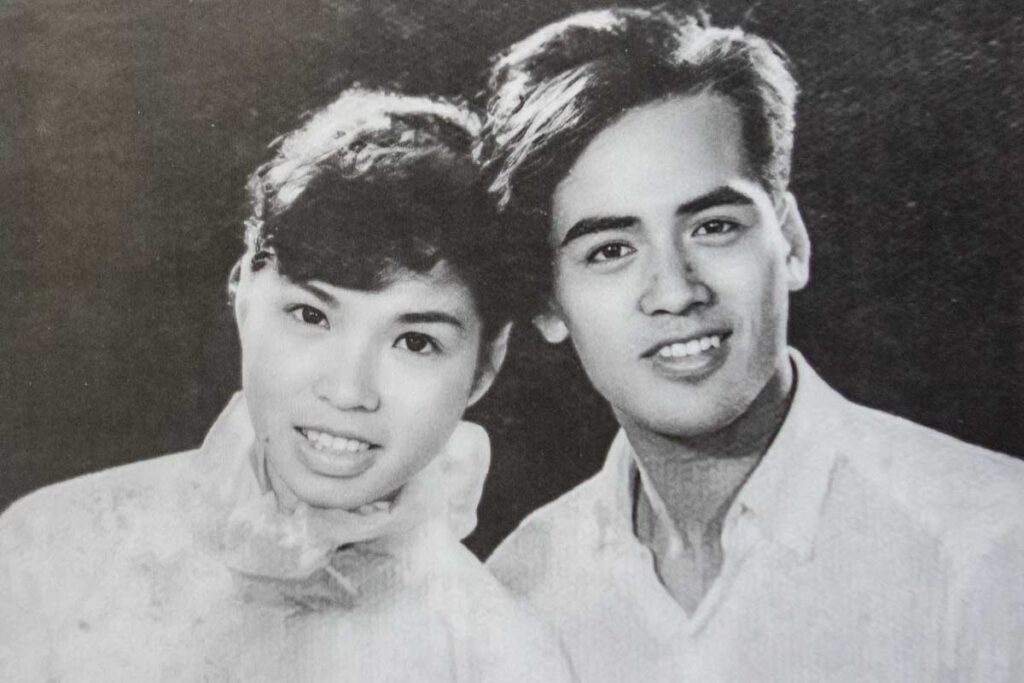
Relations between Toan and Nga began to develop only after their return to Vietnam. In Moscow, their affection had shown itself more in poems and unusual gestures of attention. The first poem Toan read to his future wife was a Vietnamese adaptation of a work by the Korean poet Kim San about a warhorse and warriors of the Li dynasty who encountered Japanese in distant mountains. Nga recalls that what won her over was not so much the poem itself as the passion with which the young poet read it. Later, Toan showed her his first translation of Pushkin’s poem I Loved You (“Я вас любил”) and asked her to evaluate his work. At that time he was still unsure whether his feelings were reciprocated. The answer was a sweater that Nga had knitted with her own hands and given to the poet. In that moment Toan understood that she was not indifferent to him.
Russian in Every School
After three years of language training, 80 students returned to Vietnam. Almost all of them subsequently built successful careers in public service. One of the women stayed in Moscow, married, and began working at the Vietnamese embassy.
The remaining 19 entered the Faculty of Philology at Moscow State Pedagogical Institute named after V.I. Lenin, where they received a full university education. Nga recalls with particular warmth Professor Fedor Golovenchenko – a brilliant teacher of Russian who had a profound influence on her.
At the institute, Toan continued translating Pushkin, Lermontov, and Yesenin. “The depth of Russian literature kept revealing itself to me more and more, and I felt a strong urge to bring it to readers in my homeland,” he recalls. He had the good fortune to meet and befriend Lenin’s niece, Olga Ulyanova, with whom he discussed the subtleties of the translator’s craft.

Toan’s work was published not only in the institute newspaper, but also in the Vietnamese press – in the newspapers Pioneria, Education and Culture, and Literary Newspaper. Toan himself wrote so illegibly that he asked Nga to copy out his translations: the young woman had superb calligraphic handwriting. It was these manuscripts that he sent to the editorial offices. At first, the editors did not even believe he was the author – they were puzzled not only by the beautiful handwriting, but also by the unusual lyricism of the poems.
In 1961, after seven years in Moscow, Toan and Nga returned to Hanoi. He began teaching at the Mechi Lyceum of Foreign Languages (now Hanoi State University), while Nga took a job at the Institute of Literature. For a time, both of them also taught Russian in ordinary secondary schools. In those years, Vietnam set a course towards the mass study of Russian. It was expected that it would be taught in every school.
At the same time, Toan began working with the Van Hoc (“Literature and Art”) publishing house, where he later became head of one of its departments. Nga translated Russian prose. She considers her main work to be the translation of Chingiz Aitmatov’s novel The Day Lasts More Than a Hundred Years. According to her, the book struck her so deeply that she resolved to introduce it to Vietnamese readers.
From Pushkin to The Tale of Igor’s Campaign
Toan quickly gained recognition as a poet and translator. As early as 1962, one of the most famous Vietnamese poets, Nguyen Xuan Sanh, invited him to collaborate on the first anthology of Soviet poetry. Four years later, Toan’s own first book appeared – Pushkin’s Lyric Poetry. An unusual story is connected with this publication. During the Vietnam War, American soldiers discovered a copy of the book while capturing one of the positions held by Vietnamese defenders. Toan still recalls this incident with amazement.
According to him, the war did not change everyday life in Hanoi much. During air raids, he usually did not even go to a shelter. The only exception was the “Christmas bombings” of 1972, when American aviation struck the city for 12 days in a row (18–29 December). At that time, the Vietnamese army, with the help of Soviet air defence systems, shot down 34 American B-52 bombers…
Toan is convinced that the policy of mass Russian-language learning in Vietnam fully proved its worth. Besides school lessons, there were evening courses for adults, funded by the state. There was a time, he recalls, when almost everyone in Hanoi knew at least a few Russian words. Soviet newspapers were regularly brought to the city – Pravda, Nedelya, and Literary Newspaper. People read them and discussed them. And to read them, you had to know Russian, and that fueled interest.
After 1991, everything changed. Russian disappeared from the school curriculum, and along with the political and economic changes, support from Russia practically ceased. Then Toan published a collection of poems at his own expense, Russia – My Homeland, as a token of love and gratitude to our country.
Today, Toan has more than 60 translated and published books by Russian authors to his name. Among them are 10 poetry collections – Pushkin, Lermontov, Tyutchev, Blok, Yesenin, Mayakovsky, Tvardovsky, Rubtsov, Gamzatov, and Yevtushenko. The list of prose writers is no less impressive: Tolstoy, Dostoevsky, Gogol, Gorky, Sholokhov, Fadeyev, Ostrovsky.
A special place in his life is occupied by The Tale of Igor’s Campaign. In order to translate this Old Russian literary monument, Toan studied the Old Russian language. He collected about twenty translations of The Tale into modern Russian and compared them with one another, trying to understand the meaning of each verse as precisely as possible. The first edition came out in 1987. For this work, Toan was awarded the Friendship Prize. He presented the second edition to Russian President Dmitry Medvedev during the ceremony of awarding the Order of Friendship in the Kremlin in 2010. Toan received this award for many years of strengthening Russian-Vietnamese cultural ties.
Finding the Hidden Meaning

Toan is convinced that translating poetry is always a creative act akin to writing a poem. It is not enough to find a rhyme or preserve the rhythm. One must find the hidden meaning, hear the music of the verse, and be able to convey its soul. By the way, his translation of Pushkin’s I Loved You was initially met rather coolly. Critics said the translator had departed too far from the original. But over time, it is precisely this version that became a classic: it entered school textbooks and was carved on the reverse side of the Pushkin monument erected in Hanoi in 1999.
According to Toan, there is a huge difference between Russian and Vietnamese poetry. Vietnamese tradition has been strongly influenced by Chinese culture. In it, the human figure often becomes part of the landscape rather than its centre.
At the same time, Russian literature had a significant influence on Vietnamese literature. As early as the 1930s, Russian classics were read here – though mainly in French translations. The psychological, social, and philosophical themes of Dostoevsky, Chekhov, and Tolstoy resonated with Vietnamese readers. Writers experimented with plots, and Russian classics were reworked with local material. In 1938, for example, Ho Bieu Chanh wrote the novel The Desperate Man, inspired by Crime and Punishment.
Comparing the Russian and Vietnamese mentalities, Toan says that Russians are far more open, direct, and emotional. Vietnamese culture, like many others in Asia, teaches people to be more reserved and guarded: it is not uncommon for people to say one thing and think another. Toan admits that during his years in Russia, he and his wife grew accustomed to the Russian manner of communication and now prefer to speak openly. However, he adds, on the whole the Vietnamese are very easy-going, smiling, and cheerful people.
As an example of cultural differences, he recalls that in Vietnam, young people intending to marry traditionally must obtain their parents’ consent. Because translators are unfamiliar with such customs, some Russian translations of Vietnamese stories, in his opinion, do not fully convey how Vietnamese people declare their love. We asked how Toan and Nga had married. In response, the couple smiled and explained that they belonged to a new generation, lived far from their parents, and built their lives independently. At that point Toan glanced at a small altar arranged on a dresser. On it stand photographs of Toan’s parents. According to Vietnamese tradition, such a home altar is set up in honour of the husband’s relatives, which is why there are no photographs of Nga’s parents here.
The couple has two children. Their son graduated from the Hanoi Institute of Foreign Languages, speaks Russian and English, and now works in the USA. Their daughter studied at Donetsk University and works in tourism in Hanoi. The grandchildren and great-grandchildren have not yet linked their lives to the Russian language.
Getting a Feel for the Russian Spirit
Toan’s latest project is the Museum of Russian Literature in his native village of Phu Luu. Over his lifetime, he collected everything reflecting Russian-Vietnamese literary exchange: photographs, documents, early translations of Russian classics, and books signed by Russian writers and poets. In total, the museum holds more than 3,000 exhibits.
The Pushkin exhibit holds a special place here. It brings together scholarly studies, popular books about the poet, various translations of his poems, numerous editions of Pushkin’s works, and commemorative items issued for the anniversaries of the Russian poet.
The idea for the museum first emerged back in 1988, when Toan received the Friendship Prize, the funds from which became the first contribution to the future collection.
In the 2010s, he organised several major exhibitions that toured throughout Vietnam: Pushkin in Vietnam, 60 Years of Russian Poetry in Vietnam, and others. And in May 2015, the museum finally got a home of its own. The Phu Luu authorities handed over to Toan an old two-storey mansion that had once belonged to local merchants.
Toan continues to add to the collection. During our meeting, he showed us a thick folder with new materials that will soon be sent to the museum. He hopes the museum will help young people feel the spirit of Russian literature and better understand the basis of Russian-Vietnamese friendship. “I want to leave future generations what embodies my love for Russian literature,” says Toan.