
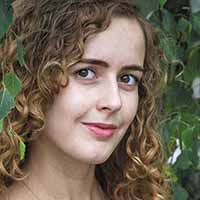
 Marta Martsi
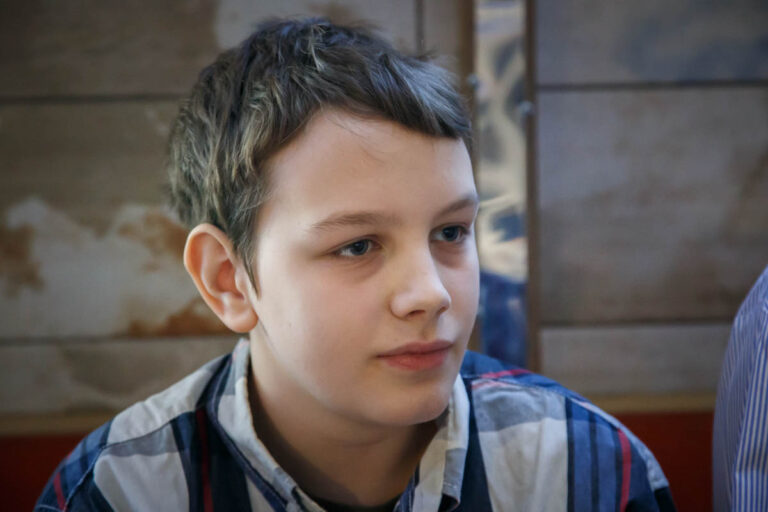
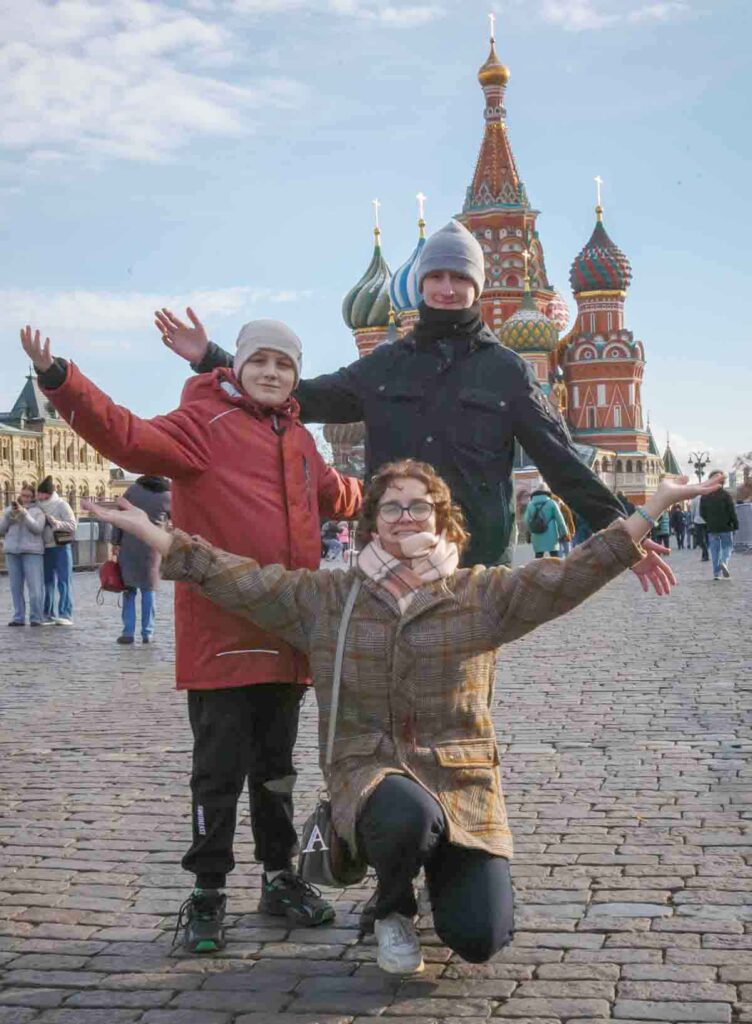
 Dimitri, sixteen, is the tallest and most serious. Anika, the eldest, is a smiling girl with kind brown eyes. Darik, the youngest, is lively and spontaneous. At first, all three were a little shy, but gradually they opened up. In talking with them, we found out why the Oosting family hurriedly left the Netherlands and moved to Russia.
It happened in 2022, when Gerar and Yulia, the parents of the family we spoke to, decided it was time to start a new life in the Russian Federation. And now, after four years in our country, Anika, Dimitri and Darik are convinced that it is Russia that can teach the rest of the world a great deal.
The Narrowest Part of the Netherlands

“Our mother was born and grew up in Kaliningrad near Moscow – the town now called Korolyov. Our father spent his whole life in the Netherlands,” Anika begins. Yulia had a good command of English and worked as a translator for an international company. One day she was sent on a business trip to the company’s headquarters in the Netherlands, where Gerar Oosting worked. That’s where they met, and later got married.
Their children were born in Echt-Susteren, a town in Limburg province. The vast majority of people who don’t know the Netherlands very well usually only know a couple of cities there: Amsterdam, Rotterdam and, perhaps, The Hague. So I asked the children to tell me a little about their hometown.
“It takes quite a long time to get from Susteren to Amsterdam – by car or by train. If you take the train, you have to change along the way,” Dimitri chimes in. “And if you look at the map of the country, in the south‑east you can see the narrowest part of the Netherlands (about 4.8 km wide). That’s exactly where we lived. A road sign there says: ‘The narrowest part of the Netherlands.’ Belgium is on the left side of the road, Germany on the right.” “Susteren,” Anika continues, “is a very small town. It’s more like a village, where everyone knows each other and lives in low‑rise brick houses.”
Christmas and the Carnival before Lent are pretty much the only events that bring any variety to the slow and quiet life of Susteren. True, the kids say, you will hardly see any traditional costumes in the carnival crowd nowadays – people mostly dress up as superheroes from American comics.

“The Netherlands is about the same size as Moscow region – not much room to move around,” Dimitri remarks. His parents found him a decent music school where he could learn the accordion. It turned out to be abroad: Gerar and Yulia had to take their son to neighbouring Belgium.
It turned out that there are no free after-school clubs or activities in the Netherlands. Moreover, paying for the classes themselves is not enough: for example, if a child does judo or football, parents have to pay additional fees to the relevant national sports federation. According to the children, the classes were often run unprofessionally – sometimes other parents would act as coaches. Dance and music lessons were at a very basic level, barely enough to perform the simplest dance moves during the town carnival. Swimming lessons teach you how to stay afloat and dive in your clothes – a kind of mini‑survival course in case you accidentally fall into a river or canal and nothing more. Courses in programming, engineering or modelling simply do not exist. “So what do kids do after school?” I ask. It turns out that after classes, children mostly either sit at their computers or kick a ball around in the park.
“Surely there must have been some free activities for schoolchildren?” I asked in surprise. “There were!” the Oostings answered in unison. But they clarified: the only free activity was the church choir. That didn’t last long, though: the choir sessions came to an end when the enthusiastic organisers moved away. From that point on, there were no more free clubs in the town.
“That’s your problem how to manage it”

With the move to Russia, the children’s lives changed dramatically. All three started attending the Kvantorium children’s centre for additional education, where each of them found an activity they enjoyed. “I do website creation and high-tech work,” says Darik proudly, who is into computer technology. Dimitri, who is interested in the same field, explains: “High-tech is a high-tech field involving 3D and laser printers.” He even got to visit Sakhalin with his own project. Free of charge.
I asked how they had got used to Russian school life and whether anything had surprised them. The siblings, interrupting one another, explained that when they first started school here, the teachers immediately offered to give them extra lessons after school – and didn’t ask for any payment! The children were genuinely amazed by this. They say that in the Netherlands, those who struggled with adaptation or the school curriculum could only rely on themselves. “Don’t know the language well? That’s your problem how to manage it,” Anika recalls indignantly, quoting what she heard from teachers. “There was no such thing as walking up to a teacher and asking for help with schoolwork,” Darik confirms.
As for Anika’s hobbies, she seems to be trying her hand at everything Russia has to offer: vocals, dancing, robotics, and project work at the same Kvantorium. Moreover, Anika is a seasoned participant in the All‑Russian School Olympiad in English.
The children admit that since they started studying in Russia, they have been moving forward at full speed, and at first this pace of life was unusual for them. Fooling around, as they used to in the Netherlands, is no longer an option. But they are glad that in their mother’s homeland they have found plenty of opportunities to develop themselves. “Our father strongly supports the Russian education system. He really likes that we work much harder here than in the Netherlands and that we’re not just sitting around at home,” Dimitri says with a smile.
It must be said that the whole family is unanimous on this issue. The Oostings believe that the Western education system is not designed to produce well‑educated individuals. According to the children, in Dutch schools no homework is assigned until the seventh or eighth grade. When homework did finally appear, the Oostings were disappointed: the tasks usually involved colouring or drawing a picture. Laughing, they recall that they were taught the multiplication tables for three or even four years in a row. The grading system can also be a real eye‑opener for Russian boys and girls – and their parents. “In Russia there are honour students, but in the Netherlands there are none,” says Anika. “There are those who pass and those who don’t pass a test or an exam. The main thing is to score above six out of ten. The principle is: let most students have an average level. And those who stand out go on to study at university.”
In Dutch secondary schools, classes turn into a kind of caste system: students are divided according to their intellectual abilities or academic performance. The Oosting children went to a decent gymnasium, where they felt comfortable studying. In the less prestigious schools, they note, migrants predominate – people who do not assimilate: stabbings and threats against teachers are commonplace. Some Dutch boys are no strangers to this behaviour either.
The small town of Susteren has been largely unaffected by illegal immigration, which cannot be said of the larger settlements nearby. People from North Africa block entire neighbourhoods, with alarming regularity staging protests and riots on any inflated pretext, just to be able to smash everything left and right.
“Don’t Like It? Get Out!”

The propaganda of LGBTQ+ and gender reassignment in educational institutions became one of the main reasons for Gerar and Yulia, as well as other parents in their circle, to leave. Once, a friend of Yulia’s, a mother of many children, approached the school principal with a request: please stop showing transgender people to children. The reply was blunt: “If you don’t like it, get out!”
For several years, Gerar and Yulia debated whether to stay in the Netherlands or look for a new place to live. They left in 2022, when they decided that staying in Europe any longer was no longer possible.
Gerar is an analyst by nature. He had often been to the UK on business. About ten years ago, observing what was happening in his home country and drawing quite obvious conclusions, he said: “What has already happened in the UK will happen here. Do I want to live in a country where people of a different faith and culture refuse to integrate and outnumber the local population? No, I do not.”
Meanwhile, the political situation became increasingly tense. Tensions were also growing in the small world in which the Oosting family lived.
According to the children, even before 2022, the Dutch perceived Russians as “angry” and “hostile” people, although outwardly they still remained friendly. But with the start of the special military operation, the teenagers’ Russian roots became a target of open condemnation. “Once a classmate told me: ‘If we bomb all the Russians, no one will object,'” Dimitri says with a frown. “The main thing is that they openly said that we need to kill all the Russians, get rid of them all,” Anika chimes in.
In her view, the Dutch are too credulous, lacking even a shred of critical thinking. So when the history teacher would play news programmes right in class, blaring about the supposed nuclear threat posed by Russia, the students would believe it without question.
The Escape Plan
Gerar and Yulia had prepared for the move well in advance – they took their time and made thorough preparations. They had already decided to move back in 2021, but kept their plans secret from their own children until March of the following year. Anika jokes that the youngest in the family only found out about it when a ‘For Sale’ sign appeared in front of the house. Darik himself, however, tells a different story: one morning he came downstairs for breakfast and heard his mother say to his father: ‘Well, it’s settled then – we’re moving!’
First, they sent a huge container with furniture to Russia, after which the whole family slept on mattresses in an almost empty house for several months. Then, on the first day of August, Gerar and Yulia hastily packed what little remained, loaded the children into the car, and set off – essentially, into the unknown. Their only destination was Russia. Along the way, they would stop at random hostels that happened to be on the route. They stopped in Korolyov, then headed for Nizhny Novgorod region. They spent four months there, which the children remembered for the unusually snowy winter and the sights of Nizhny Novgorod. After that, the family returned to Korolyov, where they eventually settled.
It should be said that the children had known Russia long before the move, as they spent every summer with their grandmother in a small village in Ryazan region. The younger Oostings never had any problems with Russian: from the very beginning, it was customary in their home to speak both of their parents’ native languages – Russian and Dutch. They also speak English fluently, which is quite common in the Netherlands. Now the children speak Russian completely fluently, only occasionally slipping into Anglicisms.
In the end, the European wind of change drove all the international families the Oostings knew in the Netherlands to Russia. Remarkably, even native Dutch people are showing growing interest in moving to Russia. Most of them are farmers, since agriculture plays a large role in the Dutch economy. Although the current ‘aggressive’ policy of the European Union, as Anika called it, towards its own farms makes one doubt that: the authorities are forcibly buying up agricultural land and encouraging farmers to give up livestock farming, citing ‘greenhouse gas reduction targets’. As a result, thousands of landowners are being forced to cede their land to the state. In the end, while in Russia the menu consists of meat and fish dishes, schoolchildren in the Netherlands are given food containing processed insects to try, being told that this is the future (since February 2025, the EU has allowed the production of food products containing powder from the larvae of the great mealworm beetle; it can be added to bread, pasta, and dairy products).
What Does History Teach?
The Oostings never refuse to lend a hand to their former compatriots – they are always ready to advise on how to make the move to Russia easier. However, native Dutch people, Anika notes, do not like taking risks and, even in the face of a serious problem, can drag their feet for a long time before making a decision. They prefer to plan, wanting everything to go according to a pre‑thought‑out scenario. Anika dislikes this approach to life: “I love it when it’s like this: you wake up, decide you want to leave – and off you go.” Without much thought, the Oostings arrive at a single conclusion: they got it from their mother!
The Dutch, the children continue, really love cleanliness and order. And for that reason, they are not very keen on guests: outsiders in the house inevitably disrupt the usual peace and quiet. What’s more, if you turn up unannounced, it’s a complete nightmare for the hosts. So visits are typically planned at least a week in advance.
Anika was a little nervous when she was first invited to a Russian home. Her friend sat her down at the table and kept offering her either borscht or a salad. The guest was taken aback, because in the Netherlands it is considered good manners to keep quiet and turn down food, so as not to put the hosts out. “Russians don’t just feed you – they also spend time with you until late in the evening,” Anika says. “And then they tell you: ‘Stay the night with us, it’s already dark outside!'”
In Russia, no one gave the Oostings a second glance because they came from an unfriendly Western country. “Russians see a human being first and foremost,” Anika believes. The siblings say that many are surprised when they learn that they moved from the Netherlands to Russia. Some are happy for them, while others, sometimes, are bewildered: why did you move? Isn’t it better there?
Anika, Dimitri and Darik are adamant in their reasoning: they moved for the opportunities – for life, for activities, for personal growth. “In the Netherlands, you are viewed as a future employee – and that’s it. Your talents, ideas, and thoughts are of no use to anyone there,” Anika shares. Russia, in her opinion, offers young people enormous opportunities for personal development.
In their new homeland, the children have already visited several cities: Tula, Kostroma, Rostov Veliky, Sergiyev Posad, and even Novosibirsk. They have really taken to the authentic look of ancient Russian cities. At the same time, they also note a certain tendency in modern Russia to copy Western models in some spheres – Dimitri, for instance, finds this puzzling.
The children find the Dutch tendency in this regard equally puzzling. Only there, in their opinion, it is far more widespread than in Russia. “They devalue their own heritage. As if bewitched, they gaze at other people’s realities, and even try them on for themselves,” Anika says.
After a pause, Dimitri unexpectedly admits: “I am proud of my Russian roots, but not of my Dutch ones. When it comes to the Netherlands, I only really know its history. I would like to know more about its culture and literature, but they never paid much attention to that there. So it turns out there’s not much to be proud of. By the way, it was only after moving to Russia that I first learned that a great Russian figure – Emperor Peter the Great – had once visited Holland. I never heard anything about that in the Netherlands; it was never mentioned there…”
Darik nods in agreement with his older brother. Soon he will know more about this country than about the one he was born in. The youngest of the Oostings smiles and says he is very happy to live in Russia. “Peter the Great did come to Amsterdam,” he continues the conversation started by Dimitri. “But I doubt they’ll teach that in Dutch schools – because they think Russia is bad. And they are wrong. It is Russia that can teach Europe a great deal today. For instance, at least that you cannot simply erase a whole layer of any country’s history and culture. Because history is always important and always relevant.”
Translated by Grigory Litvinov