 Elena Machulskaya
 The artist began by laying cool green brushstrokes onto the canvas. Then carefully added pinkish and peach tones over them. He was pleased with the result: the hands and face of the young beauty seemed to glow; her delicate blush was impossible to look away from. Even harder was to put down the brush. But he had no choice: his beautiful young wife, posing for him, had grown tired. And Konstantin Makovsky himself was weary. He had been too busy lately: countless private views, exhibitions, evenings in aristocratic salons, a crowd of clients eager to be painted by Makovsky himself…
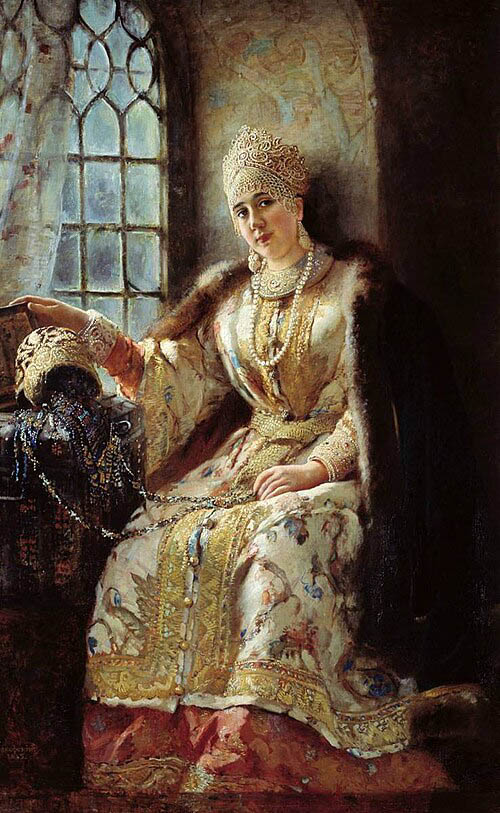
One can assume that this was how the artist’s famous work A Boyarynya at the Window was born, which he painted in spare moments, having his wife pose in luxurious boyar attire and a pearl kokoshnik. This very painting became the centrepiece of the exhibition “The World of the Makovsky Brothers” at the Omsk Regional Museum of Fine Arts named after M.A. Vrubel. The halls display canvases by the Makovskys from twelve regional museums and a private collection; depicting 19th-century peasants and boyars of old Russia, grey‑haired old men, beautiful ladies, and children engrossed in play look out at us…
A Talented Family
And it all began quite ordinarily: a civil servant, Yegor Makovsky, a great art lover, amateur painter and collector, lost his head in love with Lyubov Mollengauer, the daughter of a musical instrument manufacturer. And the famous Moscow beauty reciprocated his feelings. Lyubov was well educated and sang beautifully. The couple had five children, four of whom became artists. Two of them — Konstantin and Vladimir — created canvases that immortalized their names.
“The Makovsky brothers are profoundly national artists, who captured the essence of Russia. They had a different and acute vision of their homeland,” says exhibition curator and art critic Ekaterina Kudryashova. “Vladimir Makovsky subtly captured the sorrows and joys of his contemporaries. Konstantin Makovsky was in love with Russia’s historical past. Nikolai Makovsky, whose works many viewers saw for the first time, was an architect by training and was interested in national motifs in architecture.”
And although the exhibition is called “The World of the Makovsky Brothers”, the fourth member of the family whose works are on display is Alexandra Makovskaya. Few people know her works today, yet she painted beautiful Russian landscapes.
Fortune’s Favourite
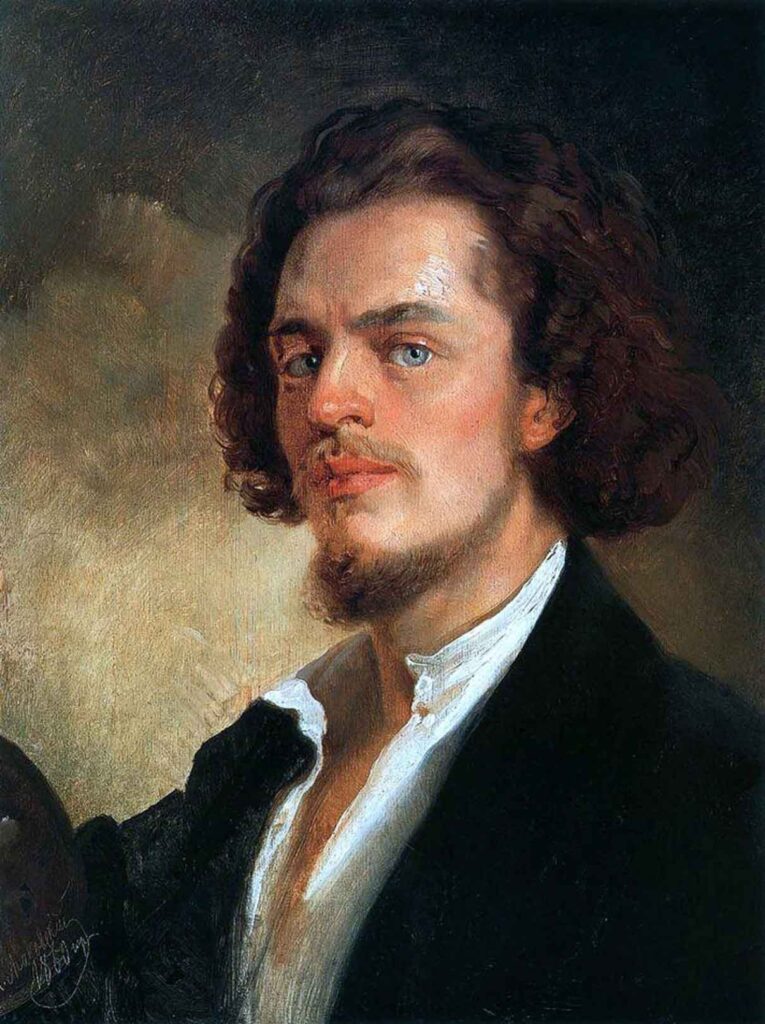
Awards and titles rained down on the eldest of the brothers, Konstantin Makovsky (1839–1915), as if from a cornucopia. The painter had no shortage of commissions; he was a welcome guest in the most famous aristocratic salons; he married three times. Konstantin Makovsky became one of the most famous and highly paid artists of the second half of the 19th century. His contemporaries called him the “ever-lucky man”, “fortune’s favourite” and the darling of the public.
Konstantin picked up a brush when he was only four years old. His father taught him to sketch everything he saw in a small pocket album and constantly repeated: “Admire and remember.” At twelve, the boy was sent to the Moscow School of Painting, Sculpture and Architecture; seven years later he became a student at the Imperial Academy of Arts in St. Petersburg. Around that time, the young painter received his first commissions – and well‑paid ones at that.
Contemporaries noted that Konstantin Makovsky worked with astonishing ease. “Of all the artists I have known, no one worked with such effortlessness, such spontaneity, as if there were nothing to think about, as if the colours blended themselves on the palette and the brush fluttered across the canvas, leaving strokes exactly where they needed to be… With clients, things sometimes went like this: after the very first sitting, the portrait was ready, all that remained was to sign it once dry, varnished (to go on painting would only spoil it). But the client, no connoisseur of art, would protest: who ever heard of paying such money for just two or three hours of work? One had to be cunning: ‘You’ve misunderstood me; I need another month to finish it on my own…’ And a month later, to everyone’s satisfaction, the portrait would be sent off to the client in its original state,” recalled the painter’s son, Sergey.
Konstantin Makovsky quickly achieved fame and became the most fashionable and celebrated portraitist of his time. Emperor Alexander II, whose portrait he painted on several occasions, called Makovsky “my artist”. And here is another curious fact: he was the first Russian artist to paint a portrait of an American president, Theodore Roosevelt. Makovsky travelled widely in Europe and visited the United States twice.
Konstantin Makovsky was an emotional, cheerful and hospitable man who lived in grand style. His dazzling successes and lordly manners more than once irritated his colleagues in the Society for Travelling Art Exhibitions (the Peredvizhniki), and in the end he left the ranks of the society. In 1867 he was awarded the title of academician, and in 1869 — professor of the Imperial Academy of Arts. However, he never taught at that institution.
A brilliant painter, he created a vivid gallery of portraits of his contemporaries. Some of them were featured in the exhibition in Omsk. The generous patron and philanthropist, tea merchant Alexander Kuznetsov; the Lady-in-waiting to Empress Maria Feodorovna, Countess Elizaveta Vorontsova‑Dashkova. And here is a dashing Cossack in a red shirt — it is clear that this man knows his own worth.
In the painting A Boyarynya at the Window, which set the Russian style for the exhibition’s design, Konstantin Makovsky depicted his second wife, Yulia Letkova. To create the young woman’s image, the artist used objects from his own collection of Russian antiquities. This gem of the Omsk museum’s collection was restored last year – for the artist’s anniversary. It was then that the restorers discovered which paints Makovsky had used to achieve the “boyarynya’s” seemingly glowing face.
Konstantin Makovsky was a passionate chronicler of old Russia. His brush produced the largest easel painting in Russia — Minin’s Summons (698 × 594 cm). In 1908, the Imperial Ministry of the Court acquired it from the artist and presented it as a gift to the people of Nizhny Novgorod. Today it is kept in the Nizhny Novgorod State Art Museum. Many of the artist’s historical canvases, which brought him world fame, were bought by foreign museums and private collectors. To this day, connoisseurs of academic painting are drawn to beauty, elegance and refined sensuality that reign on Konstantin Makovsky’s canvases.
“The smallest setback in his work would plunge him into genuine despondency… but not for long. Again, the sounds of his heartfelt singing would fill the studio, and new images would emerge from under his brush,” recalled the artist’s daughter, Elena.
Alas, in September 1915, the “fortune’s favourite” fell victim to an accident: the carriage in which Konstantin Makovsky was riding to his studio collided with a tram. Makovsky was thrown onto the pavement, and the 76‑year‑old painter suffered a fatal head injury.
The Dickens of Russian Painting
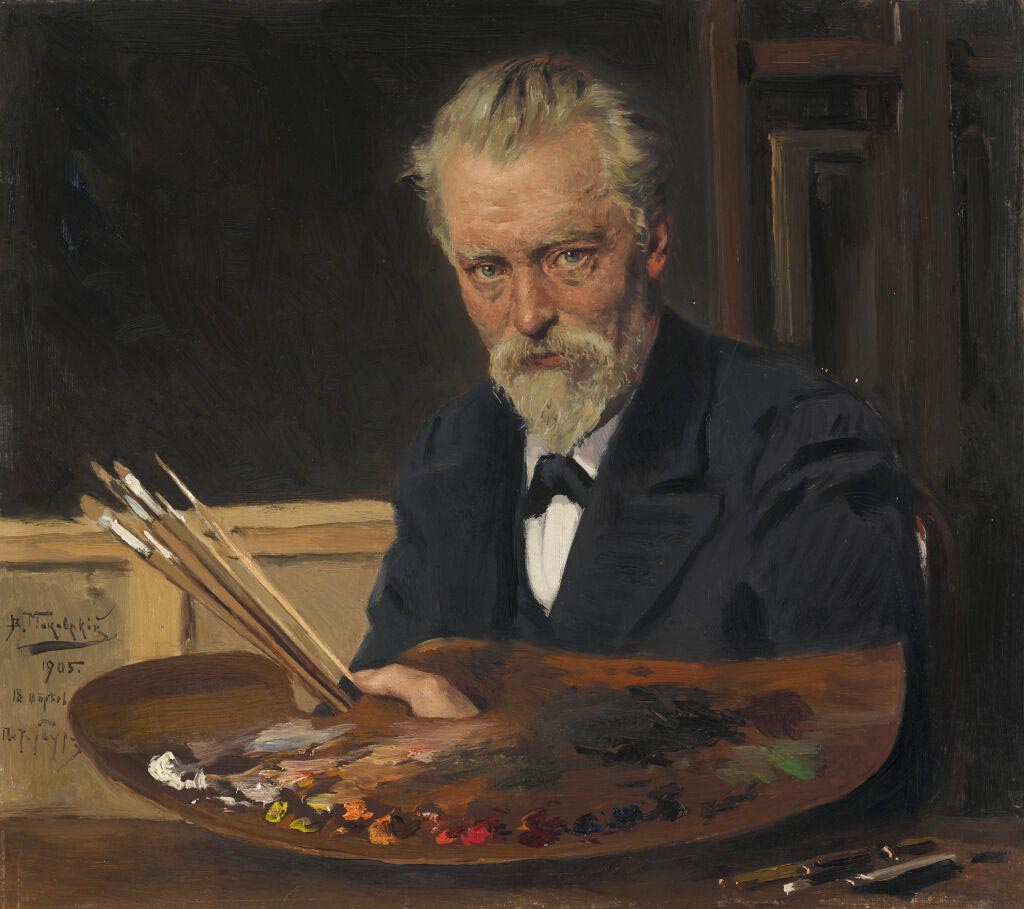
Next to Konstantin Makovsky’s paintings, the museum also displays works by his brother Vladimir (1846–1920), an outstanding artist of democratic realism who left a vivid panorama of life in the19th‑century Russia.
In 1873, Vladimir Makovsky’s painting Nightingale Lovers was shown at the Vienna World’s Fair and aroused the public’s delight. Fyodor Dostoevsky saw in it “love for humanity – not only for the Russian people in particular, but for humanity in general.” Vladimir Makovsky’s works were also in great demand and sold for high prices.
But Vladimir’s path to fame proved far thornier than his elder brother’s. He was always playing catch‑up, long remaining in the shadow of Konstantin’s success. Not surprisingly, he ultimately chose a different creative path, becoming a ‘poet of everyday life’, the ‘Dickens of Russian painting’.
Vladimir painted his first picture at the age of 7 – he depicted one of his parents’ guests. Like his elder brother, he received his first painting lessons from Vasily Tropinin. And just like Konstantin, at 12 he entered the Moscow School of Painting, Sculpture and Architecture. After graduating, he remained in Moscow. Unlike artists from St. Petersburg, those from Moscow focused on the present, more often depicting real situations from the life of the lower classes on their canvases.
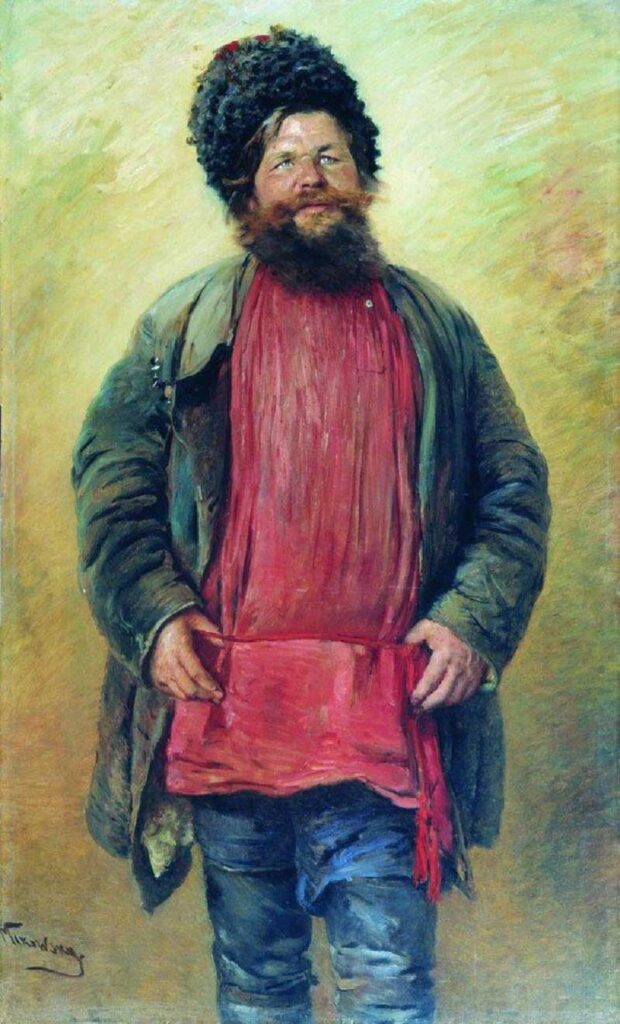
The exhibition includes some intriguing early works by the artist, for example, the canvas Peasant Woman with Children. “Vladimir Makovsky was very sensitive to individual traits of personality, which are especially difficult to capture in child characters. Their mother is a simple peasant, but look how elegant she is. That is a Ukrainian folk costume. In the background, a Ukrainian village is depicted. Vladimir Makovsky was always interested in regional character; he tried to convey them in his works, and he did it brilliantly,” says Tamara Galeeva, chief curator of the Yekaterinburg Museum of Fine Arts.
Vladimir Makovsky became one of the leading figures of the Society for Travelling Art Exhibitions (the Peredvizhniki) and remained so until his death, which coincided with the end of the Peredvizhniki movement. Unlike Konstantin – a loner who needed nobody’s support – Vladimir always “thrived within artistic circles”. Incidentally, in adulthood the relationship between the brothers was quite cool. Contemporaries noted that “they hardly had anything to do with each other”.
Vladimir Makovsky’s working style differed from that of his elder brother. It seemed that he achieved outstanding results through immense effort. Striving for maximum artistic effect, he would rework canvases many times, even those already finished and exhibited.
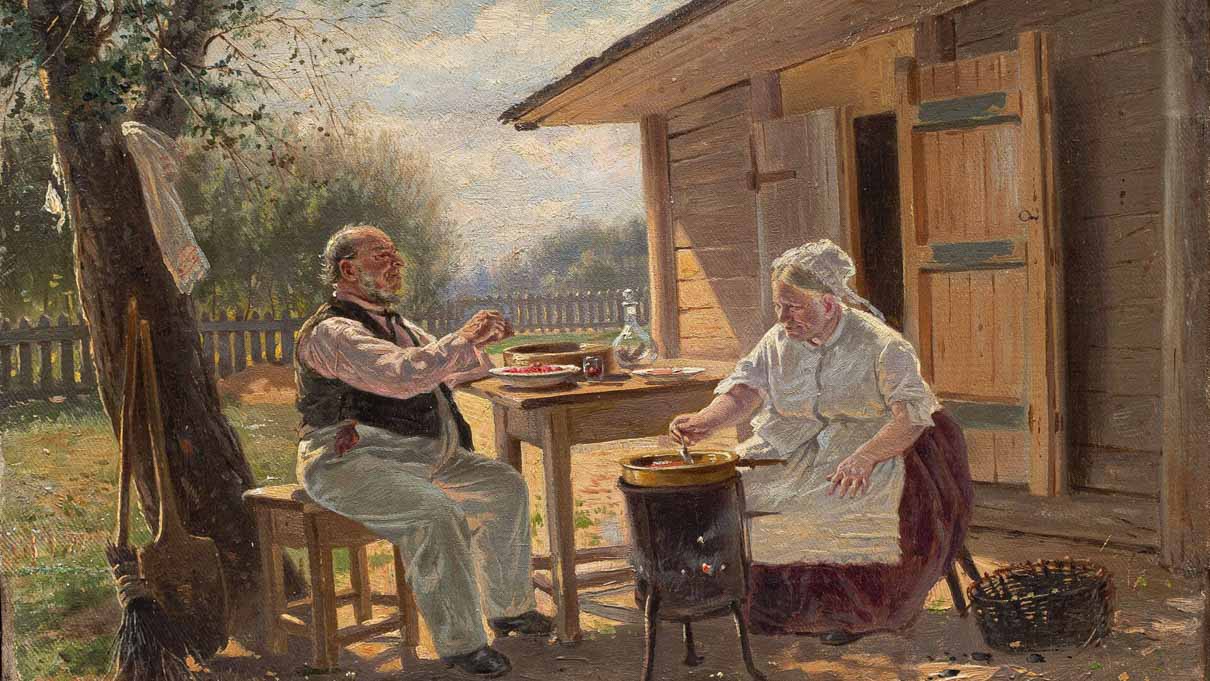
Vladimir Makovsky painted small‑format canvases in which the action usually takes place between two characters. The scenes were arranged so that everything happening would be clear at first glance. The artist said: “A painting is not a word; a painting gives the viewer only a minute, and in that minute everything must be there.”
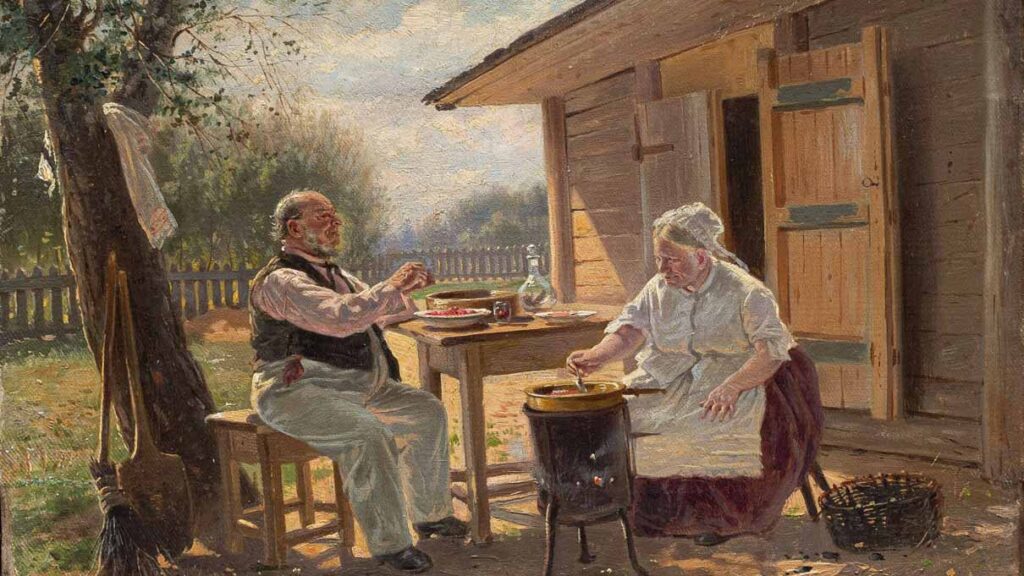
One work deserves special attention: Making Jam. At first glance, it depicts an idyllic scene from the life of an elderly couple. But it is not that simple. In the characters portrayed on the canvas, one can recognise the figures of the artist’s parents – Yegor Makovsky and Lyubov Makovskaya. The marriage broke down in the 1860s. Lyubov left for Petersburg with the older children, while Vladimir stayed with his father in Moscow. The divorce left a deep wound in the artist’s heart, so on the canvas he painted the happy continuation of the family story that never came to pass…
Vladimir Makovsky was known for his strict discipline. Perhaps that is why, unlike his elder brother, he managed to combine his creative work with teaching at the Moscow School of Painting, Sculpture and Architecture. Later, after moving to Petersburg, he taught genre painting at the Imperial Academy of Arts – the institution where he had never studied.
“Everything he had did not come to him easily, but was forged through persistent, systematic work,” wrote the artist Yakov Minchenkov in his memoirs about Vladimir Makovsky. “His entire day was divided into hours, and each hour was designated for something specific.”
Elder Sister
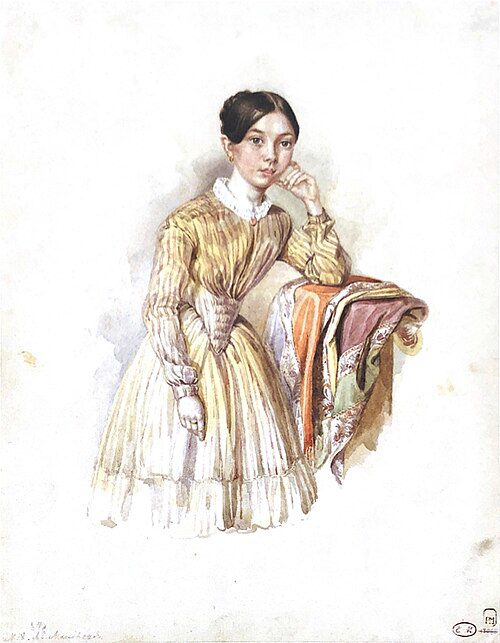
Alexandra Makovskaya (1837–1915), the elder sister of the famous brothers, became one of the first women artists of her time. Her brothers noted that she had an undoubted gift for depicting Russian nature.
Alexandra took an active part in exhibitions for almost 30 years. Her works were exhibited at the Imperial Academy of Arts and at shows of the World of Art association. Pavel Tretyakov bought Alexandra Makovskaya’s paintings for his collection, and one of her landscapes was kept in the collection of Grand Duke Konstantin Konstantinovich.
“Alexandra Makovskaya was a unique figure in Russian art. In some of her landscapes, she was even somewhat ahead of her time – one can already sense impressionist tendencies in them,” says Ekaterina Kudryashova. Today, Alexandra Makovskaya’s paintings are rare in museum collections. But at the Omsk exhibition, one can see a very delicate, subtle and beautiful work by this unjustly forgotten artist – the romantic Landscape with a Bell Tower. This canvas comes from the private collection of Andrey Morozov.
Alexandra Makovskaya had no professional art education. Her main teachers were her younger brothers.
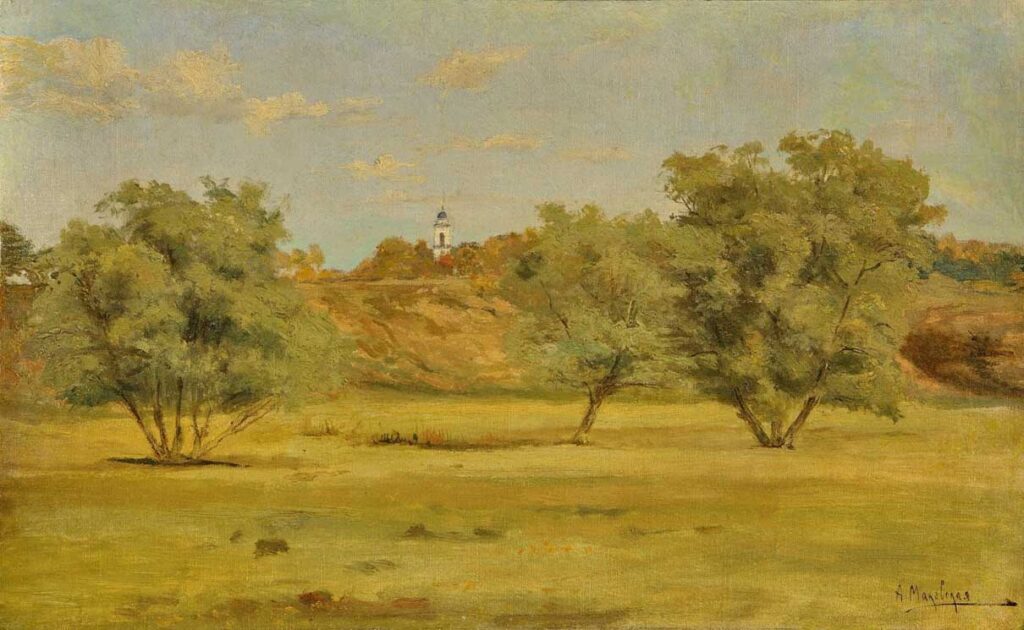
Alexandra never started a family of her own. Sergei Makovsky mentions her when describing his visit to his grandmother, who lived “in Petersburg, together with her daughter Alexandra, a most good‑natured and enthusiastic spinster, ‘Sashenka’ (a well‑known landscape painter). … In her modest flat, somewhere on Ligovka, one could smell Alexandra’s paints, and there were many houseplants and even more cages with songbirds. ‘Sashenka’ would show me her delicately painted pictures, which she usually finished from photographs (as many artists of those years did) …”
The Middle Brother
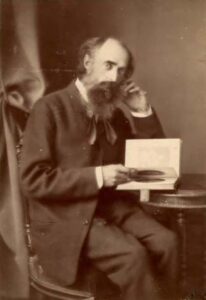
In the second hall of the exhibition, loosely titled “On Far Shores”, are paintings by the Makovskys based on sketches made during their travels. Here one can see not only the colourful Italians painted by Konstantin Makovsky, but also the vivid canvases of the middle brother – Nikolai Makovsky.
Nikolai Makovsky (1841–1886) graduated from the Moscow Palace School of Architecture and later studied in the architecture department of the Imperial Academy of Arts. For a project of a rural church, he received a Small Silver Medal. But his true love always remained painting, and his main source of inspiration – the Orient. Unfortunately, he did not live long – only 45 years.
At the exhibition in Omsk, visitors can admire his works. The composition An Arab Riding a Camel, in which Nikolai Makovsky depicted a Bedouin in traditional attire, is now kept in the Novosibirsk Art Museum. It was painted in Cairo, where Nikolai had come with his elder brother. “Elena Timofeevna, Konstantin Makovsky’s first wife, suffered badly from tuberculosis. According to the medical views of the time, the Egyptian climate might help her. So Konstantin Makovsky and his wife made several trips to Egypt. On one of them, Nikolai went along,” says Ekaterina Kudryashova.
Impressions from Egypt later formed the basis of many of Nikolai Makovsky’s paintings and graphic works. As for Konstantin Makovsky’s wife, the Egyptian climate did not help her – she died and was buried in Alexandria…
“It was in Egypt that Nikolai Makovsky began painting landscapes, but before his trip to that African country he enthusiastically painted old Moscow architecture. In our exhibition we have his masterfully executed work The Faceted Chamber in the Terem Palace of the Moscow Kremlin. Egypt is one of the most brilliant chapters of Nikolai Makovsky’s art, but not the only one,” explains the exhibition curator.
The Returned Archive
At the exhibition, visitors can also get acquainted with works of the descendants of the artistic dynasty. Alexander, the son of Vladimir Makovsky, received an excellent education at the Moscow School of Painting, Sculpture and Architecture, and later at the Imperial Academy of Arts. His mastery is fully demonstrated by the portrait of Adeli Andreeva – the artist brilliantly managed to convey the elegance and artistry of his model.
Sergei, the eldest son of Konstantin Makovsky, did not become an artist, but his contribution to Russia’s artistic heritage is very significant. He was an art critic and the founder of the famous Silver Age magazine Apollo.
The exhibition is supplemented by the archive of Konstantin Makovsky – rare documents, letters, photographs. The story of its return to Russia deserves attention. In 1992, Omsk hosted a congress of Russian compatriots. First‑wave émigrés took an interest in the city, which had once been the White capital of the Supreme Ruler of Russia, Alexander Kolchak. At the congress, Omsk local historian Vladimir Selyuk met Irina Zelenskaya, a descendant of the famous Morozov family. She invited him to Paris, where he got to know representatives of the Russian emigration. The local historian visited France several times. As a result, the archives of the cadet corps and the General Staff, as well as a number of other interesting documents, were transferred to Omsk.
During one of his trips, Vladimir Selyuk met Marina Sedrak, the granddaughter of Konstantin Makovsky. Relations were strained at first, but when Vladimir Selyuk brought a catalogue of the Omsk Museum named after M.A. Vrubel and showed that it contained A Boyarynya at the Window, Marina’s attitude changed. The artist’s granddaughter donated her grandfather’s archive to the Art of Omsk Museum.
“We are used to knowing the Makovskys from certain iconic works kept in the Tretyakov Gallery and the Russian Museum. But the Omsk exhibition, for the first time, showcases regional collections, demonstrating the full diversity of genres and themes that the artists explored,” states Elena Galaktionova, director of the Radishchev State Art Museum in Saratov.
Translated by Grigory Litvinov.