 Aleksandra Kuzmina
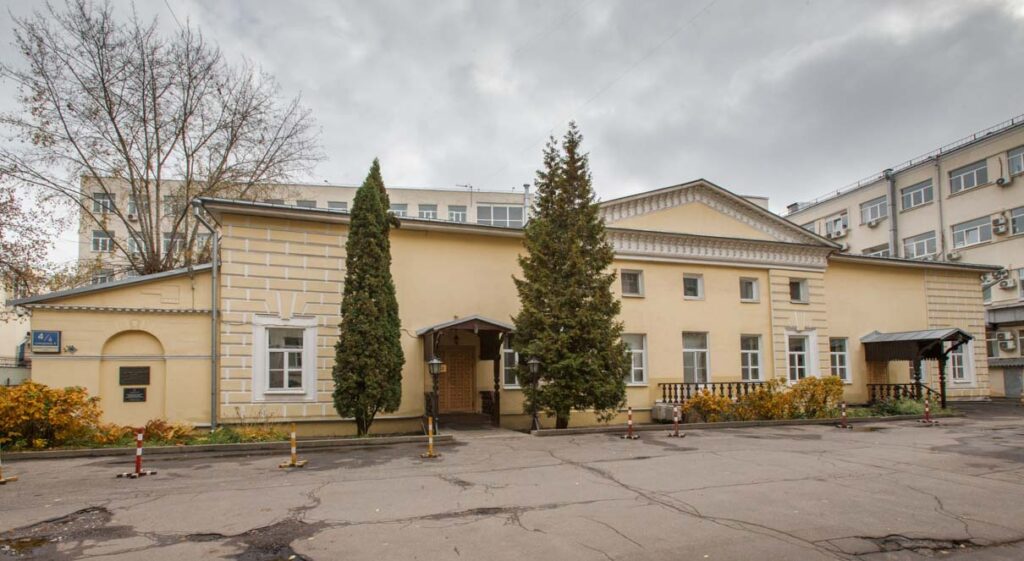
On Bolshaya Gruzinskaya Street, across from the Moscow Zoo, in the courtyard of the Ministry of Natural Resources, stands an unassuming mansion that miraculously survived the fire of 1812 and a bomb strike in 1942. It was here that Vladimir Dal spent the last thirteen years of his life. In this “happy house” on Presnya, as the lexicographer called it, he completed his work on the Explanatory Dictionary of the Living Great Russian Language.
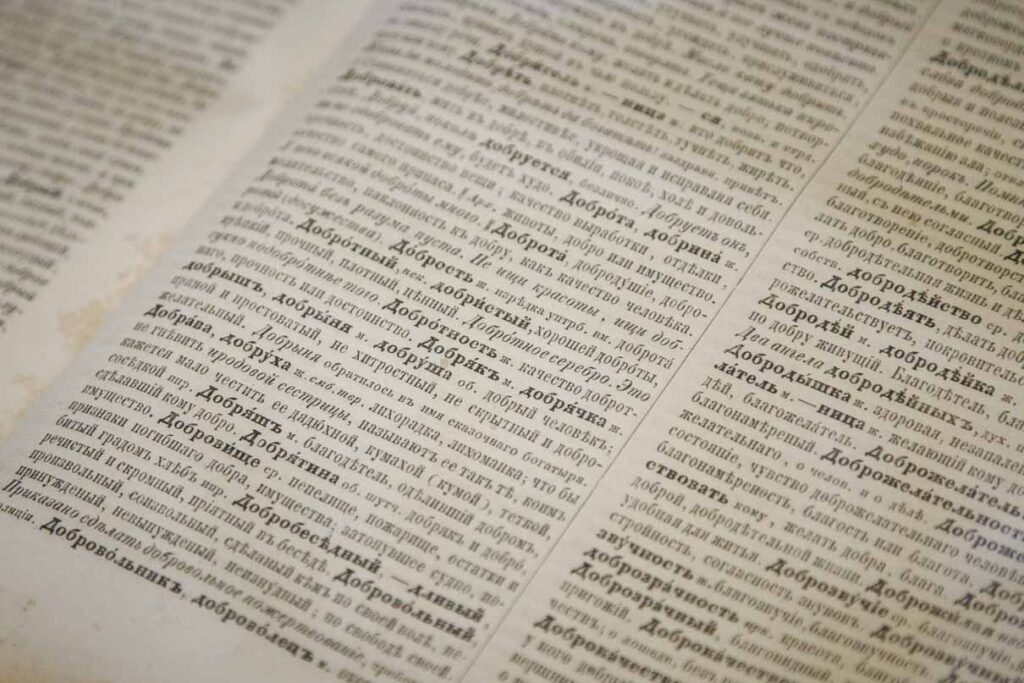
Vladimir Dal spent more than fifty years gathering materials for his dictionary. Thanks to his Autobiographical Note, we know when he first recorded an unfamiliar word, long before he conceived the idea of creating an “encyclopedia” of the Russian language. It happened in March 1819. Seventeen-year-old midshipman Dal was traveling from St. Petersburg to Nikolaev when he heard the word zamolazhivat from his coachman and wrote it down in his notebook: “‘Zamolazhivat’ — in Novgorod Province means: the sky grows cloudy, becomes overcast.”
From that moment on, Dal tirelessly recorded words, sayings, proverbs, folk tales, and songs — always and everywhere, wherever fate took him.
Dal was born in 1801 in the settlement of Lugansky Zavod. He studied at the Naval Cadet Corps in St. Petersburg and served in the Black Sea and Baltic fleets. He graduated from the medical faculty of the University of Dorpat (now Tartu) and, as a military doctor, took part in the Russo‑Turkish War and the Polish Campaign. He served as an official for special assignments in Orenburg, as secretary to the as secretary to the Minister of Internal Affairs in the capital, and finally as head of the Nizhny Novgorod Appanage Office.
Vladimir Dal had an astonishing range of interests and occupations: he knew twelve languages, was an excellent surgeon, a talented writer and scholar, and one of the founding members of the Russian Geographical Society. In addition to his Explanatory Dictionary and Collection of Russian Proverbs, he published fairy tales, short stories and essays, scholarly articles, and textbooks on zoology and botany. He was friends with the surgeon Nikolay Pirogov, the historian Mikhail Pogodin, the writers Sergey Aksakov and Pavel Melnikov-Pechersky, the poet Nikolay Yazykov, as well as with Vasily Zhukovsky and Alexander Pushkin.
In 1859, Dal retired and moved from Nizhny Novgorod to Moscow. He brought with him the completed collection of Russian proverbs and dictionary materials prepared up to the letter P. “I was already planning, overcoming provincial difficulties, to begin printing it in Nizhny Novgorod, when my good fortune chose to ease my burdens in a different way — by relieving me of my official duties and granting me, in my old age, time and freedom for other things,” wrote Vladimir Dal.
The mansion where the Dal family settled was wooden, plastered to imitate stone, single-storey, with a mezzanine and a large, bright hall. Between the house and the wing stood an old stone storehouse with a portico of four columns. It was there, to protect them from fire, that Vladimir Dal stored the materials for his Explanatory Dictionary.
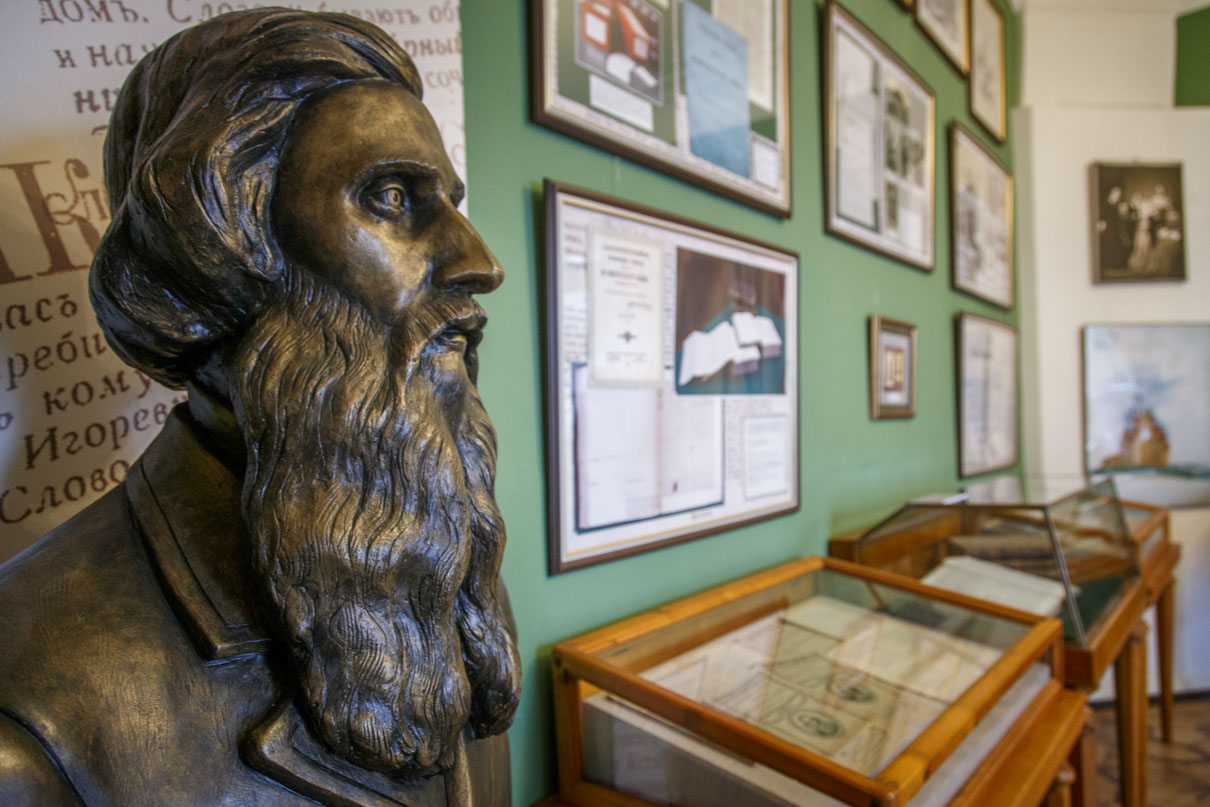
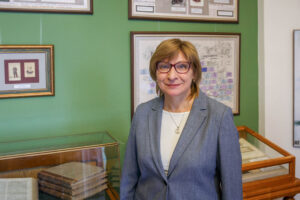
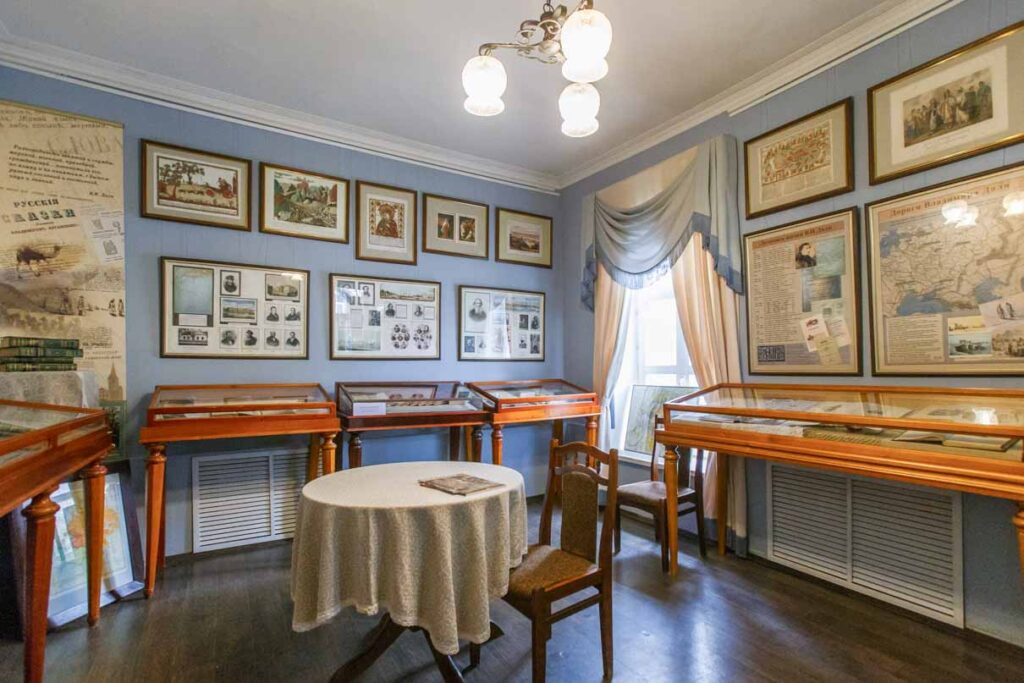
Today, two rooms of this building contain the V.I. Dal Museum and Cultural and Educational Center, established by the All‑Russian Society for the Protection of Historical and Cultural Monuments. The museum’s director, Irina Kleimenova, gave us a tour.
The backwater of Presnya
The mansion where the Dal family lived had been built for the famous historian Prince Mikhail Shcherbatov in the second half of the 18th century. After Shcherbatov’s death, the estate passed to various owners, among them, for example, Count Lev Tolstoy. One of his daughters became the mother of Fyodor Tyutchev, and as a child the future poet often came to visit his grandfather on Presnya.
In 1845, the estate was bought by a landowner from Yekaterinoslav Province, Mikhail Ivanenko. It was from his heirs that the nephew of the writer Sergey Aksakov rented the house for the Dal family. Vladimir Dal rented the mansion for several years and then purchased it outright. The house had 34 rooms, divided into two halves by a long corridor running the length of the building. Dal set up his study in the central double‑height drawing room: he preferred to work in a common room, surrounded by his family. “The house was bought unusually well. Today it’s hard to believe that such a property could be acquired for 40,000 rubles,” recalled the lexicographer’s granddaughter, Olga Weiss (née Demidova).
Incidentally, in those days, the district where Dal lived was considered the outskirts and was not prestigious. “Few people know that there, somewhere near the Presnya Ponds, in the backwater, lives a hermit who has been through fire and water,” wrote the famous historian Mikhail Pogodin. Although Pogodin described his friend as a hermit, the doors of Dal’s house were always open to guests. They recalled that Vladimir Dal often took them to the nearby zoo and could speak in detail about every animal.
In 1866, Pavel Melnikov moved to Moscow. Dal had become particularly close with him during their service in Nizhny Novgorod. In that Volga city they both lived on Pecherskaya Street, and it was Vladimir Dal who suggested the writer adopt the pseudonym Andrey Pechersky, under which Melnikov became famous.
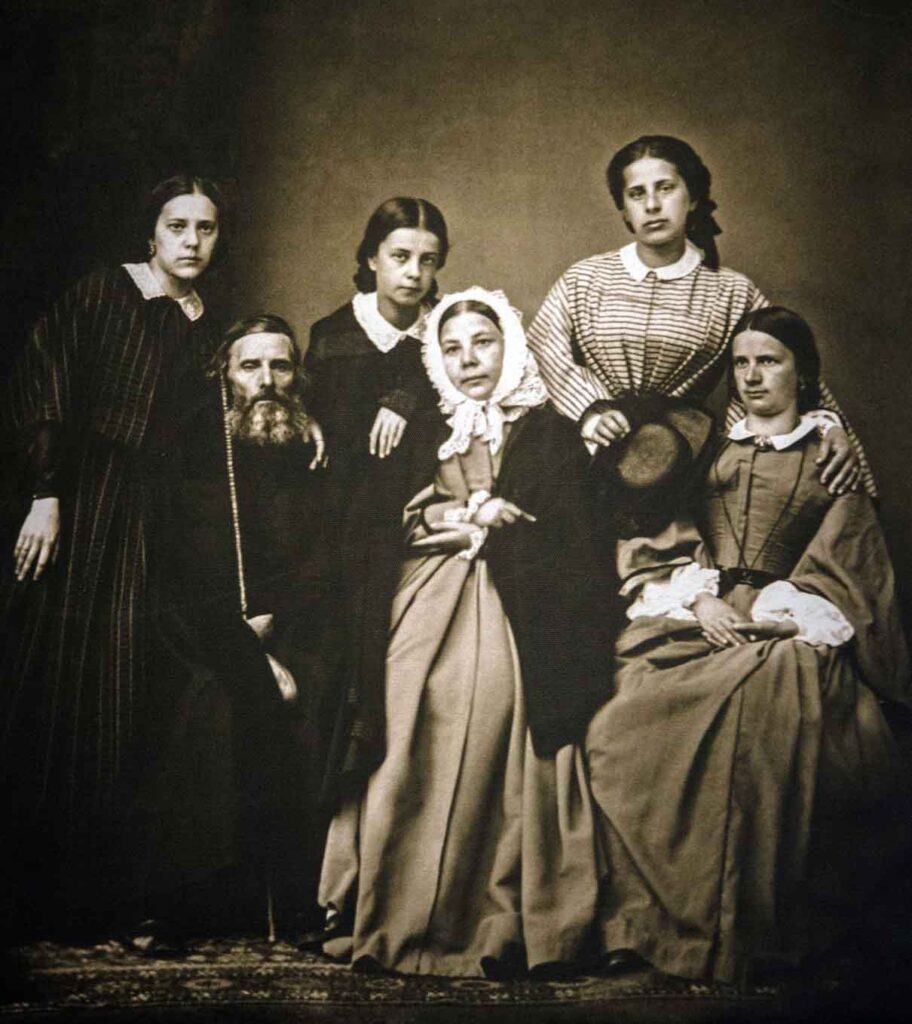
At first, Melnikov’s life in the capital was not easy; the family’s only real income came from the writer’s royalties. Realizing how difficult Pavel Melnikov’s situation was, Dal offered him an accommodation in the wing of his house. There the writer lived with his wife and six children for about three years, working on his novel In the Forests.
“The semi‑literate granddaughter” and her grandfather
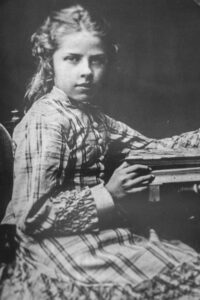
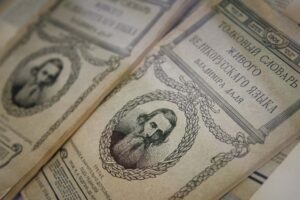
Between 1861 and 1867, the Explanatory Dictionary was published in soft‑cover booklets that were later bound into volumes. A total of 21 booklets were issued. On the back of each, Dal placed a notice giving his address and inviting readers to submit corrections and additions for the dictionary. Many of these were incorporated into the second edition, which was published after the author’s death.
“Ah, if only I could live to finish the Dictionary! Launch the ship into the water, hand it over to God,” Dal would repeat, fearing that he might not complete his immense work, sometimes staying at his desk until exhaustion, sometimes to the point of fainting. He had to read through the proofs of the dictionary fourteen times – that is almost 2,500 pages.
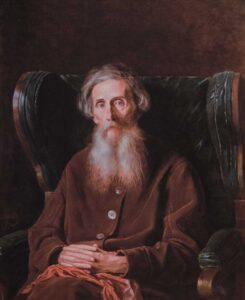
In a family photograph from the early 1860s, Vladimir Dal is shown with his second wife, Ekaterina Sokolova, and their three daughters: Maria, Olga and Ekaterina. Also in the picture is his daughter from his first marriage, Yulia, named after her mother, Yulia Andre, who died in 1838. A son, Lev, was also born of that marriage.
The grandchildren brought warmth to the house on Presnya. Vladimir Dal’s favourite was Olenka, the daughter of Olga Vladimirovna, who had married the Moscow prosecutor Platon Demidov. It was for her that Dal compiled the collection The First Beginner Book for a Semi‑Literate Granddaughter: Fairy Tales, Songs, Games. The book included Russian folk tales, games, tongue twisters and proverbs. When Olenka had mastered her letters, a second book followed: Another Beginner Book for a Literate Granddaughter from Her Illiterate Brethren.
Vladimir Dal hoped that these little books would interest parents and educators. “In our country, more than anywhere else, education has become hostile to everything native and popular,” he wrote bitterly. These collections embody Dal’s spirit; they contain not the dry academic interest of a word‑collector, but a living, tender reflection of his native culture.
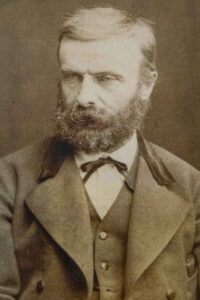
In 1959, a collection titled Father Four Seasons was compiled from the two little books that Dal had dedicated to his grandchildren, with illustrations by Vladimir Konashevich, a well‑known artist who illustrated Pushkin’s fairy tales as well as books by Fet and Turgenev.
In the last six months of his life, in the spring and summer of 1872, the seven‑year‑old Olenka was her grandfather’s constant companion. The dying Dal, who was completing the proofreading of the second edition of his Explanatory Dictionary, had a bed placed right in his study. His granddaughter would read aloud to him for hours. Incidentally, this “young literate girl” lived up to her grandfather’s hopes: she graduated with distinction from the S.N. Fisher Moscow Classical Gymnasium, became a teacher, and later the head of the Yaroslavl Women’s College for the Daughters of Clergy. Olga Weiss (née Demidova) lived a long life. In 1918, escaping the horrors of the Civil War, she fled from Yaroslavl to the south of Russia with her daughter and grandchildren. Later, Olga Weiss lived in Moscow, Krasnodar, Frunze (now Bishkek) and Leningrad, where she died in 1935. She left behind memoirs of her famous grandfather.
Olga Weiss recalled that a year before Dal’s death, when he had already suffered several strokes, Pavel Tretyakov came to the house on Presnya and urged the scholar to give permission for a portrait to be made for his gallery. Vladimir Dal agreed. The famous portrait by Vasily Perov was painted in the house on Presnya, in the very study‑hall where the lexicographer had worked on his dictionary. “It is a pity that this idea did not strike Tretyakov earlier, when Grandfather was still healthy; then he would have had a portrait of a living man,” Olga Weiss wrote in her memoirs. “As it is, he got a portrait of a dying old man, whose eyes are fixed ‘beyond the bounds of earthly existence’.”
Shortly before his death, Dal, who had been a Lutheran his whole life, converted to Orthodoxy. He died on 4 October 1872 in the house on Presnya. The scholar was buried at the Vagankovo Cemetery.
After the death of the head of the family, the mansion passed by inheritance to the children, and from 1872 to 1903 the Dal family lived there. Dal’s son, Lev, a talented architect, reconstructed the house, introducing elements of Russian folk architecture while preserving the characteristic features of classicism. Lev Dal, by the way, was a noted researcher of Russian wooden architecture, went on expeditions, wrote many articles on the subject, and became one of the founders of the “Russian style” in architecture of the last third of the 19th century. Among his well‑known works are the Alexander Nevsky New Fair Cathedral and the tombstone for Citizen Minin in the Transfiguration Cathedral in Nizhny Novgorod. He also paid tribute to his father: the tombstone of Vladimir Dal, designed by Lev Dal in the Old Russian style, survives to this day. Later, the architect himself was buried next to him.
A bomb with a dictionary
The 20th century put the “happy house” to the test. On 6 March 1942, a high‑explosive bomb fell near the house — but it did not explode. The bomb disposal crew discovered that the bomb had been filled not with explosives but with sand. Imagine their surprise when, inside the bomb, they also found a small Czech‑Russian dictionary. Anti‑fascist workers at a military factory had deliberately filled the bomb with sand and placed the little dictionary inside as an act of solidarity in the fight against fascism. Today, this unique find is kept in the State Central Museum of Contemporary Russian History. “The bomb with the dictionary became the most paradoxical and vivid confirmation of the house’s ‘happy’ fate: even war could not destroy it,” says Irina Kleimenova.
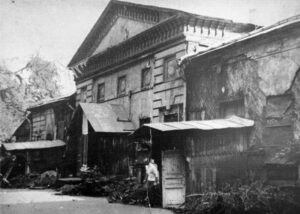
A dilapidated facade, peeling paint, a roof sagging in several places — that was how the mansion looked in the mid‑1960s, after the communal apartments had been vacated. That was how it was seen by the activists of the movement to save Dal’s house. Articles about the deplorable state of the monument appeared in Komsomolskaya Pravda and Literaturnaya Gazeta. The first to raise the alarm was Viktor Sorokin, a well‑known expert on Moscow, who was the head bibliographer and historian at the Scientific Library of Moscow State University. He remembered how, as a boy, he used to go to the zoo with his mother and, while she stood in line for tickets, he would wait for her near Dal’s house. It was Sorokin who managed to identify the dilapidated building on Presnya as Vladimir Dal’s house.
Sorokin told the well‑known restoration architect Pyotr Baranovsky, the founder of the Kolomenskoye Museum and the Andrei Rublev Museum in the Andronikov Monastery, about the house. Baranovsky was also the driving force behind the creation of the All‑Russian Society for the Protection of Historical and Cultural Monuments. It was he who drew the attention of the general public to the dire condition of Dal’s house. Under the auspices of the society, prominent cultural figures rallied around the idea of preserving this unique monument, among them the writers Leonid Leonov, Irakli Andronikov, Yuri Kazakov, and the academics Viktor Vinogradov, Nikolai Konrad, and others. Thanks to their joint efforts, the demolition of the mansion was prevented.
In 1971, a decision of the Moscow City Executive Committee transferred Dal’s house to the jurisdiction of the USSR Ministry of Communications on the condition that two rooms be set aside for a museum of Vladimir Dal. The restored mansion housed the central philatelic agency Soyuzpechat, and in 1986, through the efforts of the society, a public museum of Dal was opened (now known as the V.I. Dal Museum and Cultural and Educational Center).
Gifts from the descendants
In the museum, visitors can see a lifetime edition of the Explanatory Dictionary of the Living Great Russian Language, Dal’s collected works from 1887, the pre‑revolutionary collection Proverbs of the Russian People, as well as copies of archival documents and manuscripts of the writer and lexicographer.
The Literary Museum of V.I. Dal in Luhansk shared with its Moscow colleagues a copy of an archival document titled “The Oath of Allegiance.” The scholar’s father took his oath of eternal Russian citizenship on 14 December 1799. In Russia, the Dane Johann Christian Dahl became Ivan Matveyevich Dal.
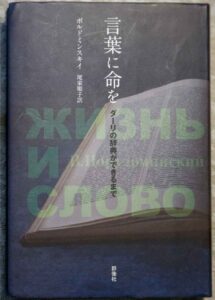
One of the more unexpected exhibits is a Japanese translation of the book Life and the Word: Dal by the writer and literary scholar Vladimir Porudominsky. The translation was done by Junko Oya. On 4 October 2019, the anniversary of Vladimir Dal’s death, the Japanese woman placed a bouquet of white roses on his grave — from herself and from Porudominsky.
“Our most valuable exhibits were donated by the descendants of Vladimir Dal,” says Irina Kleimenova. “His family history is very important to us.”
Two portraits of Vladimir Dal’s children from his first marriage — Lev and Yulia — were painted by the artist Andrey Sapozhnikov, with whom Dal was on friendly terms. They had met back in the 1830s; later, the artist illustrated Dal’s literary works and also prepared a series of drawings for his zoology textbook.
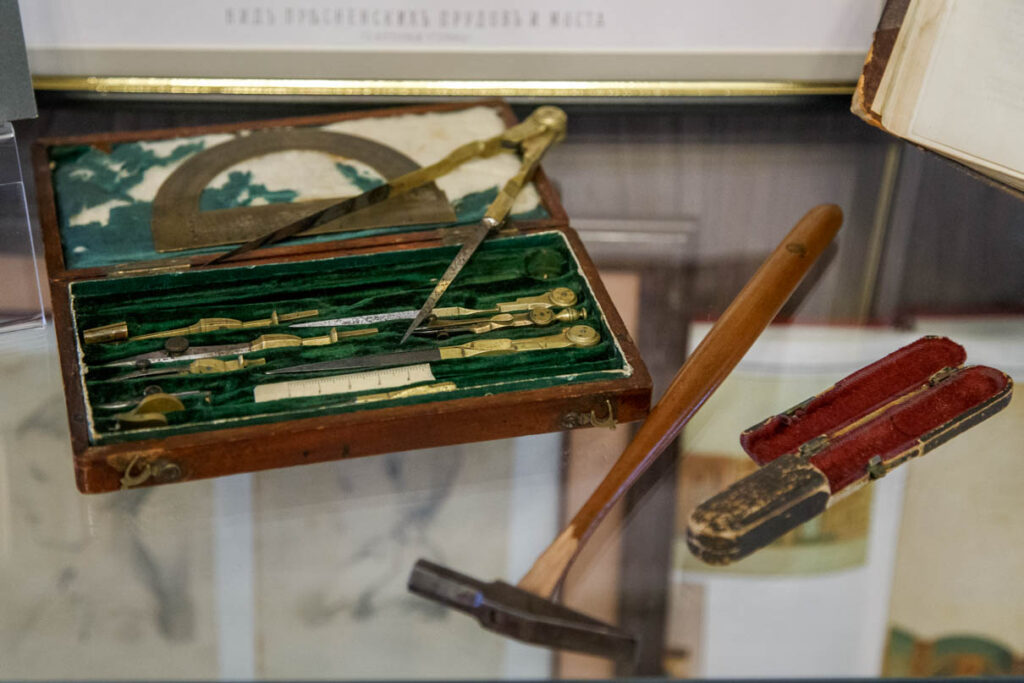
Very few of Dal’s personal belongings have survived. In 2017, at an exhibition marking the 150th anniversary of the Explanatory Dictionary in his Moscow house, a carpenter’s hammer and a set of drawing instruments that had belonged to the lexicographer were put on public display for the first time. They had been preserved in the family of Anastasia Zhuravskaya — a descendant of Dal through the line of Olga Weiss.
Incidentally, the set of drawing instruments may have been among Dal’s possessions when, as a military doctor serving under Lieutenant General Fyodor Ridiger, he took part in the suppression of the Polish Uprising of 1830–1831. If so, he used those instruments to prepare a plan for a pontoon bridge that enabled the successful crossing of the Vistula near the Polish town of Józefów. Using whatever materials were at hand — empty barrels from a brewery, logs and planks — the soldiers, under the direction of the head of the regimental hospital, quickly built a 380‑metre pontoon bridge across the Vistula. As a result, the Russian troops crossed the river successfully. Dal himself recalled that he stayed on the bridge with fifteen soldiers “in order to destroy it after our garrisons had crossed.” Suddenly, a Polish detachment appeared at the other end. With the help of his men, Dal cut eleven cables, destroyed the pontoon bridge, and then safely rejoined his own forces. Ironically, for this bold manoeuvre he first received a reprimand from his superiors — for leaving the hospital — but was later noticed by Emperor Nicholas I, who awarded him the Order of St. Vladimir, Fourth Class.
Dal not only brilliantly solved an engineering problem in the field, but also documented his experience. In 1833, his brochure Description of a Bridge Built on the Vistula River for the Crossing of Lieutenant General Ridiger’s Detachment was published in St. Petersburg, complete with detailed drawings. This work became a practical guide for military engineers and was even translated into French.
For many years now, defenders of Dal’s heritage have been trying to have a bust of the lexicographer installed in Moscow. The task was almost accomplished: under Mayor Yuri Luzhkov, Dal’s bust stood “in line” right after Sherlock Holmes and Dr. Watson. The monument to the literary characters was erected near the British Embassy in 2007, but the bust of Dal, who compiled the fundamental dictionary of the Russian language, never appeared in the capital. “In the city where Vladimir Dal spent a significant part of his life and completed his main work, no place could be found for him,” Irina Kleimenova notes with regret.
In 2002, the sculptor Ilya Mishanin made a plaster bust of Dal. It was intended to be cast in bronze and installed near the memorial house. For now, however, the plaster bust of the lexicographer stands in the museum, and visitors like to have their picture taken next to it…
The “happy house” on Presnya has outlived centuries: neither fire nor bomb, neither neglect nor indifference could destroy it. And today, all those who remember the great work of Vladimir Dal still wait for a monument to appear in Moscow to the man who created the Explanatory Dictionary of the Living Great Russian Language.
Translated by Grigory Litvinov.