 Marina Yardaeva
 For his exceptional fortitude and courage, Musa Jalil (born Musa Mustafovich Zalilov) was posthumously awarded the title of Hero of the Soviet Union.
A poet’s task is the word itself. But the strength and truth of that word are tested by life itself, which sometimes confronts a person with a difficult choice. The Tatar poet Musa Jalil is known today in many countries. His poetry is not only a literary treasure; it is a true heroic deed. The most powerful of his verses were written in a Berlin prison shortly before his execution.
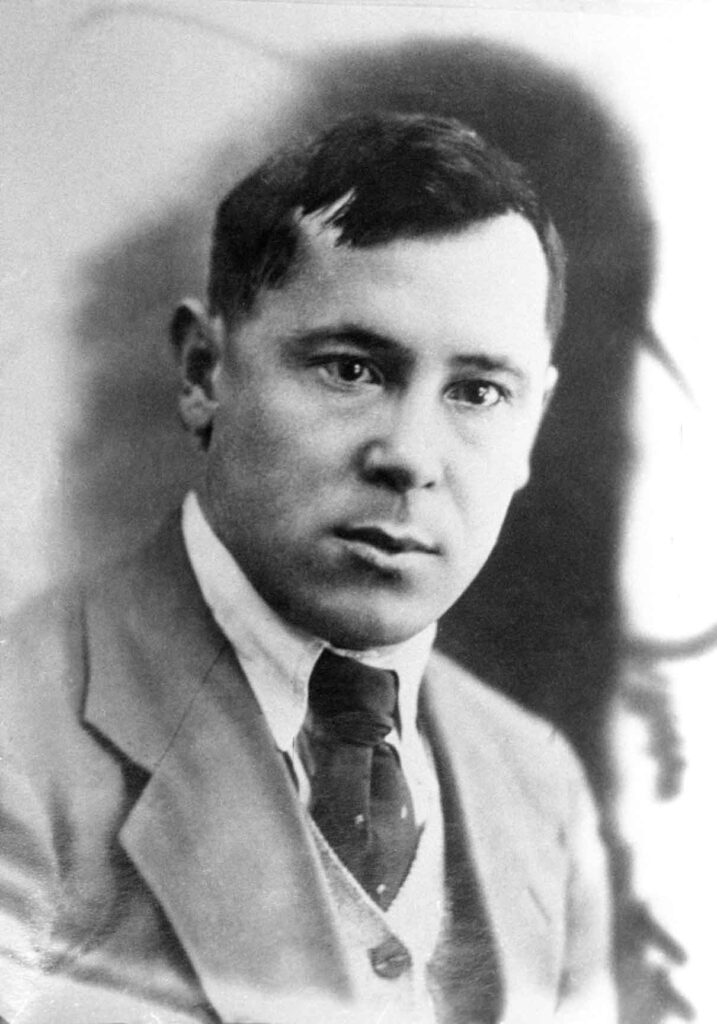
The poet was born on February 15, 1906, in the village of Mustafino near Orenburg, to parents Mustafa and Rakhima Jalilov. The family was poor, despite all the efforts of Musa’s father to make a decent living. He first worked as a clerk for a merchant, then tried his own hand at trade by opening a grocery shop. Although business was not doing well, Mustafa Jalilov made sure to give at least a primary education to his six children. As soon as Musa turned six, his father took him to the village school. Within a year, the boy had completed the four‑year curriculum, and this proved timely: his father went bankrupt, unable to repay even the loans he had taken to open the shop. The family sold off their belongings and moved to Orenburg. Musa’s childhood came to an end.
In the city, everyone worked tirelessly. Musa’s father and his elder brother, Ibrahim, went from house to house: chopping firewood here, clearing rubbish there. Their mother worked as a laundress. And seven‑year‑old Musa looked after his little sister, Zaynab, who was five. Eventually, the father found a job as a janitor at the Khusainov Madrasah. The family was given a corner in the basement to live in, and Musa was accepted into the preparatory class of the religious school. Near their new home was the Belek library — it was there that Musa spent his rare free hours. Life was hard: when a family is barely scraping by, educating one child can look like an unforgivable luxury. But, as they say, every cloud has a silver lining: illiterate women whose husbands had gone off to the front in the First World War began turning to Musa for help. He would write letters for them — almost every one he would end with a quatrain of his own composition.
Meanwhile, life in Orenburg was becoming increasingly difficult. The February Revolution of 1917 changed little. After the October Revolution, power in the city was seized by the Cossack ataman Dutov, and throughout 1918, fighting between the Whites and the Reds raged over Orenburg. The Jalilovs returned to Mustafino, but there, too, things were uneasy. The sons were sent back to the city: Ibrahim to work in a printing house, Musa to study at the madrasah. In 1919, the Whites were driven out of the city. The religious school ceased to exist. Within its walls, the Tatar Institute of Public Education was opened, and Musa continued his studies there.
Poet of the revolution
Musa’s political choice was hardly complicated: it was shaped by an impoverished childhood and the feeling of being an outsider at the madrasah, where most of the students were merchants’ children. Like his elder brother, Musa wanted to join the Red Army, but both were turned away because they were too young. So Musa decided to fight the old order with the power of the word. In 1919, the Tatar newspaper Kyzyl Yoldyz (“Red Star”) published a poem by Musa Jalilov titled Happiness. It was ardent and filled with that revolutionary fervor of which only youth is capable. From then on, his poems began to be regularly published in newspapers and journals.
The death of his father forced Musa to return to the village: on his own, Ibrahim would not have been able to support the family. At fourteen, Musa headed a newly opened proletarian club‑theatre in Mustafino. There he worked as director, playwright, actor and musician all at once.
A year later, famine struck the Volga region. To avoid being a burden on his family, Musa left the village and went to Orenburg. For several months he wandered, living in basements, eating whatever he could find on garbage dumps, and most likely would have perished had he not met an employee of Kyzyl Yoldyz. The man did not immediately recognize the poet in the ragged, filthy, emaciated boy, but once he did, he gave him shelter. Later, he arranged for Musa to become a cadet at a Soviet Party school.
In 1922, Jalil went to Kazan to enroll in a workers’ school. However, admissions had already closed, so Musa stayed in the city and took a job as a copyist at the editorial office of the newspaper Kyzyl Tatarstan. At the same time, he joined local literary circles. And his poetry began to appear in established literary journals.
Then came the workers’ school, Komsomol work in Orsk, and his first collection of poetry, Barabyz (“We Are Coming”). Finally, in 1927, Musa Jalil moved to Moscow. There he threw himself into studying Russian. And we know about the diligence with which he mastered the language thanks to Varlam Shalamov. As a student at Moscow State University, Musa shared a dormitory room with the future author of The Kolyma Tales. “Musa was very neat: small, precise, with thin, small, feminine fingers nervously turning the pages of a book of Russian poetry,” Shalamov later recalled. “In the evenings — not just often, but every evening — Musa would read half‑aloud in Tatar, his own poems or those of others. His body would fall into the rhythm of the reading, and Musa’s slender palm would beat out the rhythms — someone else’s, or perhaps his own. We were all captivated in those days by the idea of making iambic metre closer to living speech, and we watched with admiration as Musa climbed the Olympus of a foreign language, a path full of unexpected bumps and potholes.”
But Musa Jalil did not only study and read. He also edited a children’s Tatar magazine, led a literary circle at the Tatar Workers’ Club, translated Russian and foreign classics, worked for the Tatar newspaper Kommunist published in the capital, wrote critical articles, plays and, of course, poetry and songs. By the 1930s, he had become a well‑known national poet and playwright: his songs were performed on the radio, his plays staged in theatres in Kazan, Orenburg, Ufa and Tashkent.
In the late 1930s, he settled in Kazan with his second wife, Amina, and his daughter, Chulpan, where until 1941 he held the post of executive secretary of the Writers’ Union of the Tatar ASSR. There he also completed the libretto for the opera Altynchech. His wife recalled those years as the happiest of the poet’s life: “Cheerful, tireless, he loved to laugh, to joke, loved merry company and long evening conversations. And for all his tenderness and gentleness, his vulnerably open nature, he could be even‑tempered, calm, steadfast. Jalil was always surrounded by friends.”
«I am not afraid of death…»
On June 22, 1941, Musa and his family were on their way to friends’ country house. The news of the outbreak of war reached them at the railway station. They did not cancel the visit, but of course they could not be cheerful; all they talked about was what lay ahead for the country. “After the war, some of us will be gone,” Jalil said to his friends. The next day, he was already at the military enlistment office.
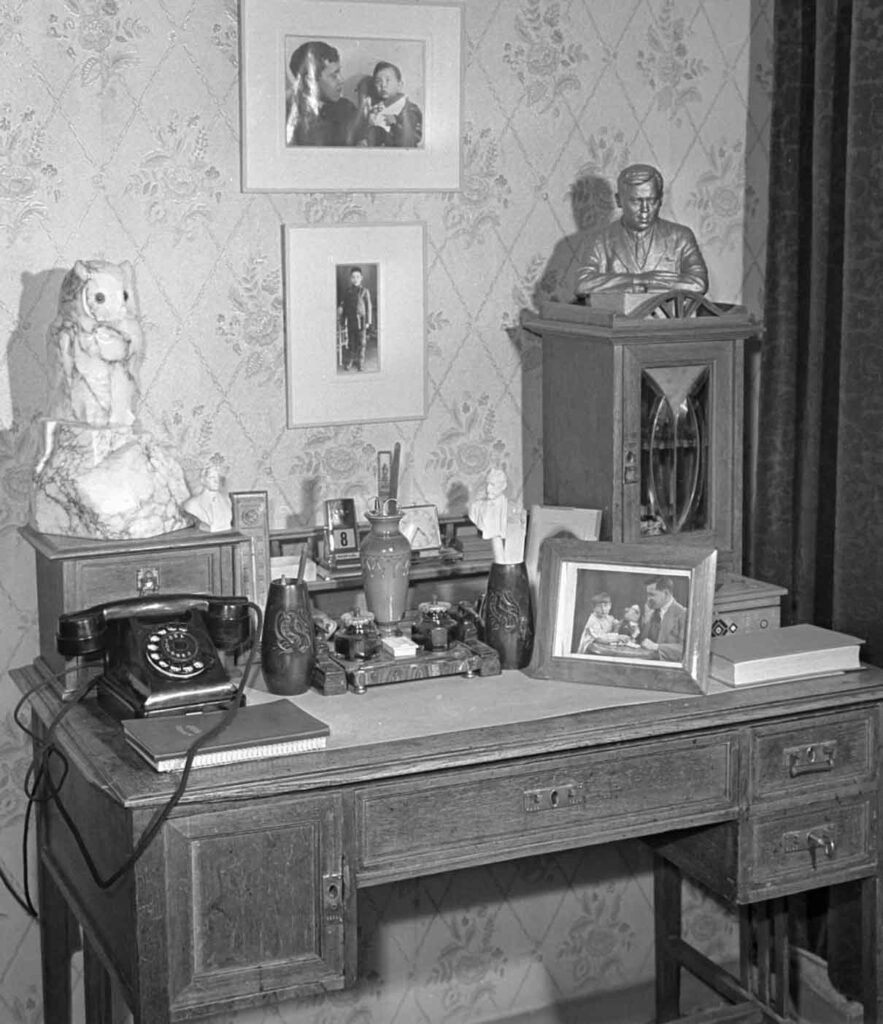
The poet received his draft notice on July 13. At that very time, the opera Altynchech was premiering in Kazan. The unit command, learning what kind of soldier they had gotten, wanted either to discharge him or to keep him in the rear. But Jalil was adamant: he had to go to the front. He condemned acquaintances who were hiding in the rear, especially poets and writers. “Everybody is straining every nerve, making sacrifices! But these people make the most noise, advertise themselves, show off, while in reality they are pathetic cowards and false patriots! You can’t help but curse!” he confided to his friend Kashshaf Gazi. He could not imagine such a fate for himself.
On the way to the Leningrad Front in the winter of 1942, he wrote: “I am not afraid of death. This is not an empty phrase. When we say that we despise death, it is really true. … Beyond our life, there is another life, not the ‘life after death’ that priests and mullahs promise. But there is life after death — in the consciousness, in the memory of the people. If during my life I have done something important and immortal, then by that I will earn a long life — life after death. … But if we are not afraid of death, that does not mean that we do not want to live … Not at all! We love life very much, we want to live, and that is why we despise death! … But there are moments when I think about my little Chulpan, I imagine her without a father… When I think about it, I feel terrified…”
In the spring, Jalil found himself near Leningrad. He worked as a war correspondent: five days a week he was at the front line. Later, having been promoted to the rank of Senior Political Officer, he took part in combat. The situation at the front was such that at the end of May he wrote a will: “In the event of my death, I bequeath and entrust the collection of all my manuscripts — poems, songs, narrative poems, stories, plays, epigrams, critical articles, diaries, letters, both in draft and final form — to my best friend, the critic and writer, member of the USSR Writers’ Union, Comrade Kashshaf Gazi.” In June 1942, Jalil was surrounded and severely wounded. He had a plan for such a case, but fate decided otherwise:
What to do?
I gave up on the word,
On the last word, my comrade — the pistol.
The enemy bound my half‑dead hands.
«There will be august…»
Musa Jalil was taken prisoner. For his family, he was listed as missing in action. He understood that as a Political Officer he was doomed; he could be shot in the first days. He gave a false name: Gumerov. Jalil’s nationality became a kind of amulet: the Nazis tried to win over representatives of different Soviet peoples, believing that they had accumulated many grievances against the Soviet authorities.
In August 1942, the German command began creating the Idel‑Ural Legion, made up mainly of captured Volga Tatars, Bashkirs and Mari. The legion was formed near the Polish city of Radom. Musa Jalil immediately joined the underground group that had already been established there. Having earned the special trust of the Nazis, Jalil was allowed to engage in cultural and educational work, to publish the legion’s newspaper, and to travel to other camps to recruit amateur performers. This gave him wide opportunities to set up an underground network and to bring new members into the resistance. Musa himself was connected to the international underground organization “Berlin Committee of the All‑Union Communist Party”, headed by Nikolai Bushmanov.
Thanks to the work of the underground fighters, the Idel‑Ural Legion never became a fully‑fledged combat unit. The first battalion of the legion, the 825th, which was sent to Vitebsk in February 1943, staged an uprising. About 500 legionnaires managed to break through to the Belarusian partisans. The soldiers of the other battalions behaved the same way: at the first opportunity, they went over to the side of the Red Army or the partisans. Nothing helped. Neither threats nor the appeals in the newspaper that the Nazis put out for the legionnaires made any difference.
The legionnaires, however, preferred not the brisk editorials in that propaganda newspaper, but Jalil’s poems. He wrote them in Arabic script. At first he showed them to no one. But one day a new acquaintance in the camp, Talgat Gimranov, caught Musa writing poetry in a tiny notebook. He asked to read them. Jalil did not hide what he had written; he only said that for such lines a man could lose his head. Gimranov was not deterred. He read the poems and asked permission to copy several of them. Jalil agreed, merely asking: “If you survive, pass them on to my wife.” After that, Talgat began writing down all of Jalil’s new poems. When the notebook ran out, he came up with the idea of using margarine wrappers: he would wipe them clean, dry them, and write on them. Then he would read the poems to those he trusted. He did not name the author. Sometimes it happened that Jalil would catch fragments of his own verses in someone else’s whisper. Few of the ordinary legionnaires knew his role. That was how it had to be. Jalil increasingly thought that in the future his family might never learn the truth about his work.
He was waiting for a general uprising in the camp. It was planned for August 1943.
Only one hope remains with me:
August will come. In the night’s dark veil
My wrath toward the foe and my love for the homeland
Will break free from captivity together with me.
But there had long been a traitor in the underground, and with his help the Nazis traced the organization. In August 1943, several hundred people were arrested in various camps. Among them was Musa Jalil. He was sent to Berlin’s Moabit prison, where he was tortured for several months. Then came the trial and the sentence.
Moabit notebooks
Even before the trial, in December 1943, Musa Jalil found himself in the same cell with a Belgian resistance fighter, André Timmermans. They did not become friends immediately; the language barrier and mutual wariness got in the way. But later, Musa tried to explain to his cellmate how he had ended up in prison. “I didn’t understand a quarter of what he told me. But I did manage to understand that someone had badly deceived his trust,” Timmermans later recalled.
André spoke French and a little German; Jalil knew Tatar, Russian, a little Polish, and very poor German. Musa suggested they study together. The prisoners were sometimes given the newspaper Völkischer Beobachter, whose pages had wide margins, and Musa learned to make small notebooks out of them. On the pages of these notebooks, the prisoners would draw various objects and write captions underneath: Musa in Russian, but using the Latin alphabet, and André in French. Then they would memorize those words. Gradually, they began to understand each other. This was important – vitally important. In prison, each prisoner was seen by his fellow prisoners as a potential link to the outside world: those who survived after the victory could tell the fate of those who had fallen. And no one doubted the inevitable victory over fascism.
Musa no longer believed he would be freed. But he believed in life after death. He believed in peace. He believed in poetry. And he did not give up.
Though my days are numbered, though the hangman waits,
And the grave is already dug,
I am ready for all. But still I need
White paper and black ink.
After the war, Timmermans spoke about Musa Jalil’s life in prison. Every morning the poet did his exercises, rubbed himself down with cold water, tidied himself up, and after breakfast and a walk he wrote. Every day. He would cover sheet after sheet. He would reread, tear up, rewrite, correct — he worked. He believed that his poems would survive and reach his homeland. He knew that they mattered.
Several notebooks of poems were filled. Not all of them have survived. One of them the poet handed to Timmermans before the trial. He explained that after the trial he would return “with my head tucked under my arm,” asked him to keep the poems and, if luck allowed, to pass them on to the Soviet embassy in any country. The Belgian placed the notebook inside a prayer book that the prison chaplain had given him. Musa wrote a dedication to his friend on the pages of the prayer book.
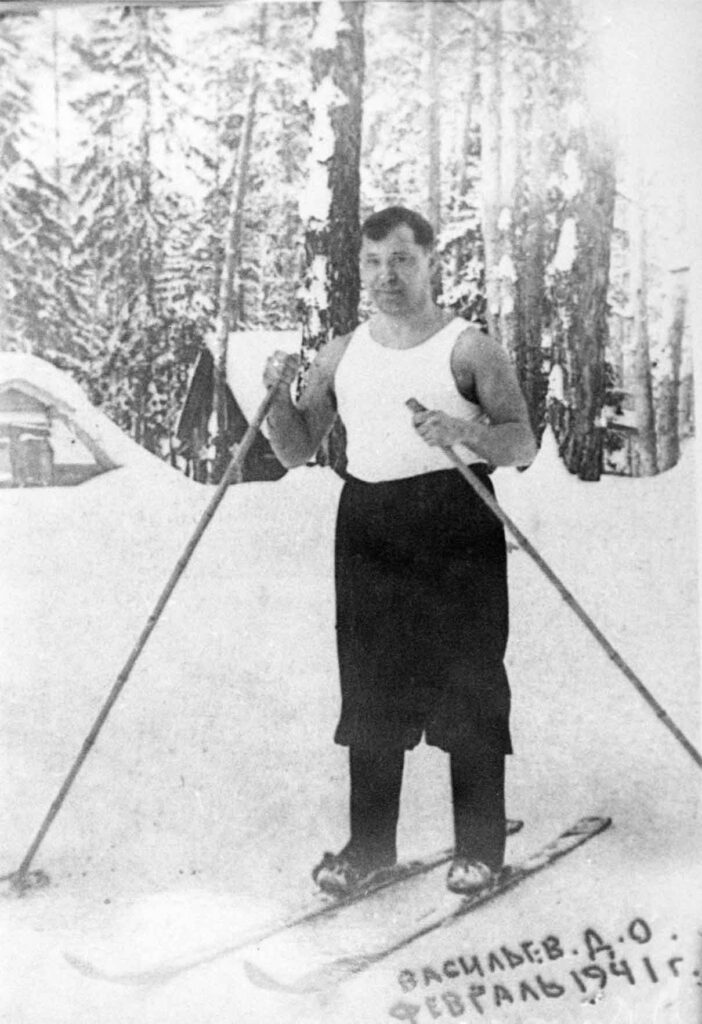
Jalil was taken away to Dresden, and Timmermans was transferred to Spandau. During the transfer, a search took place. The prayer book had to be handed over. But — a miracle! — the prison official, after flipping through the prayer book and the notebook, understood nothing and ordered the seized items to be sent to the prisoner’s mother. André, who still had five years left to serve, wrote to his mother and told her to keep the notebook as a treasure. And she preserved it.
After the death sentence was handed down in March 1944, Jalil was sent to Tegel prison. Other underground fighters from the Idel‑Ural legion were brought there as well. Among them was Akhmet Simaev, Jalil’s comrade from his time working in Moscow. He was also condemned to death. Jalil gave him another notebook of poems.
Before his execution, Simaev managed to hand over the notebook and to tell a prisoner of war, Mikhail Ikonnikov, about the underground group and about Jalil. He also left an account of what the poet had said before the sentence was pronounced. He recounted that Jalil rejected the charge brought against the underground fighters – that they had been acting on orders from the Soviet command – insisting that the group had acted on its own initiative, because each of them felt himself a patriot. The poet spoke sharply, decisively. He said that the crime had been committed not by the people in the dock, but by Hitler’s gang. He declared that he and his comrades were proud that, even while in captivity, they had been able to contribute to the coming victory over fascism. He was not allowed to finish his speech.
The court also failed to grant the condemned men’s request to make the verdict public. The underground fighters wanted their homeland to know how and why they had died. But the truth was destined to be revealed much later. Eleven leaders of the underground group — Musa Jalil and ten other Tatar anti‑fascists — were executed on August 25, 1944, in Berlin’s Plötzensee prison. For a long time, nothing was known about them in the USSR.
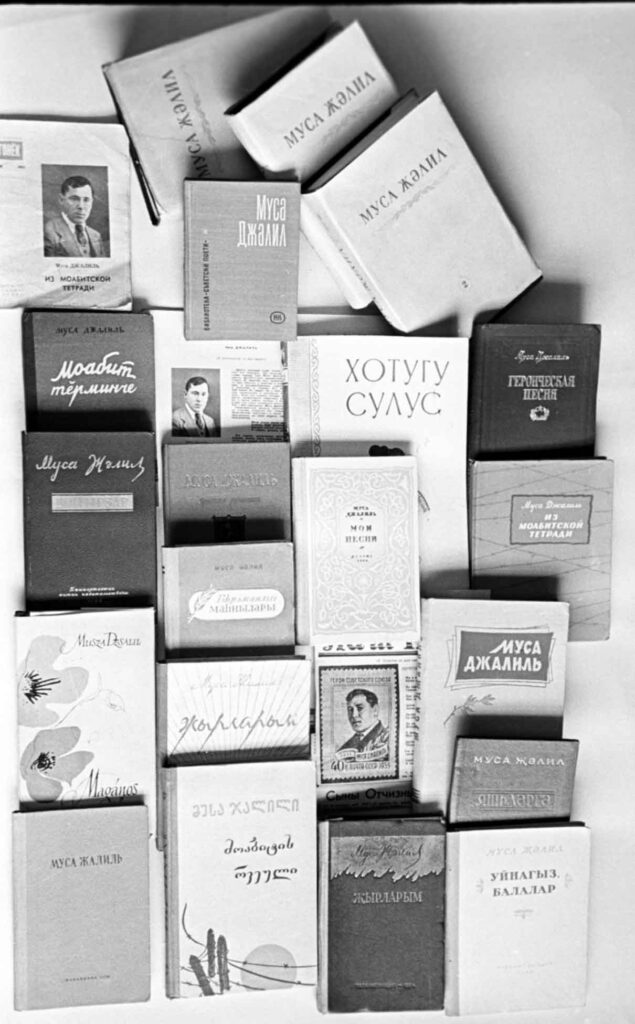
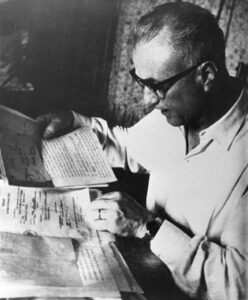
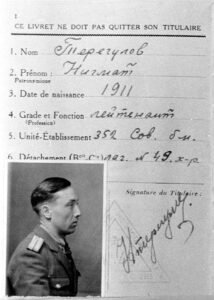
In 1946, the USSR Ministry of State Security opened an investigative file on Musa Jalil. He was suspected of treason and aiding the enemy. That same year, a Turkish citizen of Tatar origin, Kazim Mirshan, brought a notebook of poems to the Soviet embassy in Rome. The collection was sent to Moscow, to the Ministry of Foreign Affairs, then to the MGB and SMERSH. Another notebook was brought to the Writers’ Union of the Tatar ASSR by a former prisoner of war, Nigmat Teregulov. A year later, a notebook arrived from Timmermans through the Soviet consulate in Brussels. But the notebook that had been given to Ikonnikov and handed by him to a camp commandant after liberation was lost. Some of the poems were lost. Testimonies about the life and struggle of Musa Jalil in captivity also spread. However, the poet was only rehabilitated in 1953.
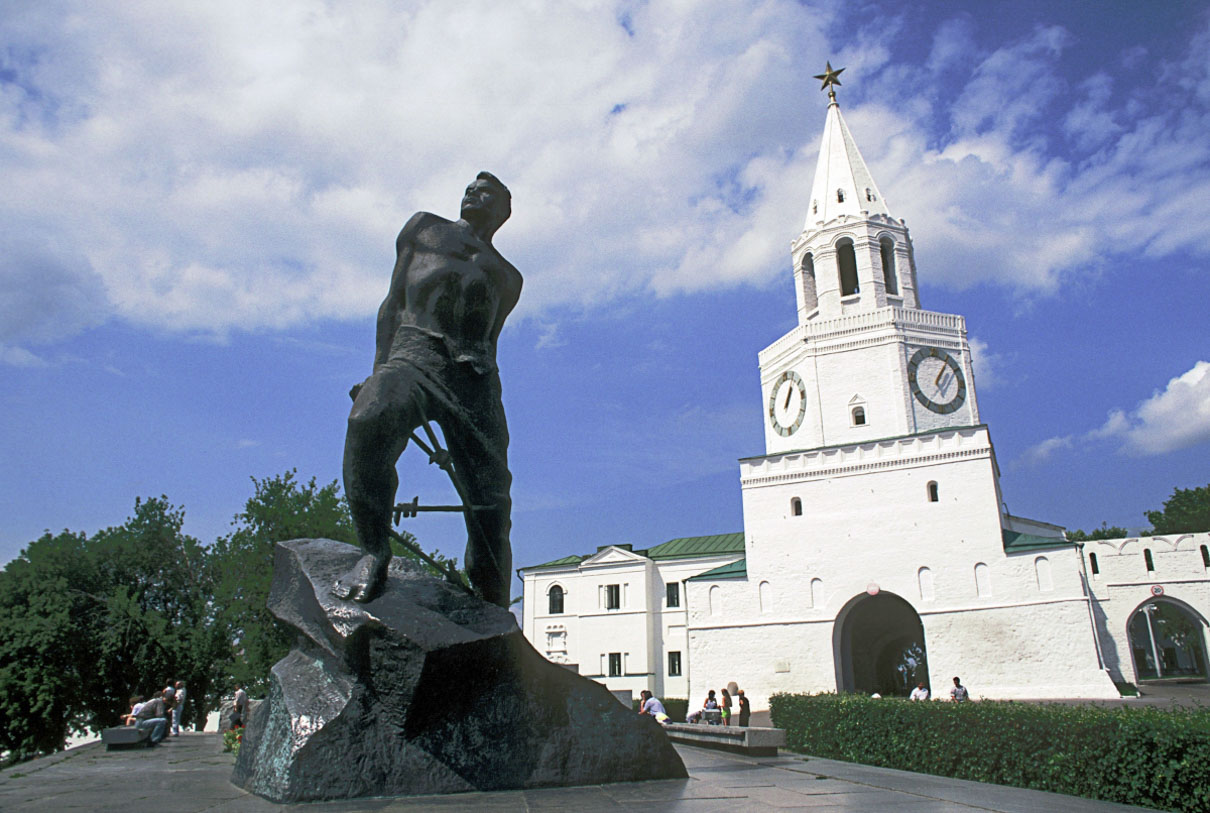
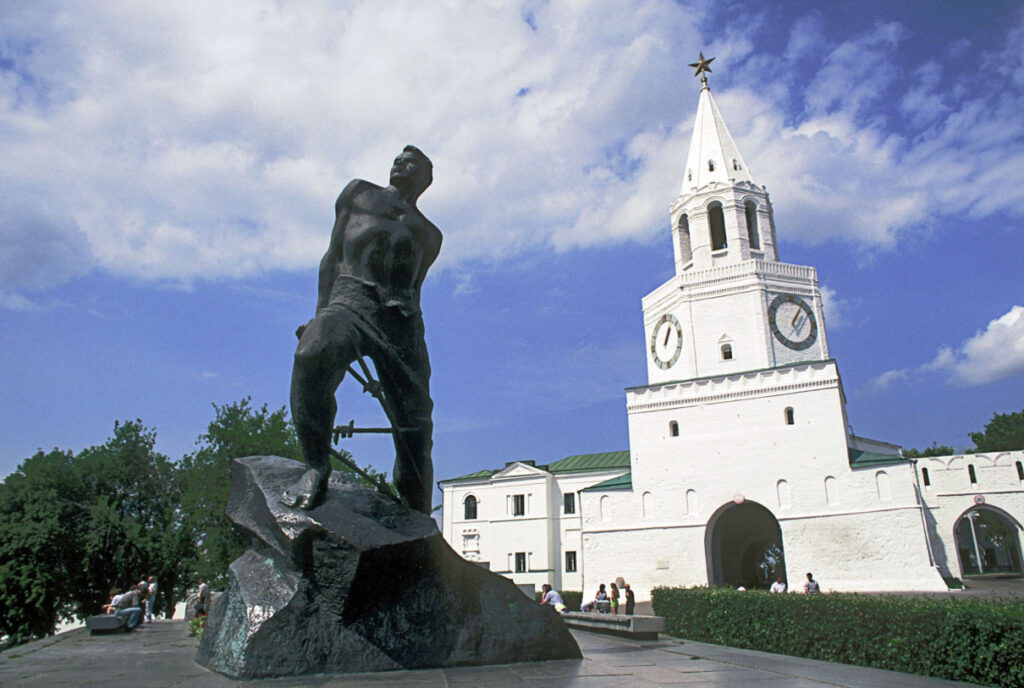
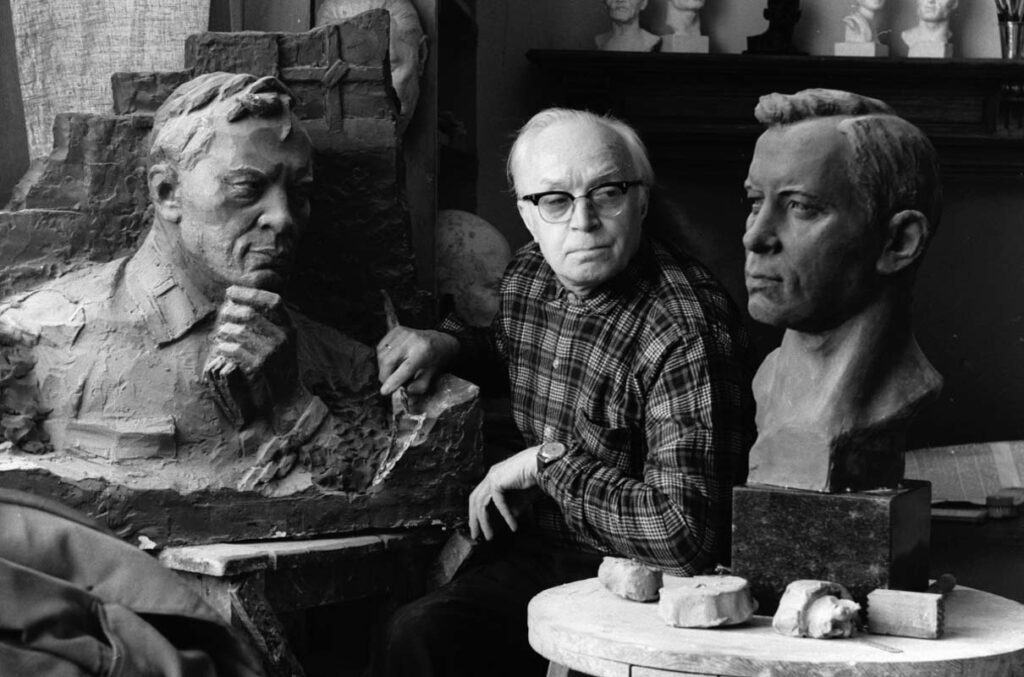
Konstantin Simonov played a key role. He arranged for the poems from the Moabit notebooks to be translated into Russian and published them as a separate collection. In 1956, for exceptional fortitude and courage shown in the fight against the Nazi invaders, Musa Jalil was posthumously awarded the title of Hero of the Soviet Union. In 1957, Musa Jalil received the Lenin Prize for his cycle of poems The Moabit Notebook. In 1966, the first monument to the poet was erected in Kazan. The sculpture depicts a man breaking his chains — an embodiment of unyielding defiance, strength and freedom.
Translated by Grigory Litvinov