
 Elena Machulskaya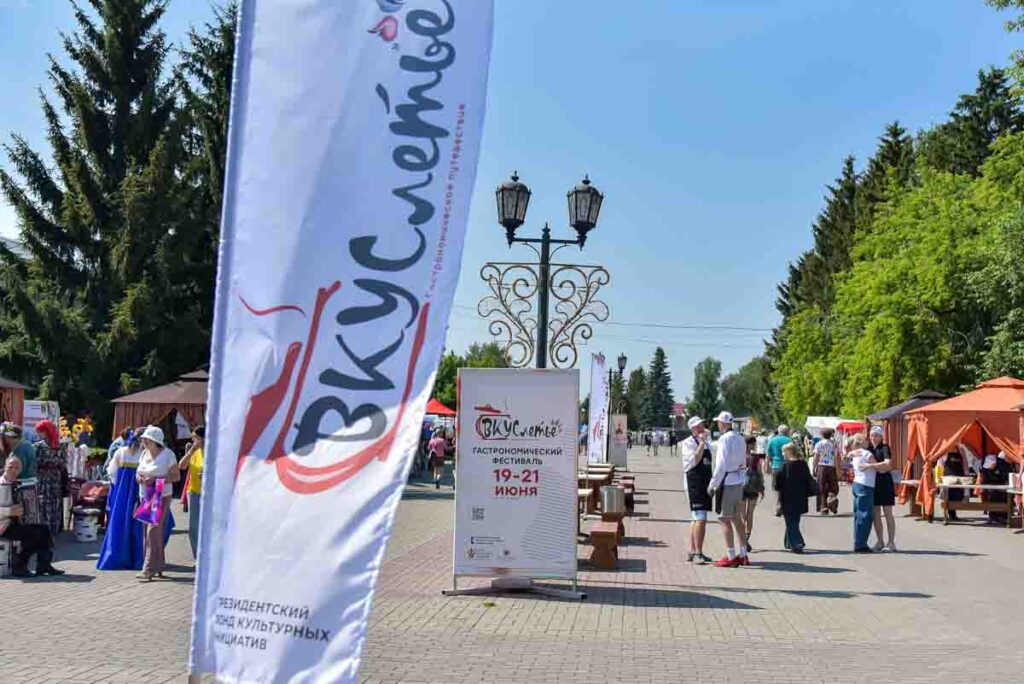
Gribyatnitsa, ikryanik, vereshchaga, nalivnye kalachi, uvar… These dishes are still prepared in Siberian villages, but for today’s city dwellers, they are a true exotic delicacy.
Photos by Igor Smirnov
However, at the gastronomic festival “VKUSlete” in the settlement of Bolsherechye, Omsk region, anyone could get a taste of Chaldon cuisine. This year, it was included for the first time in the programme of the fifth, anniversary edition of the Siberian culture festival “Slete.”
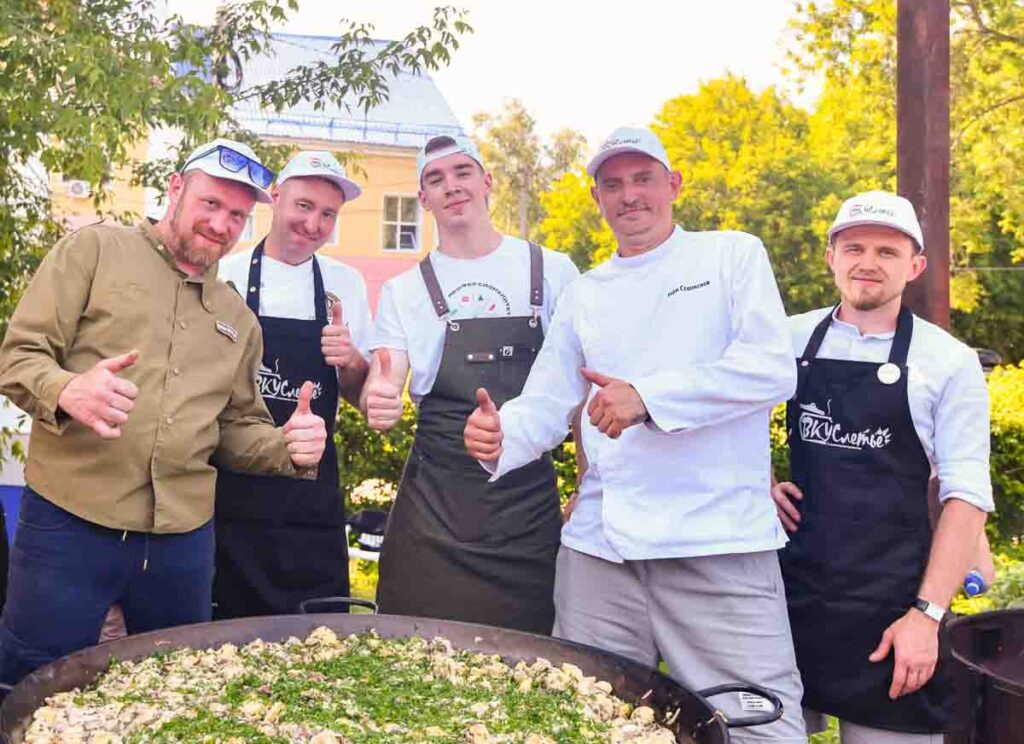
And something remarkable happened: on the main street of Bolsherechye, folk cuisine and professional cuisine met face to face. On one side were the tents, where dressed‑up Siberian women offered traditional dishes that had been prepared in the villages since time immemorial. Opposite, a field kitchen was smoking away, as chefs from Omsk and Novosibirsk cooked up delicacies according to recipes recorded during expeditions. One could try both and compare. Long queues stretched out for the tastings…
The “Slete” festival kicked off with a showcase of Chaldon cuisine. (The name Chaldons was what the old‑time Siberian settlers called themselves.) It is a truly unique culinary tradition that, for far too long, was sadly overlooked. That changed last year, thanks to a grant from the Presidential Fund for Cultural Initiatives.
“Together with the chefs, we went on culinary expeditions across the Omsk region. We systematised the recipes we collected and published a cookbook called ‘Chaldon Cuisine.’ Before that, we had only issued a small brochure with field notes from our expeditions. Now, Oleg Mamontov, chef at the restaurant ‘Osip Terleev,’ has taken each recipe, tested it in his own kitchen, adjusted the measurements, worked out the exact temperatures for each dish, and come up with stylish, modern ways to present them. Some of these dishes have already made it onto the menus of Omsk restaurants,” says Victoria Bagrintseva, head of the Centre for Intangible Ethnocultural Heritage and Creative Industries at the State Centre for Folk Art.
A truly historic event for Siberia took place at this festival: the chefs announced the creation of the Chaldon Cuisine Association.
Combining the incompatible, or Chaldon tyurya
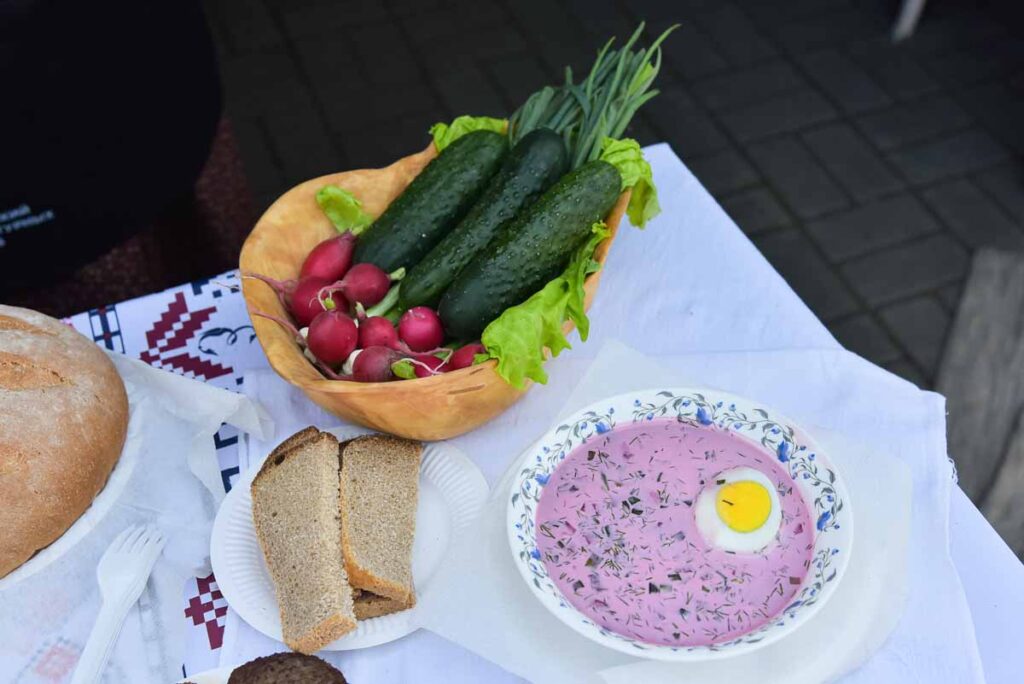
Chaldon cuisine is full of surprises. Take this example: kholodets¹ is considered a winter dish, while tyurya – a cold soup made with kvass² and radish – is a summer one. But the Chaldons went and combined them. In some places, the dish is called tyurya; in Bolsherechye, it’s kholodets with horseradish; in the village of Mayak, Okoneshnikovsky district, it goes by the name pokhlyobka³.
1 Kholodets – a traditional Russian meat jelly made from pork or beef, served cold with horseradish or mustard.
2 Kvass – a fermented, cereal‑based, low‑alcoholic beverage of cloudy appearance and a sweet‑and‑sour taste.
3 Pokhlyobka – a simple, rustic soup or stew, typically made with vegetables and sometimes fish or meat.
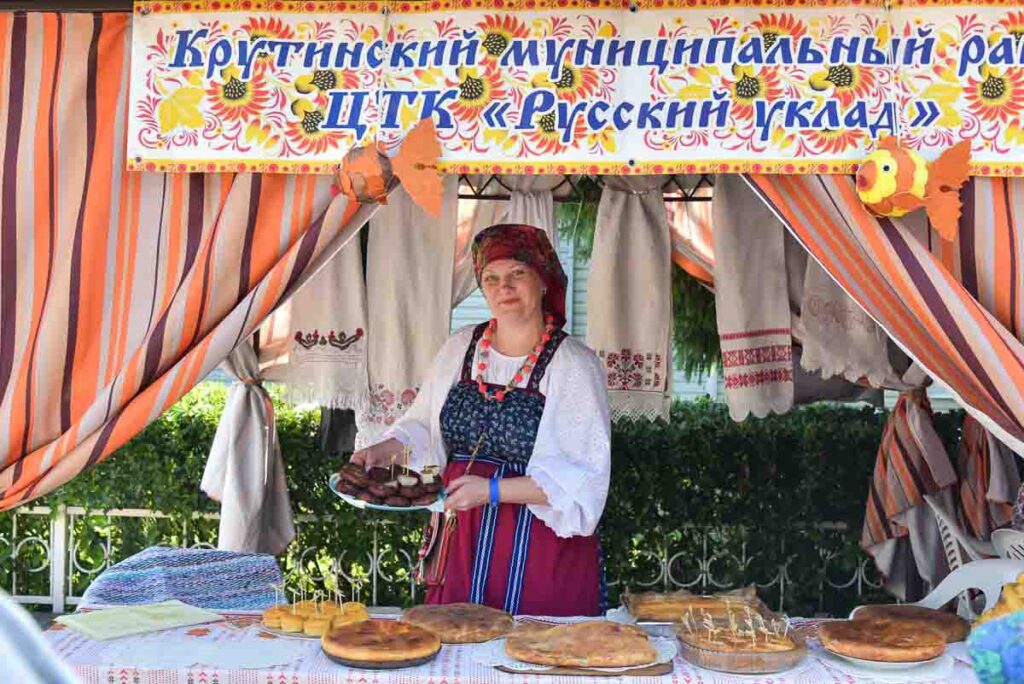
“When we first visited Sergei Ustinovich in the village of Mayak, he decided to treat us to this very pokhlyobka. At first we didn’t even want to try it – kholodets with kvass seemed just too strange. We added mustard and sour cream, tried it – and it was interesting. The next day we arrived in the village of Krestiki, and there we were served exactly the same dish – only there it had a different name: tyurya,” recalls Victoria Bagrintseva.
It turns out that this dish is hardwired into Siberians at the genetic level. When Yulia Litvinenko, vice‑president of the Russian Association of Chefs and Confectioners and a chef from Novosibirsk, together with her colleagues, was presenting the wedding cuisine of the old‑time Siberian settlers in Moscow at VDNKh⁴, they decided to serve that very kholodets with kvass for the tasting. “There was a big crowd, lots of noise and laughter. Suddenly, a woman emerges from the crowd, walks straight up to me, crying, and says: ‘I remember!’ At first I was even scared. Then she explained: ‘When I tasted it, every cell in my body started to tremble – I’ve been living in Moscow for fifteen years, but I’m originally from the Omsk region!'” recalls Yulia Litvinenko.
⁴ VDNKh – the Exhibition of Achievements of the National Economy, a major exhibition centre and public park in Moscow, originally opened in 1939 to showcase the economic achievements of the Soviet Union.
We are talking by the gates of the “Starina Sibirskaya” open‑air museum, when a member of the museum’s staff suddenly joins us and tells us how her grandmother used to make the same tyurya – only with cabbage brine. “She would pour brine over the kholodets, add grated radish and sour cream. We ate it with boiled potatoes on the side. My grandmother was Polish. Her family had been exiled from Belarus to the Omsk region, to Artyn, before the war. It was over a boundary dispute: a neighbour had claimed part of their land and wrote a denunciation.”
Bolshiye Uki Delicacies
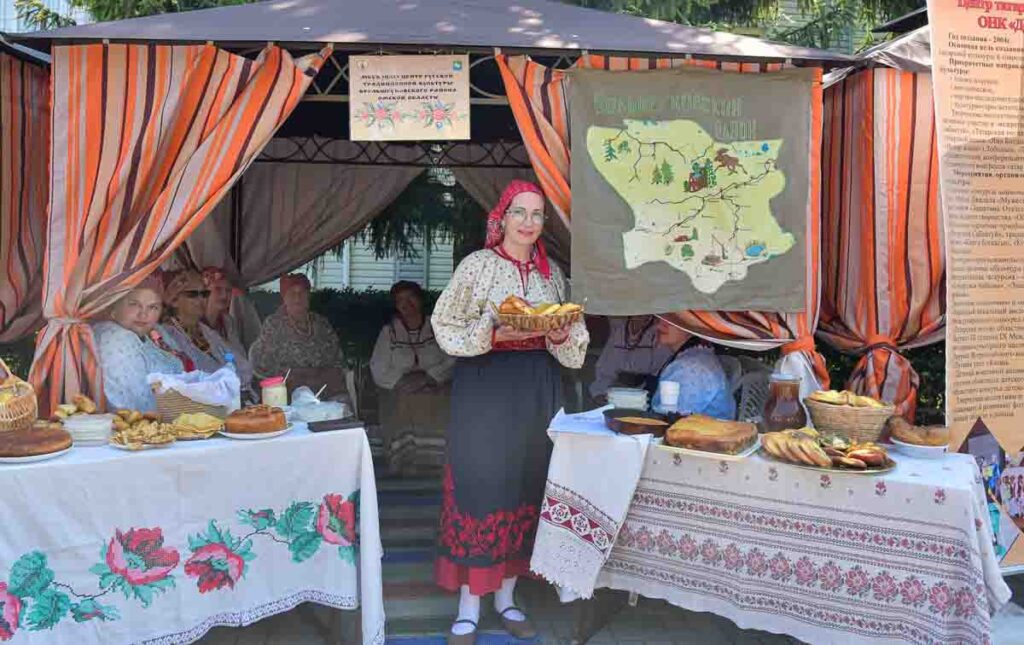
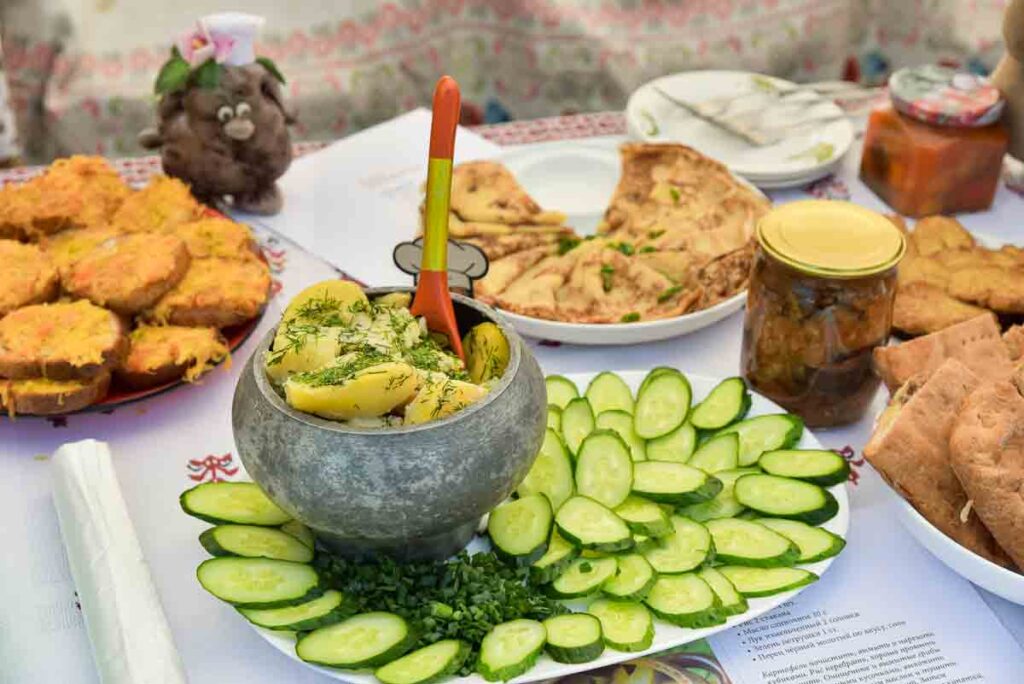
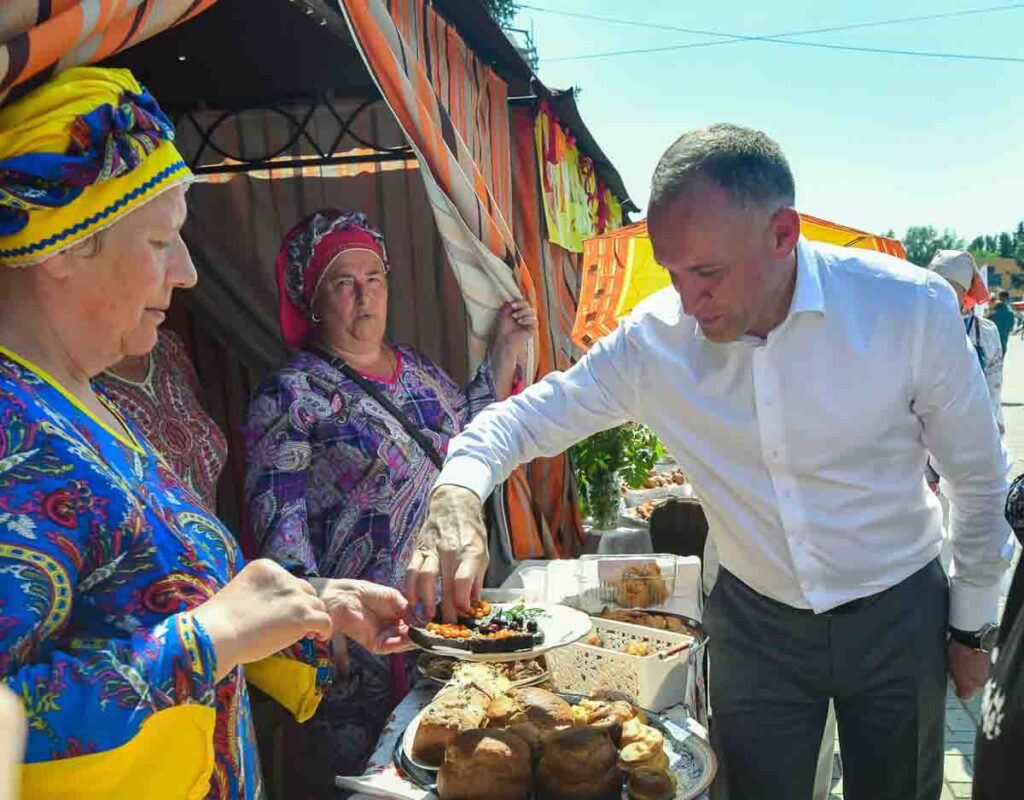
The village of Bolshiye Uki lies in the north of the Omsk region, amid forests and bogs. Getting there is no easy task–and so I had never managed it–but at the festival I finally got a chance to talk to the villagers. The Bolshiye Uki district tent was packed with people, and Siberian cuisine was on display in all its diversity.
“Have you ever tried this kind of kissel5? No? Well, now you will.” The hospitable hostess hands me a plastic tray containing something resembling semolina porridge, only a slightly different shade. On top she adds sour cream mixed with sugar: “This is sour kissel. This is how it was served.”
⁵ Kissel – a traditional East Slavic dessert or drink made from fruit or berry juice, thickened with starch or, in older versions, fermented oatmeal; it has a jelly‑like consistency and can be served hot, cold, sweet, or sour.
This kissel is eaten with a spoon. The unusual dish turns out to be refreshing, with a slight tang and surprisingly filling. “This is the kind of kissel they used to eat in the old days,” explains Lyubov Kashcheeva, a resident of Bolshiye Uki. “When you started the dough for bread, you would leave a little bit of it, pour water over it, and let it turn slightly sour. As soon as the dough settled to the bottom, you poured off the water, and what remained was a thick mass. That mass was then brewed with boiling water. The kissel turned out very filling, healthy, and tasty.”
Since I hadn’t had time for breakfast, this treat came in very handy. One could marvel at the wisdom of our ancestors: this ideal summer dish is made from virtually nothing.
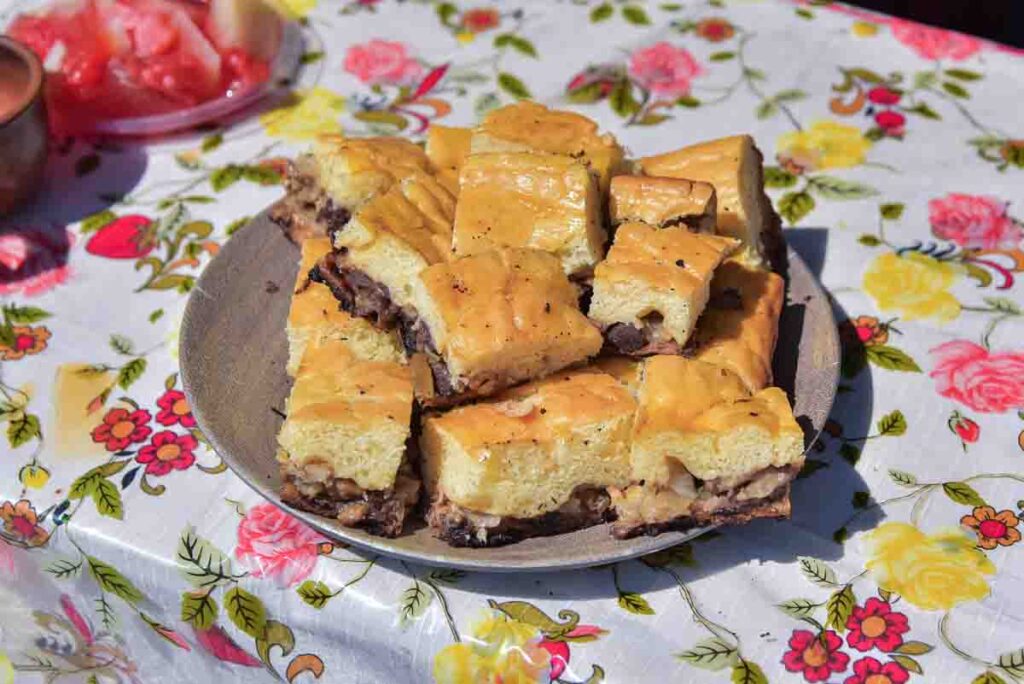
On tables covered with embroidered tablecloths, an array of dishes was laid out, making it difficult for a city dweller to figure out what was what. It looked something like a casserole. But made of what? “This is ikryanik,” the hospitable hosts explain to me. “Fresh crucian carp roe, cow’s milk, rendered pork fat. Mix it all together and bake it. Try it! Take the piece that catches your eye.” And the piece that “catches my eye” is one on the edge. I try it cautiously. It tastes like nothing I’ve ever eaten before.
“Our mother makes ikryanik quite often,” smiles a young woman in a traditional Chaldon costume. “The men catch fish, mother makes fish soup, and there’s roe left over – so she makes ikryanik.” So in Bolshiye Uki, this is a perfectly ordinary dish. And its recipe, once again, is simple in its genius.
But the real gastronomic highlight of Bolshiye Uki is shangi6. They come with all sorts of fillings: carrot, potato, beetroot, onion… All the fillings are generously enriched with thick sour cream. Usually, these shangi were also drizzled with melted butter on top. In short, this is hearty food, well suited to the harsh Siberian conditions. The shangi laid out on the platter here were baked the night before the festival by Marina Yarova, head of the Centre for Russian Traditional Culture in the Bolshiye Uki district.
⁶ Shangi – traditional open‑faced pastries common in Siberian and Ural cuisine, made from rye or wheat dough and topped with various fillings such as potato, carrot, or cottage cheese, often served with sour cream or melted butter.
Nearby, a golden-brown kurnik was giving off a delicious aroma. In many Chaldon villages, this is the name for any closed pie with a filling. But in Bolshiye Uki, kurnik is always a pie with sauerkraut and lard. Next to this remarkable dish sat a large fish pie. Marina Yarova lifted the pastry lid, and inside were two whole baked crucian carp! “In our tradition, this was a ritual dish, prepared when a son was born into the family,” Yarova explains.
Pike cutlets and sorrel pies

“We have plenty of fish around here,” says a woman at the Krutinsky district tent. “When we were kids, we’d put on a tank top, wade into the water, hold out the hem like this, walk along, and the fish would swim right into it. Those were the days.” Impressed, I joke: “So the fish literally walks around here?” – “No, just swims in the lake,” she replies with a smile.
The Krutinsky district is a land of lakes. Unsurprisingly, the locals prepared many fish dishes. Kurnik with fish, pike cutlets and many more…
“Pike cutlets are made, as you might expect, from pike. You clean the fish, remove the skin, mince the meat, add onion, unsalted pork fat, flour, and an egg. Then you shape them into patties and fry them just like ordinary cutlets,” explains Irina Karakcheeva, head of the “Russian Way” Centre for traditional culture.
Fish cutlets with pork fat? Unexpected… “Pike meat is tough, but once you add pork fat to the mince, it becomes richer and more tender,” they promptly explain to me.
And for dessert – sorrel pies.
“This used to be a seasonal dish, because we didn’t grow sorrel in our gardens. In the spring, the children would run to the forest, pick sorrel, and bring it home. Grandma would wash it, dry it on a towel, chop it up, and make the dough. If it wasn’t a fast, she’d make the dough with milk and eggs. Yesterday, though, I made a Lenten dough – no eggs at all,” continues Irina Gennadievna. “You roll out the dough, put the sorrel on it, sprinkle a little sugar on top, seal it, and bake it. Help yourselves!”
A pastry to die for!
Kalachi
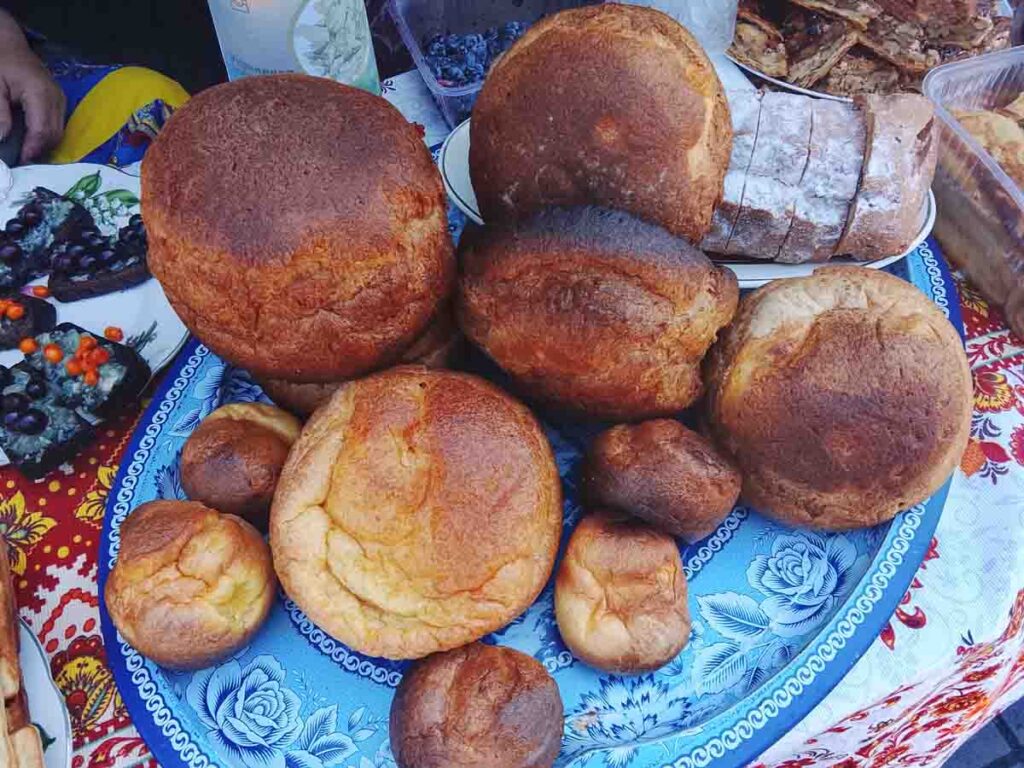
On a large platter lie golden-brown little buns, or rolls. But these are no ordinary buns – they are the famous nalivnye kalachi, or “saucer kalachi”! They are baked in a Russian oven to a special recipe by Ekaterina Ilyina from the village of Strokino, Kolosovsky district.
In the old days, in the villages of northern Omsk region, these kalachi were served on festive tables. In the village of Semyonovka, Znamensky district, there even lived a woman who was commissioned to bake them for weddings. Why her alone? Because there was a belief: if the kalachi collapsed, if they didn’t turn out right, it foretold an unhappy marriage.
Making these kalachi is quite an undertaking. The dough seems simple enough: flour, eggs, milk. But the woman who bakes them must work entirely alone. “There must be silence,” says Irina, the daughter of Ekaterina Ilyina. “Kalachi really don’t like noise – slamming doors, clattering about. The eggs must be warm, and the milk fresh from the cow. If they’re at different temperatures – nothing will come of it.”
The dough – which should be slightly thicker than pancake batter – is then poured into greased clay saucers (hence the name nalivnye, “poured”). A small piece of lard or butter is placed in each, and they are put into the oven. But it’s not that that simple. “Before you set the kalachi in the oven, you always throw a pinch of flour in first. If it catches fire straight away, the oven is still too hot. If it gradually turns a golden pink, it’s ready,” she explains. A true folk thermometer.
The kalachi bake for about fifty minutes. During that time, the dough undergoes astonishing transformations. From the heat, it doesn’t just rise – it literally bursts. And you get hollow little buns on the inside. The most curious thing is that they taste unlike any other baked goods. They are something incredible.
“Nowadays, many people in Kolosovka bake saucer kalachi. At first, everyone refused – ‘No, we don’t bake them.’ But once we started talking about it with Ekaterina Timofeevna, it turned out that all the skilled bakers in Kolosovka had taken it up,” says Marina Zhmakina, artistic director of the Strokino village House of Culture in Kolosovsky district, with a smile.
The saucer kalachi have now become part of the intangible ethnocultural heritage of the Omsk region.
Professional chefs found it no easy task to master Chaldon cooking techniques. “Oleg Mamontov spent three weeks going through mountains of ingredients: his kalachi wouldn’t rise, wouldn’t release, wouldn’t turn out at all… But now they do – both in saucers and in silicone molds,” says Victoria Bagrintseva.
In the village of Takmyk, Bolsherechensky district, such kalachi are called kurabatki, and in Sedelnikovsky district – korabastrye kalachi. This comes from the dialect word korabatsya, meaning “to work hard.” And baking them is anything but easy…
Gribyatnitsa and “knut”
From mushrooms, which are abundant in the local forests, the Chaldons would prepare a dish in the Russian oven that is reminiscent of both a casserole and a mushroom omelette. This food, in various versions, exists among practically all Siberian old‑timers. In Bolsherechye, the dish is called gribovnitsa; in the village of Krestiki, gribyatnitsa (from grib, meaning “mushroom”); in Kolosovka, it has no special name at all; and in the village of Talbakul, Kolosovsky district, it is called zalivnoy pirog (a “filled pie”) – although there is no pastry in this “pie.” In summer, gribyatnitsa was usually made with fresh gruzdi milk mushrooms, and in winter with pickled ones.
Naturally, I went to try the main Siberian mushroom dish at the tent of my old acquaintances from the village of Krestiki. Their tent even accommodated a loom – craftswoman Olga Serikova was making a new rug. On the table, there was a variety of Chaldon dishes. There was also ikryanik, by the way (here it’s called ikryanitsa). I immediately recognized the gribyatnitsa by its appearance. I asked: “What’s in more of in the gribyatnitsa – mushrooms or eggs?” – “Whichever you have more of, that’s what you put in. There’s no difference – either way it’s delicious,” they answered.
What can I say: the gribyatnitsa is absolutely amazing. And in Krestiki, they also make cabbage soup with dried cottage cheese – meat-free, but you couldn’t tell them from the meat-based kind. And they salt watermelons, too.
Yes, I also learned here that the traditional Siberian feast was finished with a dish called knut – a berry kissel, in this case raspberry.
“You eat this dish and then you leave the table. You must not sit back down for a second helping. That’s why it’s called ‘knut’ – the whip,” explains Lilia Marchenko, director of the Krestiki House of Culture.
From potato pancakes to kulebyaka

In Sedelnikovsky district live the descendants of Belarusians who moved to Siberia as part of the Stolypin agrarian reform. Consequently, the local cuisine has a Belarusian flavour. Take kholodnik, a traditional summer dish – a soup made with fermented beetroot, which was covered with cold water and left in a warm place for about a month. The kholodnik was prepared with whey and sour cream.
The tent from the settlement of Kormilovka is a revelation in its variety of potato dishes. There’s even potato sausage! And Kormilovka has been hosting its own potato festival, “Oh, Potato!”, for several years now.
Potato pancakes look no different from ordinary ones. The recipe is the simplest. “One cup of flour, one cup of potato porridge (as mashed potatoes were called in the old days), and one cup of milk. There were no kitchen scales back then, so everything was measured in cups,” explains Natalya Alekseeva, director of the Kormilovka House of Culture.
In Gorkovsky district, they bake all kinds of pies – including multi-layered kulebyaki. Lyudmila Klevakina, a specialist in Russian traditional culture for Gorkovsky municipal district, brought a five-layer kulebyaka to the festival. “It’s a traditional Russian variety of pie. They were decorated in different ways, but the shape was always oval and multi-layered. The filling is separated by layers of pancakes. In mine, there’s steamed millet, cabbage, chopped egg with butter, and onion,” she explained. In a word: delicious!
The “curly” soup and vereshchaga
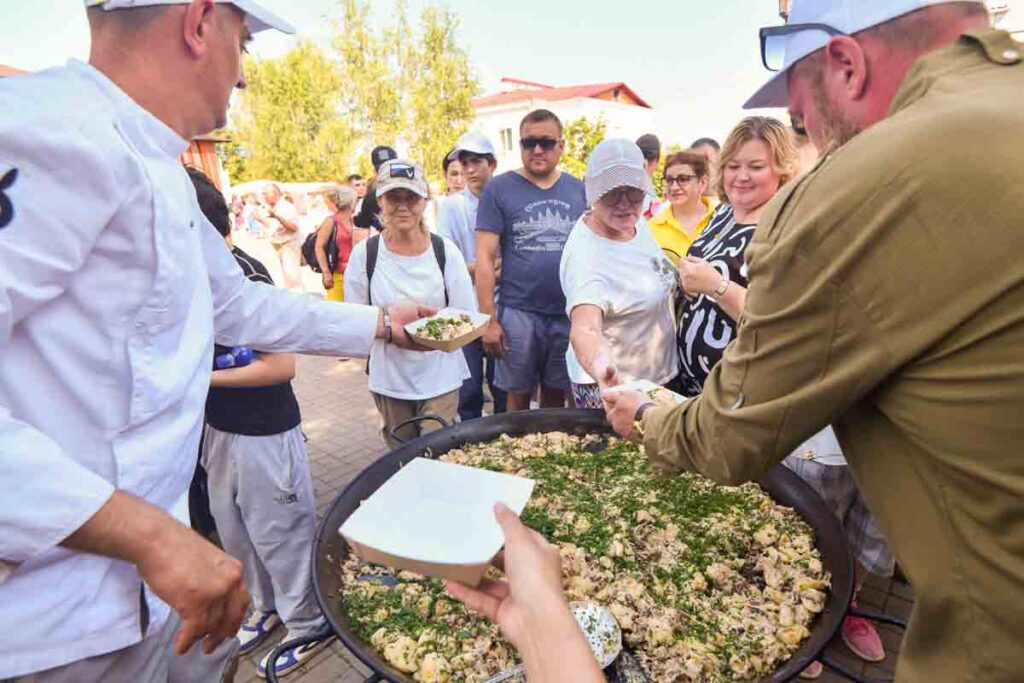
Another traditional Siberian dish – “curly” soup – was prepared right before my eyes by professional chefs in a huge pot, on a near‑industrial scale. “This is a soup made with sorrel and nettles. The water boils – add the potatoes, let them cook. Turn the heat down. First comes the nettle, then the sorrel. The sorrel also gives it colour, which is why the soup turns dark. And at the very end, we add an egg, whisk it in, and turn off the heat,” explains Stanislav Kern, a chef from Omsk, who had just finished making it.
Stanislav admits that immersing himself in tradition is very helpful. “All chefs are like artists. We can suddenly wake up with a new dish when inspiration strikes. And these trips, meeting the bearers of local culinary traditions, learning traditional recipes – it’s all incredibly inspiring.”
The next day, on a meadow beyond the Bolshaya River, professional cooks were frying vereshchaga – a traditional Siberian fried egg dish with lard – on a frying pan a metre and a half in diameter. It’s called that because the lard sizzles appetisingly as it cooks – it vereshchit (squeals). This time they made two pans full. Next year, they plan to use three – to make sure there’s enough for all the guests and participants of the Big Siberian Choral Dances.
The main secret of chaldon cuisine
“The golden age of Chaldon cuisine has arrived,” declares Yulia Litvinenko. Interest in the traditional food of Siberian old‑timers is now widespread – and not only in Siberia.
Chef Oleg Mamontov has already introduced Chaldon cuisine in Makeyevka, where he held a masterclass. After this year’s festival, he set off on the same mission to Kurgan and Tyumen. And for late August, he already has a Chaldon-themed dinner planned at a restaurant in St Petersburg.
What is the secret of such resounding success? “The Chaldons never attended any culinary schools, they were never catering technology specialists, but Chaldon dishes contain astonishing, universal combinations of ingredients. One university has already shown interest in Chaldon cuisine from a nutritional perspective. The benefits of these recipes, honed over centuries in the harsh conditions of Siberia, are obvious. This is the experience of many generations. Chaldon cuisine is alive, authentic, rooted in the earth. It’s got a bright future,” believes Yulia Litvinenko.
Translated by Grigory Litvinov