

 Platon Besedin
The writer Gennady Cherkashin once put into words the very essence and spirit of the hero city of Sevastopol: “Here people performed feats worthy of myths, and the greatness of the human spirit became as integral to this land as the blue of the sea, the splash of the waves, the scent of seaside wormwood, the grey sheen of the rocks, and the lushness of the hills on whose slopes the city called Sevastopol is spread – a name which, translated from Greek, means ‘city of glory’ or ‘majestic city’, a city worthy of reverence.”
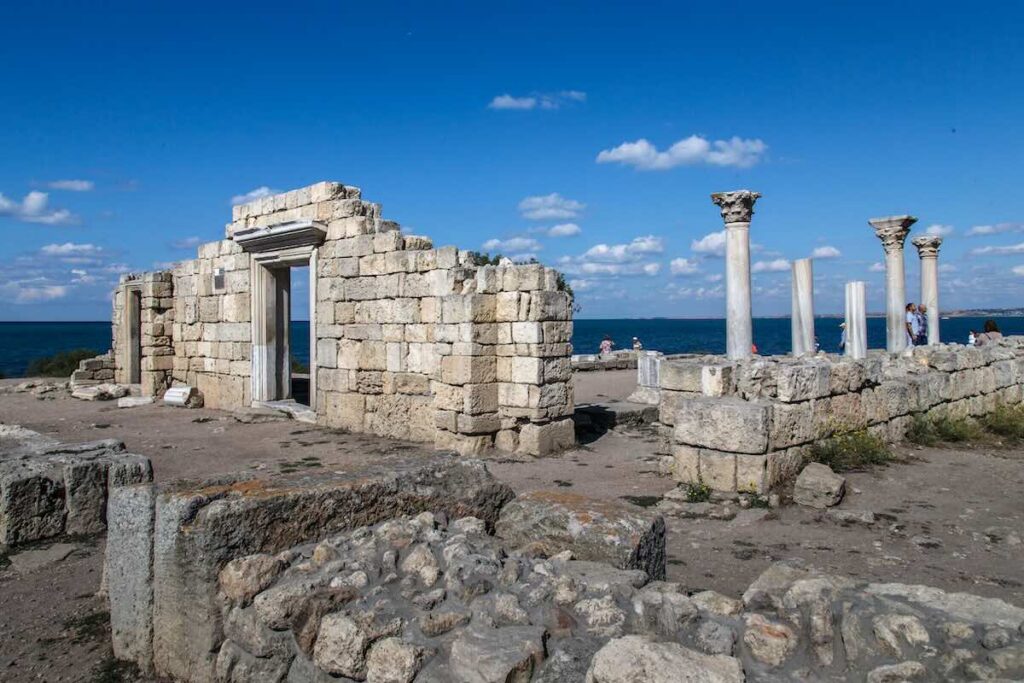
And it all began with Tauric Chersonesus, known in Russian history as the place where, according to tradition, Prince Vladimir was baptised, after which Orthodoxy spread throughout Rus. But one must not forget that Chersonesus was a crossroads of many cultures and civilisations: Greeks, Romans, Byzantines, Goths, Alans and many other peoples settled and lived here. This multifaceted heritage was absorbed by the Sevastopol lands, which later became Russian. And there is a particular continuity in this.
In the Tauric Chersonesus Historical and Archaeological Museum, visitors can see a document known as the “Oath of the Citizens of Chersonesus.” It is a unique epigraphic monument dating back to the early 3rd century BC. It was discovered in 1891 during excavations in Chersonesus by the archaeologist and founder of the museum, Karl Kostsyushko-Valyuzhinich.
The monument is a slab of white marble, adorned with a cornice and pediment. On it, the words of the oath are engraved, preserved almost in full – though the final phrase is missing. “I swear by Zeus, Gaia, Helios, the Virgin, the Olympian gods and goddesses, and the heroes who hold the city, the territory and the fortifications of the Chersonesites: I will be of one mind concerning the welfare of the city and its citizens, and I will not betray Chersonesus, nor Kerkinitis, nor the Beautiful Harbour, nor any other fortifications, nor any part of the territory which the Chersonesites possess or have possessed, to anyone – neither to a Greek nor to a barbarian – but I will guard it for the Chersonesite people…” – thus begins the oath. These are resolute, bold, strong‑willed words. Perhaps they hold the key to the future destiny of the hero city.
It is well known that Sevastopol was founded as a base for Russia’s Black Sea Fleet. It is at once a Russian military outpost, a frontier stronghold, and a focal point of Russian civilisation. It is commonly believed that Sevastopol entered history above all as a city of military glory. But it is famous and significant not only for this, although it is true that some of the greatest battles that shaped world history were fought here – the Crimean War and the Great Patriotic War, both turning points in the global order.
The North Side
Sevastopol heroically withstood two sieges: in 1854–1855 and in 1941–1942. The first lasted 349 days, the second – 250. Few people are aware that for most of the second defence, it was the North Side that held the line. The city is historically divided by a sea bay into the South Side and the North Side. It was this very bay that the hero of Leo Tolstoy’s Sevastopol Stories crossed. The South Side is more densely populated – it is the hub of Sevastopol’s life.
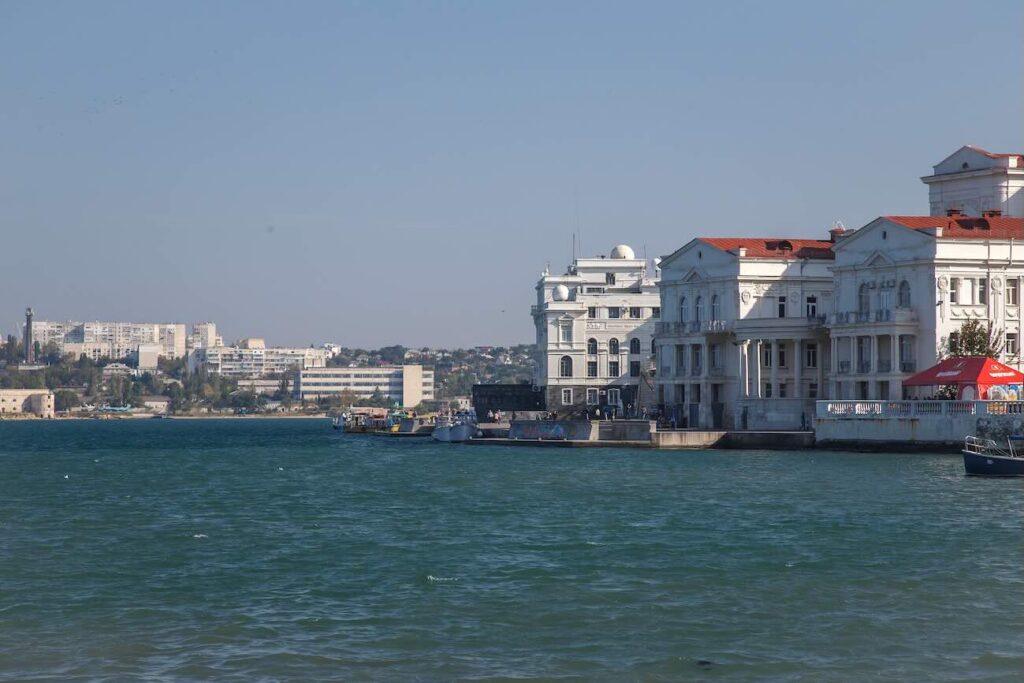
As a rule, especially in Soviet times, people travelled from the South Side to the North Side of Sevastopol by motor boats and ferries. The boats had splendid names – like Zuid, Nord, Ost, West. This was not only a convenient and fast means of transport, but also a kind of sightseeing route. From the deck of a boat or ferry, a marvellous, picturesque view of Sevastopol opens up – the city spread along the seashore in its sugar‑white beauty. The power of Stalinist Empire architecture, despite all the trials it has endured, preserving its white‑stone beauty and nobility, is one of a kind in this hero city.
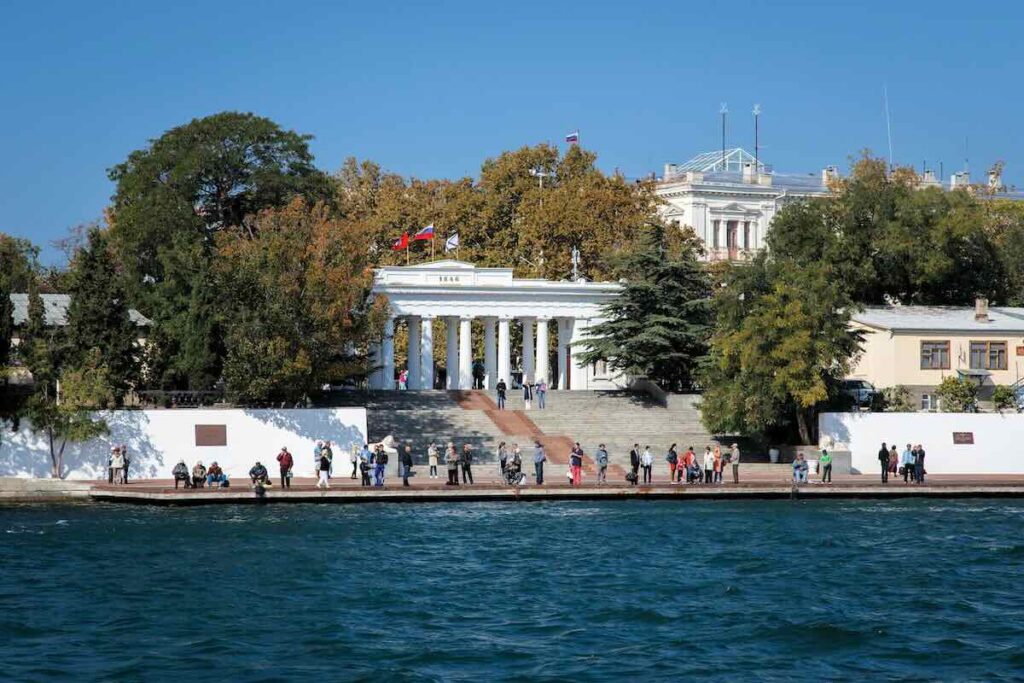
In Soviet times, the North Side was considered a fine residential area. There were large industrial plants here, some of them secret; the Institute of Nuclear Energy and Industry was located here (and still is). Of course, much of the area was taken up by Sevastopol’s satellite towns, such as the popular tourist spots Lyubimovka and Uchkuevka. A significant part of the North Side is occupied by dachas, including the legendary Mekenzie Hills, where during the Great Patriotic War Soviet soldiers, holding the Nazis back from the bay, heroically defended the line.
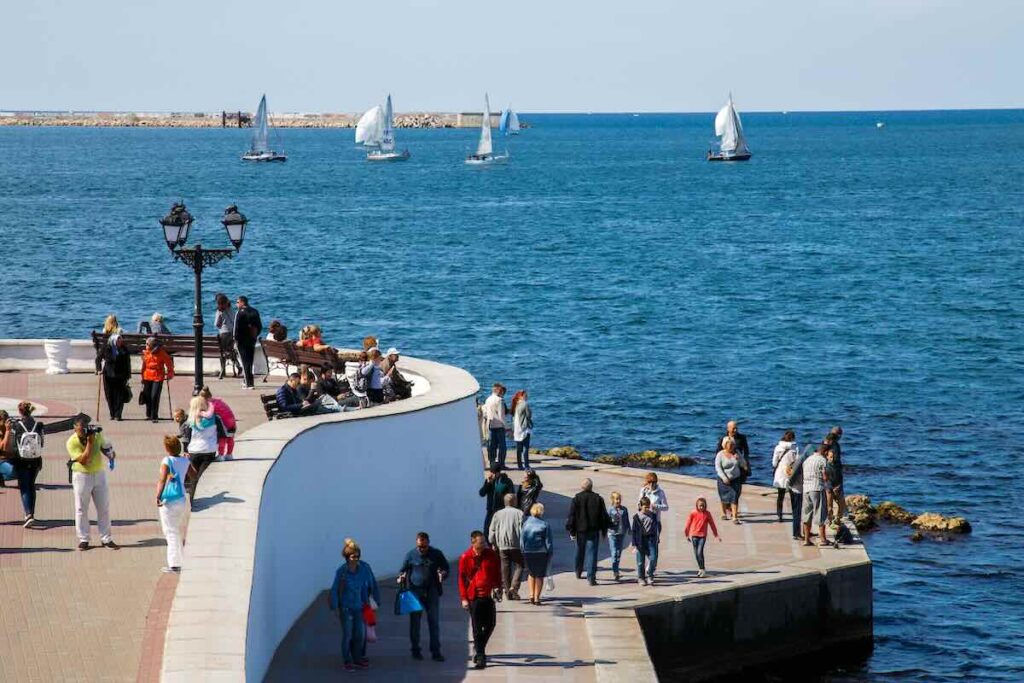

The North Side, in fact, was settled later than the rest of the city. Initially, this place was created as an outpost – or, in the case of Sevastopol, as a stronghold within a stronghold. And it played its part perfectly. It was here that prolonged and bloody fighting took place. The Russian people showed the whole world what true heroism, courage, valour and love for the motherland really mean.
The landmark sites on the North Side are mostly linked to military history. Some of these places became crucial rallying points during both the first and second defences of Sevastopol. And they still bear witness to those terrible and heroic years. For instance, there are two fortresses – Mikhailovskaya and Konstantinovskaya. They are also called batteries, but there is another local word for them. It is actually French and means “to separate,” yet at the same time it preserves a purely Sevastopol flavour: that word is “ravelin” – a type of fortification.
Ravelins and the Common Grave of the Heroes
Originally, there were twelve such fortresses along the Sevastopol shoreline. They were built as fortifications, and they were erected in a short matter of time – practically overnight. The Russian fleet needed a naval base, and the North Bay of Sevastopol was ideally suited for this purpose. Construction of these structures began almost immediately after the city’s founding – in the late 18th century. Half a century later, stone structures were added to them. The Mikhailovskaya Battery was completed shortly before the Crimean War. Somewhat resembling a medieval castle, it has been perfectly preserved to this day. The traces of shelling on its walls only add to the character of this unyielding stronghold on the Black Sea coast. It now houses a unique museum. During the Great Patriotic War, the battery became the last line of defence for the North Side of Sevastopol.


The Konstantinovskaya Battery, founded on the orders of Generalissimo Alexander Suvorov, had a horseshoe shape and followed the contours of the cape. It acquired its current appearance in 1840 (it now houses the Sevastopol branch of the Russian Geographical Society). The Nazis who stormed this battery called it “little Sevastopol” – for the fearlessness and resilience of the soldiers who defended it. In 1942, the defenders of the Konstantinovskaya Battery received a telegram: “To the defenders of the ravelin! We need your heroism for one more day…” And the defenders held out. When the time came, they left the battery by swimming across the bay; most of them, sadly, perished. Only the commissar, Ivan Kulinich, remained in the fortress. He drew as many of the Nazis as possible close to the fortification and then blew up the ammunition depot.
The Konstantinovsky ravelin has now lost its military significance. However, there is an old naval tradition, dating back to 1819: every day at exactly noon, a cannon shot is heard from the Konstantinovsky Fort. This tradition, which began in Sevastopol, was later adopted in St Petersburg, Kronstadt and Vladivostok.
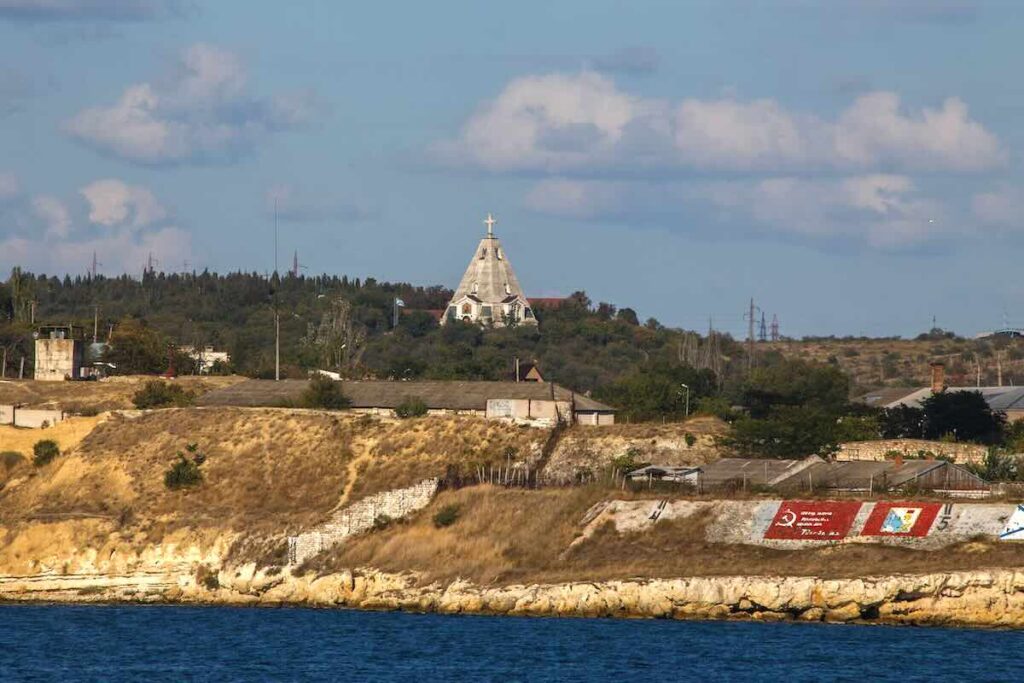
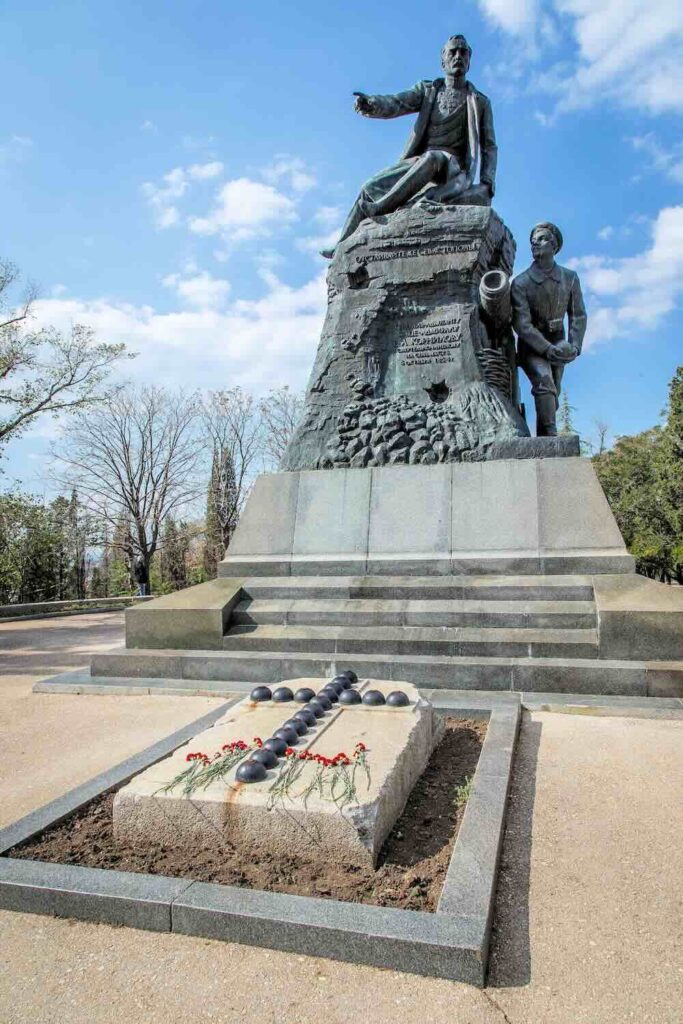
Many of the defenders of the first and second defences of Sevastopol rest on the North Side – at the legendary Brotherly Cemetery, above which rises the pyramidal St. Nicholas Church. “Only there, beyond that green water, was there something paternal – that which was called the North Side, the Brotherly Grave; and only from there did there breathe upon me the sadness and charm of the past, the distant past, now peaceful, eternal, and even as if something of my own, also long forgotten by everyone…” Thus wrote Ivan Bunin in his novel The Life of Arsenyev.
Initially, it was called Petropavlovskoye and was founded on the initiative of the great Vice Admiral Vladimir Kornilov, who fell during the first heroic defence of Sevastopol on the Malakhov Kurgan. Before his death, Vladimir Kornilov uttered legendary words that became the motto of the city’s defenders both during the Great Patriotic War and during the Russian Spring. These words are precious to every Russian: “So defend Sevastopol!”
Later, Eduard Totleben, the great reformer of military engineering – whose monument stands on the Historical Boulevard – proposed renaming the Petropavlovskoye Cemetery as the Brotherly Cemetery. More than 50,000 soldiers are buried here. Totleben himself lies in the Brotherly Cemetery. Here rest the heroes of many wars that Russia fought. At the same time, the Brotherly Cemetery also contains the graves of sailors from the battleship Novorossiysk, which sank in 1955, and the graves of Sevastopol residents who perished on the submarines Komsomolsk and Kursk.
Sacrifice – that is the word that comes to mind at the Brotherly Cemetery. Sacrifice not for an immediate victory, but for one yet to come. Sacrifice as victory – through the triumph of life over death.
The Hill of Heroes

Next along the way are the Mekenzie Hills. They are named after the great Sevastopol figure Foma Fomich Mekenzi. In fact, he was born Thomas Mackenzie and came from a Scottish family. However, he settled on a farm given to him by Grigory Potemkin and loved his new homeland deeply. Russia reciprocated his devotion. He did a great deal for Sevastopol for Sevastopol and is still remembered there as one of their own.
Here, on the Mekenzie Hills, fierce fighting unfolded as well. Not far from these places, my grandfather, a veteran of the Battle of Stalingrad, had a summer house, and as a very young child I would wander about these places, digging in the earth. I remember it well: wherever you scooped up the soil, the earth seemed to be packed with shrapnel. I would find bullets, helmets, and other war trophies. On the Mekenzie Hills, the defensive fortifications from the first siege became the basis for those of the second. Such tragic continuity. And not only here.
On 11 November 1941, the Nazis launched their assault on Sevastopol. The road to the Sevastopol bays lay through the Mekenzie Hills. It was here that the Nazis directed their main blow. They attacked in wave after wave. Soviet soldiers heroically repelled the attacks, but the Nazis would withdraw their shattered units and replace them with fresh ones. Our defenders had no one to replace them with, yet they held their ground. They stood and fought to the death. Perhaps nowhere else were the battles fought with such ferocity as here. The two symbols of Sevastopol’s heroic defence are Malakhov Kurgan from the first siege and the Mekenzie Hills from the second.
Field Marshal Erich von Manstein wrote that Sevastopol was a weak fortress, one that could be taken with a single blow. The fortifications were indeed far from ideal, but the will and spirit of the Russian soldiers proved unbreakable. Sevastopol held out for more than eight months. For most of that time, the defence was waged on the North Side of the city. The places of Sevastopol’s military glory are known far and wide, across Russia and the world: Sapun Mountain, the 35th Battery, Malakhov Kurgan. Yet these are only part of the heroic legacy. There are other sites no less significant, though far less widely known.
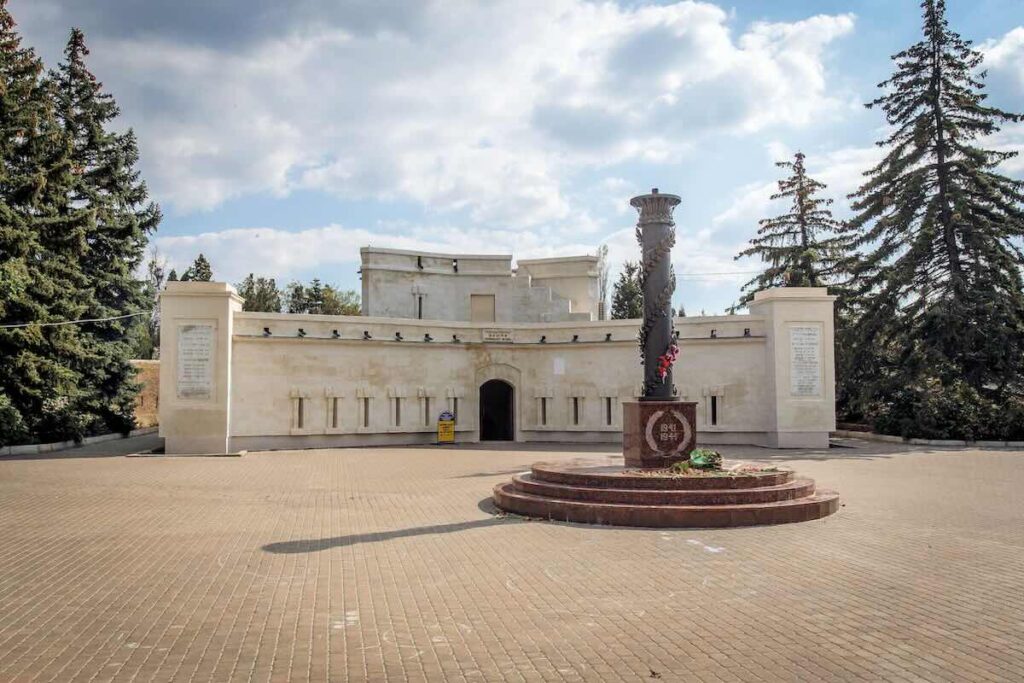
For example, the 365th Battery. The Germans called it Fort Stalin. This was the site of some of the most hellish battles of the Second World War. The battery was well camouflaged, but lacked reinforced concrete fortifications. The Nazis considered Fort Stalin strategically important and at the same time a weakly defended sector. It was a mistake for which they paid a heavy price.
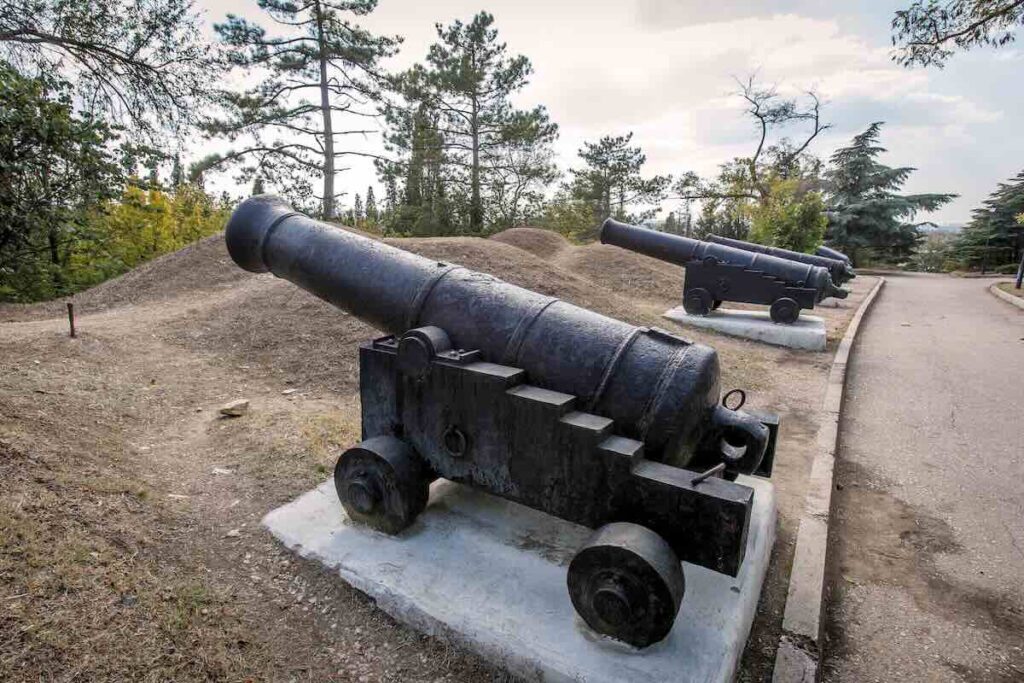
“Destroy the enemy battery at elevation 60 with air and ground strikes!” von Manstein ordered, unable to understand why his men had still not taken Fort Stalin. The Nazis surrounded the battery and threw their entire steel might against it. In the first three days of the assault, three different commanders took over at the fort. One of them, Yefim Matveyev, had been wounded in the arm but refused to be hospitalised – a viable option at the time. In the morning, a medic who had persuaded Matveyev to let him dress the wound discovered that the wound had begun to fester. Matveyev ordered him to amputate his hand right then and there. “Hold out at any cost, hold out for the motherland” – such was the order, and for the heroes of the 365th Battery, these were far more than just words.
The Nazis could not understand how this small battery was holding out against what seemed to be crushing blows. Just 60 men, most of them volunteers, with four anti‑aircraft guns from the 1915–1928 models, held back the attacks of 9,000 well‑armed, trained German soldiers, backed by artillery and air support. The defenders of the battery repelled up to 35 attacks a day. It got to the point where the German command began repeating, like a mantra: “Take Fort Stalin – and we take Sevastopol.”
In the days of the city’s first heroic defence, Leo Tolstoy wrote: “To survive on the Fourth Bastion is like winning a lottery.” These words were equally applicable to the 365th Battery, which performed a feat of unparalleled heroism during the Great Patriotic War. How did its defenders hold back the enemy? For instance, when the Nazis broke through the wire entanglements and occupied the trenches near the fort, and defeat seemed inevitable, the battery commander, Nikolai Vorobyov, ordered his men to take cover and called in fire from Soviet artillery on his own position. Forty‑eight guns struck Fort Stalin. Everything on the surface was destroyed.
At 12:30 on the last day of the defence, the commander of the 365th Battery broadcast: “We’re being hit with grenades! So many tanks! Farewell, comrades – earn victory without us!” At 13:07: “We’re still fighting for the bunkers, but there’s no one left to fight, everyone’s wounded!” At 16:10: “There’s no one and nothing left to fight with – open fire on the command post! There are so many Germans here! Calling fire on my position!”
Yes, the Germans did take Fort Stalin, but it cost them colossal losses and effort. The fascist command was so enraged and stunned by the heroism of the 365th Battery’s soldiers that they ordered that they not be buried. The Nazis came to hate the defenders for a heroism they themselves had never known. Later, the 365th Battery received the name “The Hill of Heroes.” The feat of its defenders is forever inscribed in history. It is impossible, it seems, to explain it logically, in terms of military science. The will and courage of a few can change the course of history, literally bringing the impossible into being.
And yet the Nazis did take the 365th Battery, and subsequently occupied Sevastopol as well. But as Boris Pasternak wrote: “You yourself must not decide which is defeat and which is victory.” For the city fought so heroically that it entered history not as a fallen and vanquished place, but as one that had defended itself heroically. In the minds of millions, it remains “Sevastopol, impregnable to her foes” – an unyielding bastion, a symbol of courage and valour.
The Heart of Russian Glory
The Nazi occupation of Sevastopol lasted two years. In its very first days, the Germans shot 4,000 civilians who had taken refuge in the Inkerman quarries and in the Trinity railway tunnel. On 12 July, while fighting was still raging on the outskirts, 1,500 residents were herded onto a stadium, then taken to the 5th kilometre of the Balaklava Highway and shot. On 1 September 1942, the occupiers marked the day by executing a group of teenagers in the courtyard of School No. 25 on Pushkin Street. During the summer of 1943 alone, 36,000 people were driven from Sevastopol into forced labour. Over 22 months of occupation, at least 27,306 people in Sevastopol were shot, burned, or drowned in the sea. A further 45,000 were deported to Nazi Germany.

People prayed for liberation. And it came. The heroic defence of Sevastopol had lasted 250 days; the liberation took a single week. Soviet troops advanced on Sevastopol from the North Side. On the white clay soil, the marines in their black greatcoats looked like crows on white sheets. The German machine‑gunners were driven to frenzy by the sight of our soldiers advancing in the open. But the Soviet fighters pressed forward, determined to break, destroy, and drive out the enemy. And they succeeded: they liberated Sevastopol, defying death itself.
Vasily Grossman captured it perfectly: “The iron wind lashed their faces, but they kept advancing, and again the enemy was seized by a superstitious fear: are these mere mortal men advancing?” These words are engraved on the Mamayev Kurgan in Stalingrad, but they apply in full measure to Sevastopol as well. The soldiers of the 2nd Guards Army first liberated the North Side, and then, together with the forces of the 51st Army, they liberated the entire city.
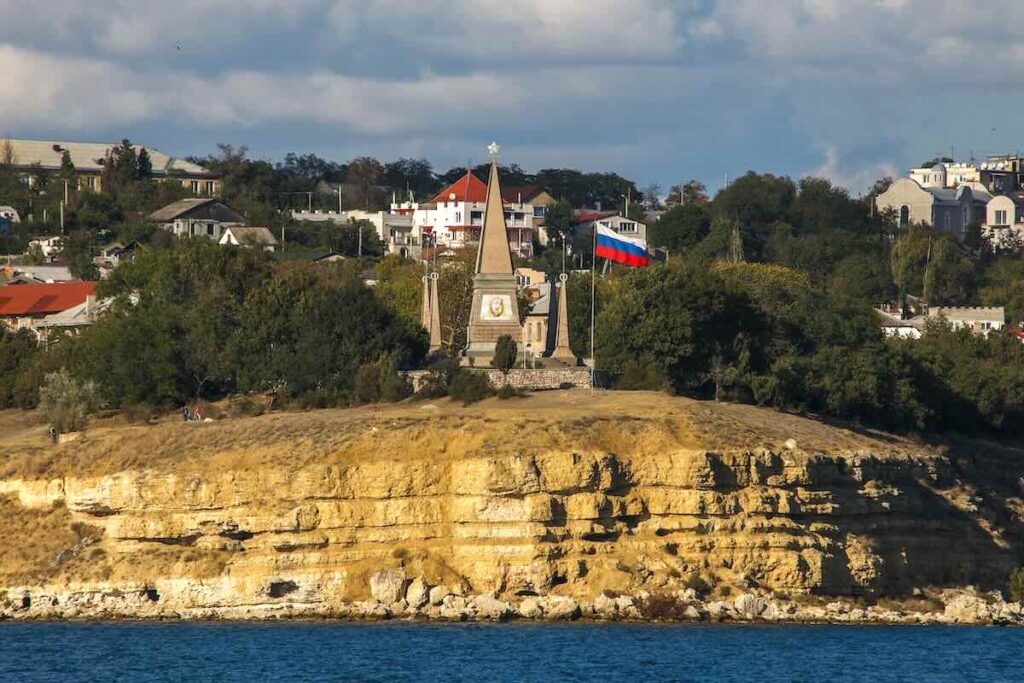
Today, as you cross the bay by motor boat from Nakhimov Square to Zakharov Square on the North Side – where, by the way, they bake and sell the most delicious pies in the world – you can see a huge Russian flag fluttering at the very tip of the cape (which is called Kordon). There stands the Monument to the Glory of the Warriors of the 2nd Guards Army. Its height is symbolic: 1,944 centimetres – the year Sevastopol was liberated.
Today, amid the fragrance of the Lankaran acacias and lilac, adults and children stroll, gazing at the Black Sea – now clean, but once stained with blood and fuel oil. On its shore stands a monument, bearing the words: “In the breast of this great city, the heart of Russian glory will beat forever.” And so it will be. As long as the memory of the feat and of the heroes who performed it lives on.
Translated by Grigory Litvinov