
 Olga Dyatko
 “I want to go to school,” a five‑year‑old boy declared to his parents. In reply, he was told that the school was far from home, there was no one to walk him there, and—most importantly—he was still too young to study. So the little boy decided to take matters into his own hands: he put on his father’s boots and went out as if for a walk, but headed straight for the school. Classes were already in full swing. Walking up to the teacher, the boy asked loudly: “Can I study here? I promise I’ll behave.” The teacher looked carefully at the child in the enormous boots and answered: “Sure.” The boy’s name was Nikolay Burdenko.
Outstanding surgeon, healthcare organiser, founder of Soviet neurosurgery, academician and the first president of the Academy of Sciences of the USSR. The life of Nikolai Burdenko is an example of selfless service to science and the homeland.
Descendant of a literate serf

Nikolai Burdenko was born on 3 June 1876 in the village of Kamenka, in the Nizhnelomovsky District of Penza Governorate. The grandfather of the future academician, Karp Burdenko, was a serf peasant. As a child, he learned to read and write from a village cleric and eagerly read every book he found in the cleric’s house. Word of Karp Burdenko’s learning reached the manor house, and the landowner took the capable young man on as his clerk, allowing him to use his library. The young man eagerly read books and magazines, reading everything he could, but he was particularly interested in agriculture. Having observed his clerk’s abilities, the landowner appointed Karp Burdenko as manager of his estate.
After the abolition of serfdom, Karp Burdenko found work as a merchant’s agent in Nizhny Lomov. His wife started making ladies’ dresses and soon became known throughout the district as a dressmaker. The family’s affairs prospered so much that Karp was able to fulfil his long‑standing dream – to take up horticulture and vegetable gardening. Over time, his small but exemplary farm won general recognition in the town and even began to attract curious visitors from various parts of the province.
In the book Nikolai Burdenko: Life and Work, the physician and historian of medicine Surén Bagdasarían recounts the future surgeon’s memories of summer holidays at his grandfather’s: “We worked in the garden and the kitchen garden with grandfather and grandmother. Like a close-knit family work brigade…” About his grandmother, Nikolai Burdenko wrote: “She was illiterate, but smarter than grandfather, observant, and had a gift for apt observations about events and people. Her conversation sparkled with genuine humour and I always enjoyed it.”
Nikolai Burdenko’s father, Nil Burdenko, also had a thirst for knowledge from childhood. With considerable difficulty, the family obtained the landowner’s permission to enrol Nil in the district school, where he pursued his studies “in exchange for potatoes, buckwheat, butter and eggs.” After completing his education, Nil Burdenko became a clerk on the estate. The young man continued his self‑education, acquiring knowledge in “land surveying, drafting, and thoroughly studying the laws relating to land matters.” Later, this proved extremely useful to him. After the abolition of serfdom, he acted in court as a representative and advocate for peasants in their disputes with landowners, earning him great popularity in the district and leading to his election as a member of the district council. As for the future scholar’s mother, Varvara Burdenko, it is known that she completed a gymnasium, received a secondary education, and after marriage devoted herself entirely to household duties and cares.
School Years
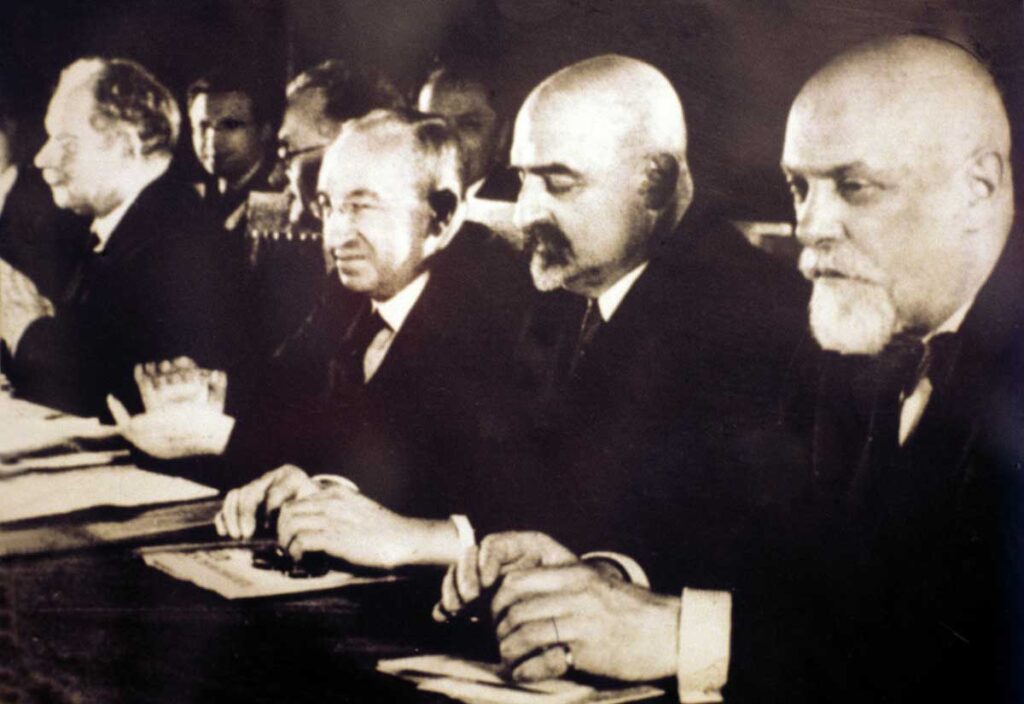
Nikolai Burdenko began his studies at a village school at the age of five and finished it when he was eight and a half. There was no money in the family for his further education, but his father found a way. In 1886, he took Nikolai to Penza and enrolled him in a theological school, after which the young man entered a seminary. Having completed the course, he passed the entrance exams for the St. Petersburg Theological Academy, but did not go there to study. Instead, his choice fell on the medical faculty of Tomsk University. At this point, the family “rose up as a united front against Nikolai’s reckless decision.” His father declared that he “would starve to death, since no one would be able to help him.” His brother also tried to dissuade him, while his mother wept, foreseeing the hardship and deprivation that might destroy her son. Nikolai was sorry to upset his family, but he did not want to change his mind. Having asked everyone for forgiveness, Burdenko left home.
The young man studied in an unfamiliar city – far from family and friends, without any means of support. It was a harsh period in his life. Soon his beloved grandfather died, followed by his grandmother. The large, once close‑knit family fell apart. Poverty pursued Nikolai; he took on any work he could find, and during the holidays he taught at a school. The only way to improve his financial situation was to pass all his subjects with top marks. This cost the student several weeks of sleepless nights, but in the end he won a scholarship – 500 roubles a year – which was a real lifeline for the young man.
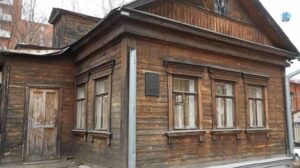
At Tomsk University, Nikolai Burdenko received a thorough and well‑rounded clinical training, along with a solid theoretical grounding in the core medical disciplines. However, the political climate introduced its own adjustments to the future surgeon’s life. At the turn of the century, revolutionary fervour was spreading across Russia. In Tomsk, young rebels protested against the state and advocated for changes to the university statutes. Burdenko was one of the students who took part in a student strike in 1901, after which he was expelled from the university. Thanks to the professors who recognised his abilities and academic achievements, he was reinstated. That same year, Burdenko submitted a request to the head of Imperial Tomsk University to be transferred to the corresponding course at Imperial Yuryev University (now the University of Tartu), where the luminary of Russian medical science, Nikolai Pirogov, had once taught.
Pirogov’s ideas and the traditions he established determined the direction of the young surgeon’s scientific interests. Having studied the experience of the Franco‑Prussian War, Pirogov described the organisation of medical care for troops in combat, outlining both the strengths and weaknesses of the military medical services of the warring nations. Burdenko was struck by the “rigorous logic of these conclusions” and instinctively felt the need to apply them in the Russian army. He decided to devote his career to military field surgery.
After completing three years of medical school and already having some practical experience, Nikolai Burdenko went to Kherson province, where a typhus and typhoid fever epidemic was raging at the time. The young doctor found himself right at the epicentre of the outbreak. All his efforts were focused on identifying the causes of the disease’s spread. He studied the relevant literature and analysed the living conditions of the population. Working in areas of high epidemiological risk, Burdenko learned from experienced paramedics, from whom he picked up the techniques of minor surgery.
Upon returning to Yuryev, Burdenko took over the leadership of the Yuryev student society. In addition, he was elected as a district representative to the First State Duma.
In 1904, the Russo-Japanese War broke out. The Russian Red Cross was organising flying medical units. In Yuryev, such a unit was formed from doctors, assistants and fourth‑year medical students, and Burdenko joined it. In April 1904, interrupting his studies, he went to the front as a doctor’s assistant. He worked as an orderly, a paramedic, and a surgeon at the front and at dressing stations. He spent days and nights working tirelessly among the soldiers, carrying the wounded from under fire. For his bravery, he was awarded the Soldier’s St George Cross. During the fighting, he suffered a concussion, which later caused his hearing loss.
In November 1904, Burdenko returned to Yuryev University, and in the summer of 1906, he passed his final exams with flying colours. After receiving his diploma, he began work on his dissertation. Its subject was related to issues of anatomy, physiology, histology, pharmacology and biochemistry. In 1909, Burdenko defended his dissertation and became a Doctor of Medicine. In the summer of 1910, the Council of Yuryev University confirmed him in the rank of Associate Professor at the Department of Surgery and the Surgical Clinic.
“This is Professor Burdenko. They worship him here…”
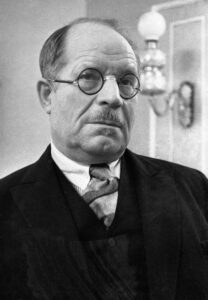
With the outbreak of the First World War, Burdenko left for Petersburg to volunteer for the front. His work as a surgeon during this period is one of the most brilliant chapters in the history of Russian military medicine.
Here is an eyewitness account of Burdenko’s work in field conditions, published in the journal Russian Antiquity in 1915:
“He stood at the operating table behind a glass door. His glasses had slipped down, hiding his eyes, and in his hands he held a surgical instrument… The operation was over. The nurses, assistants and orderlies – a group of about seven people in white coats – stepped aside, and the short man moved to the next table. Beside me, through the glass door, one of the nurses was watching. She did not say a word, her eyes fixed on the eyes and the movements of the hands of the man performing the operation.”
“This is the third day he’s been operating without rest,” she remarked in my direction when the operation was over. “This is Professor Burdenko. They worship him here…”

His colleagues were amazed by Burdenko’s superhuman capacity for work. He lived in the dressing room, sleeping on a wooden couch or on chairs. Yet his stern exterior could not fool his colleagues and patients: his big heart was filled with love for people.
At the end of 1917, Burdenko was elected by the Council of Yuryev University to the position of full professor at the Department of the Surgical Clinic, the very chair once held by Pirogov. However, he was not to work there. After the German occupation of Yuryev, university life came to a standstill. The German command dismissed all Russian professors and lecturers. However, they made an exception for him, offering him “peaceful academic work in Yuryev” and warning him of “the danger awaiting him in a country engulfed by revolution.” But Nikolai Burdenko turned down the German offer: “The future is there – I am going home.”
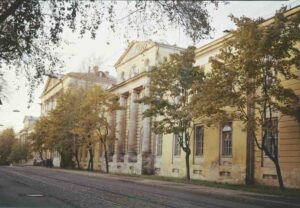
The Russian professors dismissed by the Germans transferred to the university that opened in Voronezh in 1918. Burdenko, who had personally overseen the evacuation of the Yuryev faculty surgical clinic, took over the corresponding department at Voronezh University. At his initiative, the Pirogov Medical Society was founded in the city. Burdenko enjoyed immense popularity among both students and faculty. His lectures, built on a wealth of factual material, attracted large audiences.
In October 1921, Nikolai Burdenko was elected by the Medical Department of the Main Directorate of Professional Education to the position of professor of operative surgery at the Department of the First Moscow State University. His colleagues in Voronezh were deeply upset. They were reluctant to lose “their Burdenko.” For two years, the university administration delayed his departure under various pretexts, citing the absence of a worthy successor, hoping that Moscow would forget its decision. But that did not happen, and Voronezh had to yield. His colleagues organised a farewell ceremony for Nikolai Burdenko, at which poems they had written were read:
“No wonder the rector, our father dear,
Once said: ‘Ah, Voronezh, my friend!
You’re bound to let Burdenko slip, I fear…’”
“It pains us deeply, hurts to say,
Unbidden tears, we can’t stay still,
The orphaned faculty cries: ‘Hey,
Burdenko was here, is gone — what will?’”
After his farewell lecture, a huge crowd of students surrounded the doctor and carried him in their arms.
Chief Surgeon of the Red Army
The move to Moscow marked a new stage in Burdenko’s life. Surgeons from Moscow and the Moscow region elected him chairman of their professional society. He became actively involved in shaping Soviet healthcare and headed the prosthetics commission of the People’s Commissariat of Health. In January 1939, Burdenko was elected a full member of the Academy of Sciences of the USSR, and in March 1941, he was awarded the Stalin Prize, First Class, for his published scientific works on surgery of the central and peripheral nervous system.
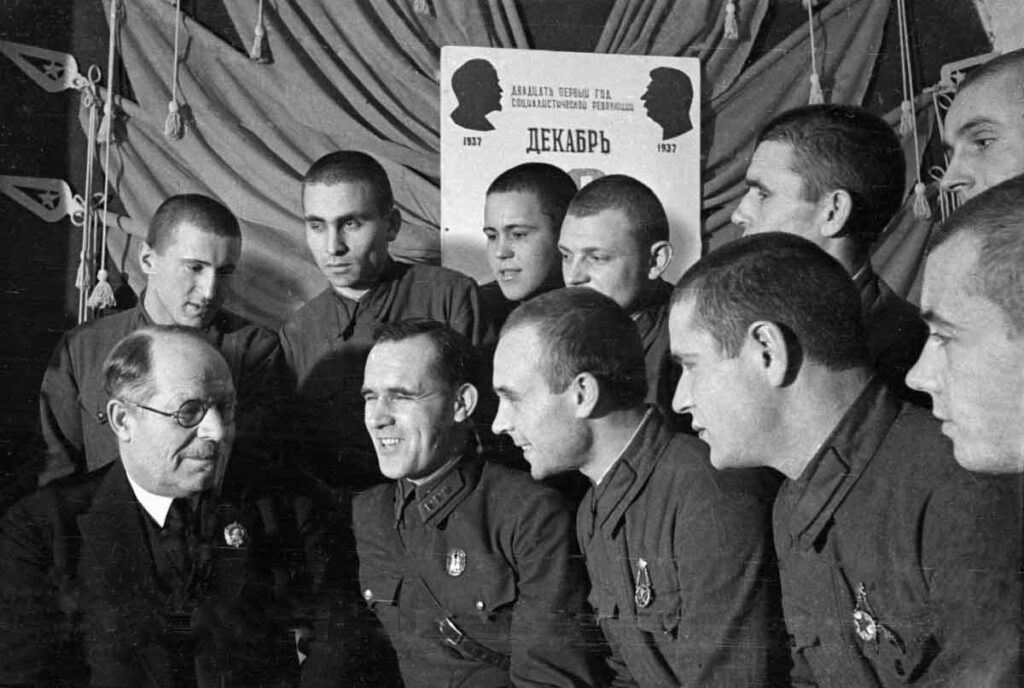
Burdenko taught, conducted research, and saved lives. Grateful patients wrote to him from all over the country. Here are lines from a letter written by a woman who had been bedridden for six months and had lost all hope of recovery: “Dear Nikolai Burdenko! I know that you receive dozens of letters of gratitude every day from people who owe you their lives. How many lives you have saved! Add to the countless expressions of gratitude you have received the thanks of one more person – one who is in awe of the power of Soviet surgery and who has been brought back to life by your skill.”
The fame of Burdenko’s neurosurgical school spread beyond the country’s borders. His name became known to every educated surgeon in Western Europe and America. Doctors from various countries – both ordinary practitioners and leading scientists – came to Burdenko’s clinic.
From the first days of the Great Patriotic War, Burdenko was appointed Chief Surgeon of the Red Army and remained in this post until the last days of his life. The Presidential Library’s website features a unique recording of a speech by Nikolai Burdenko, made on 1 July 1941. In it, the scientist speaks about the heroism of the Russian soldier and Soviet patriotism: “I have 36 years of service in the army behind me. Over these years, I have come to know the rich, infinitely deep soul of the Russian people… Over these years, I have understood and realised that the Russian soldier can overcome any hardship, can defeat any enemy.”
The consequences of concussions sustained during the Russo-Japanese War and the First World War gradually, but steadily, cost Burdenko his hearing. By the late 1930s, he had gone completely deaf. This caused him great suffering, but it did not affect his remarkable capacity for work. He used to say: “When physical strength gives out, moral strength must come to your aid. If you have only one finger left on your hand – don’t give up, keep working, act with the same energy as if all your fingers were intact.”
In September 1941, near Moscow, while inspecting a military medical train that had arrived from the front, Nikolai Burdenko suffered his first stroke. In a severe condition, having lost the ability to move and speak, he spent about three weeks in hospital, and was then evacuated to Omsk. To recover his speech, Burdenko practiced intensively in front of a mirror, restoring his articulation, learning to pronounce syllables in a singsong manner without being able to hear them. As soon as he recovered enough, he began conducting research on military field surgery in local hospitals. In a letter to one of his assistants and students, Burdenko wrote: “I work in three hospitals. I make diagnoses, mentor doctors, assist in operations, and perform them myself, studying the consequences of frontline amputations…”
His faithful companion was his wife, Maria Emilievna. She was able to provide everything he needed for his work, helping him select books, serving as his secretary, and translating articles from foreign journals. For the deafened Burdenko, his wife became a vital link to the outside world: she assisted him in telephone conversations, during meetings with visitors, and at conferences and meetings.
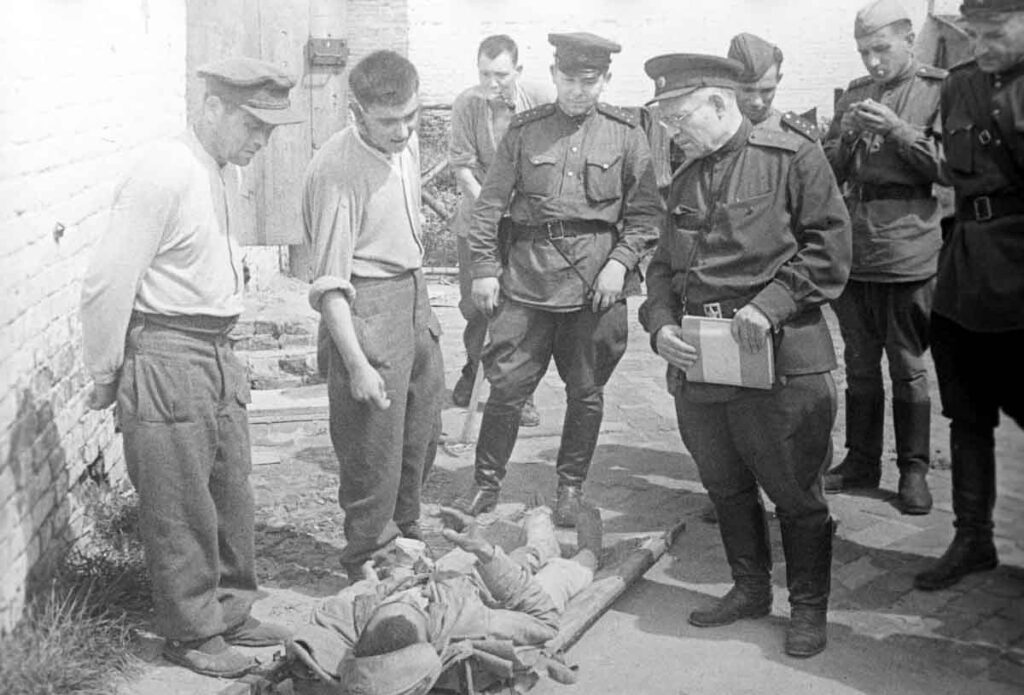
In November 1942, Burdenko was appointed a member of the Extraordinary State Commission for the Investigation of German‑Fascist Crimes. He oversaw the work in the Oryol and Smolensk regions, and also headed a special commission to investigate the circumstances of the execution of Polish officers by the Germans in the Katyn Forest. “The scenes I had to witness defy all imagination. The joy of seeing liberated people was overshadowed by the numbness on their faces. This made me think – what was the reason? Evidently, the suffering they had endured had made life and death seem indistinguishable,” he later recalled.
In July 1945, Burdenko fell ill again. He lost the ability to speak that he had regained and was once again hospitalised. His heroic constitution and will to live prevailed once more. Before long, Burdenko was again appearing at meetings of the medical academic council, at commissions and in hospitals. But in the summer of 1946, he was struck by a third stroke. While remaining fully conscious, he handed the assembled council of doctors a note that astounded them with its cool courage: “1905 – concussion, which caused me to begin losing my hearing. 1917 – another concussion, which led to my total loss of hearing in 1937. 1941 – I travelled along the front lines and was extremely exhausted. 1941 – I came under aerial bombardment during the crossing of the Neva, near Shlisselburg, and suffered a stroke soon after. 1945 – another stroke. I am already 70. Time to die!!”
In the autumn of 1946, the XXV All‑Union Congress of Surgeons was held in Moscow, at the Polytechnic Museum. Burdenko himself, due to his health, could not preside over it, but a paper by the famous surgeon, devoted to the treatment of gunshot wounds at the front during the Great Patriotic War, was read to the delegates. After the congress, Nikolai Burdenko wrote on a scrap of paper: “This paper is my swan song: I will not live to see the next congress.”
The great surgeon was gone on 11 November 1946.
The editorial team thanks the B.N. Yeltsin Presidential Library for its assistance in preparing this material.
Translated by Grigory Litvinov