
 Ekaterina Zhiritskaya
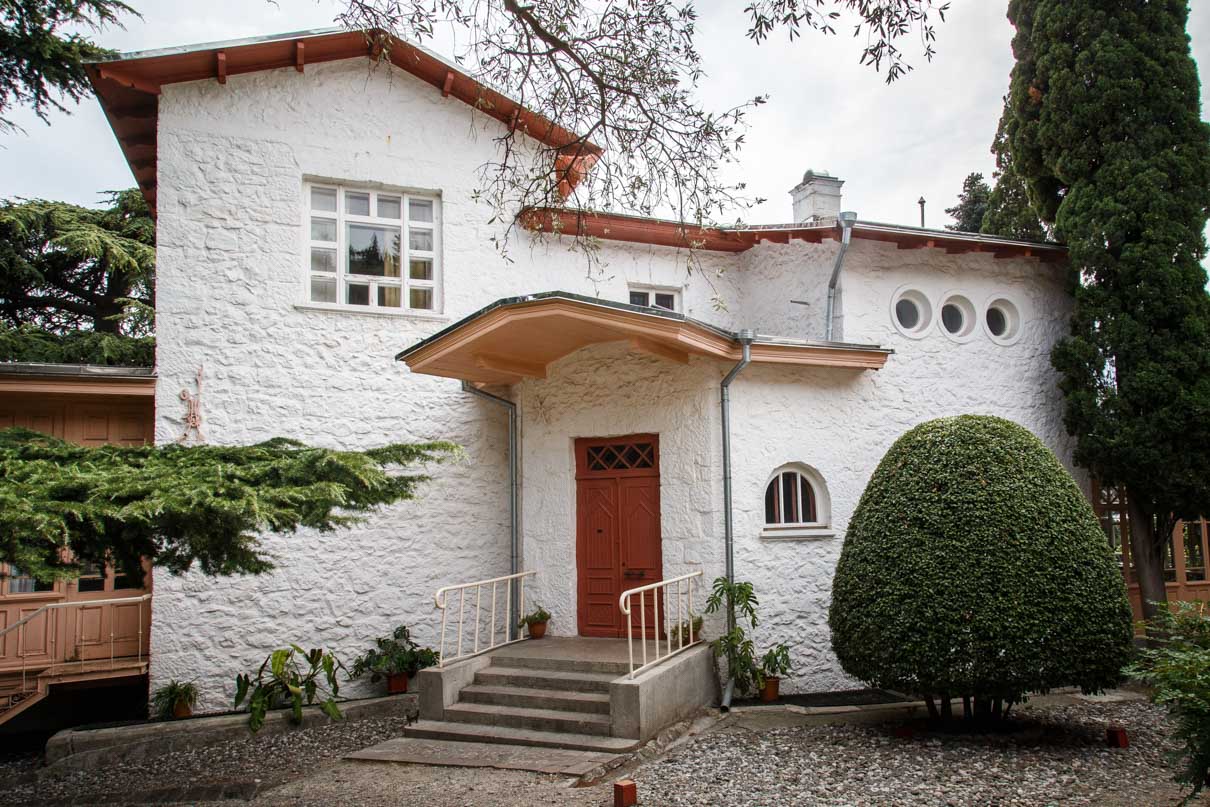
This house was built in a newly planted southern garden on the far outskirts of the resort town of Yalta. It later came to be known as the White Dacha. Here, the plays Three Sisters and The Cherry Orchard, the short novel In the Ravine, and the stories The Lady with the Dog, The Bishop, and At Christmas Time would be written. From this house, Chekhov would depart for Badenweiler, where he would die.
In time, the house would become a branch of the Crimean Literary and Artistic Memorial Museum‑Reserve. But let us, with the help of our imagination, once again populate it with its inhabitants.
A Vineyard by a Tatar Cemetery
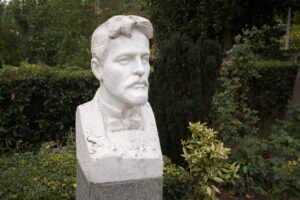
“We walked for a very long time. I felt annoyed and irritated that he had chosen a plot so far from the sea. When at last we approached the site, I saw something quite unexpected: an old, twisted vineyard, enclosed by a wattle fence — not a single tree, not a bush, no building of any kind. To top it all, just beyond the fence lay a Tatar cemetery. … I could not hide my first unpleasant impression. … True, the view from the plot was very beautiful: you could see all of Yalta in the palm of your hand and the wide sea horizon…”
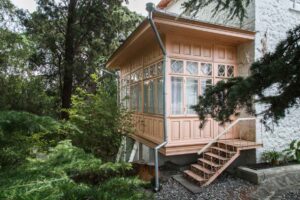
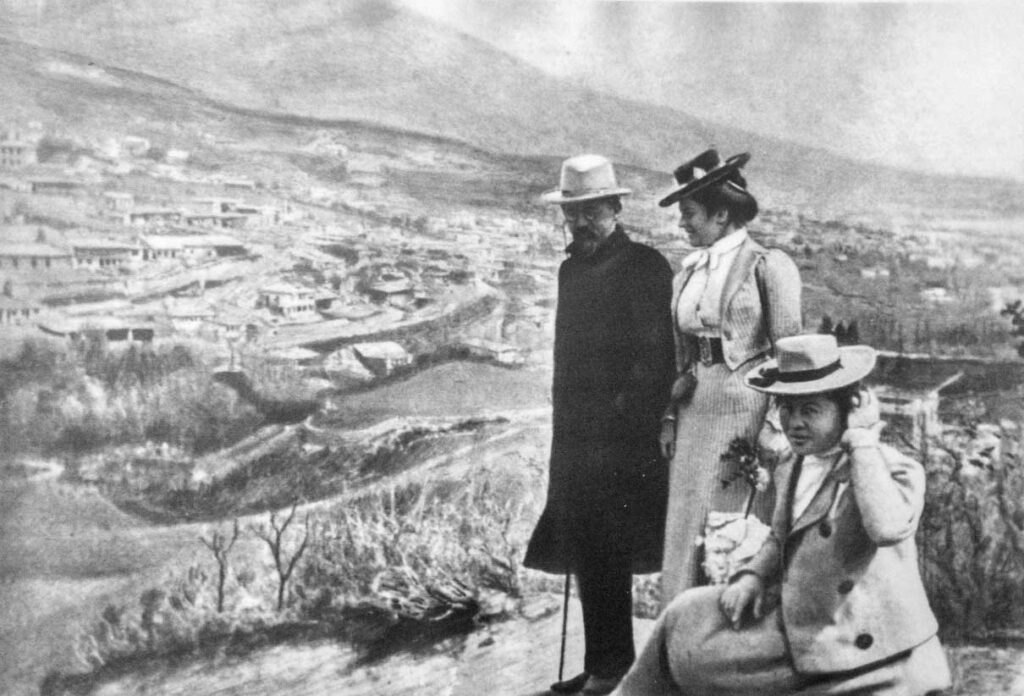
The White Dacha was singularly fortunate: it had its own chronicler. Maria Chekhova, after their father’s death and the sale of the family estate Melikhovo near Moscow, moved with her mother to Yalta to join her brother and began keeping a diary of her life in Crimea. She chronicled the life of the White Dacha in the then‑Tatar village of Autka. And when Chekhov passed away, Maria Chekhova became the keeper of the museum for many years…
But let us return to 1899. Maria Pavlovna strongly disliked the site for the future dacha, but out of consideration she did not want to upset her brother. And so together they began to sketch out a plan for the garden on a sheet of paper, marking where the house was to stand, where paths were to be laid, where grottoes were to be dug and fountains arranged. They became so carried away with their dreams that they forgot that they had nowhere near enough money.
Chekhov Sanatorium
In 1897, Anton Chekhov was dining with publisher Alexey Suvorin at the Hermitage restaurant in Moscow. Suddenly, blood began to come from his throat: his neglected tuberculosis had made itself known. The writer was put in a hospital, but he never fully recovered. As a result, doctors forbade him to live in a cold climate during winter. So Chekhov spent the winter months of 1897–1898 in Nice, where he was desperately bored. He spent the following winter in Yalta. But Chekhov did not like to move from one rented apartment to another — he needed a corner of his own.
The death of the writer’s father accelerated the decision to move to Crimea. The house at Melikhovo stood empty: Maria Chekhova went to her brother in Yalta to help him arrange their new home.
To raise money for the construction of the house, Anton Chekhov was forced to sell the rights to all his works, including those not yet written, to Adolf Marx, the publisher of the magazine Niva. The deal was unfavorable: Chekhov received the money in installments over several years. Construction, which the writer personally oversaw, proceeded quickly, and in the fall of 1899, the writer’s mother moved into the not yet fully finished house.
Even while suffering from his illness, Anton Chekhov did not remain idle. At that time, tuberculosis was not yet curable, but the southern coast of Crimea was already considered an all-Russian health resort. People sought advice from the doctor and writer known throughout Russia. Chekhov confessed to Gorky: “I am besieged by impoverished consumptives. … It is hard to see their faces when they beg, and their pitiful blankets when they die. We have decided to build a sanatorium; I have written a public appeal, for I see no other means.” Anton Chekhov indeed published the appeal and sent it all over Russia. Many responded to his call, and a significant sum was raised. Chekhov added five thousand rubles of his own and built the first tuberculosis sanatorium in Yalta, “Yauzlar”. And Chekhov continued his medical practice in Crimea: according to Maria Chekhova, the Tatar population of the village of Autka came to him for medical help “day and night”.
During the five and a half years that Chekhov spent in Yalta, life at the White Dacha was bustling. Distinguished visitors filled the house with laughter, arguments, and music. No one expected that the owner of the White Dacha would soon be gone.
After the writer’s death in 1904, Maria Chekhova took charge of the house, deciding to preserve the last dwelling of her illustrious brother unchanged. “I could not imagine the possibility of altering anything in the house after his death,” she recalled. “I could not believe that he [Anton Chekhov] was gone, that he would never return to his study. I continued to carefully keep and preserve the rooms where he lived and worked — and so it remained for many years.” Maria Chekhova had no intention of turning the house into a museum. But people continued to come to the White Dacha from all corners of Russia. Often they would ask Maria Chekhova to tell them something about Chekhov’s life and work. Such attention made the writer’s sister seriously consider the future of the dacha: “It became clear to me that I must preserve the house not only as a memory of my brother, but also for everyone who loved and valued him as a great writer.”
At the White Dacha, Maria Chekhova lived through the Revolution and the Civil War, and found herself without any means of support — she even had to take up sewing to feed her seriously ill mother. But in 1921, the writer’s dacha officially became the A.P. Chekhov Museum in Yalta. Maria Chekhova guarded it and did not leave even during the Nazi occupation. A German general was billeted in the house, and only by a stroke of luck did the museum avoid being looted.
Cultivating His Own Garden
“All of Anton Chekhov’s attention was focused on the garden,” Maria Chekhova continues to tell us. Her memory holds images of Turks in red fezzes who came to Crimea for excavation work, the uprooted old vineyard, the planting holes into which Anton Chekhov, “rejoicing like a child,” plants slender saplings of young trees.
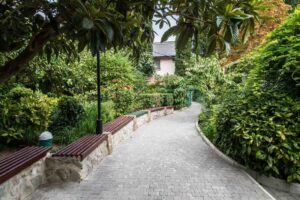
In the first years, tending the garden was hard: water had to be fetched from the stream in the ravine, and then full buckets had to be dragged up the steep hill. But the young trees grew — to Anton Chekhov’s joy. He missed the landscapes of central Russia and tried to recreate it in his garden by planting deciduous trees. He did not like evergreens: ” Their leaves seem to be made of tin.” The only exception were the cypresses. And there were many roses in Chekhov’s garden as well.
Doors Into The Past
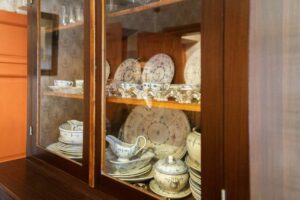
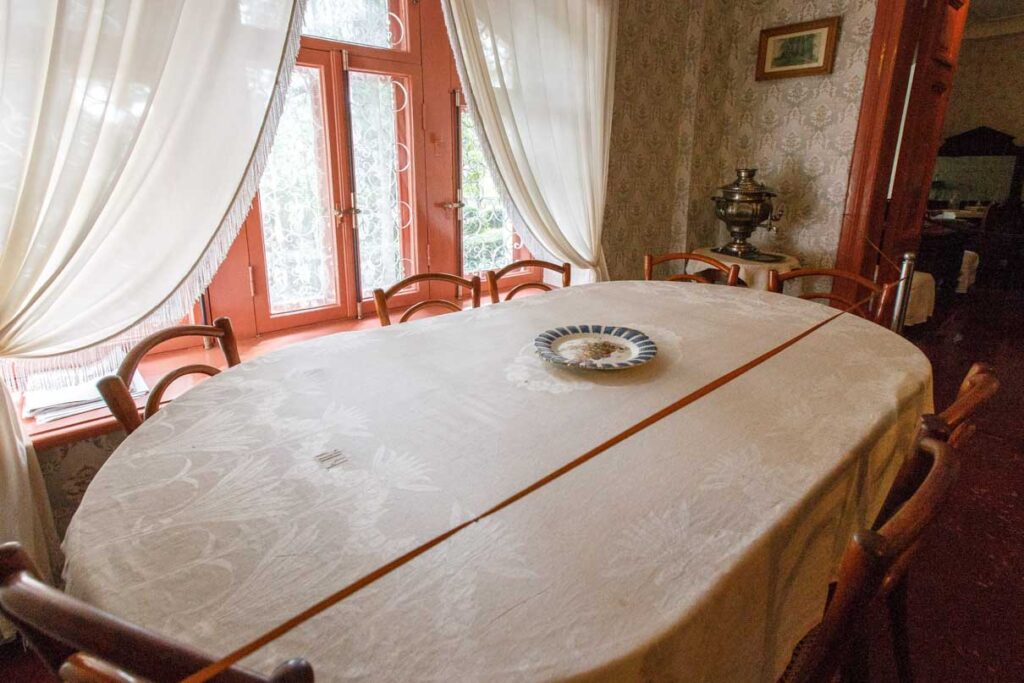
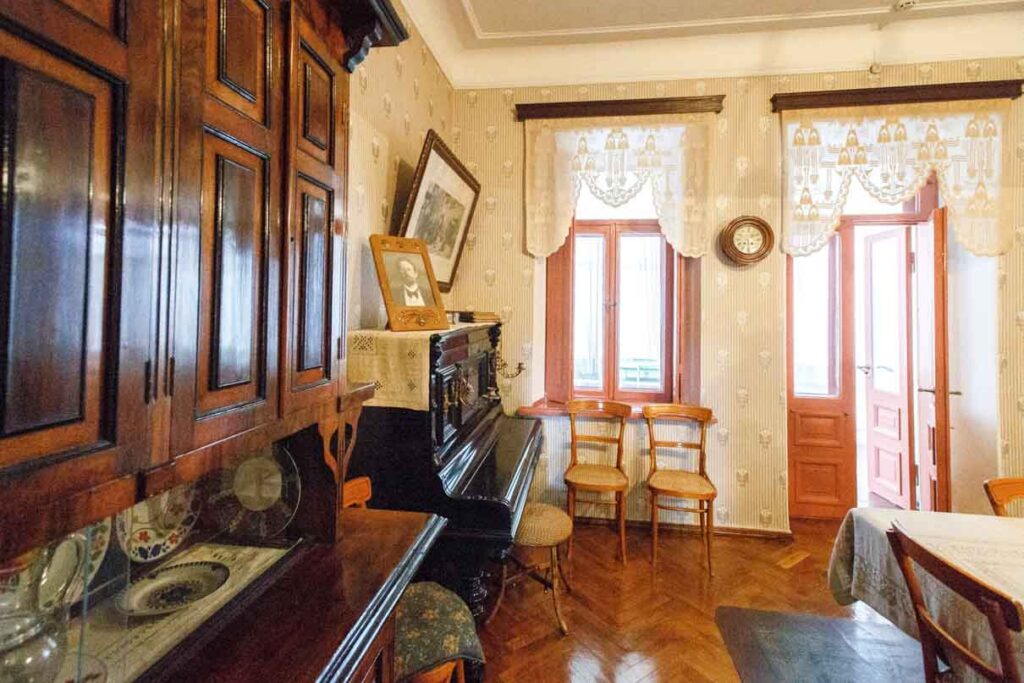
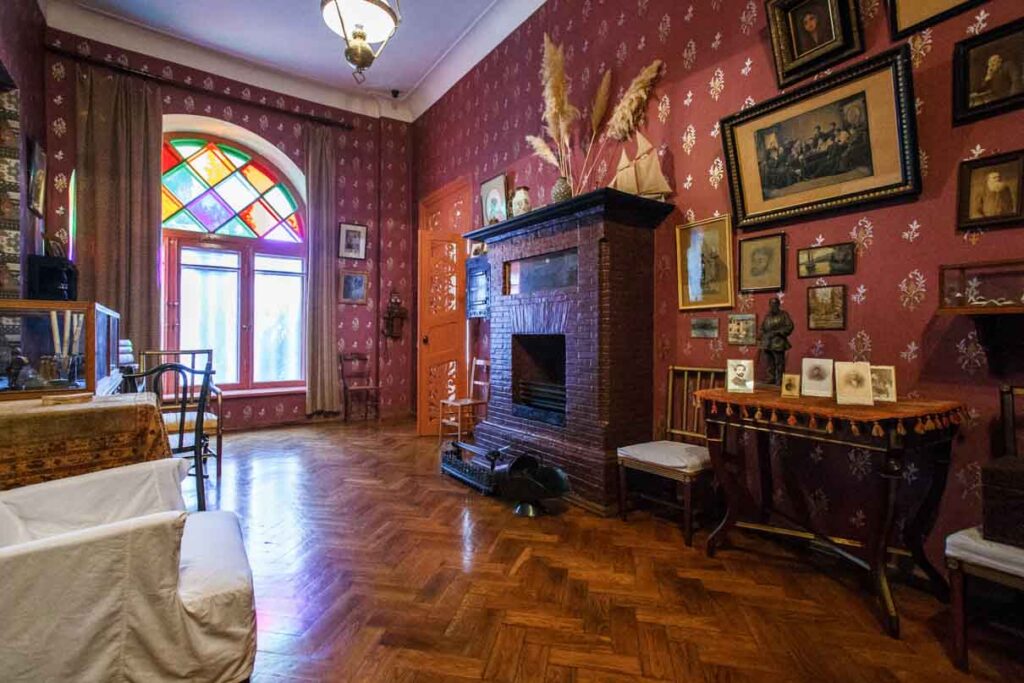
However, it is time to enter the house. First, into the hallway, where by a table covered with cloth stood a bamboo chair and a folding bench — which Anton Chekhov had brought from Melikhovo, where he used to take it fishing. Then we proceed to the dining room: here, an extending dining table, nicknamed the “centipede” because of its many supports, is surrounded by Viennese chairs. On the top shelf of the sideboard glassware gleams that were part of his mother’s dowry.
The walls of the room are decorated with several paintings. They were donated to the Literary Society, which existed in Yalta from 1918 to 1920 and provided financial support to Chekhov’s house. The paintings were raffled off in lotteries, and the proceeds went toward maintaining the White Dacha. After the museum received state support, the need to help it ceased, and in 1920 the paintings became museum exhibits.
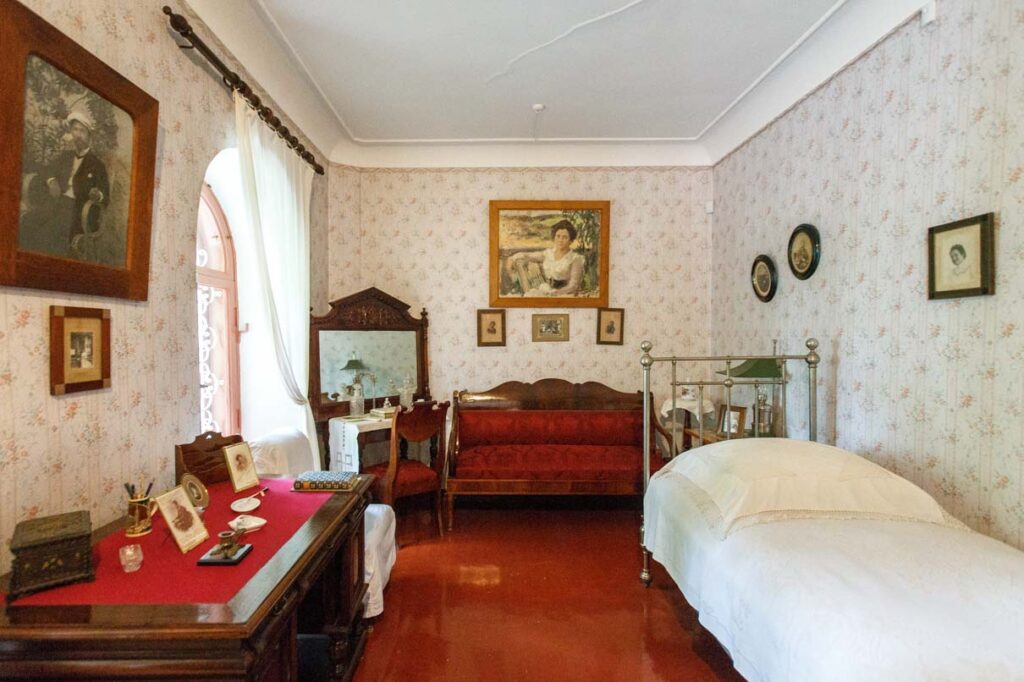
From the dining room, doors lead to three rooms. The one to the left of the large, tiled stove was chosen by Anton Chekhov’s wife, actress Olga Knipper, who performed at the Moscow Art Theater. The writer first saw her at a rehearsal of A.K. Tolstoy’s tragedy Tsar Fyodor Ioannovich, in which she played the role of Tsarina Irina. Olga Knipper made a great impression on Chekhov. He wrote to Suvorin: “Irina is magnificent. Her voice, her nobility, her warmth — so wonderful that it even gives you a lump in your throat. … If I had stayed in Moscow, I would have fallen in love with this Irina.”
Six months later, Chekhov invited Olga Knipper to visit him at Melikhovo, where she, in her words, spent “three wonderful days.” Then they met in Novorossiysk and spent a month in Yalta. They started writing to each other, and Knipper realized: “a feeling arose that demands some kind of definite decision.” In May 1901, Anton Chekhov and Olga Knipper married. Alas, the actress and the writer did not have long together: in 1904, Chekhov died at the German resort of Badenweiler.
Olga Knipper outlived her husband by 55 years. For half a century after Chekhov’s death, she came to Yalta almost every year. She spent most of her vacations in Gurzuf, in a house that Anton Chekhov had bought especially for her, but she always had a room in the White Dacha.
The Serf’s Grandchildren
It is time to look more closely at the inhabitants of the house more closely. The Chekhov family was large. Besides his sister Maria, Anton Chekhov had four brothers (he was the third eldest).
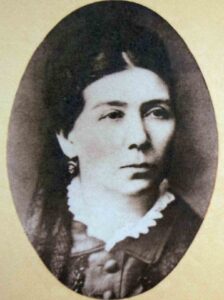
In an old oval‑framed photograph are members of Anton Chekhov’s family: his grandmother, Efrosinya Chekhova; his grandfather, Yegor Chekhov; his mother, Evgeniya Chekhova; and his father, Pavel Chekhov. Evgeniya Chekhova, née Morozova, came from the town of Morshansk in Tambov Province. Her father sold cloth and died of cholera during one of his business trips. After that, the family moved to Taganrog. It was there that Evgeniya met Pavel Chekhov and became his wife in 1854. Anton Chekhov wrote of his mother: “…she was a very kind, gentle and sensible woman; my brothers and I owe her a great deal.” By the time she came to the Yalta house, Evgeniya Chekhova was already an old woman, but she won the sympathy of all its guests. She died in 1919 at the age of 88.
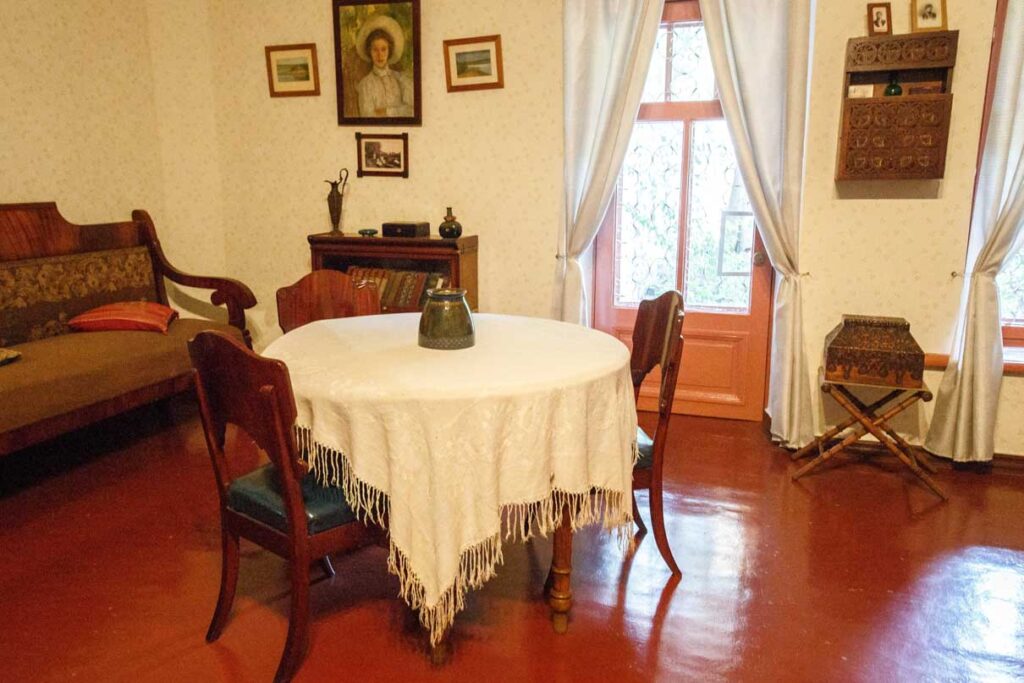
The writer’s father, Pavel Chekhov, was the second son in the family. From his native Voronezh Province, he moved with his father to Taganrog, opened a small grocery shop, but his true calling was music. He played the violin, sang in a choir, and was so passionate about it that he sometimes neglected his business. He also had a talent for painting — one of his works, John the Theologian, hangs in the White Dacha. Chekhov said that in his family, the children inherited their talents from their father, and their soul from their mother. In 1876, Pavel Chekhov went bankrupt and fled to Moscow to avoid debtors’ prison, and took a job as a clerk for a merchant named Gavrilov. Only when his sons got back on their feet, and when Anton Chekhov bought the estate at Melikhovo in 1892, did Pavel Chekhov retire.
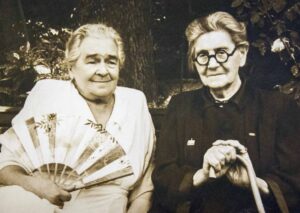
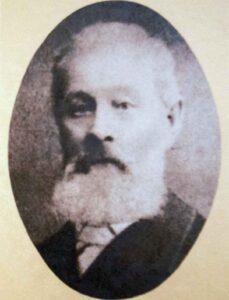
The writer’s grandfather, Yegor Chekhov, came from the village of Olkhovatka in Voronezh Province. He was a serf of the landowner Chertkov, but he managed to buy his own freedom long before the reform of 1861. He did not have enough money to buy the freedom of his daughter, and he asked the landowner not to sell her to strangers, but to wait until he could buy her freedom as well. Having received his freedom, Yegor Chekhov moved south and took a job as a manager on the estate of Count Platov. He also brought his two sons, Pavel and Mitrofan, there. Pavel, the writer’s father, was sent to study in Taganrog, and Mitrofan to Rostov‑on‑Don. In that city, the brother of the writer’s mother, Ivan Morozov (“Uncle Vanya”), worked. Mitrofan and Ivan Morozov became friends; both moved from Rostov to Taganrog, where “Uncle Vanya” introduced Pavel to his sister, Evgeniya Morozova.
The White Dacha also holds memories of Anton Chekhov’s brothers. A portrait of one of them, Ivan, was painted in 1917 in Miskhor by the artist Leonid Brailovsky. Ivan Chekhov worked as a schoolteacher in the town of Voskresensk, Moscow Province (now Istra), and was a well‑known educator. In the 1880s, the Chekhovs often stayed with him. Some five kilometers from Voskresensk was the estate of Babkino, owned by collegiate secretary Alexei Kiselyov. The Chekhovs became friends with the Kiselyov family and spent the summer months of 1885–1887 at Babkino, where the artist Isaac Levitan was also a frequent visitor.
Another notable exhibit in the White Dacha is a photograph of the youngest brother, Mikhail Chekhov. He was the publisher of the magazine Golden Childhood and the author of many articles and books about Anton Chekhov’s life. One of Mikhail Chekhov’s major contributions was the publication of his brother’s letters, which help us better understand the writer’s personality.
On the second floor, in the drawing room, hangs a large painting called Poverty. It was painted by the writer’s second eldest brother, Nikolai Chekhov, a graphic artist and caricaturist. He worked for various publications, illustrated some of his brother’s stories, and was friends with Levitan, Korovin, and Shekhtel.
Anton Chekhov’s elder brother, Alexander, also had a gift for literature. The writer owed his first attempts at writing to him, at least in part. Unfortunately, illness kept Alexander’s talents from ever fully unfolding. His son, Mikhail Chekhov, was a famous dramatic actor, theatre director and teacher.
Anton Chekhov’s sister, Maria, taught geography and history. She was also fond of painting. Anton Chekhov greatly loved her paintings; one of them hung above the sofa in his study, reminding him of Melikhovo, which was dear to his heart.
The Luminaries of Russian Culture
When the famous writer’s brothers came to see him in Yalta, they usually stayed on the first floor, in a room specially set aside for family. But the White Dacha also had a guest room, which was rarely empty. Those who stayed there were the luminaries of Russian culture.
The guests of the White Dacha included Alexander Kuprin and Ivan Bunin, Maxim Gorky and Leonid Andreyev, Sergei Rachmaninoff and Fyodor Chaliapin, Viktor Vasnetsov and Valentin Serov. In 1900, Chekhov was visited by actors from the Moscow Art Theater, led by directors Konstantin Stanislavsky and Vladimir Nemirovich‑Danchenko. They stayed at the Rossiya Hotel in Yalta, performed in the theater in the evenings, and spent their days at the Chekhovs’. Maria Chekhova recalled that during this time the garden and the house were especially crowded, noisy, and cheerful…
On the wall of the writer’s study, among the paintings, there is a photographic portrait of Pyotr Ilyich Tchaikovsky with the inscription: “To A.P. Chekhov from an ardent admirer”. In the autumn of 1889, the composer visited Anton Chekhov in Moscow presented him with this photograph. Chekhov, in turn, dedicated his collection Gloomy People to Tchaikovsky. “I am ready to stand day and night as an honorary guard at the porch of the house where Pyotr Ilyich lives – such is my respect for him,” Anton Chekhov wrote to the composer’s brother. “If we speak of ranks, then in Russian art he now occupies second place after Leo Tolstoy, who has long held the first. I give third place to Repin, and assign ninety‑eighth to myself.”
The White Dacha was also adorned with a lithographic portrait of Leo Tolstoy. It had been sent to Chekhov as a prize by an illustrated magazine, and he liked it so much that he had a frame made for it, hanging it first in his study at Melikhovo and later moving it to Yalta. Chekhov held Tolstoy in great esteem (“I have never loved anyone as I love him”; “if he were to die, a great void would open in my life”). The two writers met in 1895, when Chekhov came to Yasnaya Polyana. “Chekhov visited us, and I liked him,” Tolstoy wrote afterwards. “He is very gifted, and his heart must be kind …” Tolstoy had a high opinion of Chekhov’s stories.
Earlier, in the writer’s study, there hung a painting by Levitan, Twilight. Haystacks (now kept in the Tretyakov Gallery). The story of its creation is remarkable. At the beginning of 1900, Isaac Levitan came to stay with Chekhov. One evening, he sat in an armchair by the fireplace, listening to Anton Chekhov pace around the study and complain of how tedious life was in that hothouse of a city — as he called Yalta back then. Suddenly, Levitan asked Maria Chekhova to bring him a piece of cardboard. He quickly painted a landscape, Twilight. Haystacks, for the writer who missed the north. Afterwards, Anton Chekhov wrote to Olga Knipper: “…Levitan is staying with us. On my mantelpiece he depicted a moonlit night during haymaking. The moon, haystacks, a forest in the distance, the moon reigning over it all…”
The writer’s study was also adorned with a portrait of Alexei Pleshcheev, painted in no time at Chekhov’s house on Malaya Dmitrovka during a conversation. Pleshcheev, a well‑known poet and translator, was arrested in 1849 as a member of the Petrashevsky Circle [a group of utopian socialists; he, like Dostoevsky, was sentenced to death, commuted to exile]. After returning from exile to St. Petersburg, Pleshcheev joined the staff of the journal Notes of the Fatherland, and after its closure moved to the editorial board of The Northern Herald. He sent his portrait to Chekhov in 1888, after Chekhov’s play Ivanov was published in The Northern Herald. A lively correspondence began between them, which later grew into a close friendship.
“Vulgarity Took Revenge On Him”
In the spring of 1904, Anton Chekhov’s health began to deteriorate catastrophically. Tuberculosis and frequent pleurisy had severely weakened the writer’s body. In early June, on the advice of his doctors, he left for Badenweiler, a resort in southern Germany. From there, he wrote to his friends that his health was returning to him not by ounces, but by pounds.
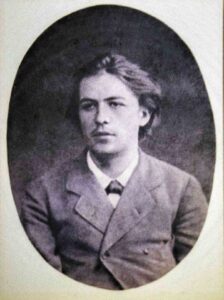
But on the night of July 15, Anton Chekhov died of a heart attack. His body was taken to Moscow by Olga Knipper. A vast crowd was waiting at the station for the writer’s remains. The train arrived early in the morning on July 22. On the refrigerated car that carried the coffin was an inscription: “Fresh oysters” (there had been no other way to bring the writer’s body home). “His enemy was vulgarity, and vulgarity took revenge on him,” wrote Maxim Gorky, shocked by this twist of fate.
As we come to the end of our walk through the White Dacha, we may recall the words of Anton Chekhov from his famous “Yalta” story, The Lady with the Dog. This passage, so clear and precise in both word and feeling, is the perfect farewell to the white house on the Crimean shore:
At Oreanda they sat on a bench not far from the church, looked down at the sea, and were silent. Yalta was barely visible through the morning mist; white clouds stood motionless on the mountaintops. The leaves did not stir on the trees, grasshoppers chirruped, and the monotonous, hollow sound of the sea rising up from below spoke of peace, of the eternal sleep awaiting us. So it must have sounded when there was no Yalta, no Oreanda here; so it sounds now, and it will sound as indifferently and hollowly when we are no more. And in this constancy, in this complete indifference to the life and death of each of us, there lies hidden, perhaps, the pledge of our eternal salvation, of the unceasing movement of life upon earth, of unceasing perfection…