 Marina Krugliakova
The Sámi, or Lapps as they were called until the 1930s, are the indigenous people of the Kola Peninsula. Worldwide, there are between 60,000 and 80,000 Sámi — in Norway, Sweden and Finland; in Russia, about 1,500. How do the Sámi preserve their language and traditions when faced with modern challenges? To answer this question, we turned to our guides and experts — Ulyana Yulina, Nina Afanasyeva, and Anastasia Yakovleva.
First story: Ulyana Yulina
“Light some paper, and I’ll tell your fortune,” Ulyana’s mother said to her one Epiphany evening, when she was still in high school. The flames cast strange dancing shadows on the wall. “Look — a reindeer sled! You’re going to marry a herder.”
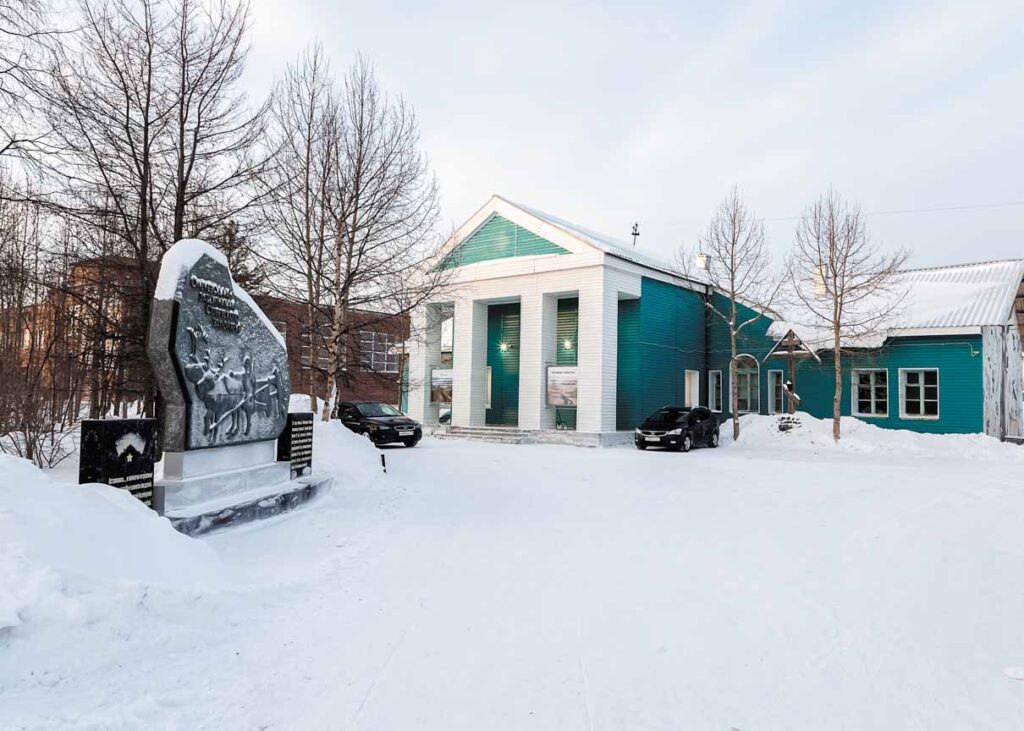
Ulyana recalled her mother’s words when she married Boris Yulin, whose family had been reindeer herders for generations, in 1985. Since then, the tundra has been her second home. As a Sámi saying goes: “Fate is like a river in winter — it may freeze, but it still flows beneath the ice.”
The reindeer herding brigade where Ulyana and Boris worked was based on the shore of Lake Karozero: a log house where they lived, a bathhouse, and several outbuildings. Today, reindeer herders have televisions and satellite phones at their camps, but back then they kept in touch with the outside world by radio — they would call in every day at 11 a.m. and 3 p.m. The brigade had ten male herders and two women were in charge of the household.
Ulyana stoked the stove, baked bread, cleaned the house, carried water from the lake, boiled laundry in a wooden tub, and rinsed it in the lake. She knitted, sewed, and mended clothes.
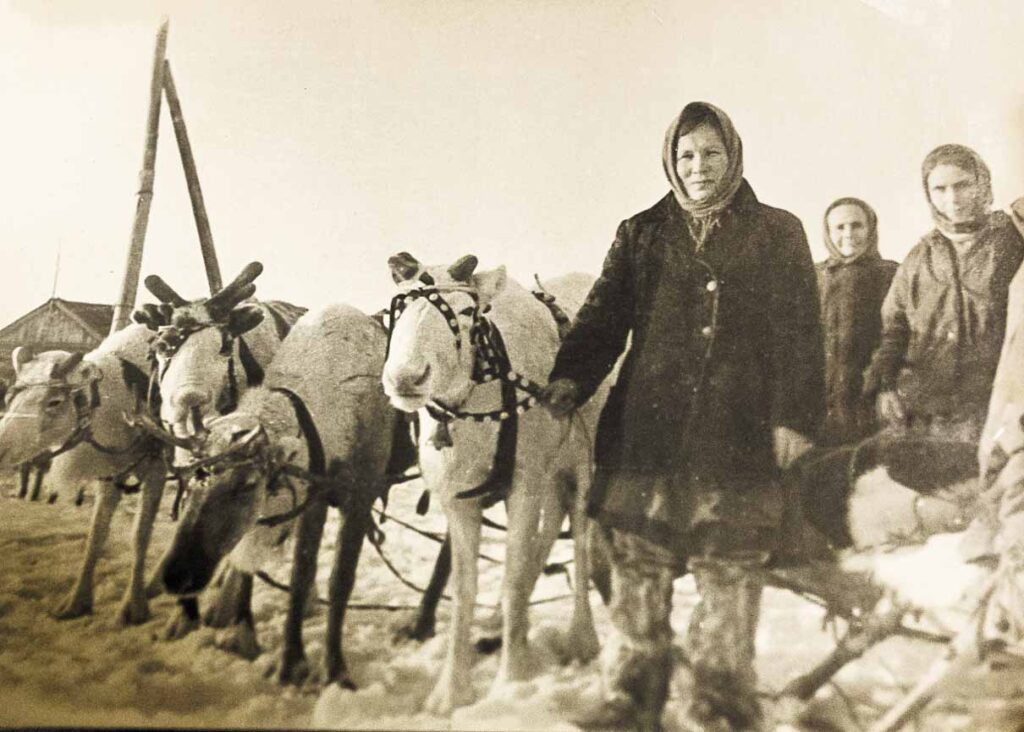
Historically, the Sámi led a semi-nomadic life. From late May to mid-August, they lived in summer camps on the shores of the sea, a river, or a lake. When the cold set in, they moved deeper into the peninsula, into the forest‑tundra. They lived by fishing, hunting, and reindeer herding. Their settlements were set up near hunting and fishing grounds and pastures rich in moss. The creation of collective farms forced the Lapps to adopt a settled way of life.
Ulyana’s father was the thirteenth child in his family. He was known for his craftsmanship. In the tundra, there is nowhere to turn for help, so you have to be able to do everything yourself. After they married, Ulyana’s parents settled in the village of Voronye, where she was born in 1955. When the Serebryanskaya hydroelectric power station complex was built, the village was flooded. The residents were relocated to Lovozero.
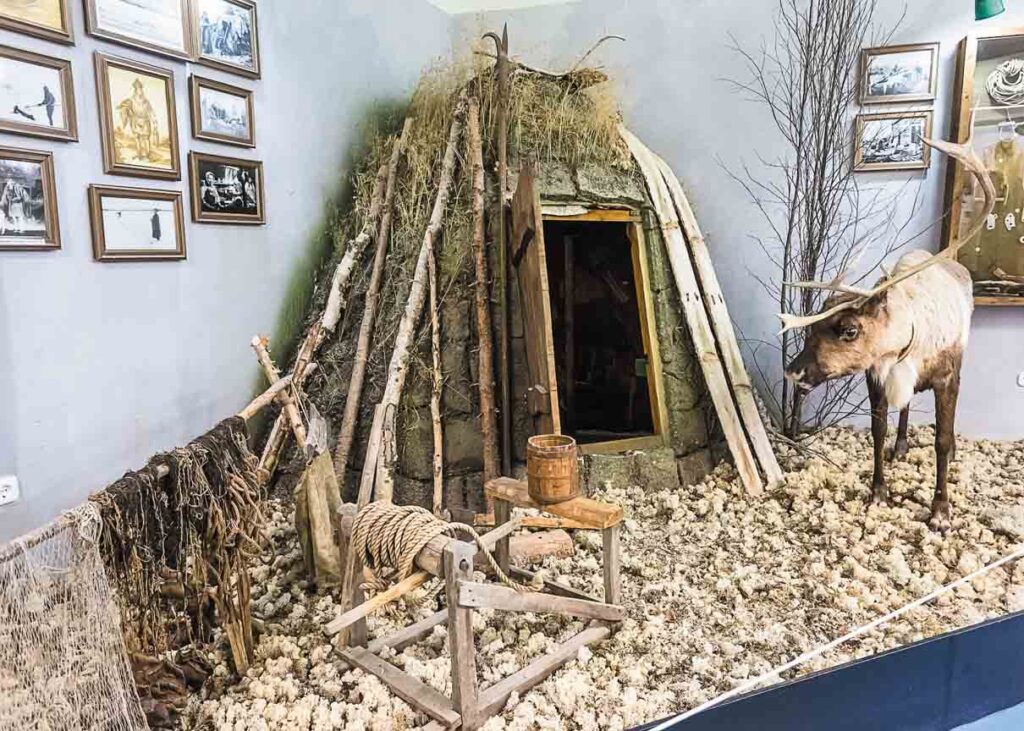
In late March or early April, the reindeer herders would set out for their base camp. They traveled by reindeer sleigh, in convoys — several sleighs hitched one behind the other, with a single person driving them. They carried everything they needed, including a season’s supply of food.
Each reindeer-herding brigade is assigned its own herd. The herders look after it, protect it from wolves and poachers, and seek out rich pastures. They treat moss with care: if it gets trampled, it can take decades to recover, for it grows very slowly — by three to five millimeters a year.
Calving takes place in May. By this time, the female reindeer are separated from the herd. The calves are branded, each brigade with its own mark. In June and July, the reindeer head to the shores of the Barents Sea to escape the gnats and mosquitoes. In September and October, the herders go in search of the herd, so that by late November they can drive it into an enclosure. There, all the animals are gathered, and each brigade separates out its own by their marks, counts them, and selects those destined for slaughter. These tasks are completed by late December, and the herds leave for their winter pastures. Around this time, Ulyana would return to Lovozero, able to spend time with her daughters, Natalya and Tatyana.
Oiyar— circles on the water
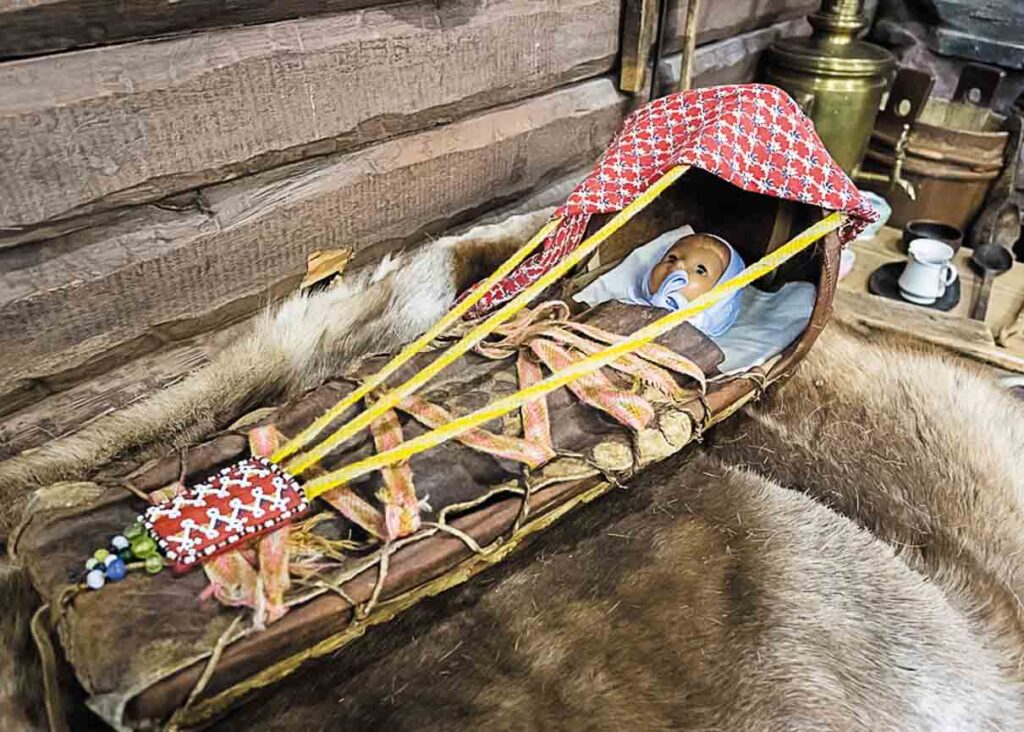
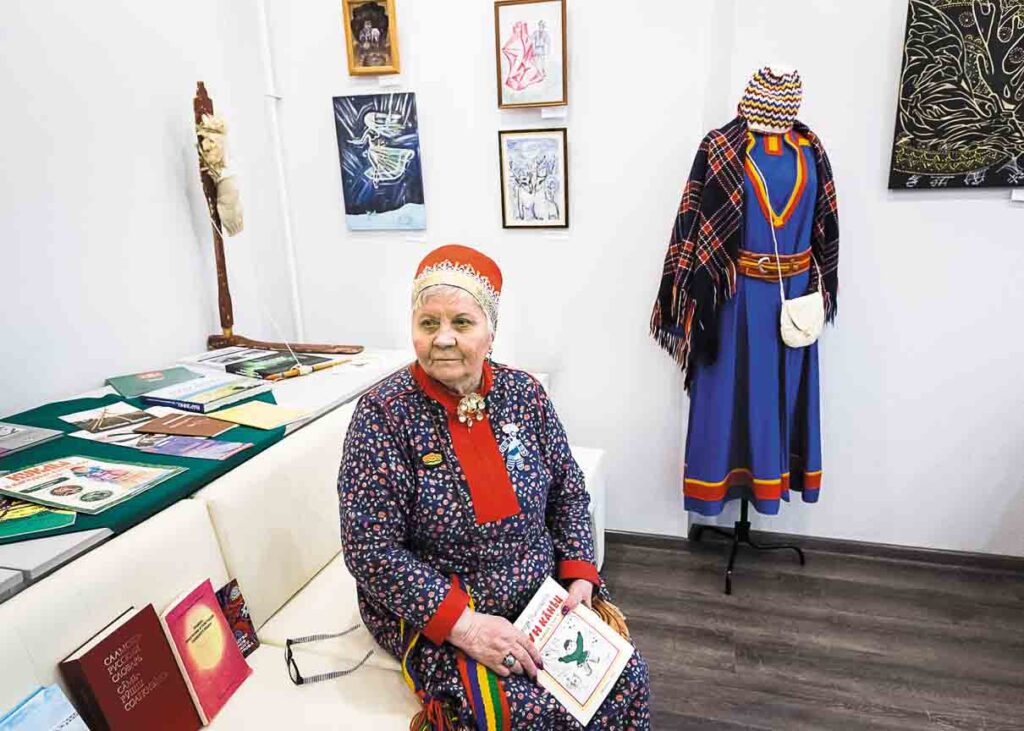
The Museum of the History, Culture and Daily Life of the Kola Sámi in Lovozero displays an old cradle — the one in which Ulyana and her sisters were rocked as babies. The Sámi cradle was hollowed out of wood, covered with leather embroidered with beads. If a boy was born, the sides were decorated with small woolen balls; if a girl, with triangular charms made of cloth.
“You never know which family you’ll end up in — you might become a swan, or you might become a crow…” Ulyana translates a song her mother used to sing when she got married. Her mother’s monotonous, chant‑like singing sounds melodious on the recording. “Luvvt” — this traditional Sámi form of song— it is both a way of communicating with nature and with the reindeer, and an improvised narrative about the endless tundra, the beauty of rivers and lakes, about events of all kinds — the themes are unrestricted.
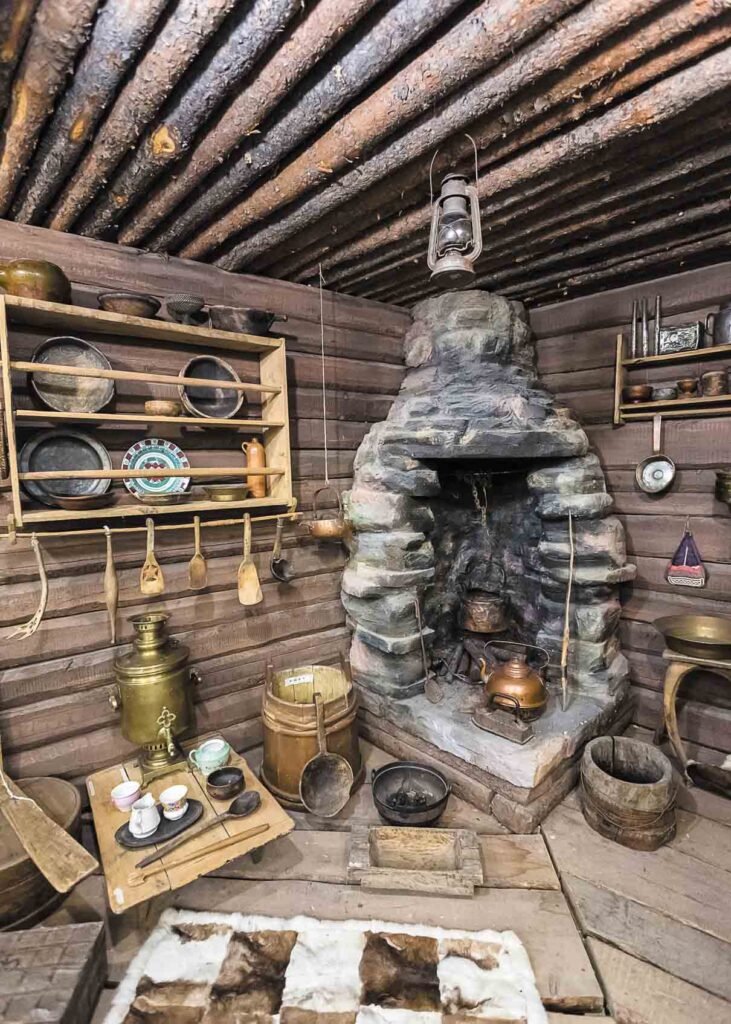
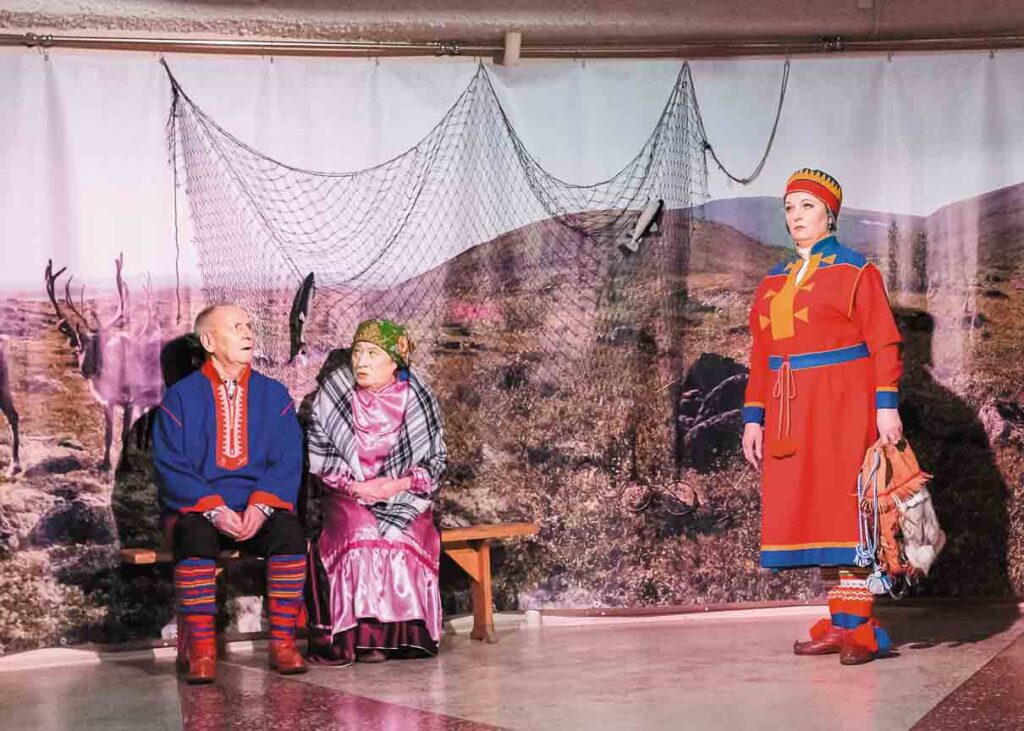
After retiring, Ulyana’s parents, Anisya and Mikhail Yuryev, teamed up with friends: they questioned the old residents, recorded songs, and asked to be shown Sámi dances. At home they would learn them — first dancing to the voice alone, then an accordion player joined them. This is how the folk ensemble Oiyar — “circles on the water” — was formed in 1985.
One of the most spectacular Sámi rituals is the wedding, usually held in winter. The bride and groom were chosen by their parents, with the final word belonging to the mother: among the Sámi, the woman was the guardian of the hearth. For the wedding, the bride would wear a festive outfit. During the ceremony, her maiden headdress (a band) was exchanged for a married woman’s headdress — the shamshura.
Today, many Sámi are concerned about the commercialization of their culture for the sake of tourism. Reindeer, for instance, are often used to make money, without being properly cared for. Tall tales are invented — for example, the story that the Sámi used to eat moss.
Second story: Nina Afanasyeva
“The universe above has exploded,” the Sámi say when they receive unexpected bad news. That’s how the residents of the village of Varzino described the news of its closure in 1969.
As early as the 1920s, a policy was adopted to consolidate Sámi settlements. A second wave of resettlement swept through in the 1950s and 1960s. People were forced to start from scratch in new places. In the rush, sometimes not everyone was provided with housing right away.
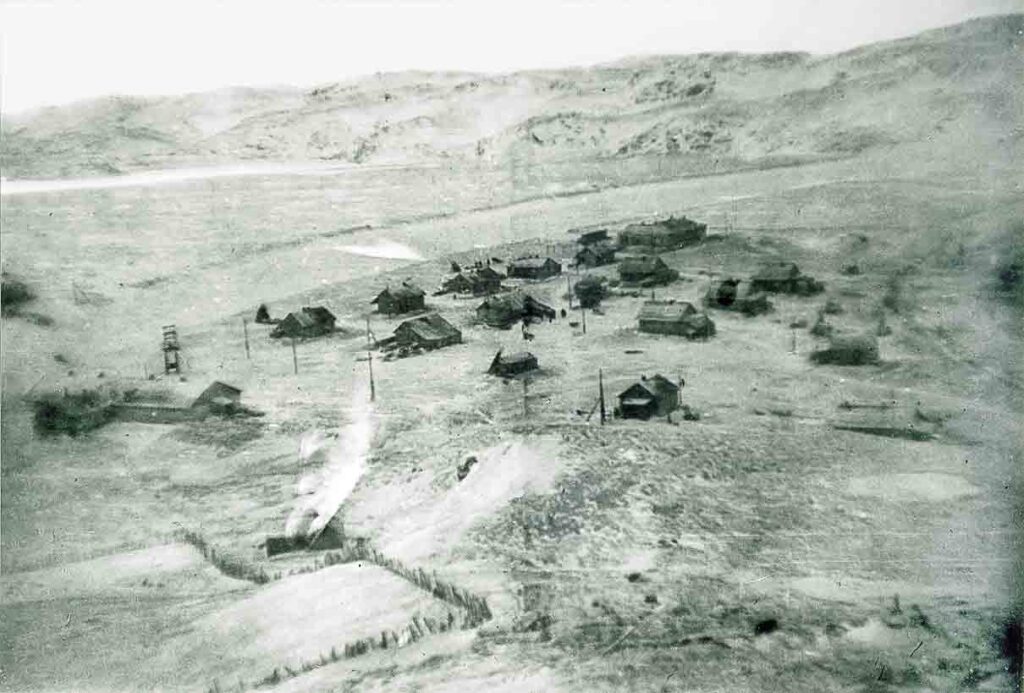
For Nina Afanasyeva, Varzino is both love and pain. She wrote a book about its history, its inhabitants, and their ancestors — who was born in which family and when, what they did. Nina Afanasyeva is a philologist, educator, researcher of the Sámi language, one of the founders and vice-president of the Kola Sámi Association, and a member of the Council of the Sámi Heritage and Development Foundation. Her book records that at the time of its closure, Varzino had 200 to 250 inhabitants.
“Everyone had many children,” Nina Afanasyeva recalls. “The men of Varzino mostly married women from Yokanga or Lovozero: the village was small, and all the inhabitants were related to each other, either closely or distantly.”
Nina Afanasyeva was born in 1939. Her father was one of the last to join the collective farm, contributing 150 reindeer to the common herd. Her mother, Praskovya, used to go to the tundra with her husband, but when children came along, she moved to work on the farm. There were seven children in the family; Nina was the youngest. “Sámi children learn to speak very early,” Nina Afanasyeva notes. “We have extremely keen hearing — an essential quality for survival in the Arctic. You have to constantly distinguish what sound is being made and where it comes from.”
When Nina started first grade, she did not know Russian at all. There was a shortage of textbooks and notebooks, but she enjoyed studying, with history and literature capturing her interest most of all. In Varzino, children attended elementary school; later they were sent to a boarding school in the settlement of Gremikha. There Nina completed seven grades, after which she went to Leningrad for preparatory courses at the Faculty of the Peoples of the Far North. She then entered the Philology Faculty at the Leningrad State Pedagogical Institute named after A.I. Herzen. After graduating, she worked as a teacher of Russian language and literature at an evening school in Apatity. She later moved to Murmansk, where she headed the Department of National Schools at the Institute for Teacher Training. She was the one who helped boarding school teachers develop teaching methods when the Sámi language was introduced into the curriculum.
From Nina Afanasyeva’s book, we learn that the village of Varzino existed, according to various sources, from the 15th or 16th century. Archaeologists have discovered an ancient settlement near it. Nina Afanasyeva notes that in Sámi culture, Christianity and pagan traditions coexist peacefully. “The Sámi believe that the tundra, rivers, lakes, and hills have a soul that rests at night,” Nina Afanasyeva observes. “To avoid disturbing it, you must not make noise at that time.”
Nina Afanasyeva also told me about another custom. Among the Sámi, it was common practice to… buy children. Usually, a child was exchanged for a sack of sugar and a reindeer. For example, a childless couple might acquire a son or daughter from a family with many children; the child would then take their surname and inherit their reindeer and property. “They wanted to buy me from my mother, too,” Nina Afanasyeva shares. “My father had died young; I was three years and four months old. But my mother didn’t give me away.”
The Sámi are sparing in their display of emotions, Nina Afanasyeva believes. Indulgence and coddling are discouraged, for the main goal is to prepare children for an independent life in the harsh conditions of the polar winter. “My sister Nastya fell seriously ill. In such cases, a child would also be sold for a symbolic payment to a family with many children — but healthy ones. That was how the Sámi tried to cheat fate.”
What the future held for the Sámi, they would divine from the northern lights. According to legend, the flickering lights are the souls of the departed that have moved to the sky. Blue and green hues foretell peace and tranquility. If the lights are red, trouble is coming. Old‑timers used to say that the northern lights had turned red before World War II.
According to Sámi beliefs, the world was divided into three levels. The middle level was our planet. The upper level was space, the universe, the stars, other planets. And the lower level was the underworld, where people go after death. It was feared; people believed that the dead could turn into ghouls, which is why they buried them on islands, so that water would separate the living from the dead. The mediators between these three worlds were shamans.
Reindeer people
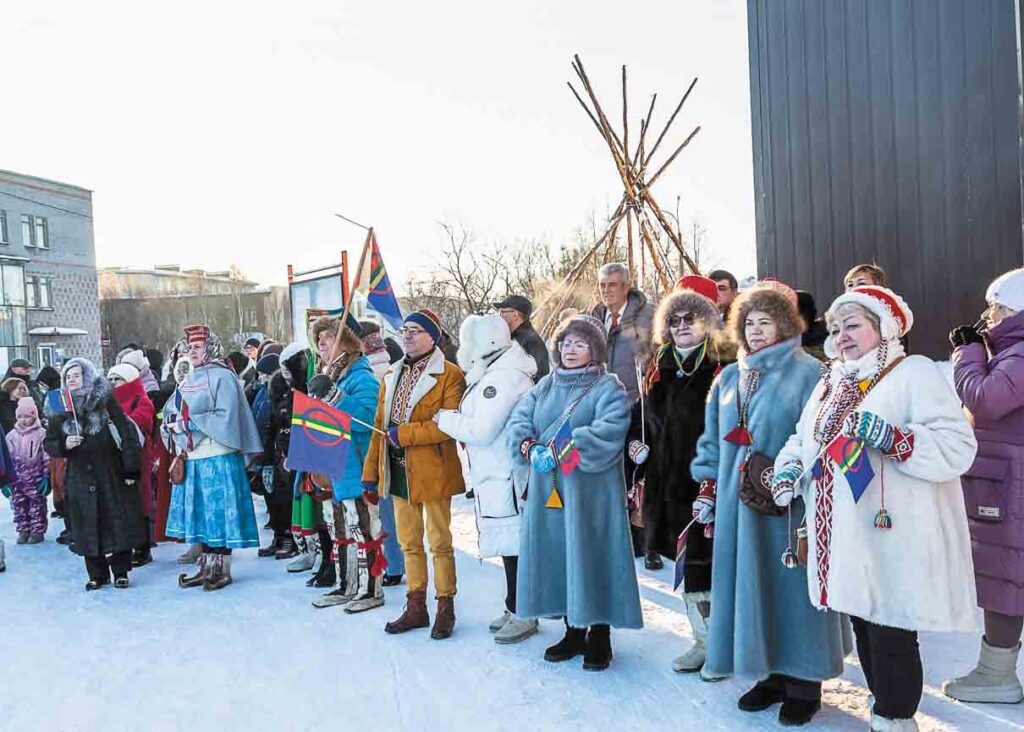
When Ulyana and Boris retired, they decided to return to a traditional way of life. Together with like‑minded people, they formed a non‑profit Sámi community. The couple built a traditional Sámi tent (later replaced by a construction trailer), bought reindeer, and began living in the tundra, just as their ancestors had done. They came to Lovozero only to buy food, gasoline, and collect their pension.
In the tundra, they were in their element. People joke that the Sámi have a kind of GPS in their heads. Their navigation is not mere orientation — it is a complete merging with nature. “Once, some fishermen came to us — they were lost and didn’t know where they’d left their broken snowmobile,” Ulyana recalls. “Boris asked them a few questions and drove straight to where the machine was. He knew every crevice in the tundra.”
Under Russian law, the Sámi, as members of an indigenous small‑numbered people, are entitled to receive land for their use. Ulyana and Boris knew this, of course, and spent more than five years trying to make it happen. They went from office to office: one document would be missing, then another, then papers would get lost. In the end, they gave up, worn out by the red tape, and swore: “Never again will we set foot in those places!” But they did not abandon their dream. “We started living in the tundra with the reindeer, not for the money, but for the soul.”
Each of the reindeer, Ulyana believes, has its own character. For example, Guitarist would stamp his foot when harnessed, as if playing the guitar. Bow Tie had a bow‑tie marking on his neck. Reindeer understand everything — they just cannot speak. Crybaby is a handsome black reindeer; they wanted to send him for slaughter, but he understood it and started crying. Boris took pity on him and made him a riding reindeer…
But then everything came to an end. “Boris went out to feed the reindeer and came back quickly. There were tears in his eyes. It turned out that a pack of feral dogs had torn the herd apart… After that, he started having heart trouble. After Boris died, I wanted to stay, but my daughters wouldn’t let me.”
When she returned to the trailer some time later, Ulyana found that their home had been ransacked. When the community was dissolved, they were left with nothing.
The complicated “family tree” of the sámi alphabet
It flows like a stream — that’s how people describe Sámi speech. The Sámi language belongs to the Finno‑Ugric group. The Sámi had no written language. In the 19th and early 20th centuries, translations of books from Russian into Sámi were written down using Russian letters.
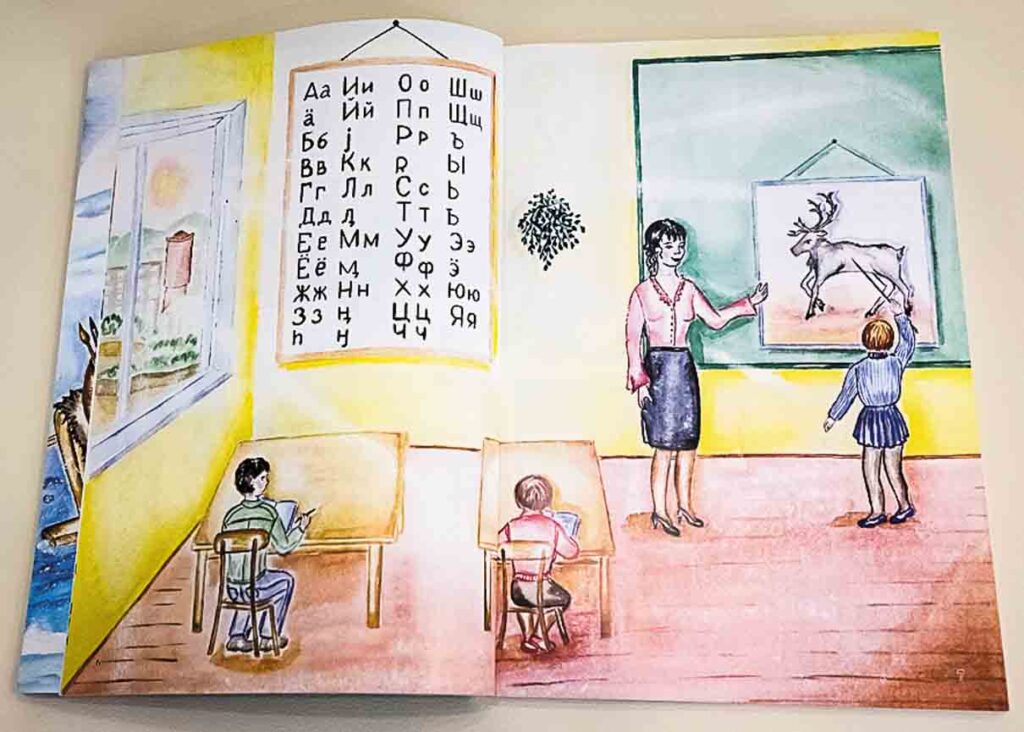
The first Sámi alphabet was created using the Latin script in 1933 by the Soviet linguist Zakhar Chernyshev, with the participation of Aleksandr Endyukovsky. That same year, a primer was published, along with textbooks for elementary school and reading books. In the Murmansk region, Sámi children were taught in their native language in elementary school. But the Sámi written language did not last long. In 1937, the so‑called “Sámi conspiracy” was fabricated. Teaching the Sámi language ceased. And although Endyukovsky had already published a new primer using the Cyrillic alphabet in 1937, it did not save him from execution. Chernyshev miraculously survived.
The revival of Sámi written language began in the 1970s, when it was permitted to introduce Sámi as a subject in the curriculum of ethnic boarding schools. In order to publish textbooks, an alphabet had to be developed. Endyukovsky’s Cyrillic‑based version, consisting of 33 letters, did not provide a way to represent all the specific sounds of the language.
The Kola Sámi spoke four dialects, and there were also numerous sub‑dialects. Sometimes the differences between them were so great that people could not understand one another. One dialect — Kildin — was chosen as the basis.
In 1979, the philologists Rimma Kuruch and Boris Glukhov, together with the Sámi language speaker Aleksandra Antonova, prepared a draft of the Sámi alphabet. Over the following five years, it was refined by a group of scholars that included Nina Afanasyeva. In 1982, the alphabet was officially adopted It consists of 43 characters; the Latin letters h and j are used to represent some of the sounds. “Some people, especially the elderly, say that the alphabet is too complicated — and they are right,” Nina Afanasyeva says. “An alphabet is a graphic system that needs to be explained to native speakers so that they can learn to write. And no one ever taught them that.”
Nina Afanasyeva is one of the authors of the first Sámi‑Russian dictionary. She is currently working on its second edition.
Third story: Anastasia Yakovleva
My third protagonist, Anastasia Yakovleva, was also born in the village of Voronye. Her father worked as head of a reindeer brigade. Her mother raised the children — there were eleven of them. “At home we spoke Sámi. I learned Russian when I started preschool,” Anastasia recalls.
In 1963, the school in Voronye was closed due to the construction of a hydroelectric power station, and Anastasia continued her studies at a boarding school in Lovozero. “We would get Russian words mixed up, use wrong endings or stress. We were forbidden to speak Sámi among ourselves; we were required to speak only in Russian,” she recalls.
Anastasia’s parents stayed in Voronye for another two years and moved to Lovozero in 1965, but she continued to live at the boarding school. “I liked it there,” Anastasia explains. “But there was another reason. In Voronye, we had a house, but when we moved to Lovozero, we didn’t get housing right away. At first we lived in a dilapidated bathhouse; later we were given a room in an old building, so I stayed overnight at the boarding school.”
After finishing school, Anastasia went to a sports college in Monchegorsk. She returned to Lovozero and took a job as a coach at a children’s sports school. Later, she moved to work as a teacher at a boarding school. For over ten years, she taught the Sámi language. Around that time, she became interested in literary translation. She translates fairy tales, plays, and short stories from Russian into Sámi and from Sámi into Russian, mainly for productions at the Lovozero People’s Theater named after N.D. Yushkevich. “The hardest thing to translate is poetry,” she shares. “Because in terms of rhythm, Sámi and Russian poetry don’t match. In the past, the Sámi didn’t tell fairy tales — they sang them.”
The works of Sámi poets contain many metaphors that are difficult to translate into Russian, because the words have multiple meanings. For example, linguists identify around fifty distinct words for snow in the Sámi language. Wet snow, dry snow, hard snow, crusted snow, sparkling snow, dirty snow, snow on a mountain peak, snow on marshland, snow on ice — there are separate words for all of them.
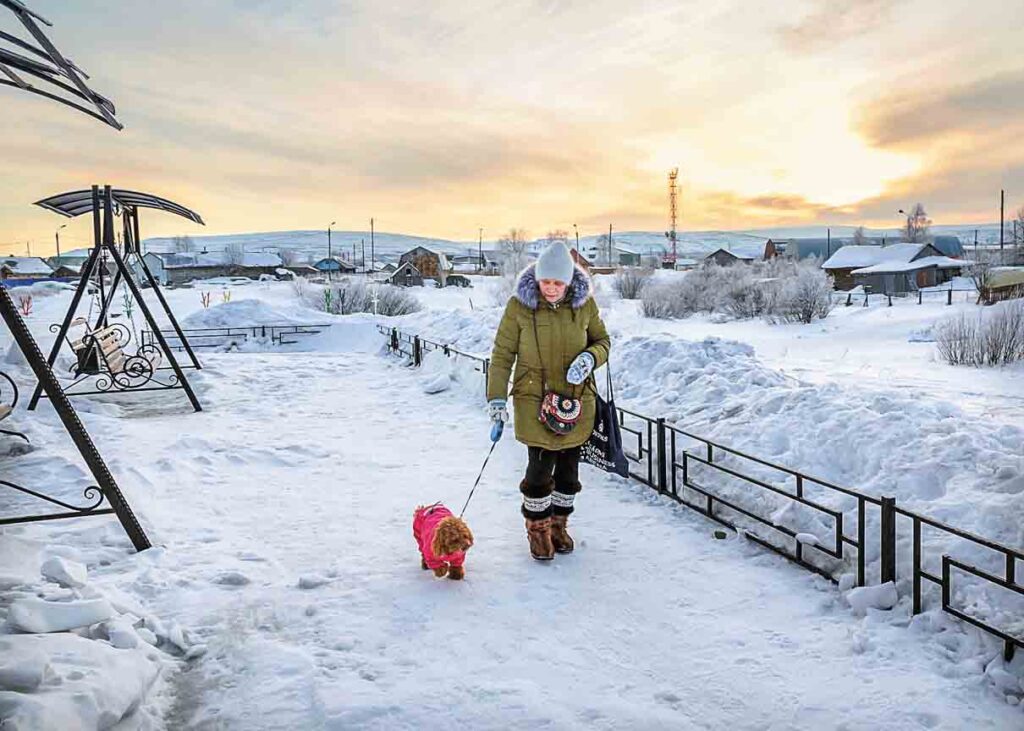
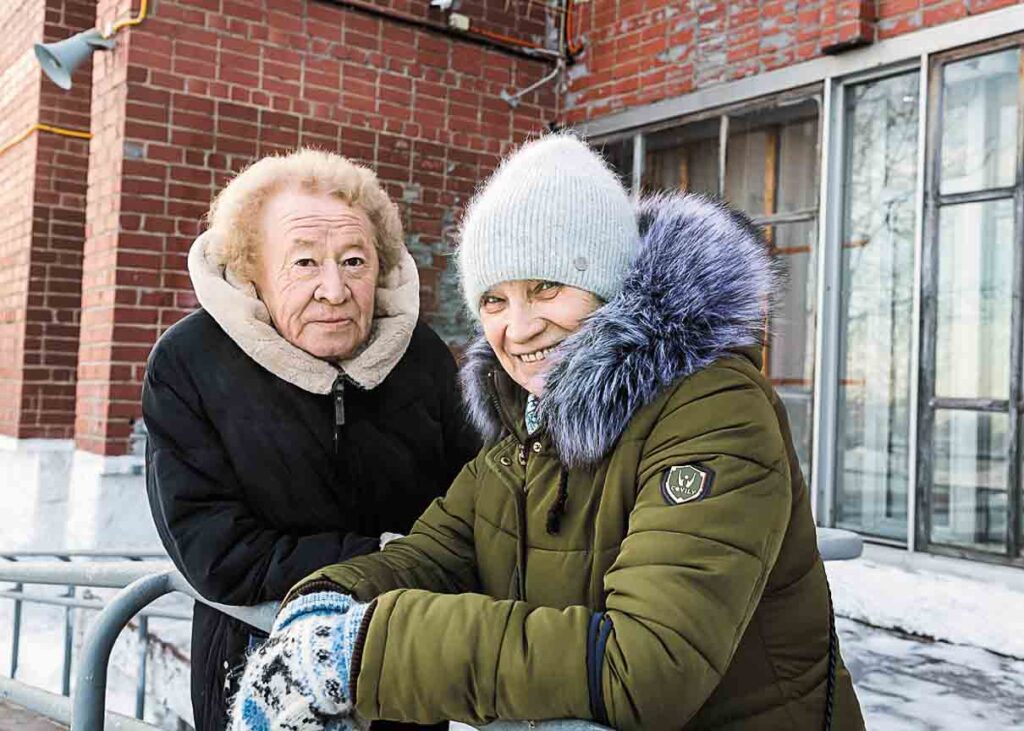
“Now I only speak my language with people my age,” Anastasia shares. “When I started teaching, most children no longer understood Sámi. We knew it because we spoke it at home. Now there are many mixed marriages. Children may speak Sámi during lessons, but when they come home, they hear only Russian. And then in the next lesson, we start all over again…”
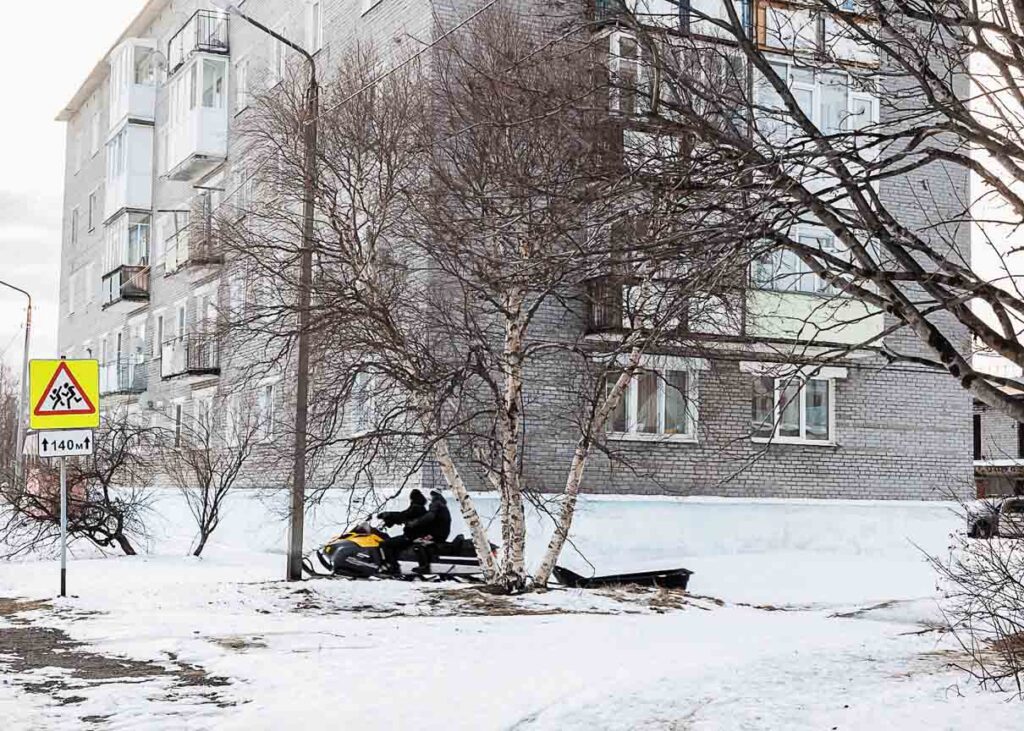
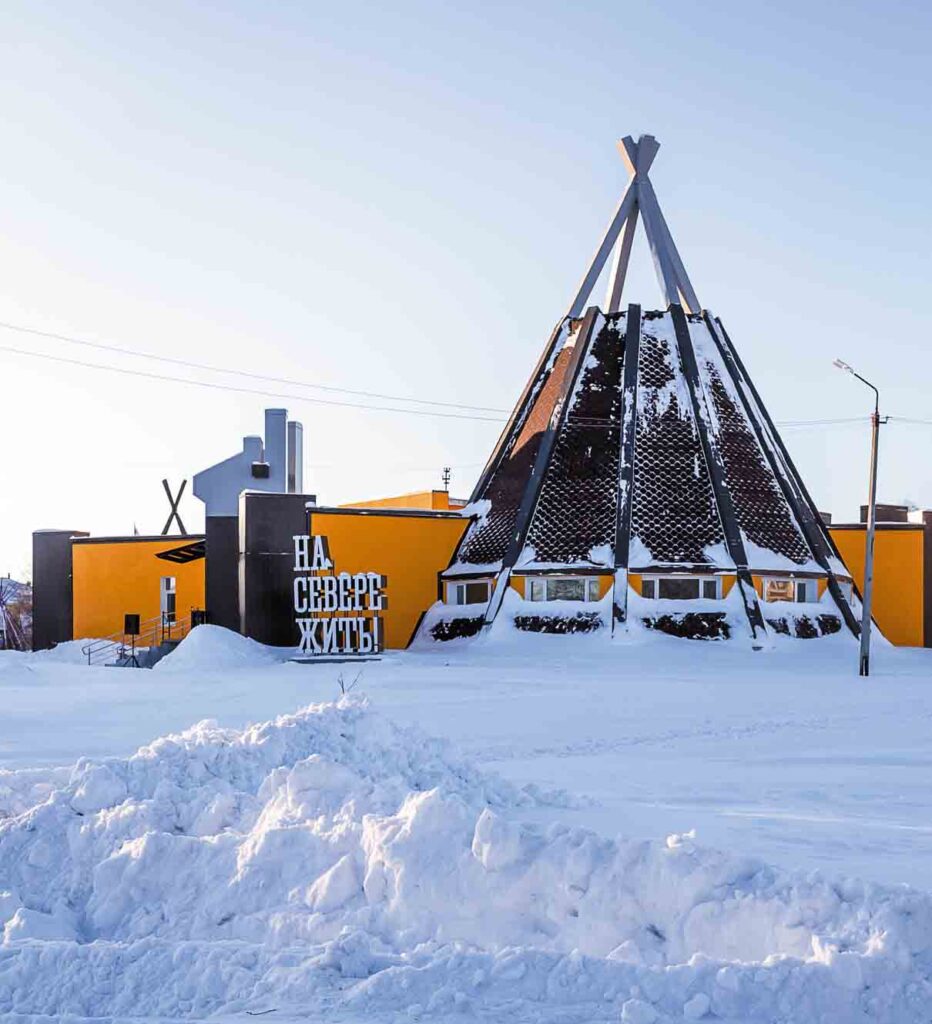
Lovozero, near the lake of the same name, is the cultural center of the Sámi. It is home to the Museum of the History, Culture and Daily Life of the Kola Sámi, the National Cultural Center, and the Center for Leisure and Culture. There are also numerous clubs, and folklore celebrations and festivals are held. Songs are sung and plays are staged in the Sámi language, and courses are offered for studying the Sámi language. On the street or in a shop, however, you will not hear Sámi spoken; few people use it in everyday communication.
“The language is dying, unfortunately, and we are trying to revive and preserve it,” Nina Afanasyeva says. “There are still native speakers alive, but their children and grandchildren may understand it to some extent, but have largely lost the ability to speak it.”
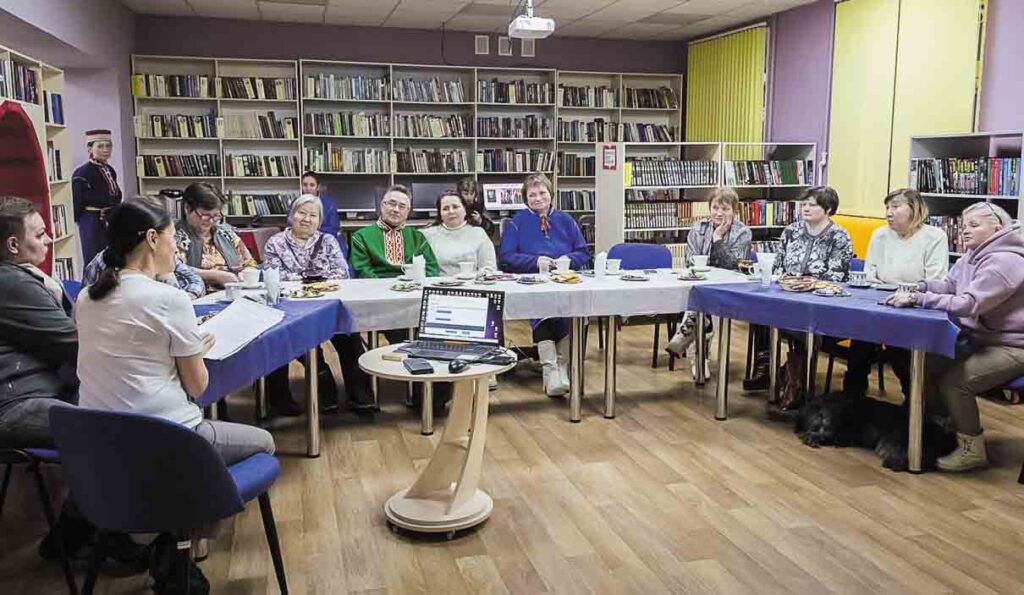
Since 2003, staff at the Lovozero Library have been recording audio interviews with village elders. They also hold evenings where listeners hear the stories of local residents, who share memories of their loved ones, relatives, and friends who are no longer with them. And while many Sámi, by their own admission, used to be ashamed of their ethnicity, they now speak of it with pride and are starting to learn their language.
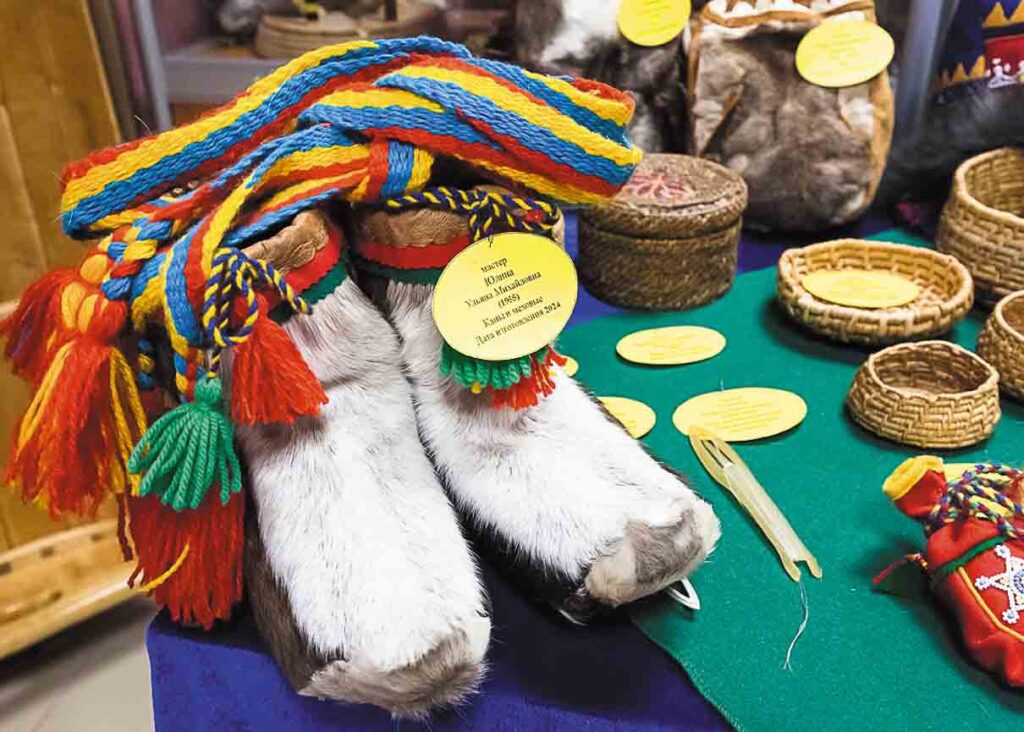
The Sámi village of Varzino remains not only in the memory but also in the hearts of Nina Afanasyeva and her fellow villagers. Every summer, they return to their native place, though all that remains of the village is an old well and a cemetery. Ulyana Yulina, her sisters, Anastasia Yakovleva, and other residents of Voronye have not forgotten their village either. They hold on to their traditions, preserving the identity of their people. “My mother taught me to sew, my grandmother to knit — and I passed it on to my daughters,” Ulyana Yulina says. She makes traditional Sámi footwear — kangi — from fur, and bags and other items from leather. Her sisters compose and sing songs in their native language, write fairy tales and poetry, embroider, and sew traditional clothing. …Sophocles’ plays have been translated into more than a hundred languages. Sámi can now be added to that list. Anastasia Yakovleva has translated a fragment of Antigone for a theater production. Her voice rings out from the stage of the People’s Theater like an echo of ancient tales, and her translations have become a bridge between generations.